Follow @TomVMorris
Retreats
Keynote Talks and Advising
About Tom
Popular Talk Topics
Client Testimonials
Books
Novels
Blog
Contact
ScrapBook
Short Videos
The 7 Cs of Success
The Four Foundations
Plato's Lemonade Stand
The Gift of Uncertainty
The Power of Partnership

Tom Morris

Great Ideas. With Power. And Fun.
Retreats
Keynote Talks and Advising
About Tom
Popular Talk Topics
Client Testimonials
Books
Novels
Blog
Contact
ScrapBook
Short Videos
The 7 Cs of Success
The Four Foundations
Plato's Lemonade Stand
The Gift of Uncertainty
The Power of Partnership
Socrates.jpg

The Lessons of Socrates and Christmas

Socrates called philosophy a preparation for death. I guess he never heard of estate planning. Philosophy in my view is a preparation for life—a full and good life. For death, it gives us very little solid guidance. For life, it offers a lot.

And yet then, perhaps the wise and good life it prescribes is in itself also the best preparation for death, or the final ending of this life. So, in a sense, the old boy was right. But then, I think I am too. And he left out the middle part, which is not to be ignored. But then again, our Christmas and Easter stories imply that even the finest intellectual guidance or theoretical preparation for life or death is never enough. Inner transformation is required of us. We come into the world like unmolded clay. We need first to be formed, and then transformed. And while that never comes from philosophy, it can be mediated through it. Perhaps that was the one more thing Socrates would have told us if he had not been required to drink the particular spiked punch that ended his time here. But don't worry about him. He was prepared.

Happy Christmas. May the joys and lessons of the season infuse the new year for you and yours.
PostedDecember 26, 2019
AuthorTom Morris
CategoriesPhilosophy, Life, Wisdom
TagsSocrates, Christmas, Philosophy, Easter, Transformation, Life, The Good Life, Death, Tom Morris
Post a comment
Tomb.jpg

Resurrection

I just realized on this Easter Weekend that I’ve been writing about resurrection for seven years without realizing I was doing so.

Our word comes from Latin roots, from a verb that meant to rise again or arise anew. Since February of 2011, I’ve been writing and editing a story about a boy and his friends in a reimagined Egypt in 1934 and 1935. As the story played out like a vivid movie in my spirit, I gradually learned that the story is about the power of the mind, the depth of the human spirit, the strength of love, the nature of true friendship, the vital importance of wisdom in everything we do, and the many contours of goodness. It's also about the special abilities we all have available to us that we too rarely experience. What I didn’t realize was that perhaps resurrection is the main thread around which all the others are woven.

Can a boy rise anew from the life of an ordinary child in a small village to serve his kingdom as a prince? Can a nation rise from the ashes of turmoil and great political damage to a new and better life? But finally, and most importantly, is a moral and spiritual resurrection possible within the confines of this life or beyond for a individual whose journey has been corrupted by decades of wrong choices and motivations?

As a Christian, I celebrate a unique resurrection this weekend. But as the best theologians of my tradition have long pointed out, the myth of resurrection has long been present in the human spirit, across cultures, and throughout history. The distinctive Christian claim is that at one particular place and time, and in a distinct individual from another small village, the myth was finally embodied and made real at a new level, for the benefit of us all.

The idea reverberates through all of life. In the world of vegetation, there is death and then revival. In our careers in the world, we’re sometimes like the fantastical Phoenix, who goes down in flames and rises afresh from the ashes. We want to believe in radical and positive transformation. But is it really possible? I think it is. And that’s an implication of the message of Easter, when a tragic death brings new and transformed life. I see now that I’ve been writing about it without realizing I was doing so for the past seven years—its possibility and hope and reality.

My Easter wish is that we all experience that possibility and hope and reality anew in this special season and throughout the days to come.

PostedMarch 31, 2018
AuthorTom Morris
CategoriesFaith, Wisdom, Religion
TagsResurrection, Easter, Philosophy, Rising anew, Novels, Tom Morris, TomVMorris
Post a comment
Easter.jpg

Resurrection: The Insight of Easter.

Resurrection. It's about radical transformation and new life. It's about disaster and even death as the doorways for redemption. It's about apparent failure and ultimate success. It's about vivid appearances and unsuspected realities. It's about having these treasures in earthen vessels.

The original disciples, our predecessors and paradigms of faith, abandon the one in whom they had hoped, and give up their aims in despondency—they flee the path and the project, in a failure of both understanding and courage, and thereby provide an example for all of us unfaithful, weak, panicked souls that we need not be shamed by our lack of sturdy steadfastness, but rather inspired that strength can come of weakness, that honor can come of humility, and that the plan for all things is a massive, wonderful turnaround.

In the darkest of times, the light still shines. Happy Easter.

PostedApril 16, 2017
AuthorTom Morris
CategoriesAttitude, Faith, Life, Religion
TagsEaster, Resurrection, Transformation, Change, Tom Morris, TomVMorris, philosophy, wisdom
Post a comment
EmptyTomb.jpg

The Empty Tomb and Plato's Cave

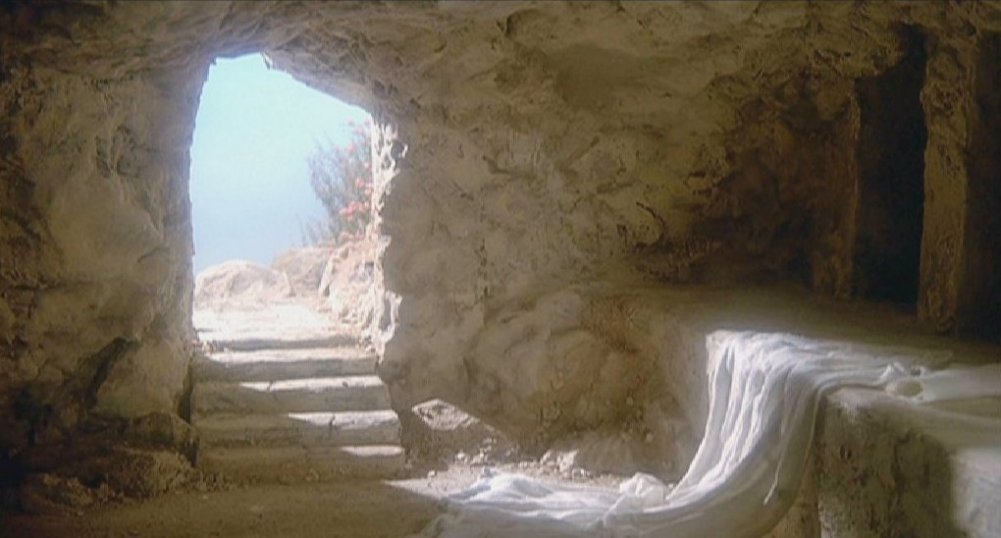
Today I came across a vivid Easter Sunday representation of the Empty Tomb of Jesus, as described in the Gospels. In this depiction, as viewers, we’re inside the tomb and can see that it’s essentially underground and dark, and yet an attractive bright light draws our attention beyond the now open door. Right away some thoughts came to me.

The Christian diagnosis of the human condition turns on a Greek word, hamartia, that’s most often translated as “sin” but that in the original language meant “falling short” or “missing the mark,” as in the case of an arrow shot toward a bullseye failing to make it to the target, falling short, and thus missing the mark.

The Christian claim is that we all naturally fall short of our proper ideal. We fall short of what we’re shooting for as human beings who deep down want a good, meaningful, successful, fulfilling and loving life that makes its best potential impact on the world. We’re all somehow metaphorically buried in a tomb of mistakes and illusions, and the gospel claim is that there is one who has escaped that tomb, leaving it empty, and has invited us all out of it as well, while actually also empowering us to leave it and move into the light that awaits us.

Plato had this image of a cave. He suggested that we’re all like men chained in an underground cave, watching shadows dance across its wall and mistaking those shadows as realities. We fear them or we desire them. We want to chase them or run from them. They monopolize our attention and define our lives. But they aren’t the realities among which we’re meant to live.

The philosopher, Plato tells us, is the person who breaks his chains and leaves the cave, ascending into the light of the true sun outside, to see the realities within which we’re ideally meant to live. But then, this philosopher descends back into the cave to spread the word to the other captives that they, too, can escape these illusions and the darkness that envelopes their lives. The light awaits them all.

The tomb from which Jesus escaped can be viewed as symbolically representing that same cave, where we're cut off from the true light and life that we’re meant to have. The Easter message is that the one who left that tomb empty invites us all to leave the realm of illusion and get out where we can hit the intended mark, following him into the light.


PostedMarch 27, 2016
AuthorTom Morris
CategoriesFaith, Wisdom, Religion, Philosophy
TagsEaster, Empty tomb, Jesus, Plato, Plato's Cave, Sin, Illusion, Tom Morris, TomVMorris
Post a comment
Easter.jpg

A Celebration of Transformation

Easter is a distinctive holiday. It's a celebration of transformation - from death to life, mortal to immortal, defeat to victory, illusion to truth. It's about the most powerful force in or beyond the universe displaying an undying concern for the worth of each person. It's about redemption, second chances, and the triumph of love in the end.

It's also, of course, a holiday and a message surrounded by controversies of all sorts - what are the historical arguments for resurrection, or the philosophical possibilities of such a unique and fundamentally revelatory event? And what about all the organizational, political, ethical, and social issues that swirl around the diverse community of people who are celebrating this day?

As a philosopher, I like to avoid distractions when a big issue is at stake. So I'd recommend a few minutes today of meditating on the core issues of transformation and the potential power of love in our lives, in everything we do. A holiday such as this can easily be lost in its trappings. Or it can act as an aperture to allow us to view things differently. And this one, in particular, gives us all an opportunity to think deeply and arise with new insight, boldness, and compassion for our fellow creatures.

We're ultimately not here to be overcome, but to overcome with creative love.

Happy Easter.

PostedApril 5, 2015
AuthorTom Morris
CategoriesLife, Wisdom, Philosophy
TagsEaster, Ressurection, Transformation, metamorphosis, love, Tom Morris, TomVMorris
Post a comment

Some things that may be of interest. Click the images below for more!

First up: Tom’s new Silver Anniversary Edition of his hugely popular book on The 7 Cs of Success!

The New Breakthrough Guide to Stoicism for our time.

Tom's new book, out now!
Finally! Volume 7 of the new series of philosophical fiction!

Finally! Volume 7 of the new series of philosophical fiction!

Plato comes alive in a new way!

Plato comes alive in a new way!

On stage in front of a room full of leaders and high achievers from across the globe.

On stage in front of a room full of leaders and high achievers from across the globe.

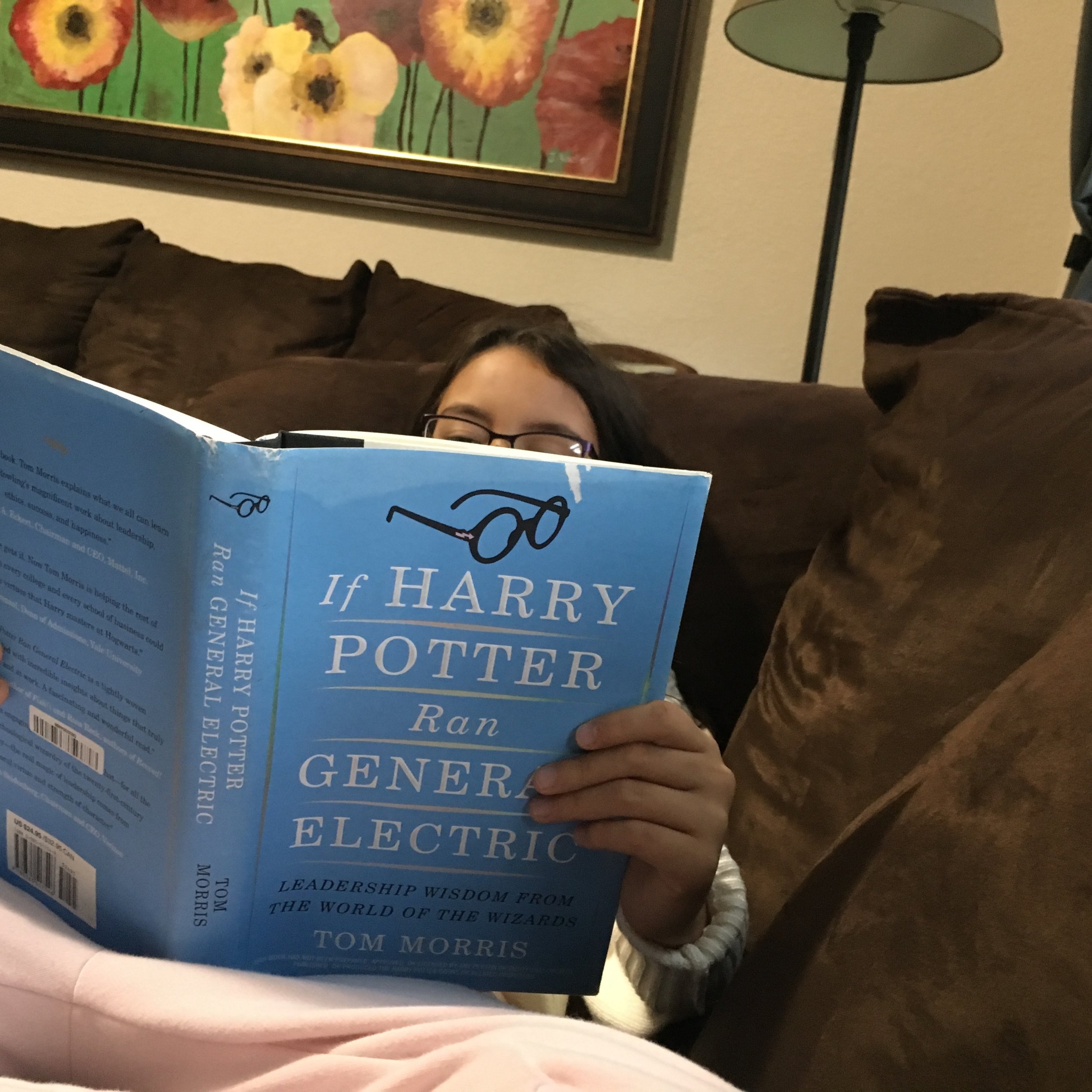
My Favorite Recent Photo: A young lady named Jubilee gets off to a head start in life by diving into some philosophy!

My Favorite Recent Photo: A young lady named Jubilee gets off to a head start in life by diving into some philosophy!

Great new Elizabeth Gilbert book on creative living and the creative experience.

Great new Elizabeth Gilbert book on creative living and the creative experience.

Two minutes on a perspective that can change a business or a life.

So many people have asked to see one of my old Winnie the Pooh TV commercials and I just found one! Here it is:

Long ago and far away, on a Hollywood sound stage, I appeared in two network ads for the wise Pooh, to promote his adventures on Disney Home Videos. For two years, I was The National Spokesman for that most philosophical bear. This is one of the ads. I had a bad case of the flu but I hope you can't tell. A-Choo!

One of my newest talk topics is "Plato's Lemonade Stand: Stirring Change into Something Great." Based on the old adage, "When life hands you lemons, make lemonade," this talk is about how to do exactly that. Inquire for my availability through the c…

One of my newest talk topics is "Plato's Lemonade Stand: Stirring Change into Something Great." Based on the old adage, "When life hands you lemons, make lemonade," this talk is about how to do exactly that. Inquire for my availability through the contact page above! Let's stir something up!

Above is a short video on finding fulfillment in anything you do, that was taped a few years ago. I hope you enjoy it!