Follow @TomVMorris
Retreats
Keynote Talks and Advising
About Tom
Popular Talk Topics
Client Testimonials
Books
Novels
Blog
Contact
ScrapBook
Short Videos
The 7 Cs of Success
The Four Foundations
Plato's Lemonade Stand
The Gift of Uncertainty
The Power of Partnership

Tom Morris

Great Ideas. With Power. And Fun.
Retreats
Keynote Talks and Advising
About Tom
Popular Talk Topics
Client Testimonials
Books
Novels
Blog
Contact
ScrapBook
Short Videos
The 7 Cs of Success
The Four Foundations
Plato's Lemonade Stand
The Gift of Uncertainty
The Power of Partnership
arts-humanities.jpgrts

The Arts, The Humanities, and Business Success

When young people study the Arts and Humanities, they can prepare themselves in deep, untold and currently unappreciated ways for a successful business life.

The Arts: Every art involves complexity and mastery, two of the deepest features of any highly accomplished business life. We can think of a painting as a solution to a problem—or better yet, as thousands of solutions to thousands of problems. When it embodies Truth, Beauty, Goodness, and Unity, it succeeds best. And this is true of a business, or a business deal. The same is also true of a piece of music, a dance, or a sculpture. Art hones many intellectual qualities and personal traits like perseverance in the pursuit of perfection, or even happy imperfection.

The Humanities: Let's begin with what's broadly called literature, encompassing poetry and prose, short stories, essays, and novels. Let's even throw in the best of film. When we study great literature, we can prepare ourselves for deeply satisfying business success. First, in reading well-told stories, we learn to tell stories well. And there's nothing more important in business life than telling powerful stories about what we're doing, want to do, and can possibly do. One famous film producer, Peter Guber, has said in his delightful book "Tell to Win" that during his career, whenever he went into a meeting with facts and figures, he never got what he wanted, but whenever he showed up with a great story, he got everything he wanted and more. Secondly, we come to understand character more deeply through the lens of a masterful story. Great literature is full of cautionary tales for leaders and high achievers: Gilgamesh, Beowulf, Don Quixote, Frankenstein, Moby Dick, and Jack London's Sea Wolf, among many others. And in these tales of greatness and tragedy, we see the truth of what Heraclitus said long ago, "Character is Destiny."

History: Of course the lessons here are obvious. The long-term link between character and excellence throughout the course of our world up to now, The Law of Unintended Consequences, from even the most modest decisions, the balance of risk and reward that attends any bold action, the inevitable mess that arises from wild interventionism, and the catastrophes that democracy is intended to prevent.

Psychology: Coming more deeply to understand what motivates people just might be the most important key to business success. It's crucial for forming more positive relationships, building a great business culture, and diagnosing what can go wrong between people. The recent turn to positive psychology has provided us with new tools for excellence in everything we do.

Philosophy: As a philosopher, what can I say? When young people encounter the best of world philosophy, they learn about belief and skepticism, appearance and reality, love and purpose, evidence and folly, wisdom and virtue. They prepared themselves for a deeper and more lasting form of success in whatever they do. And the same is true for older people. The more we learn the insights of the great practical philosophers and use them relentlessly, the better we can be at anything we do. The truth of this has been on display in the talks I've given to business groups over the years, at this point far surpassing a thousand. One company has had me speak more than sixty-five times, offering me for each of those hours more than my annual salary once was at Notre Dame. Why would any business do such a thing? Because of the fact that they see the great value of philosophy. You can't have a great business without great philosophical foundations.

PostedMarch 29, 2018
AuthorTom Morris
CategoriesAdvice, Art, Business, Philosophy
TagsArt, Humanities, Education, Business, Preparation, Excellence, Philosophy
Post a comment
WeldersPhilosophers.jpg

Welders and Philosophers

In the most recent Republican presidential primary debate, Senator Marco Rubio said:

“For the life of me, I don’t know why we have stigmatized vocational education. Welders make more money than philosophers. We need more welders and less philosophers.” 

First of all, let me ignore the grammatical infelicity here and agree that the senator is absolutely right in his opinion that vocational education is not as appreciated as it should be in our time and place. One of the best books written on this topic is Shop Class as Soulcraft: An Inquiry into the Value of Work, by Matthew Crawford, who happens to be a philosopher with a prestigious PhD who makes his living by working with his hands as a motorcycle repairman, and thus demonstrates that the we should beware of false alternatives in our political rhetoric. Crawford argues eloquently for a recognition of the value and dignity of manual labor, with a special emphasis on its skilled varieties. Life doesn’t offer us a stark choice between doing or thinking, and neither should any good system of education. There are different ways by which we can enjoy a life of thoughtful work. Welding can certainly be one of them. So can toiling as a philosopher.

To the claim that welders make more money than philosophers, my first response would be that if it’s true, then, so what? Would it follow as the senator seems to suggest that we need more welders, thereby increasing our available supply and, against presumably equal demand, competitively force their wages down to the level of the sages? Stranger yet is the fact that behind these remarks we can see the exact value assumption that’s gotten us in trouble: The belief that higher wages mean a higher value to our society. That’s precisely the equation that’s led us down the road of valuing college prep vastly more than vocational education, and trying to train everyone for white collar careers, whether that’s the best thing for a particular young person, or for the rest of us, in the first place. A mediocre hedge fund manager may make a lot more money than a great school teacher, or a master welder, but you can’t convince me that this is a good measure of their relative value to society. So even if the welders of the world are out there lighting their cigars with hundred dollar bills and the average philosopher can’t pay the rent, I don’t think that implies anything about the relative value of welders and philosophers. 

When I first went to graduate school at Yale to become a philosopher, I remember seeing a newspaper clipping on a philosophy department bulletin board. It featured a photograph of a construction worker sitting on the ground, eating out of his steel lunch box, his hard-hat by his side, and with a copy of Heidegger open in front of him. I said to myself, “That’s it. That’s the role of philosophy - to help everyone become more thoughtful about their lives.” I spent fifteen years as a professor of philosophy in a great university and my goal was never to turn my students into wage-earning academic philosophers, but instead to help them develop a more robust philosophical dimension of their experience and thought, whether they went on to become doctors, lawyers, insurance agents, or welders.

And in my most recent two decades as a public philosopher working with people across industries and professions, my goal is the same. We need more good philosophy and philosophers in our time, not less of it and fewer of them. But that’s because we need more philosophical practitioners in all walks of life, including politics.

Rodin got it right in his famous sculpture of The Thinker, which I first saw in person many years ago. It surprised me to notice how muscular an individual is depicted in the statue. He’s obviously a man of action as well as of thought. Rodin had expressed a deep insight. The good thinker should ideally be a proficient doer; and the active doer, a careful thinker. Only then will things have a chance to go well.

This is something all our candidates for high office should keep in mind. Doing without thinking is much more dangerous than thinking without doing. And no politician who ignores such philosophical insights can ever take on the fissures in our body politic and stand a chance of repairing our wholeness with good and lasting welds.


PostedNovember 13, 2015
AuthorTom Morris
CategoriesLeadership, Life, Philosophy, Wisdom
TagsMark Rubio, Republican Debate, Politics, Presidential Race, Philosophers, Welders, Money, Education, Matthew Crawford, Tom Morris, TomVMorris, Wisdom
Post a comment

Some things that may be of interest. Click the images below for more!

First up: Tom’s new Silver Anniversary Edition of his hugely popular book on The 7 Cs of Success!

The New Breakthrough Guide to Stoicism for our time.

Tom's new book, out now!
Finally! Volume 7 of the new series of philosophical fiction!

Finally! Volume 7 of the new series of philosophical fiction!

Plato comes alive in a new way!

Plato comes alive in a new way!

On stage in front of a room full of leaders and high achievers from across the globe.

On stage in front of a room full of leaders and high achievers from across the globe.

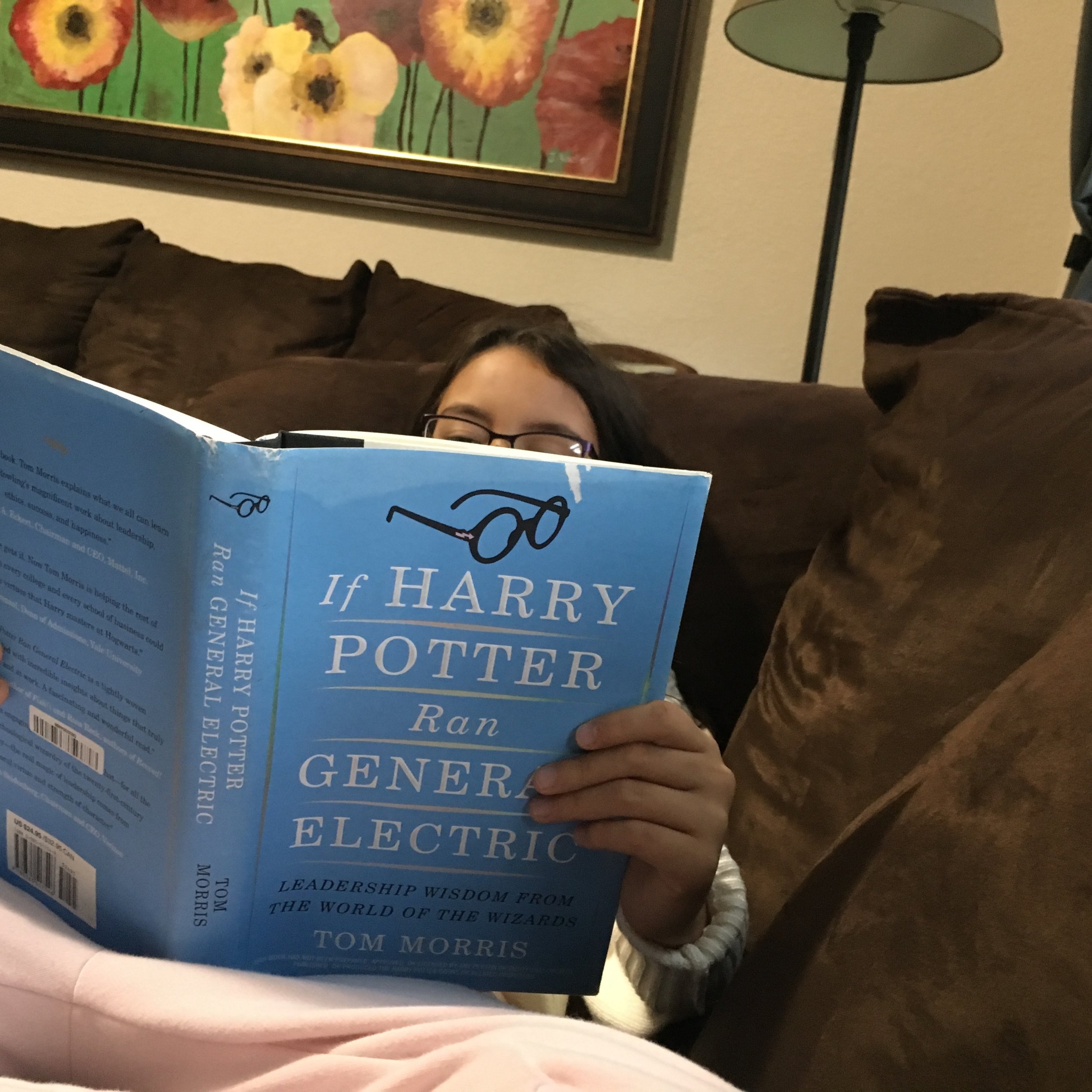
My Favorite Recent Photo: A young lady named Jubilee gets off to a head start in life by diving into some philosophy!

My Favorite Recent Photo: A young lady named Jubilee gets off to a head start in life by diving into some philosophy!

Great new Elizabeth Gilbert book on creative living and the creative experience.

Great new Elizabeth Gilbert book on creative living and the creative experience.

Two minutes on a perspective that can change a business or a life.

So many people have asked to see one of my old Winnie the Pooh TV commercials and I just found one! Here it is:

Long ago and far away, on a Hollywood sound stage, I appeared in two network ads for the wise Pooh, to promote his adventures on Disney Home Videos. For two years, I was The National Spokesman for that most philosophical bear. This is one of the ads. I had a bad case of the flu but I hope you can't tell. A-Choo!

One of my newest talk topics is "Plato's Lemonade Stand: Stirring Change into Something Great." Based on the old adage, "When life hands you lemons, make lemonade," this talk is about how to do exactly that. Inquire for my availability through the c…

One of my newest talk topics is "Plato's Lemonade Stand: Stirring Change into Something Great." Based on the old adage, "When life hands you lemons, make lemonade," this talk is about how to do exactly that. Inquire for my availability through the contact page above! Let's stir something up!

Above is a short video on finding fulfillment in anything you do, that was taped a few years ago. I hope you enjoy it!