Follow @TomVMorris
Retreats
Keynote Talks and Advising
About Tom
Popular Talk Topics
Client Testimonials
Books
Novels
Blog
Contact
ScrapBook
Short Videos
The 7 Cs of Success
The Four Foundations
Plato's Lemonade Stand
The Gift of Uncertainty
The Power of Partnership

Tom Morris

Great Ideas. With Power. And Fun.
Retreats
Keynote Talks and Advising
About Tom
Popular Talk Topics
Client Testimonials
Books
Novels
Blog
Contact
ScrapBook
Short Videos
The 7 Cs of Success
The Four Foundations
Plato's Lemonade Stand
The Gift of Uncertainty
The Power of Partnership
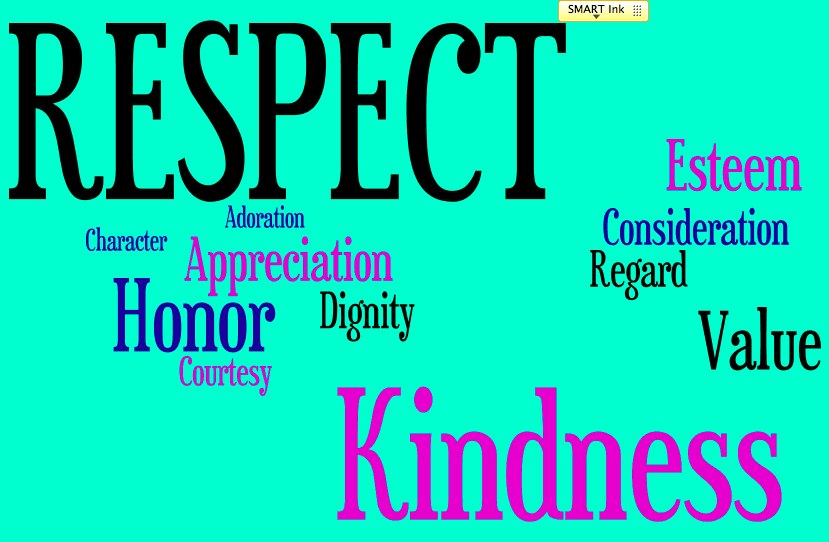
RespectKindness.jpg

Kindness and Respect

What's more important, kindness, or respect? Are they equals, or is one subordinate to the other?

Ok, in case you're thinking "Who cares?" or "What difference does it make?" consider this: When you prioritize kindness in your dealings with others, you may act differently from what you would do if you prioritized respect. For example, many people often withhold what they consider to be difficult truths, or facts that might upset, frighten or worry a friend, or family member, or coworker, in an attempt to be kind. Late in the Harry Potter stories, Albus Dumbledore pretty much admits to Harry that one of his greatest mistakes was to do this and keep certain things from the young boy that he should have told him much sooner.

When we withhold difficult truths from someone who might genuinely want to know them, however hurtful or disturbing they might be, we are not respecting the other person as a mature spirit, or soul, capable of dealing with difficulty. We might say we're doing it to be kind. But we're not showing the ultimate of respect. When we truly respect another person, we tend to be more forthright and honest. We'll also certainly try to do this, to be truthful, with kindness, so it isn't a matter of choosing one rather than the other. But it's a matter of which guides which.

Think for a moment about the relationship of these two qualities, kindness and respect.

Kindness without respect is either paternalism, or is the mere outward appearance of the caring virtue and not its reality, but rather more a form of manipulation, or else a mere cultural habit to smooth out the bumps of human relations.

Respect without kindness can be a sort of formal and almost grudging sense of at least rough and partial equality in some crucial regard. But without the warming influence of true care, it's by itself rather cold.

The ideal, in my thinking, is to pair respect and kindness in our treatment of others, but with respect always being the senior partner, so to speak, or the priority, overall. Kindness is of infinite value, but is always to be felt, and shown, as a way of respecting another person. Respect is, in this perspective, always in the lead. So, if I'm right in this conclusion, and you think that withholding some crucial information from another person is indeed an act of kindness on your part, you should ask yourself whether it also, first and foremost, shows full respect to the other person, as an equally valuable and autonomous decision maker with a right to know anything that would impinge importantly on their lives, and able in their own way to handle their emotions and reactions to the truth.

At least, this is what I got in my last dip into a swimming pool. Sometimes, first thing in the morning, before the heat of the day, I'll get into the pool and move slowly back and forth in three to four feet of water, in a sort of zen walking meditation, and the other morning, while doing so, these were the thoughts that at one point spontaneously emerged. I hope they're right. Because of the priority of my respect for you, dear reader. Thanks for your own reflection on the matter.

PostedJune 26, 2015
AuthorTom Morris
CategoriesAdvice, Attitude, Life, Wisdom
TagsKindness, Respect, Honesty, Truth, Forthrightness, Feelings
Post a comment
Moods.jpg

Moods or Goals?

I think I remember an episode of Seinfeld where Jerry says about something, "I'm not in the mood," and George replies, "Well, you better GET in the mood."

What is a mood? It's something like an emotional inclination, a sensed attraction or repulsion to some activity or thing. Moods come, and they go. And we normally don't think of them as something within our control. You're in a bad mood, or a good mood. It's almost like the weather, we think. It is what it is. And it will pass.

How often do moods determine what you do, or don't do? I suspect that mood plays more of a role in most of our lives than we acknowledge, on first consideration. And it's usually quite subtle. You don't feel like making the call, or writing up the report yet, so you don't. You feel like taking a break, or a walk, and so you do. "I'm not in the mood for any more of this right now" can indicate a lapse of patience, or perseverance, or tolerance, or even a loss of focus that could result from not enough sleep, or not enough breakfast, or too much of something else the night before.

"You're in a real mood today."

"I think I'm in the mood for pizza tonight," or "Mexican" or "Italian." And, here's something interesting: We hardly ever think or say, "I'm in the mood for working really hard today" even though we might be. And we never say, "I'm in the mood for striving consistently toward my goals for the next five months." Why not?

We normally think of moods as temporary, passing, or fickle, and goal oriented behavior as, by definition, rational, continuous, or, ideally, consistent. Moods are about what you feel like, now. Goals are about what you're committed to bring about, eventually.

I've come to think that it's fine to respond to many of our moods, in moderation. It can even be good, if the mood itself is. But life is all about the balance, the dance, the weave and integration of rational and non rational elements - what the Greeks called the Apollonian and the Dionysian (for Apollo, god of rationality and Dionysius, god of the emotional and sensual aspects of life). If we're, overall, goal oriented and have as goals valuable aims that we really believe in, then that will in itself be something of a mood governor.

The wise man or woman's moods can most often be indulged, because they're the result of a life well lived. But the long path to wisdom requires monitoring, and often overruling, the fleeting and often blind demands of mood. On that path, we train our emotions, and our moods, to work in concert with our rational purposes and goals, giving us both boosts and breaks when we need them, and moments of restoration when that's required. We're not to be machines in work or life. And our moods can express our humanity.

What are you in the mood for, today?

PostedApril 28, 2015
AuthorTom Morris
CategoriesAdvice, Life, Wisdom
TagsMoods, Goals, Plans, Rational Planning, Irrational Emotions, Feelings, Tom Morris, TomVMorris
Post a comment
Deer.jpg

Animals: Our Mystical Colleagues

In this week’s American Scholar, in a column on books that have influenced people's lives, a weekly piece called “Reading Lessons,” Sy Montgomery, the author of 20 books on animals and nature, discusses a book he once read that was formative for his career. And he quotes and comments:

“We need another and a wiser and perhaps a more mystical concept of animals,” Henry Beston wrote in his 1928 classic, The Outermost House. “For the animal shall not be measured by man. In a world older and more complete than ours, they move finished and complete, gifted with extensions of the senses we have lost or never attained, living by voices we shall never hear.”

This week’s writeup is on a book subtitled “A Year of Life on the Great Beach of Cape Cod.” Montgomery goes on to say:

Beston brought to his observations of the natural world all of his talents—not just his intellect, but his emotion and intuition as well. His book is, to me, a blueprint for how to open your soul to creation, how to see animals in a new, humbling, and revelatory way. 

A lady has helped us manage our home for nearly twenty years. Our dogs know when she leaves her own house across town to come to ours. Our cat has trained us in various ways to do what he wants us to do, and when he wants us to do it. How much do animals understand? What’s their thought and feeling world like? When I ponder this intensely enough, it makes me want to be a vegetarian. We’ve even had a group of wild deer years ago show that they knew when the kids would come home from school each day, and gather behind our house to wait for their daily afternoon treat of dried corn. Who was their timekeeper? Who called the meeting? One day, when we were late, the boldest of the deer, a young one, came across to our back deck, and walked up the steps to peer into the door, presumably to find out what was delaying things.

I’m sure you have your own stories. What is our place in nature, really? How much could we benefit and learn by opening ourselves to new insights? What do we need to learn from our mystical colleagues, the animals?

Maybe you should ask your dog or cat.


PostedApril 6, 2015
AuthorTom Morris
CategoriesLife, nature, Wisdom
TagsAnimals, Nature, Mysticism, The Mind, Thoughts, Feelings, Deer, Dogs, Cats, Tom Morris, TomVMorris
Post a comment
Joy.jpg

Joy

Joy. It's a big concept bottled up in a little word. It's a big thing available to each of us.

One of the major surprises I had when I was studying the stoic philosophers, Epictetus, Seneca, and Marcus Aurelius, years ago, in preparation for my book The Stoic Art of Living, was that they were so different from what 'stoic' and 'stoicism' has come to mean in the popular mind. Most people think that being stoic is all about not feeling anything - that it's almost like philosophical anesthesia. But it's not.

The stoics wanted to help us to keep from being disturbed by fleeting emotions so that our natural joy could rise to the surface and be experienced and lived. Negative emotions like resentment, and bitterness, and anger can obviously prevent an experience of joy. But the additional insight of the stoics was that unreasonably strong positive emotions could, too, like that "irrational exuberance" that can come from hearing what we think is great good news. When we get too worried, or too excited, we can become unhinged from reality and our own inner poise and healthiness. The stoics seemed to think that if we could avoid such unsettling emotions, negative or positive, we could become peaceful enough in our surface consciousness as to allow a deep joy that is our birthright to bubble up into our souls and truly bless us.

Joy is not the same thing as happiness. It's not giddiness. It's not mere pleasantness. It's deeper and higher and more abiding. Most of us have felt it, at some time, if only in a momentarily taste or touch of it. But some seem to live it enduringly. Do you have it in your life right now? If not, why not? What's getting in the way? What obstacle to your joy could be removed or eliminated?

At its best, therapy removes obstacles to joy. At its best, self examination prepares the soil for joy.

What gives you joy? Can you integrate more of that into your life this week? Or even today?

It's meant to be yours. And it can enhance everything else you feel, and do.

PostedNovember 25, 2014
AuthorTom Morris
CategoriesLife, Advice, Wisdom, Performance, Philosophy
TagsJoy, Happiness, Feelings, Stoic Philosophy, Seneca, Marcus Aurelius, Epictetus, Tom Morris, TomVMorris, The Stoics, The Stoic Art of Living
Post a comment

Some things that may be of interest. Click the images below for more!

First up: Tom’s new Silver Anniversary Edition of his hugely popular book on The 7 Cs of Success!

The New Breakthrough Guide to Stoicism for our time.

Tom's new book, out now!
Finally! Volume 7 of the new series of philosophical fiction!

Finally! Volume 7 of the new series of philosophical fiction!

Plato comes alive in a new way!

Plato comes alive in a new way!

On stage in front of a room full of leaders and high achievers from across the globe.

On stage in front of a room full of leaders and high achievers from across the globe.

My Favorite Recent Photo: A young lady named Jubilee gets off to a head start in life by diving into some philosophy!

My Favorite Recent Photo: A young lady named Jubilee gets off to a head start in life by diving into some philosophy!

Great new Elizabeth Gilbert book on creative living and the creative experience.

Great new Elizabeth Gilbert book on creative living and the creative experience.

Two minutes on a perspective that can change a business or a life.

So many people have asked to see one of my old Winnie the Pooh TV commercials and I just found one! Here it is:

Long ago and far away, on a Hollywood sound stage, I appeared in two network ads for the wise Pooh, to promote his adventures on Disney Home Videos. For two years, I was The National Spokesman for that most philosophical bear. This is one of the ads. I had a bad case of the flu but I hope you can't tell. A-Choo!

One of my newest talk topics is "Plato's Lemonade Stand: Stirring Change into Something Great." Based on the old adage, "When life hands you lemons, make lemonade," this talk is about how to do exactly that. Inquire for my availability through the c…

One of my newest talk topics is "Plato's Lemonade Stand: Stirring Change into Something Great." Based on the old adage, "When life hands you lemons, make lemonade," this talk is about how to do exactly that. Inquire for my availability through the contact page above! Let's stir something up!

Above is a short video on finding fulfillment in anything you do, that was taped a few years ago. I hope you enjoy it!