Follow @TomVMorris
Retreats
Keynote Talks and Advising
About Tom
Popular Talk Topics
Client Testimonials
Books
Novels
Blog
Contact
ScrapBook
Short Videos
The 7 Cs of Success
The Four Foundations
Plato's Lemonade Stand
The Gift of Uncertainty
The Power of Partnership

Tom Morris

Great Ideas. With Power. And Fun.
Retreats
Keynote Talks and Advising
About Tom
Popular Talk Topics
Client Testimonials
Books
Novels
Blog
Contact
ScrapBook
Short Videos
The 7 Cs of Success
The Four Foundations
Plato's Lemonade Stand
The Gift of Uncertainty
The Power of Partnership
socratesjesus-1080x650.jpg

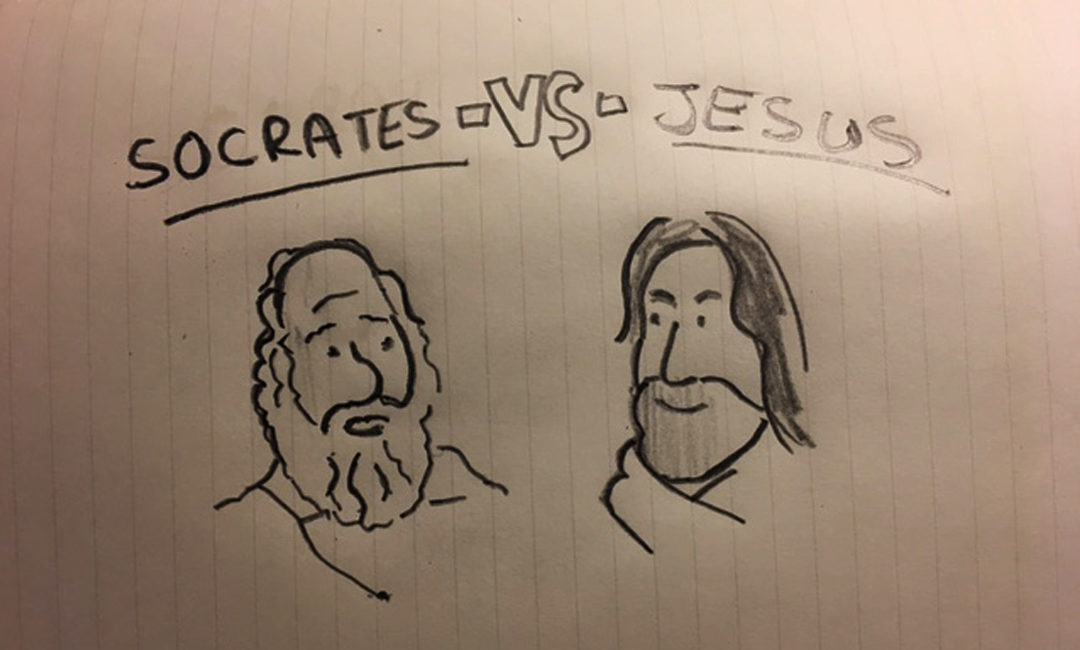
Socrates and Jesus

I always had my Intro to philosophy students read Plato's Apology (The Greek word means "Defense"), an account of the trial of Socrates, during the first week of our class, because of the portrait contained there of a man wholly dedicated to the life of the mind. Offered the chance to live and go free if he would just stop doing philosophy on the city streets, Socrates said, "As long as I live and breathe, I shall never cease to philosophize." My students were stunned to see an adult, as they would say, committed to a mission, so imbued with a purpose, that he would willingly go to his death rather than recant or change his ways. Such determination! Such passion!

Socrates was intensely committed to truth. And he died for that commitment. Jesus, by contrast, was fully committed to love, and he died for that.

I would suggest that you can be committed to truth without an equal felt commitment to love and compassion, but that you can't really and fully be committed to love without also thoroughly honoring truth. So Socrates had, perhaps, a big part of life's puzzle, but not the whole thing.

An old professor, an orthodox Jewish Rabbi who taught philosophy of science, once said to me, "Christianity is all about what you believe, while Judaism is all about what you do." Well. It's not quite so stark, is it? But I get what he was saying. Since Jesus was a Jew, and so were most of the early Christians, maybe we should dig a bit deeper. Perhaps Christianity is more about an attitude and commitment of the heart than about either the beliefs or the actions that might properly attend that attitude and commitment. We do cherish our beliefs and opinions. We're willing to fight for them. Maybe we should cherish God and his creatures more.

There's this other contrast between Socrates and Jesus. Socrates could come across as arrogant. Jesus, strangely, despite alluding repeatedly to his own literal divinity, seemed to live and preach humility. The trick in life is to have all the right commitments, but with all the right attitudes.

The Greeks didn't appreciate the deep power of humility. Christian theologians have, because of Jesus. In the end, truth may indeed be worth dying for. But it's love that's worth living for.

PostedNovember 21, 2017
AuthorTom Morris
CategoriesAttitude, Faith, Wisdom
TagsSocrates, Jesus, Truth, Love
Post a comment
EmptyTomb.jpg

The Empty Tomb and Plato's Cave

Today I came across a vivid Easter Sunday representation of the Empty Tomb of Jesus, as described in the Gospels. In this depiction, as viewers, we’re inside the tomb and can see that it’s essentially underground and dark, and yet an attractive bright light draws our attention beyond the now open door. Right away some thoughts came to me.

The Christian diagnosis of the human condition turns on a Greek word, hamartia, that’s most often translated as “sin” but that in the original language meant “falling short” or “missing the mark,” as in the case of an arrow shot toward a bullseye failing to make it to the target, falling short, and thus missing the mark.

The Christian claim is that we all naturally fall short of our proper ideal. We fall short of what we’re shooting for as human beings who deep down want a good, meaningful, successful, fulfilling and loving life that makes its best potential impact on the world. We’re all somehow metaphorically buried in a tomb of mistakes and illusions, and the gospel claim is that there is one who has escaped that tomb, leaving it empty, and has invited us all out of it as well, while actually also empowering us to leave it and move into the light that awaits us.

Plato had this image of a cave. He suggested that we’re all like men chained in an underground cave, watching shadows dance across its wall and mistaking those shadows as realities. We fear them or we desire them. We want to chase them or run from them. They monopolize our attention and define our lives. But they aren’t the realities among which we’re meant to live.

The philosopher, Plato tells us, is the person who breaks his chains and leaves the cave, ascending into the light of the true sun outside, to see the realities within which we’re ideally meant to live. But then, this philosopher descends back into the cave to spread the word to the other captives that they, too, can escape these illusions and the darkness that envelopes their lives. The light awaits them all.

The tomb from which Jesus escaped can be viewed as symbolically representing that same cave, where we're cut off from the true light and life that we’re meant to have. The Easter message is that the one who left that tomb empty invites us all to leave the realm of illusion and get out where we can hit the intended mark, following him into the light.


PostedMarch 27, 2016
AuthorTom Morris
CategoriesFaith, Wisdom, Religion, Philosophy
TagsEaster, Empty tomb, Jesus, Plato, Plato's Cave, Sin, Illusion, Tom Morris, TomVMorris
Post a comment
StainedGlass.jpg

A Sunday Reflection on Religion and Faith

I've been away from blogging for a couple of months. I first took a break in honor of the holidays. And then I got busy editing my new series of novels for a quicker than normal schedule of publication. I hope you've already seen the prologue to the series, the book The Oasis Within. It's been out for a few months. And just this week, the first numbered volume in the series Walid and the Mysteries of Phi, The Golden Palace, appeared on Amazon. In two or three months, I hope to have volume two out as well, The Stone of Giza. 

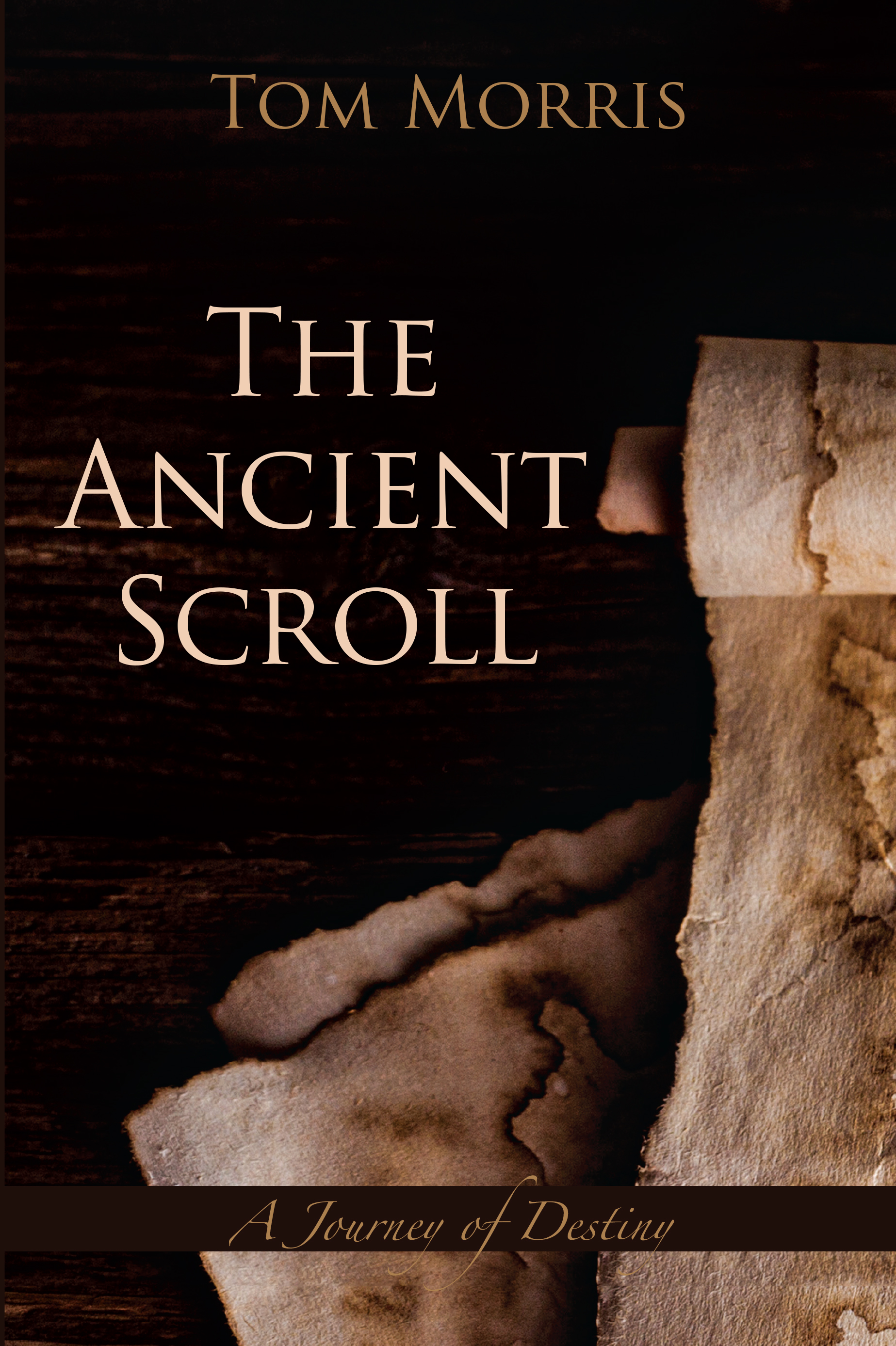
I'm almost done in my editing of the eight books I've already written for the series. And today, Sunday, I want to share a passage I just edited. Even though the books are set mainly in Egypt, certain things happen in faraway places, like Tunisia, or Berlin, or New York City. This passage comes from a story line in numbered Book Seven, The Ancient Scroll. The setting is New York City in 1935 at a Methodist Church. The minister, Bob Archdale, is working on a sermon. We get a chance to see into his head and heart as he makes notes. I hope you enjoy this passage.

Bob at the moment was in his office preparing his sermon for the next morning. He was planning to talk on the nature of faith and how it’s more about perception and values and commitment than just belief. He had decided to use as his biblical text the famous meeting at night between Jesus and the Jewish Rabbinical leader Nicodemus, as reported in the Gospel of John, chapter three. At a time when most of the religious establishment either disliked or feared Jesus, this prominent teacher had gone to see him at night, when, presumably his visit would not be public knowledge. He approached the controversial figure and actually said, “Teacher, some of us know that you were sent by God, because no one could do the things you do without divine support.” And then Jesus, rather than acknowledging the scholar’s rare open-minded reasoning and remarkable belief, says something instead that can be very puzzling on more than one level. His words in response were: “Truly, truly, I say to you, unless a man is born again, he cannot see the kingdom of God.” Nicodemus is of course perplexed and says, “How can anyone return to the womb and be born a second time?” And then Jesus answers in such a way as to indicate that his entire ministry and mission aren’t primarily about reasoning and belief, but personal transformation into what’s really a new life, with new perceptions, values, and commitments.

Bob knew that, at almost any time, many of the people in his church were showing up, week-to-week, to make a deal with God. They would believe whatever they needed to believe, and do whatever they needed to do, in order to gain divine favor and everlasting life. Some were likely just hedging their bets and maybe living out the famous Agnostic’s Prayer: “Oh God, if there is a God, please save my soul, if there is a soul.” They were there in an effort to perhaps improve their lot and maybe defeat death. But God wanted them there to defeat spiritual blindness and deafness and idolatry and selfishness. He wanted to see them born anew, raised from the death of alienation and separation and selfishness to a new life of union with him and each other. He wanted an eternal life for them now, which was more about quality than it was about quantity. 

He really wanted to get this point across to everyone who showed up for the service. The faith they were being called to embrace is about new life, new values, and new commitments lived all day, every day. He wanted them to understand that when the insistent felt needs of the untutored ego can be released, its real needs can be met. And then, we can experience the genuine power of humility, compassion, and deep faith. The reverend was hoping to get all this across in a persuasive and illuminating way, so that at least many of the members of his congregation could perhaps see the issues of faith in a new and richer light.

When people approach religion for what they can get out of it, they ironically make it nearly impossible to get the most out of it. It becomes a tool—an instrument the ego is merely using to enhance its own interests, whether those interests are healthy or not. That’s why we’ve had so much war and violence and oppression in the name of religion throughout history. These things have nothing to do with true spirituality, but are perversions or deformations of what faith and the quest of the spirit are supposed to be all about. We often come across people pursuing their own greed, with their own ambitions, and superstitiously seeking to assuage their worst fears under a false patina of religious language, ritual, and sentiment. And this wasn’t just a danger for other times and places, Archdale knew, but it’s a temptation for any of us unless we can come to a true understanding of spiritual things.
 

PostedFebruary 14, 2016
AuthorTom Morris
CategoriesLife, Attitude, Philosophy, Wisdom, Religion, Faith
TagsFaith, Commitment, Belief, Religion, Superstition, Agnostic, Christianity, Christ, Jesus, Nicodemus, Gospel of John, Tom Morris, The Oasis Within, The Golden Palace, Walid and the Mysteries of Phi, Philosophy
Post a comment

Some things that may be of interest. Click the images below for more!

First up: Tom’s new Silver Anniversary Edition of his hugely popular book on The 7 Cs of Success!

The New Breakthrough Guide to Stoicism for our time.

Tom's new book, out now!
Finally! Volume 7 of the new series of philosophical fiction!

Finally! Volume 7 of the new series of philosophical fiction!

Plato comes alive in a new way!

Plato comes alive in a new way!

On stage in front of a room full of leaders and high achievers from across the globe.

On stage in front of a room full of leaders and high achievers from across the globe.

My Favorite Recent Photo: A young lady named Jubilee gets off to a head start in life by diving into some philosophy!

My Favorite Recent Photo: A young lady named Jubilee gets off to a head start in life by diving into some philosophy!

Great new Elizabeth Gilbert book on creative living and the creative experience.

Great new Elizabeth Gilbert book on creative living and the creative experience.

Two minutes on a perspective that can change a business or a life.

So many people have asked to see one of my old Winnie the Pooh TV commercials and I just found one! Here it is:

Long ago and far away, on a Hollywood sound stage, I appeared in two network ads for the wise Pooh, to promote his adventures on Disney Home Videos. For two years, I was The National Spokesman for that most philosophical bear. This is one of the ads. I had a bad case of the flu but I hope you can't tell. A-Choo!

One of my newest talk topics is "Plato's Lemonade Stand: Stirring Change into Something Great." Based on the old adage, "When life hands you lemons, make lemonade," this talk is about how to do exactly that. Inquire for my availability through the c…

One of my newest talk topics is "Plato's Lemonade Stand: Stirring Change into Something Great." Based on the old adage, "When life hands you lemons, make lemonade," this talk is about how to do exactly that. Inquire for my availability through the contact page above! Let's stir something up!

Above is a short video on finding fulfillment in anything you do, that was taped a few years ago. I hope you enjoy it!