Follow @TomVMorris
Retreats
Keynote Talks and Advising
About Tom
Popular Talk Topics
Client Testimonials
Books
Novels
Blog
Contact
ScrapBook
Short Videos
The 7 Cs of Success
The Four Foundations
Plato's Lemonade Stand
The Gift of Uncertainty
The Power of Partnership

Tom Morris

Great Ideas. With Power. And Fun.
Retreats
Keynote Talks and Advising
About Tom
Popular Talk Topics
Client Testimonials
Books
Novels
Blog
Contact
ScrapBook
Short Videos
The 7 Cs of Success
The Four Foundations
Plato's Lemonade Stand
The Gift of Uncertainty
The Power of Partnership
BarberShop.jpg

Flannery O’Connor and The Limits of Political Reasoning

In the early 1940s, a young southern writer by the name of Flannery O’Connor spun a tale about an extremist politician and his base that resonates deeply today.

An election campaign is on for the governorship of a southern state. Every time the mild mannered college teacher Rayber goes to get a shave or a haircut, the men who work in the local barbershop are talking and laughing about their favorite candidate, the wildly racist strongman, Mr. Hawkson, known as “Hawk,” and they often repeat with enthusiasm something outrageous he’s just said at a public rally.

Hawk’s campaign is all bluster and insults. He’s got pet-names for his opponents, diminishing “effeminate” epithets that his followers relish and love to repeat. The head barber at one point says that all his talks are “killeroos,” as he recounts to the roomful of chortling and celebrating men some of their candidate’s most recent racist statements. Rayber is shocked that they’re speaking so crudely while quiet George, a young African American man, sweeps the floor of the shop toward the back. The professor has to speak up.

“A great many people,” Rayber said, “consider Hawk a demagogue.” He wondered if George knew what demagogue meant. He should have said “lying politician.”

“Demagogue!” The barber slapped his knee and whooped. “That’s what Hawk said!” he howled. “Ain’t that a shot! ‘Folks,’ he says, ‘them Mother Hubbards says I’m a demagogue.’ Then he rears back and says sort of soft-like, ‘Am I a demagogue, you people?’ And they yells, ’Naw, Hawk, you ain’t no demagogue!’ And he comes forward shouting, ‘Oh yeah I am, I’m the best damn demagogue in this state!” And you should hear them people roar! Whew!”

Rayber is stunned. He doesn’t know what to say. There are so many issues at stake in this election. There are too many obvious things deeply wrong about this man, Hawk. The progressive but timid college teacher can’t figure out where to start. He wishes the barber would read some things. The man says he doesn’t have to read nothing. All he has to do is think, using horse sense. No big words are going to make any difference. Doesn’t Rayber know that Hawk is gonna keep those other people in their place and make sure everybody like him and the teacher make more money if he’s elected? Rayber tries to point out that a little extra money isn’t going to mean anything if the state collapses under the weight of Hawk’s total incompetence and crazy beliefs. So he vows to defend his own sensible candidate some time soon in the barbershop and enlighten all of them. The barbers laugh more and say that he just can’t use the phrase ‘goodgovermint.’ That’s not allowed, they snicker.

Rayber goes home and writes a two page statement about the vast differences between the candidates. At first, it’s hard. The real issues are so obvious. Where should he begin? How do these men not see such things already? He laboriously writes out what’s wrong with Hawk and what’s right about the clearly better candidate, the reasonable and progressive Darmon. He then takes this little two page speech to a friend, the philosophy professor Jacobs, explains what’s going on, and reads it aloud to practice and get some feedback. The philosopher says, simply, “I never argue.” Rayber insists: But what if you’re right? “I never argue,” Jacobs repeats, knowing the futility of what his friend is attempting.

Our hero goes back to the barbershop and reads his treatise aloud, hoping to refute and reform these men, using the real issues and clear reason. They laugh and laugh and laugh. In the end, he punches the barber and runs out of the shop.

The seventeenth century French scientist Blaise Pascal, as well as the prominent eighteenth century British philosopher David Hume, both understood that, for most people, reason is the servant of passion and can rarely undermine or overturn its commitments. Emotion trumps all. So when a political candidate appeals to the basest and most fundamental fears, resentments, and sources of personal bitterness, no amount or quality of reasoning can possibly make a difference. You either walk away, or someone throws a punch.

It’s a sad commentary on the human condition. And in this classic story, “The Barber,” Flannery O’Connor anticipated well what’s going on in our current presidential election. She captures in the character of Rayber the total confidence of progressives in being right, the accompanying astonishment that anyone could possibly support someone like Hawk, and our often Quixotic approach to any attempt at explaining what’s what and turning things around.

Aristotle believed that politics is about how best to live well together. As such, in principle, political discussion should be among the most ennobling forms of discourse. When I recently suggested this during a breakfast in New York City at a table of corporate leaders overlooking the Statue of Liberty, everyone laughed so suddenly and loudly I thought a few might choke on their eggs. There can clearly be a huge gap between theory and practice. And it's one we're all experiencing quite vividly right now. And yet, despite Rayber’s ratiocinative failure in the story, and my own experience of strict limits in similar efforts throughout the current campaign, I remain stubbornly convinced that cool and sensible reason has a role to play. Or else, our democracy is doomed. And if you happen to disagree, please don’t tell me. I’d hate for somebody to have to get punched.


PostedAugust 25, 2016
AuthorTom Morris
CategoriesAdvice, Life, Wisdom
TagsFlannery O'Connor, Tom Morris, TomVMorris, Politics, Donald Trump, Trumpism, Liberals, Conservatives, Philosophy, Reason, Logic, Emotion
Post a comment
Philosopherplate.jpg

Emergency Wisdom

A car in front of me on a major street today caught my attention. It was a white Ford Explorer tricked out with orange stripes like an emergency vehicle. And it also had round reflectors built into the tail gate. Or were they flashing lights? Above the license plate, there was a very official looking sign, where EMT or POLICE might otherwise be. It said CHAPLAIN.

I couldn't help but be jealous. If I could just have one like that but with the sign instead saying PHILOSOPHER. Can you imagine? I sure could. I'd be driving down the road and the radio would squawk. "Logic Emergency on Front Street. All Philosophers Respond." I'd hit the lights, and of course the siren, and the gas. Out of the way, everybody. Sage coming through. I'd screech up to the address and dash out of the car. City police would be holding the door open for me. I'd run up the stairs two at a time, and there it would be: a guy splayed out across his desk, with his computer flashing some sort of error message. A detective would be standing there, and he'd look up at me and say, "It's a conceptual catastrophe."

I'd say, "What have we got?"

The gumshoe would reply. "I think we need some Aristotle."

I'd look more closely and say, "No! It's too late for that! Only Kierkegaard will do!" And, with a Leap of Faith, I'd use just the right aphorism and summon the guy back to life, and conceptual clarity. A gasp would go through the room, and I'd suddenly notice all the other people huddled over at the side. They'd start cheering and clapping. Someone would run up to me and gush appreciation and words of praise for what I had just accomplished.

"No Ma'am. No need to thank me. Just another day for a hard working philosopher."

As I came out of my stoplight reverie, I realized why things don't work like this. Oddly, most people go in search of wisdom only when they confront a catastrophe, or disaster that has arisen from unwise decisions. Wanting to avoid the flames of irrational self immolation, they desperately look for insight. And they might find a piece of wisdom here or there that can save them. But philosophy is much better as a powerful preventative medicine than as last minute emergency treatment. It's better applied in small doses throughout our days and decisions. Then, we can most likely avoid cataclysmic personal disasters, at least of the existential sort.

So: Don't wait for trouble. Seek wisdom now. Remember, I don't really have the flashing lights and siren. It was just in my imagination. Then again, the chaplain in town apparently does.

PostedApril 12, 2015
AuthorTom Morris
CategoriesAdvice, Life, Philosophy
TagsWisdom, Philosophy, Problems, Disasters, Insight, Health, Logic, Kierkegaard, Aristotle
Post a comment

Some things that may be of interest. Click the images below for more!

First up: Tom’s new Silver Anniversary Edition of his hugely popular book on The 7 Cs of Success!

The New Breakthrough Guide to Stoicism for our time.

Tom's new book, out now!
Finally! Volume 7 of the new series of philosophical fiction!

Finally! Volume 7 of the new series of philosophical fiction!

Plato comes alive in a new way!

Plato comes alive in a new way!

On stage in front of a room full of leaders and high achievers from across the globe.

On stage in front of a room full of leaders and high achievers from across the globe.

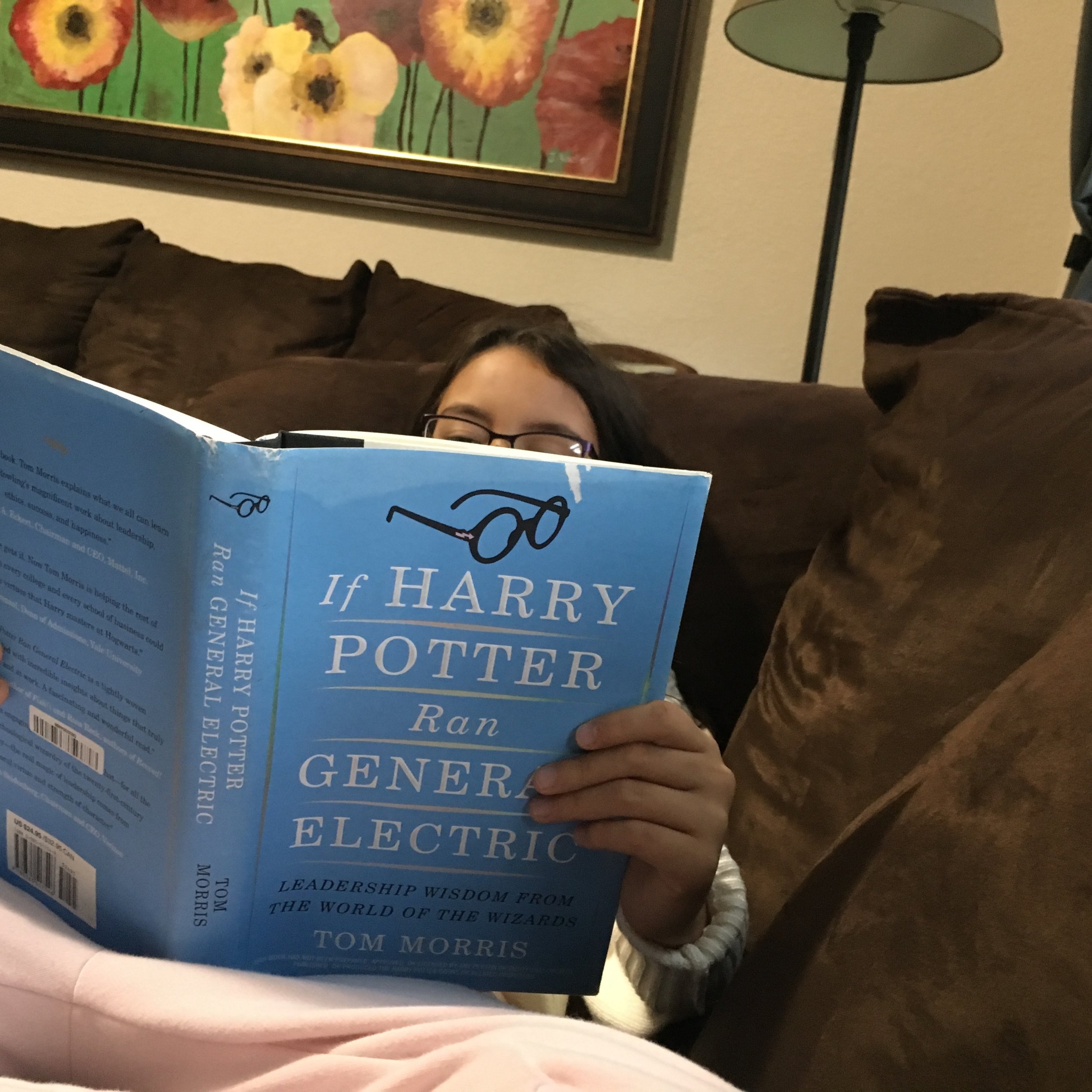
My Favorite Recent Photo: A young lady named Jubilee gets off to a head start in life by diving into some philosophy!

My Favorite Recent Photo: A young lady named Jubilee gets off to a head start in life by diving into some philosophy!

Great new Elizabeth Gilbert book on creative living and the creative experience.

Great new Elizabeth Gilbert book on creative living and the creative experience.

Two minutes on a perspective that can change a business or a life.

So many people have asked to see one of my old Winnie the Pooh TV commercials and I just found one! Here it is:

Long ago and far away, on a Hollywood sound stage, I appeared in two network ads for the wise Pooh, to promote his adventures on Disney Home Videos. For two years, I was The National Spokesman for that most philosophical bear. This is one of the ads. I had a bad case of the flu but I hope you can't tell. A-Choo!

One of my newest talk topics is "Plato's Lemonade Stand: Stirring Change into Something Great." Based on the old adage, "When life hands you lemons, make lemonade," this talk is about how to do exactly that. Inquire for my availability through the c…

One of my newest talk topics is "Plato's Lemonade Stand: Stirring Change into Something Great." Based on the old adage, "When life hands you lemons, make lemonade," this talk is about how to do exactly that. Inquire for my availability through the contact page above! Let's stir something up!

Above is a short video on finding fulfillment in anything you do, that was taped a few years ago. I hope you enjoy it!