Follow @TomVMorris
Retreats
Keynote Talks and Advising
About Tom
Popular Talk Topics
Client Testimonials
Books
Novels
Blog
Contact
ScrapBook
Short Videos
The 7 Cs of Success
The Four Foundations
Plato's Lemonade Stand
The Gift of Uncertainty
The Power of Partnership

Tom Morris

Great Ideas. With Power. And Fun.
Retreats
Keynote Talks and Advising
About Tom
Popular Talk Topics
Client Testimonials
Books
Novels
Blog
Contact
ScrapBook
Short Videos
The 7 Cs of Success
The Four Foundations
Plato's Lemonade Stand
The Gift of Uncertainty
The Power of Partnership
telescope.jpg

Our Emotional Telescope

In light of the Paris events of late, I thought my friends might benefit from a short passage in my new book, The Oasis Within. Here it is.

The old man asked him, “Have you ever come across a telescope?”

“Yes, once, in the village, years ago. There was a man, a visitor, with a small telescope that you could hold in your hands, and he let me look through it. Things that were far away suddenly seemed close. It was like magic.”

The old man said, “When I was a lot younger than you, a kind neighbor gave me such a telescope as a gift. I imagine it was much like the one you held. I used it to look all around me. I remember I once stood in the middle of the village with it. I could see people in their houses, men at a distance, and animals far down the road. I discovered something important that day.”

“What was it?”

“When I peered through the small end like everyone does, it made things look bigger and closer. But then, I turned the telescope around in my hands. I have no idea what made me think to do that. I put it up to my eye again and gazed this time through the big end. I was so amazed! It made everything around me look much smaller and far away. Large men seemed little. Tall trees were shrunken into tiny images of themselves.” He smiled at the memory.

The boy said, “I never looked into the big end like that.”

“Well, we all have in our minds something like an inner telescope for our thoughts and feelings. When things seem bad, we automatically view them through the small end of our telescope, like most people do, and then those things look much bigger and closer and worse than they really are. That’s what makes us frightened or worried. But, just like a real telescope, we can turn it around, and look through the other end. That will make our problems appear smaller. It will reduce in our minds and hearts the perceived size of what we face. Then we can feel bigger and more powerful. Often, that’s just what we need.”

“Wow. That makes sense. It’s a new way of thinking.”

Yes it is. So, when you’re afraid or worried or sad, think of your inner telescope. Are you looking through the end that almost everyone uses? Are you making things seem bigger and more imposing than they really are? You have the power to turn the telescope around and gaze through the other end. You’ll then see the difficulties as smaller, and you’ll feel better, and stronger.”

The boy was impressed, and pleased. “I like this idea. It’s a good image. And really, it’s not something I’ve ever thought about.”

The old man smiled again. “Here’s the ultimate secret, my boy. Once you’ve mastered this trick with your mind and understand the power of perspective, once you’ve grown enough in wisdom and knowledge of the world, you can put your inner telescope down and simply look at things as they are. And you’ll know. Most things in reality are no bigger than we can handle. And that’s important to remember.”


PostedNovember 18, 2015
AuthorTom Morris
CategoriesAdvice, Life, Wisdom
Tagsemotions, stress, tom morris, TomVMorris
Post a comment

Patience and Waiting

Last time, we began to examine the view that patience is a virtue, by looking at the strengths of patience and the undesirable elements of impatience.

The patient person:

1. Subjectively has inner peace, confidence, and poise

2. Objectively has a calm demeanor and waits, when needed

The impatient person:

1. Subjectively has eagerness, anxiety, frustration, and even anger

2. Objectively has an action orientation, determination, persistence, but can also express frustration and anger

The subjective side of impatience is mostly negative. The objective side looks mostly positive, aside from the negative expression of unpleasant emotions. 

And yet, consider those positive qualities that an impatient person can possess, like a tendency to take action and persist. They can have unfortunate implications in certain situations.  An impatient person may act when waiting is better, and mess up everything in the process.  But then, a patient person may wait when acting is better, and miss an important opportunity in the process. So, what’s it best to be: patient or impatient? 

A virtue, by the way, is by definition a quality or habitual disposition that it’s always good to have. And haven’t we just seen that there are circumstances in which patience and impatience each are bad?

No, actually, not at all. Look again at our characterization of patience, subjectively and objectively. There are no circumstances in which those qualities would be bad to have. The patient person can wait when needed. The only negative sort of example we were able to give assumed waiting when it was both unneeded and counter-productive. The patient person can even share all the objectively positive qualities of the impatient go-getter: that action orientation, the persistence, determination, and even creativity in trying new things in pursuit of a goal. She just does all that with an inner calm that strengthens her and that the impatient person lacks.

Patience does look like a virtue. And impatience looks like a vice. Who needs all that negative emotion? But remember Aristotle's understanding of a virtue. Every virtue has two corresponding vices, a "too little" and a "too much." Connected to patience, the too little is obviously impatience. What's the too much? Clearly the tendency to wait even when waiting is not good, the tendency to simply quit and hope when beneficial action is still needed. We might jokingly say that such a person is "too patient," but that wouldn't literally be true, if patience is indeed a virtue and involves waiting only when it's needed.

So, in the end the only real puzzle is determining when it’s best to wait, and when it’s best to press ahead. And, as I mentioned last time, that requires discernment or wisdom. But more can be said as well. If you're in a situation where you're trying to make something happen, and it's not going as well or quickly as you wanted, you need to know whether to wait a bit longer or to act anew to push things along. You need to ask questions like these:

The Waiting Check List

1. Have I already done all I reasonably think I can do?

2. Is it even a little bit likely that further action would be counterproductive or alienating to others whose goodwill or assistance I might need?

3. Could my timetable itself be unreasonable, and based on insufficient considerations?

4. Am I possibly operating under any false assumptions about the need for things to happen now?

5. Could waiting patiently for a while allow me to do or develop other good things that impatient action would prevent?

If you get at least one "Yes" here, you have an indication that patient waiting might be good. The more affirmative answers, the more likely you should be patient and wait. For at least a while. But we always have to do cost/benefit analyses along the way. Waiting for a day or a week or a month can be desirable in situations where waiting a year or three years may not be, and could even be counterproductive. The more you know about your situation and what you're trying to make happen, the better you'll be able to do such analyses. But always ask yourself questions like these, above. And try to avoid the negative subjectives involved in the impatient mindset. A patient person can act with persistence, determination, and creativity, pushing and reminding, but without the detrimental emotions tied up with impatience. He or she just knows how to release and relax, and maintain the peaceful being that is behind masterful doing over the long run.

Patience, properly understood, can be an important virtue in an active life.

PostedNovember 10, 2014
AuthorTom Morris
CategoriesAdvice, Attitude, Life, Business, Performance
TagsPatience, Impatience, anxiety, stress, peace, calm, anger, virtue
Post a comment

Some things that may be of interest. Click the images below for more!

First up: Tom’s new Silver Anniversary Edition of his hugely popular book on The 7 Cs of Success!

The New Breakthrough Guide to Stoicism for our time.

Tom's new book, out now!
Finally! Volume 7 of the new series of philosophical fiction!

Finally! Volume 7 of the new series of philosophical fiction!

Plato comes alive in a new way!

Plato comes alive in a new way!

On stage in front of a room full of leaders and high achievers from across the globe.

On stage in front of a room full of leaders and high achievers from across the globe.

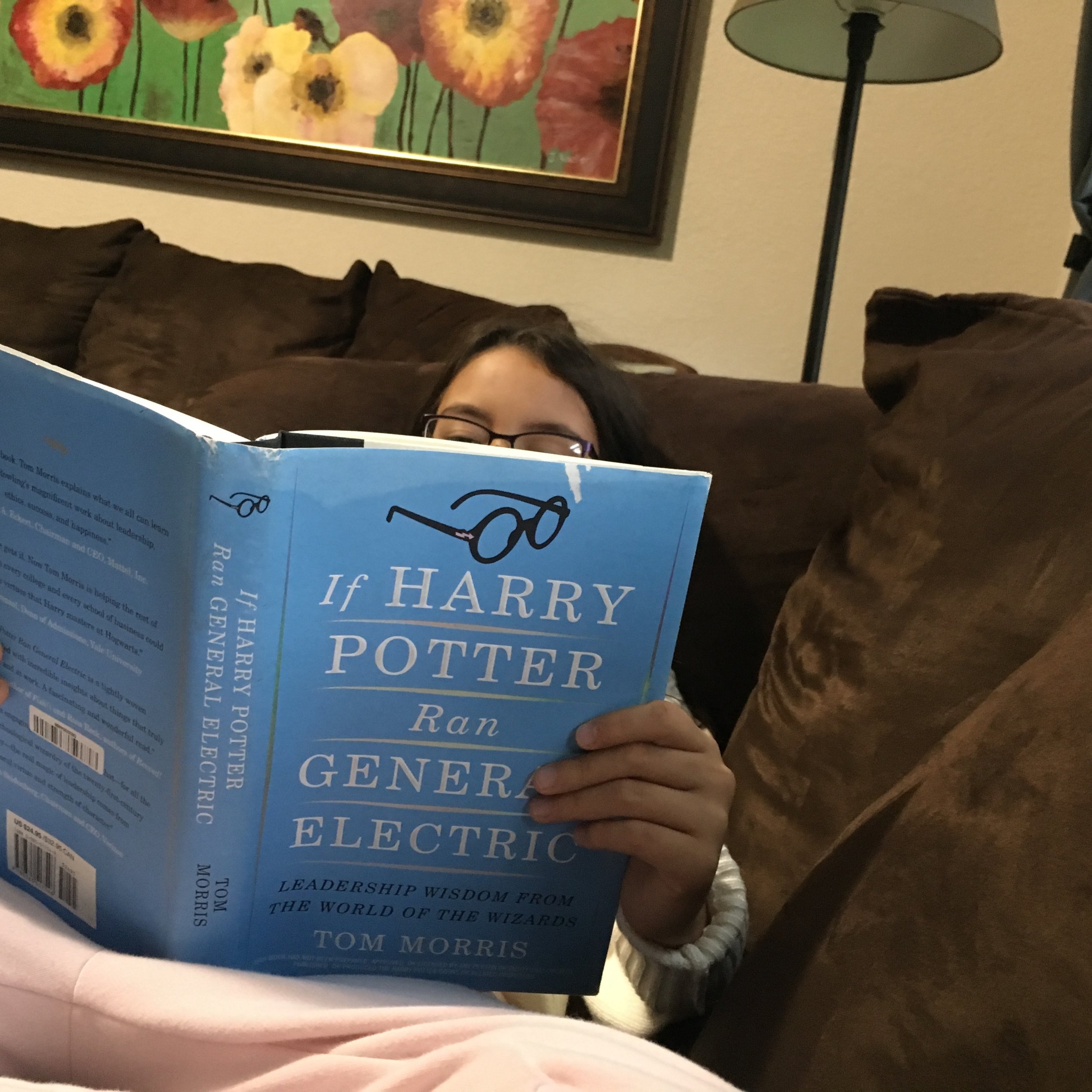
My Favorite Recent Photo: A young lady named Jubilee gets off to a head start in life by diving into some philosophy!

My Favorite Recent Photo: A young lady named Jubilee gets off to a head start in life by diving into some philosophy!

Great new Elizabeth Gilbert book on creative living and the creative experience.

Great new Elizabeth Gilbert book on creative living and the creative experience.

Two minutes on a perspective that can change a business or a life.

So many people have asked to see one of my old Winnie the Pooh TV commercials and I just found one! Here it is:

Long ago and far away, on a Hollywood sound stage, I appeared in two network ads for the wise Pooh, to promote his adventures on Disney Home Videos. For two years, I was The National Spokesman for that most philosophical bear. This is one of the ads. I had a bad case of the flu but I hope you can't tell. A-Choo!

One of my newest talk topics is "Plato's Lemonade Stand: Stirring Change into Something Great." Based on the old adage, "When life hands you lemons, make lemonade," this talk is about how to do exactly that. Inquire for my availability through the c…

One of my newest talk topics is "Plato's Lemonade Stand: Stirring Change into Something Great." Based on the old adage, "When life hands you lemons, make lemonade," this talk is about how to do exactly that. Inquire for my availability through the contact page above! Let's stir something up!

Above is a short video on finding fulfillment in anything you do, that was taped a few years ago. I hope you enjoy it!