Follow @TomVMorris
Retreats
Keynote Talks and Advising
About Tom
Popular Talk Topics
Client Testimonials
Books
Novels
Blog
Contact
ScrapBook
Short Videos
The 7 Cs of Success
The Four Foundations
Plato's Lemonade Stand
The Gift of Uncertainty
The Power of Partnership

Tom Morris

Great Ideas. With Power. And Fun.
Retreats
Keynote Talks and Advising
About Tom
Popular Talk Topics
Client Testimonials
Books
Novels
Blog
Contact
ScrapBook
Short Videos
The 7 Cs of Success
The Four Foundations
Plato's Lemonade Stand
The Gift of Uncertainty
The Power of Partnership
Dr. Ruth.

Dr. Ruth.

The Mirror Advice

"I celebrate myself and sing myself." - Walt Whitman

Many years ago, I heard Dr Ruth Westheimer, America's most famous sex therapist ever, give a talk to a hundred corporation presidents and their spouses. She was hilarious. And wise. At one point, she really surprised the group by recommending to all the men that, as soon as possible, they find a full length mirror, take off all their clothes in front of it, and just stand there admiring themselves for a couple of minutes. She explained that we don’t celebrate ourselves enough.

That got quite a reaction. Hours later, I was scheduled to go out to dinner with Dr Ruth, and was to meet her at a specified time in front of the table where she was signing books for all the presidents. I had dashed down the hall to the Men’s Room, and ended up having a couple of philosophical conversations along the way, as often happens in public places, and I got to Dr. Ruth about three minutes later than scheduled.  When I suddenly appeared, she made a face and pointed to her watch. I said “Sorry, Ruth, I passed a full length mirror along the way.”

I don't necessarily recommend what she advised. And in an age of ego and narcisism, we do have to be careful with Whitman's sentiment, as well. But I do believe that it's important to aproach life with a celebratory attitude and an appreciation for what we've been given, on the inside or out. 

Think about the uniqueness that is you. Celebrate the being you have, whether in proximity to a reflective surface, or not. And find a new way to be thankful for all that is you. 

Today.

PostedSeptember 7, 2014
AuthorTom Morris
CategoriesAdvice, Attitude, Life, Philosophy, Wisdom
TagsWalt Whitman, Celebration, Life, Confidence, Body Image, Tom Morris, TomVmorris, The Self
Post a comment

The Treasure Within Trials

The gem cannot be polished without friction,

nor man perfected without trials.

Confucius

Life is sometimes a strange proposition. The things we enjoy the least are often the very things that we benefit from the most. Suffering can deepen us. Difficulties can help us grow.

The philosophical individual doesn’t go looking for trouble, but has this consolation when it comes knocking. Wisdom is never to be found except through the door of experience, and it tends to greet us most often after trouble. So take this attitude toward any trial:  It can be a friend in disguise. Ask yourself “What can I learn from this?” And don’t let any difficulty or temporary defeat stop your pilgrimage toward what really matters.

PostedSeptember 6, 2014
AuthorTom Morris
CategoriesAdvice, Attitude, Life, Performance, Philosophy, Wisdom
TagsTrials, Problems, Suffering, Difficulty, Change, Growth, Learning, Tom Morris, TomVMorris
Post a comment
SenecaBook.jpg

To Live Wide and Deep, However Long

Today, I want to pass on part of a longer blog post from my favorite blog site, www.brain pickings.org. Go to the source to read more, if you have the time. You'll love it!

The Shortness of Life: Seneca on Busyness and The Art of Living Wide Rather Than Living Long

By: Maria Popova

“The greatest obstacle to living is expectancy, which hangs upon tomorrow and loses today… The whole future lies in uncertainty: live immediately.”

“How we spend our days,” Annie Dillard memorably wrote in her soul-stretchingmeditation on the life of presence, “is, of course, how we spend our lives.” And yet most of us spend our days in what Kierkegaard believed to be our greatest source of unhappiness — a refusal to recognize that “busy is a decision”and that presence is infinitely more rewarding than productivity. I frequently worry that being productive is the surest way to lull ourselves into a trance of passivity and busyness the greatest distraction from living, as we coast through our lives day after day, showing up for our obligations but being absent from our selves, mistaking the doing for the being.

Despite a steadily swelling human life expectancy, these concerns seem more urgent than ever — and yet they are hardly unique to our age. In fact, they go as far back as the record of human experience and endeavor. It is unsurprising, then, that the best treatment of the subject is also among the oldest: Roman philosopher Seneca’s spectacular 2,000-year-old treatise On the Shortness of Life(public library) — a poignant reminder of what we so deeply intuit, yet so easily forget and so chronically fail to put into practice.

Seneca writes:

It is not that we have a short time to live, but that we waste a lot of it. Life is long enough, and a sufficiently generous amount has been given to us for the highest achievements if it were all well invested. But when it is wasted in heedless luxury and spent on no good activity, we are forced at last by death’s final constraint to realize that it has passed away before we knew it was passing. So it is: we are not given a short life, but we make it short, and we are not ill-supplied but wasteful of it… Life is long if you know how to use it.

Millennia before the now-tired adage that “time is money,” Seneca cautions that we fail to treat time as a valuable resource, even though it is arguably our most precious and least renewable one:

People are frugal in guarding their personal property; but as soon as it comes to squandering time, they are most wasteful of the one thing in which it is right to be stingy.

To those who so squander their time, he offers an unambiguous admonition:

You are living as if destined to live for ever; your own frailty never occurs to you; you don’t notice how much time has already passed, but squander it as though you had a full and overflowing supply — though all the while that very day which you are devoting to somebody or something may be your last. You act like mortals in all that you fear, and like immortals in all that you desire… How late it is to begin really to live just when life must end! How stupid to forget our mortality, and put off sensible plans to our fiftieth and sixtieth years, aiming to begin life from a point at which few have arrived!

Nineteen centuries later, Bertrand Russell, another of humanity’s greatest minds, lamented rhetorically, “What will be the good of the conquest of leisure and health, if no one remembers how to use them?” But even Seneca, writing in the first century, saw busyness — that dual demon of distraction and preoccupation — as an addiction that stands in the way of mastering the art of living:

No activity can be successfully pursued by an individual who is preoccupied … since the mind when distracted absorbs nothing deeply, but rejects everything which is, so to speak, crammed into it. Living is the least important activity of the preoccupied man; yet there is nothing which is harder to learn… Learning how to live takes a whole life, and, which may surprise you more, it takes a whole life to learn how to die.

 Great stuff! Go to www.BrainPickings.org to read more!

PostedSeptember 6, 2014
AuthorTom Morris
CategoriesAdvice, Life, Performance, Philosophy, Wisdom
TagsSeneca, Life, Tom Morris, TomVMorris, brevity, mortality, achievement, success, time
Post a comment
OceanWaves.jpg

Your Uncanny Power to Know

The world is an ocean of information. Waves of it surround us. There’s knowledge everywhere. You just have go be able to read it, to connect with it, to take it in.

Most people float, or, at best, ride a wave now and then. As you swim in this ocean, you should take some time to dive deep. We can know much more than most people think we can know. You yourself may sometimes realize that you know things that may seem impossible for you to be aware of, at least, through "normal" channels. You have hints, glimmers, intuitions. Sometimes, you ignore them. Often, you just wonder where they're coming from.

What's important is to listen. Feel. Really look, deeply. And take the hints you're given.

How does this work? We don't yet know. But that it works, we do. Don't cut yourself off from the currents and eddies of insight you may most need right now. There's always a new tide. Be open. And do what every great religious tradition, at its heart, advises: Pay attention. Then act appropriately. You may be amazed at what can happen. 

PostedSeptember 5, 2014
AuthorTom Morris
CategoriesAdvice, Leadership, Life, nature, Performance, Philosophy, Wisdom
TagsKnowledge, Intuition, Instinct, Unconscious Mind, Information, Knowing, Tom Morris, TomVMorris
Post a comment

The Dangers of Knowledge Without Wisdom

Knowledge can be dangerous. Smart people can do monumentally stupid things. Intelligence can be put to a bad use. But this doesn't mean that knowledge and intelligence are to be avoided. It means only that they need the proper accompaniment - wisdom.

I've written often recently about wisdom. And that's because it's so misunderstood in our time. Because it's misunderstood, it's severely undervalued. And there may be nothing more valuable, in business and life, than true wisdom.

Of course, we use the word 'wisdom,' and its adjectival form 'wise,' in two different ways. It can be used of a statement, an aphorism, or a book. "There is a lot of wisdom in that book." Or: "What he said was very wise." In this sense, the word wisdom means, simply, articulated insight.

But it's possible to know a lot of wise aphorisms, epigrams, and witticisms, while doing foolish things. There was a time in my life where I was a living demonstration of that possibility. And that leads us to an important distinction.

When a person, as distinct from a statement or book, is said to be wise, or to have great wisdom, we mean to refer not to articulated insight, but rather to embodied discernment. A wise person discerns good from bad, right from wrong, appropriate from inappropriate, better from worse, and favorable from unfavorable, as well as many other differences, in a way that foolish people can't. And that's a matter of judgment and understanding. But wisdom, when attributed to a person, has to be embodied in action of some sort, or it isn't genuine. There are, you see, two sides to personal wisdom, a side that involves understanding, and a side that involves doing. One side without the other isn't wisdom. Good judgment without good action is surely foolish. And the failure can go the other way, too. Good action that doesn't come from good judgment is just from luck or habit, and not a direct manifestation of wisdom. For true wisdom to be present, thought and action have to mesh.

Knowledge without wisdom, just like action without wisdom, can take a person, or an organization, off the rails as quickly as anything. Because of this, as well as for many more reasons, we ought to be hiring for wisdom, training for wisdom, promoting wisdom, and encouraging it in every way we can, in business, politics, and our personal lives. Any other course is, of course, unwise.

PostedSeptember 4, 2014
AuthorTom Morris
CategoriesAdvice, Attitude, Life, Performance, Philosophy, Wisdom
TagsWisdom, Insight, Values, Success, Trouble, Danger, Tom Morris
Post a comment
CairoTower.jpg

The Tent and the Tower

I wanted to share today a brief passage from one of my novels that I'm editing this week. It's all about outer things and our inner lives. The conversation is taking place in Cairo, in 1934.

The wise, older Ali Shabeezar is speaking to young Walid and his friend Mafulla. They're discussing a man who has immersed himself in criminal activity, because of a lifetime focus on the wrong things. Ali sees the man's life as a cautionary tale and says to the boys:

“One of the great surprises of life is that when you focus and fixate on external things like money, power, status, or fame as your main goals, your ultimate ends, the values that drive you, you diminish yourself, and to the point that, if you actually attain any of these things, you’ll be less likely to handle them well than a person who gains them almost by accident, as a by-product of good work well done. The individual who pursues things of the spirit, and the wellbeing of others, is different. If, along the way, any of these highly regarded external things comes to him, or all of them, for that matter, then he will much more likely be able to be their master, and not their slave. There will be healthy, and not harmful, results.”

“Why do things work this way, Uncle?” Walid was always curious to understand.

“Well, you see, the inner must be the foundation for the outer, or nothing really goes well. Any large building that’s without deep and solid foundations is unstable and can collapse in a storm, or when it’s otherwise pounded and stressed by external forces. A tent needs no foundation. It’s temporary. A tower does. In a similar way, if you want your life to rise high and last long, you must anchor it deeply. Dig down beneath the shifting sands of worldly fortune, glamour, and fame. Establish footings deep in the soul. That way, you can truly flourish. Then, all the riches of the world can come to you, and you’ll never be diminished as a result. You will, by contrast, flourish. A man or woman with inner strength can use all outer things for good purpose, and with beneficial consequences. The world works this way to help remind us where the most important things are to be found.”


PostedSeptember 3, 2014
AuthorTom Morris
CategoriesAdvice, Attitude, Business, Life, Performance, Philosophy, Wisdom
TagsSuccess, Money, Power, Fame, The Soul, Tom Morris, TomVMorris
Post a comment
Myanmar.jpg

Our Daily Routines

Whatever your daily routine is, it's important to remember that there are immense numbers of people alive today whose routines are radically different. It helps us all to keep in mind the vast differences that exist on earth, the amazingly divergent lifestyles that flourish, and the variety of beliefs and assumptions that keep people going. We could all benefit from an expanded mindset, a broader sense of what's possible, what is, and what could be.

It could well be that your routine is exactly right for you, that it will help you to be and do your best in the world. Or it could be, instead, that you need to open your mind and broaden your sense of the possible. We all get in ruts. We all have habits of thought, as well as action. But an expansion of these thoughts and actions can often be a good and beneficial thing.

Wouldn't it be amazing if we could live with the ongoing realization that we're all here to learn and to contribute our own syntheses of understandings to the larger whole? The longer I live, the more convinced I am that there is no one exactly like you, or me, and that if we make the most of our uniqueness, in a positive way, we can change the world for the better, regardless of our jobs, our incomes, our place in the great scheme of things, or the ways others might view us.

Open yourself today. Embrace possibilities. And make your mark.

PostedSeptember 2, 2014
AuthorTom Morris
CategoriesAdvice, Attitude, Life, Philosophy, Wisdom
TagsHabit, Mindset, Opennness, The Mind, Philosophy, Tom Morris, TomVMorris
Post a comment
Shakespeare.jpg

Making Your Mark in the World

Let me quote from the New York Times columnist David Brooks who is quoting from someone else:

“I believe the really good people would be reasonably successful in any circumstance,” the detective writer Raymond Chandler wrote in his notebook in 1949. If Shakespeare came back today, “he would have refused to die in a corner.”

That's a striking image, and a fascinating perspective.

This week, I spoke to a great group of people one day for five hours. We were talking about business and personal success - in all its definitions and contours. Our topics included the two frameworks of ideas that I call "The 7 Cs of Success" and "The Four Foundations of Greatness." We laughed, we pondered, and a few times, I quoted long passages from Shakespeare to throw some unexpected light on a hidden facet of our subjects, and of our lives. And I do think that Raymond Chandler was right. Whenever he might have been born, in any alternative possible world, Shakespeare would most likely have made his mark.

At one point in the five hours of philosophizing, not counting the extra hour of pondering the mysteries of life at lunch over barbecue, baked beans, and cole slaw, I mentioned what I like to call my "3-D Conception of Success" - that, however different personal success may look for different people, it's always about three things:

1. Discovering your talents

2. Developing those talents

3. Deploying them into the world for the good of others as well as yourself.

Circumstances may facilitate this process, or inhibit it terribly. But really good people have a way of prevailing in almost any circumstances. What do we mean here by "really good"? Simply, the people who insist on doing the process of 3-D living well. Those who work at it, and keep at it, and pour their hearts into it.

But maybe, you might wonder, it's just the people like Shakespeare, the people who have that extra spark and talent and wisdom and even "genius," who will stand out, no matter what. Yeah, maybe. But maybe, also, more of us have that in us than we ever might imagine - our own versions, for sure, but a spark worth fanning into a flame that will provide its own light in the world.

How will you handle your circumstances now? To be or not to be: that is the question.

PostedAugust 16, 2014
AuthorTom Morris
CategoriesAdvice, Life, Performance, Wisdom, Philosophy
TagsDavid Brooks, Shakespeare, Tom Morris, TomVMorris, Talent, Success, overcoming circumstances, Difficulties, overcoming difficulty
Post a comment
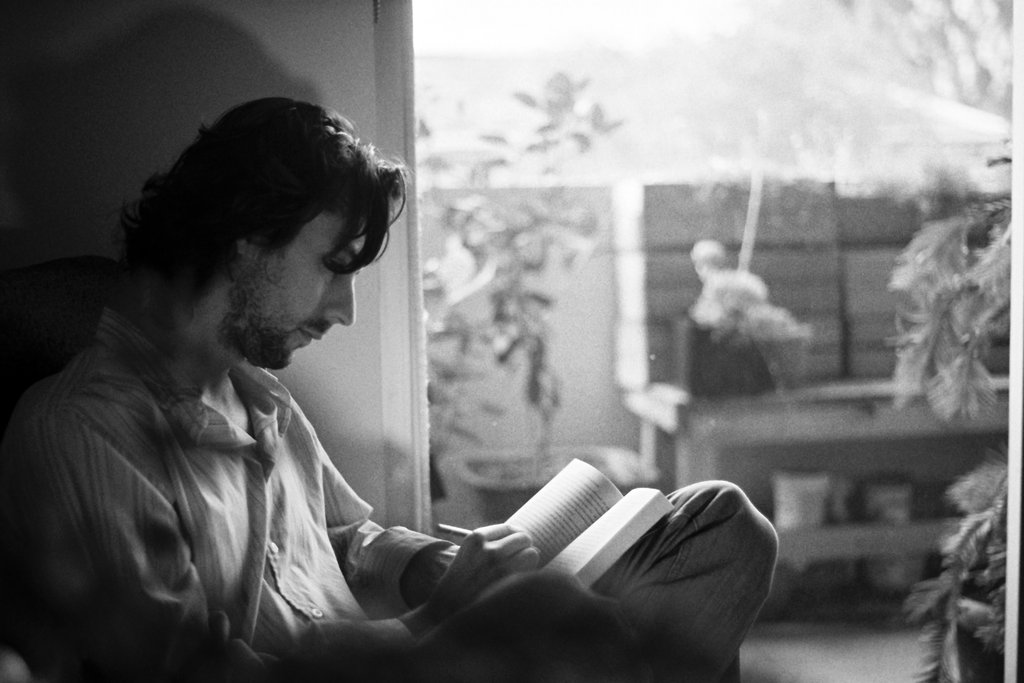
ManReading.jpg

The Wisdom Around Us

"No man is wise enough by himself," Plautus once wrote. He could have added, no woman, either, but they may come closer, at their best.

His point is an important one. It’s amazing how often we approach life as if we have to make it all up ourselves as we go along - like no one has ever trod this path before us who might have some advice that can help us along the way. I believe that the great thinkers of the past have left us the equivalent of a huge bank account of wisdom for living, but we rarely ever draw on that account. We live in existential rags while the riches of the ages are available, waiting for us to use them.

When I was growing up, I heard a story about a poor farmer in Texas whose little ramshackle house was sitting on one of the largest oil reserves in the country, but he didn't know it for a very long time. That's another great image for our untapped resources. But our reserves of wisdom from the past represent a much more renewable form of energy. We need to access what we have, in order to power our endeavors and lives forward in the best ways.

We also too often neglect to draw on the wisdom of the people around us. I’m typically astonished at how much smarter I feel after I’ve been talking to wise people, hearing what they’ve been learning about life. We're not here to go it alone. Many of the world's greatest creative endeavors have been collaborative, drawing on the insights of others, and perhaps a variety of perspectives that can come together only through open conversations fueled by true curiosity. When we seek out wise people and really talk to them, amazing things can happen.

Is there anything perplexing you in your life or work right now? Or do you just feel like you could use a little extra wisdom as you steer through the shoals of the day? Make it a point to talk to someone whose wisdom you admire. Or perhaps give someone a chance whose wisdom you haven’t even come to suspect. Share a concern, or just bring up a topic of interest. 

Or, alternatively, pick up an old book, like The Meditations of Marcus Aurelius, or some essays from Seneca, or even my own summary of Marcus, Seneca, and Epictetus, The Stoic Art of Living. You may be surprised at what results. 

We need each other’s insights, across town and through the ages. 

PostedAugust 15, 2014
AuthorTom Morris
CategoriesAdvice, Life, Philosophy, Wisdom
Tagsold books, reading, libraries, wisdom, talking, conversation, philosophy, Tom Morris, TomVMorris
Post a comment
Desires.jpg

Our Desires

"Of our desires, some are natural and necessary; others are natural but not necessary; others, again, are neither natural nor necessary." Thus spake Epicurus.

This is something worth thinking about. We all have desires. And many of them properly lead to goals. But not all of them. There are some desires that should not be pursued. Many people make themselves miserable through a failure to understand this.

The ancient Greek philosopher Epicurus had a way of helping us to classify our desires. Some are natural and necessary. We should have them and must pursue them. Others are natural but not necessary. It’s perfectly fine to pursue them, but it’s also no disaster if they go unsatisfied. The last class encompasses those that are neither natural nor necessary. We don’t have to satisfy them, and it’s not even natural for us to pursue them. Too many of our desires in the modern world fall into this last category.

Epicurus wants to free us from the tyranny of the unnatural and unnecessary things we chase. There's nothing natural about fame. There's nothing necessary about it. Yet, people sacrifice all for it. There's nothing natural about having more resources than you could ever use. There's certainly nothing necessary about it. Yet, people aspire to it, risking what they do have in lotteries and in relentless jobs that take away their lives for the remote promise of windfall gains. 

The philosopher wants to help us to understand our desires better, so that we can manage them better, for our own good, and not allow them to manage to ruin our lives. Use his categories to enhance your own thinking today. It's both natural and necessary to do so!

PostedAugust 14, 2014
AuthorTom Morris
CategoriesAdvice, Life, nature, Philosophy, Wisdom
Tagsdesires, happiness, life, Epicurus, philosophy, wisdom, Tom Morris, TomVMorris
Post a comment
GoodWillHunting.jpg

The Structure of Goals

Yesterday, I wrote a short blog post on having clear goals. I'd like to follow up on that today. The great novelist Dostoyevsky wrote:

Without some goal, and some effort to reach it, no man can live.

You certainly know the old story: Two college friends had moved to Los Angeles on a quest to become actors. But they couldn’t find work. Sitting around their dingy little apartment, hanging out with friends, they finally came to the conclusion that they needed something worthwhile to structure their days. Since no one would cast them in a movie, they decided they’d write their own screenplay. That goal, and their daily effort toward reaching the goal, put Matt Damon and Ben Affleck on the road to movie stardom, a life they continue to enjoy years later. Their film, Good Will Hunting, launched it all. They used their power of will, did some hunting, and good resulted.

And, of course, the great comedian and actor Robin Williams totally changed their lives by agreeing to act in the film, and thereby also gained for himself an Oscar.

So, yeah, Ok - it doesn't always go like this. Stardom, wealth, and fame don't lurk around every corner of goal-oriented activity. And some people preach the virtues of what they call "Goal-less Living" - as if it's their goal to convince the rest of us not to have any.

We need times of structure and times of no structure. We need time to just be, as well as time to do. But the doing should be congruent with our being, and it should be structured as such.

It’s often said that there are three kinds of people in this world - Those who make things happen, those who just watch things happen, and those who go around wondering “What happened?” Do whatever you can today to place yourself in the midst of that first category.  Focus your day and your week around some worthy goal or goals and the effort it takes to move in the right direction, making useful things happen as the result of your energies. It's indeed good hunting for the will.

PostedAugust 13, 2014
AuthorTom Morris
CategoriesAdvice, Attitude, Life, Performance, Wisdom, Philosophy
Tagsgoals, goal setting, movies, film, Ben Affleck, Matt Damon, Good Will Hunting, life, success, Tom Morris, TomVMorris, philosophy
Post a comment
archer.jpg

Our Need for Goals

The great inventor of the essay, Michel de Montaigne, once wrote:

The soul that has no established aim loses itself.

Vagueness is a disease of modern life. We're surrounded with so many possibilities, we don’t know what to actually pursue. We may have a general idea, but But thoughts can't guide specific behavior. The actress Lily Tomlin once said, “I always wanted to be somebody. I should have been more specific.” Doesn’t that capture the way so many people think, these days? They want to be somebody. They want to do something important. But they may have no clue exactly what.

The great thinkers from Aristotle to the present day have recognized that we are essentially goal oriented beings. Unless we have a clear target to shoot at, we quickly get lost in literally aimless living.

Make sure you're aiming at some clear and specific goals in what you do today, and this week. Also, take any chance you might have to engage in a conversation with a co-worker or family member about some new personal goal, or some shared goal you're both pursuing, or should be pursuing. Conversations can clarify. When we put things into words, we gain focus. In discussing something you've been thinking about, you can find a new sense of clarity and purpose that's so easily lost amid the demands of the day.

PostedAugust 12, 2014
AuthorTom Morris
CategoriesAdvice, Business, Life, Performance, Philosophy, Wisdom
Tagsgoals, goal setting, clarity, success, life, vagueness, Montaigne, Tom Morris, TomVMorris, Philosophy, Wisdom
Post a comment
Sunrise.jpg

Love

Love is the spirit of compassion, care, and forgiveness.

It unfolds in service to others and the best growth of the self.

It is the deepest and only wellspring for true greatness in life.

It seeks the best in others, and for them, while cultivating its own garden well.

To live without it is a struggle. To live with it is a better struggle, in the warm light of hope.

Love is first a commitment, then an attitude, then a belief, then a feeling, and then everything.

Love conquers all. Eventually.

Love transforms all. Now.

Love is the transcendent source of all good things.

It is the only enduring form of strength.

It is the sole source of peace and happiness.

To love is to live in full.

PostedAugust 11, 2014
AuthorTom Morris
CategoriesAdvice, Life, Philosophy, Wisdom
Tagslove, happiness, struggle, compassion, forgiveness, care, growth, excellence, greatness, Tom Morris, TomVMorris
Post a comment
HappinessBalloons.jpg

A Happy Life

What is happiness? What makes for a happy life? Go to any big bookstore, and you'll find lots of authors tackling the question. Ring all those books up at the register and you'll likely end up very unhappy at the total.

The roman lawyer and stoic thinker Seneca once wrote: "A happy life is one in harmony with its own nature."

An unhappy person is out of step with herself.  A happy person experiences a large measure of inner harmony.  She lives in accordance with her own highest nature.

In his strange film Zelig, Woody Allen long ago masterfully caricatured the chamelion-like tendency that many people have to fit in. We dress in the right style and eat at the right places, drive the appropriate cars, talk in the lingo of those around us, and do as we’re expected to do, all in a misplaced search for happiness. The only reliable formula, Seneca believed, is to live and act in harmony with your own best nature. He believed, first, that there is a universal human nature that should be respected in all that we do.  But he also wanted each of us to be true to who we uniquely are, at our potential best - with our own talents and abilities honed in a way that's right for us, but also put into service to others.

Where are the tensions in your life? If you take an inventory of your own obstacles to happiness, I think it's likely that you’ll find places where you aren’t being true enough to your deepest and highest nature. The good news is, you can make the changes you need to make to live and act in a way that is more natural for who you are and distinctively can be. It is, after all, your nature. Embrace it and work with it. That's the path to happiness, according to the philosopher.

PostedAugust 11, 2014
AuthorTom Morris
CategoriesAdvice, Life, nature, Performance, Wisdom
TagsSeneca, Stoic philosophy, happiness, human nature, wisdom, self-knowledge, Tom Morris, TomVMorris
Post a comment
Thinker.jpg

The Unexamined Life

Socrates famously said, "The unexamined life is not worth living."

He was not one to mince words. Born in the fifth century, BC, he already lived in a time when people hustled through the day, too busy with the demands of life to ever take a break and think over what it’s all about. This philosopher would stop strangers on the street in Athens and urge them to examine their lives. What were they chasing? And why?

Socrates believed in a simple scale of value. At the low end of the scale are our possessions. One step higher, are our bodies. And higher yet are our souls.

He was convinced that the least important things are the things that we tend to think about and talk about the most, and that the most important things are those that we tend to think about and talk about the least. If we examined our lives more carefully, he was confident that we’d be able ro rectify this common and profound mistake. 

When we buy something, or invest in something, we typically ask whether it's worth the price we confront. And we often make negative judgments. "That car is not worth what they're asking." The famous statement made by Socrates can be understood in the same way.

The unexamined and confused life, the life on automatic pilot, on cruise control, following the crowd mindlessly, is, according to his claim, not worth the massive investment that goes into it - the entire process of living. It's not worth all the time and energy that go into living it. 

Living an unexamined life is just making a bad investment. So, heed Socrates’ advice today, and examine your priorities. Are your commitments in line with a proper scale of values? Are you living the sort of life that is well worth living? In this examination, you can pass or fail yourself. It’s finally up to you.

PostedAugust 11, 2014
AuthorTom Morris
CategoriesAdvice, Life, Philosophy, Wisdom
Tagsself knowledge, Socrates, self examination, The unexamined life, Tom Morris, TomVMorris
Post a comment
groceryclerk.jpg

Exceptional People Around Us

I’ve been exercising my memory for the past 6 months by memorizing Shakespeare soliloquies, mainly the famous ones. It all started with a short passage from Hamlet. I remember the day I had just learned it – it wasn’t easy – and I still had to practice it all the time.

So. I was in line at the grocery store, a Fresh Market near my house, and the lady in front of me turned around and apologized for having so many items in her cart. I promise I wasn’t counting. I said, “No problem. Take your time. I’m rehearsing in my head a famous literary passage I just learned.”

The man who was ringing up her items stopped and looked at me with an expression of appreciation, almost of deep brotherhood, and said,

Whan that Aprille with his shoures soote, the droghte of Marche hath perced to the roote.

Well. That was unexpected at a grocery store checkout counter. But, it was the slow line. So, the clerk went on for a few more seconds of recitation and then stopped and looked at me with a big smile, and I just had to say,

And smale fowles maken melodye, That slepen al the night with open ye.

The guy looked really surprised and said, “You KNOW that?” I said, “Yeah, Chaucer, Prologue to the Canterbury Tales. Good job.” And a lady behind me gave me a look that “perced to the roote” because I think her ice cream was melting through all this.

Just two days later, I’m in a Harris Teeter, and the young lady checking out my groceries said something to me that I didn’t catch. I said, “I’m sorry. I didn’t hear you. I was practicing a passage from Hamlet in my head.”

She said, “Oh! Really? I memorized Hamlet once.”

I said, “You mean you memorized a passage from Hamlet?”

She said, “No, the whole thing.”

“The whole thing? The whole play?”

“Yeah,” she said, “But not in English.”

“What do you mean, not in English? It’s an English play.”

“Yeah, I know, but I memorized it in Klingon.”

“The Star Trek Language?”

“Yeah, it was more fun that way. But it took, like, four months.”

Well.

And then, last week, a different grocery store cashier spontaneously performed a Shakespeare Sonnet for me. I mean, it was Senior Discount Day at the store, so I think she took off a few lines. But it was most of Sonnet 116. In case you’re interested.

Maybe I shouldn’t be allowed to leave the house. Strange things happen.

But I came away from these recent conversations with a new realization – and not just about where our English majors are getting jobs these days – the market for literature grads is surprisingly fresh.

My realization was, that we’re surrounded by exceptional people in the world. They’re all around us. And that’s easy to forget. But when we break through the background hum of habit, poke a hole in the ordinary, and really talk to people, and give them a chance, they can sometimes shine in unexpected ways. And then, we learn.

Break through that background hum today, in some way. Poke your own little hole in the ordinary, and see what you discover.


PostedAugust 9, 2014
AuthorTom Morris
CategoriesAdvice, Attitude, Life, Performance, Wisdom
Tagshabit, the ordinary, exceptional people, talent, skill, ordinary people, Harris Teeter, Fresh Market, Tom Morris, TomVMorris, philosophy, spirituality
Post a comment
Moneystack.jpg

Money: Blessing or Curse?

Today, the Roman poet Terence weighs in on money. He once wrote, "Riches get their value from the mind of their possessor; they're a blessing to those who know how to use them, a curse to those who don't."

Money, of course, isn’t the meaning of life. And it’s not evil, either. Its value depends on how it’s used. We’ve all seen it destroy people. And we know how a lack of it can make a life so much more difficult. Any form of wealth is a resource that can be used or abused. How are you, typically, using yours?

Ultimately, it’s up to each of us what attitude we adopt toward money. It can serve us, or we can serve it. How does it function in your life right now? Is it merely a great and useful resource, or a number one focal goal? Is it an obsession or a tool? Does it control your life, or do you control it, for the good of others as well as yourself?

Most of us worry about it too much, one way or the other.

It can indeed be a blessing or a curse, and that's up to each of us.


PostedAugust 9, 2014
AuthorTom Morris
CategoriesBusiness, Life, Philosophy, Wisdom
TagsTerence, Tom Morris, philosophy, money, wealth, riches, wisdom
Post a comment

The Inner Circle Principle

Imagine life as involving a series of concentric circles representing your spheres of action and involvement. At the center is the inner and outer you. The next circle out is your family - both of birth and of choice - along with your closest friendships. The next circle yet is your neighborhood and your workplace. The next one out is your overall community. Then there is your state, or province, your nation, and the broader world, and perhaps even more.

Each circle, starting with the first, is to be tended to, nurtured, and grown in a healthy way, and is to be helpfully open to the next larger circles to come. We're never to get stuck in ego, or just in a family, or a neighborhood, or in a nation, in our sense of self identity and affiliation and value. As the ancient philosopher Diogenes once said, "I am a citizen of the world." Healthy self identity, and healthy affiliation at each level, is open to, and allows for, greater affiliations as well. Then, those come back and enhance the inner circles they encompass.

We're never to be stuck in any form of narrow thought that cuts us off from others. One of the biggest mistakes seen around the world is exactly that - an exclusivity of allegiance that turns others into threats and enemies. But, as my friend Vinod put it in a conversation we just had in the gym, "There are places where Sunnis work with Shiites in harmony and with shared purposes. This is how it should be." International business wants to bring the world together. International rivalries and exclusivist tribalisms want to pull the world apart. We can never fully flourish without being, in turn, tolerant, open, appreciative, and even celebratory of our differences. Tolerance is never enough, though it's the logical place to start, and hard enough for many people. But it's meant to be a door into a more positive understanding and appreciation, and even appropriation. We all have insights. And we all have errors. We can learn from each other. And we need to, in order for things to go well.

But of course, when we speak of being tolerant, open, appreciative, and even celebratory of others, we don't mean that we should ever embrace what strikes our most enlightened moral sensibilities as just wrong or unjust. What we're to learn from each other should never take us to a worse place, only to a better stage in our own understanding and sensibilities.

I hope you'll go through the day with an enhanced appreciation of all your concentric circles. You are a citizen of the world.

PostedAugust 8, 2014
AuthorTom Morris
CategoriesAdvice, Life, Philosophy, Wisdom
Tagscommunity, tribalism, the world, nationalism, patriotism, value
Post a comment
Falling.jpg

"We Forget How to Fall."

Reflecting on the fact that older people often sustain serious injury when they fall down, my workout partner mused one day that, "We forget how to fall." He's a lifetime surfer and skateboarder. At the age of 51, he falls all the time. And he heartily recommends it. "When you know how to fall, you don't get hurt so badly."

As kids, we fell down all the time. It was just a part of daily life. We fell down and we got back up. We fell running, and on our bikes, and in all kinds of ways. We didn't get discouraged, or distraught, or too badly bruised, at least most of the time. But, as adults, we forget how to fall, both literally and metaphorically, and so, when it does happen, we get seriously hurt, discouraged, and distraught.

Falling is, of course, a well known and much used image for failure. As kids, we tried new things all the time, and rarely got them right the first time. But, for the most part, we didn't let that bother us. We adjusted, adapted, and usually, after a time, prevailed. Sure, someone had to patch the knees of our pants, but that was almost a sign of honor, wasn't it? We were out there in the world doing things. We were active. We were brave. Falling down was just a natural part of it.

And it always is. Don't be afraid to fall down. In fact, try new little things so that maybe you can get some practice again at falling down, if you haven't had a tumble in a while. And then roll with it. Don't be tense. Be flexible, and go with it. Then just get up and try again.

The importance of those childhood lessons never goes away. Just remember: Falling is a stage of learning, and an early stepping stone to mastery. Fall often. And fall well.

PostedAugust 7, 2014
AuthorTom Morris
CategoriesAdvice, Attitude, Life, Performance, Wisdom
Tagssuccess, failure, childhood lessons, falling, philosophy, life, Tom Morris, TomVMorris
Post a comment
GuyFailing.jpg

Failure and Success

The pond guy, Thoreau, once said, "Men are born to succeed, not to fail," and he got it mostly right. But here's the problem. We're actually born to fail a lot along the way, because that's the only way we truly succeed. We have to take our lumps to learn our lessons. But that's not meant to be the end of the game. It's not meant to be easy, but it is meant ultimately to be about success, in the right ways.

Don’t we sometimes feel as if the cards are stacked against us in this life? Think about the obstacles you’ve had to face whenever you’ve tried to do anything new and different. It can sometimes feel like life itself is just one long uphill battle.

It’s interesting in this regard to look into the biographies of very successful people. What’s amazing is that there is a nearly universal pattern to so many of their lives. Talent and hard work initially get rewarded with encouragement and nurture, only to be set up for rejection and failure. Repeated rejection. And perplexing failure. The talented individual almost gives up in a Dark Night of the Soul. Any “reasonable” person would. But somehow, our hero shows an almost supernatural ability to stick it out though all the tough times, and finally emerges into public view as an overnight sensation.

You know the old saying: “It’s always darkest before the dawn.” The fact is that we're all born multi-talented. No one utterly lacks talent. And nobody has just one. We’re also born with the ability to discover our talents, along with the will power that it takes to develop them. If we don’t give up. If we stick with the process. We finally learn what we were born to achieve. And in that respect, Thoreau was right. It's ultimately not failure that's meant for us as the last verdict, but success - a form of success that is right for each of us. But it takes that ongoing process. And that process will involve lots of trouble along the way. Remember that today. You were born to succeed. After all that failure. So go do it.

PostedAugust 5, 2014
AuthorTom Morris
CategoriesAdvice, Business, Life, Performance, Philosophy, Wisdom
TagsThoreau, success, failure, achievement, growth, Tom Morris, philosoph, wisdom
Post a comment
Newer / Older

Some things that may be of interest. Click the images below for more!

First up: Tom’s new Silver Anniversary Edition of his hugely popular book on The 7 Cs of Success!

The New Breakthrough Guide to Stoicism for our time.

Tom's new book, out now!
Finally! Volume 7 of the new series of philosophical fiction!

Finally! Volume 7 of the new series of philosophical fiction!

Plato comes alive in a new way!

Plato comes alive in a new way!

On stage in front of a room full of leaders and high achievers from across the globe.

On stage in front of a room full of leaders and high achievers from across the globe.

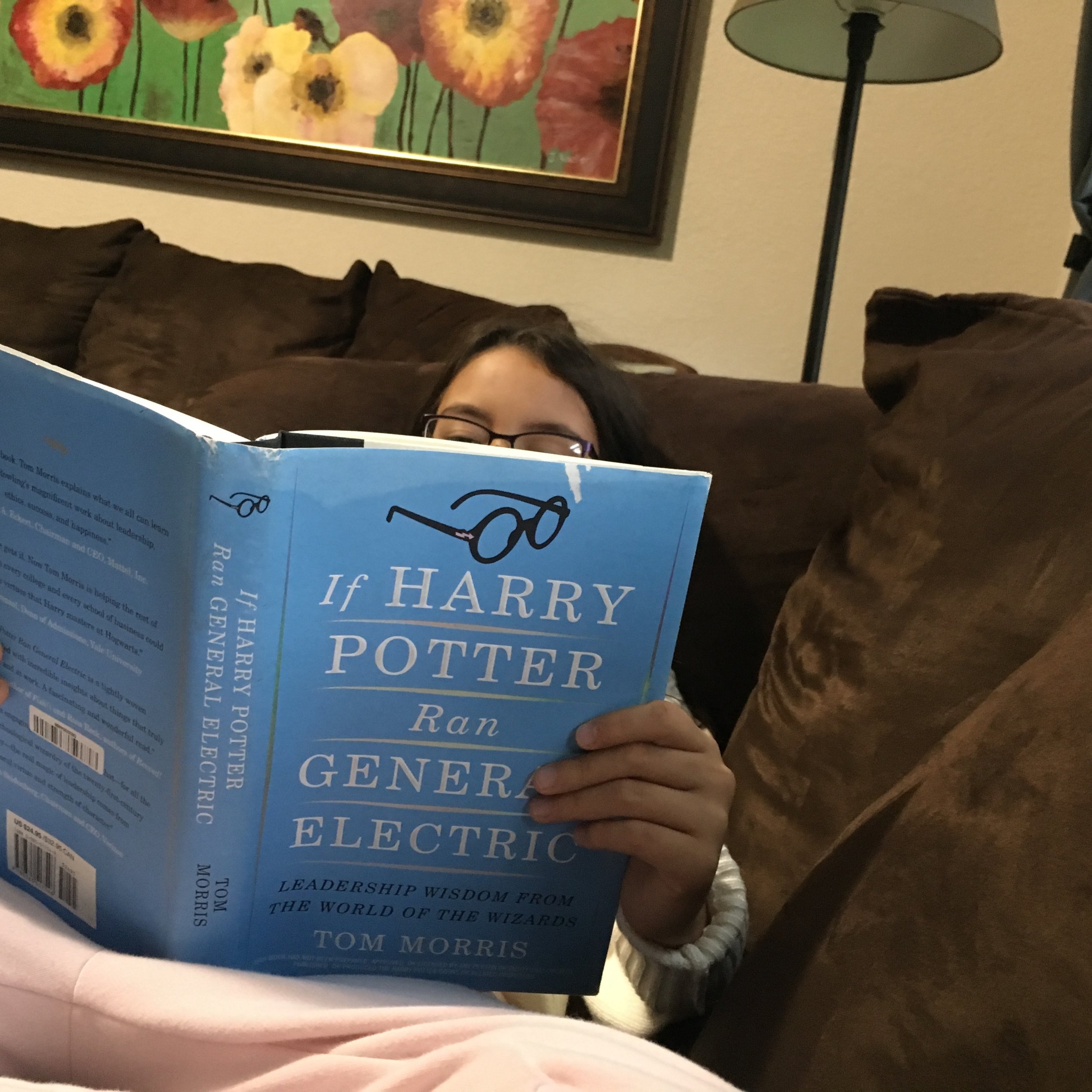
My Favorite Recent Photo: A young lady named Jubilee gets off to a head start in life by diving into some philosophy!

My Favorite Recent Photo: A young lady named Jubilee gets off to a head start in life by diving into some philosophy!

Great new Elizabeth Gilbert book on creative living and the creative experience.

Great new Elizabeth Gilbert book on creative living and the creative experience.

Two minutes on a perspective that can change a business or a life.

So many people have asked to see one of my old Winnie the Pooh TV commercials and I just found one! Here it is:

Long ago and far away, on a Hollywood sound stage, I appeared in two network ads for the wise Pooh, to promote his adventures on Disney Home Videos. For two years, I was The National Spokesman for that most philosophical bear. This is one of the ads. I had a bad case of the flu but I hope you can't tell. A-Choo!

One of my newest talk topics is "Plato's Lemonade Stand: Stirring Change into Something Great." Based on the old adage, "When life hands you lemons, make lemonade," this talk is about how to do exactly that. Inquire for my availability through the c…

One of my newest talk topics is "Plato's Lemonade Stand: Stirring Change into Something Great." Based on the old adage, "When life hands you lemons, make lemonade," this talk is about how to do exactly that. Inquire for my availability through the contact page above! Let's stir something up!

Above is a short video on finding fulfillment in anything you do, that was taped a few years ago. I hope you enjoy it!