Follow @TomVMorris
Retreats
Keynote Talks and Advising
About Tom
Popular Talk Topics
Client Testimonials
Books
Novels
Blog
Contact
ScrapBook
Short Videos
The 7 Cs of Success
The Four Foundations
Plato's Lemonade Stand
The Gift of Uncertainty
The Power of Partnership

Tom Morris

Great Ideas. With Power. And Fun.
Retreats
Keynote Talks and Advising
About Tom
Popular Talk Topics
Client Testimonials
Books
Novels
Blog
Contact
ScrapBook
Short Videos
The 7 Cs of Success
The Four Foundations
Plato's Lemonade Stand
The Gift of Uncertainty
The Power of Partnership

Burn Bright While You're Here

In our informal Methodist church at the beach yesterday, the head minister told us at the start of the service that the oldest member of our ministerial staff had just suffered a major stroke and was now with hospice for what would most likely be his final hours. This man, The Reverend P. D. Midget, though in his nineties, had always seemed to have a timeless youth and vigor about him. Today, I realized that I had always assumed he'd be with us for a lot longer, despite his advanced age. He was a great harmonica player, and could do a fine job as well on the mandolin or banjo. He had recently had a smaller stroke, and in rehab had written and performed an upbeat song about it all that amazed everyone at the hospital. A graduate of Duke Divinity School, long ago, he was a keen reader and thinker, and could reenact episodes from the lives of historical figures in a dramatic way that was unexpectedly moving. He was an unusually kind and loving man, and always had a quick smile and a word of encouragement for anyone who crossed his path. I really enjoyed every conversation I had ever had with him, and now wish there had been a lot more of them.

In giving the announcement concerning this unexpected turn of events, our minister mentioned that he had already overseen the funerals of eight people in the past eleven days. And for a church of our size, that's pretty unusual. This two facts together were a powerful reminder of the fleeting nature of our time in this world, which is something that we usually keep out of mind. But it can be greatly useful to remember. As Woody Allen's character, in one of his movies long ago, said to a friend: "Don't you realize what a thread we're all hanging by?"

Consider an interesting passage from Ernest Hemingway's book, The Sun Also Rises. 

Just eleven pages into it, you'll come across this brief conversation that starts with Robert Cohn, Princeton graduate and amateur boxer, speaking to his old friend Jake, the narrator, in a bar - where it seems, interestingly, that philosophizing about life often takes place:

"Listen, Jake," he leaned forward on the bar.  "Don't you ever get the feeling that all your life is going by and you're not taking advantage of it?  Do you realize you've lived nearly half the time you have to live already?"

"Yes, every once in a while."

"Do you know that in about thirty-five years more we'll be dead?"

"What the hell, Robert,' I said, "What the hell?"

"I'm serious."

"It's one thing I don't worry about," I said.

"You ought to."

As we all know, but mostly, like Jake, tend not to think about very much, life is a limited-time offer. This is an interesting point of reflection for all of us who are already in mid-life or beyond. But it's an important fact for any of us, however young or old. Are we making the most of our time on earth? Are we using our talents in the best ways, and taking advantage of the opportunities that come to us each day? Are we enjoying the adventure? Are we touching the lives of others in positive ways? Or are we letting ourselves be held back and worn down by our own inner reactions to things that are sometimes outside our control?

There's a lesson we can glean from Woody Allen, and Hemingway's characters, and my old friend. Burn bright while you're here. It won't be forever. Remember this, and make your best difference while you can.

PostedNovember 17, 2014
AuthorTom Morris
CategoriesAdvice, Life, Wisdom, Philosophy
TagsLife, Death, Mortality, Hemingway, Woody Allen, P.D. Midget, Tom Morris, TomVMorris, The Sun Also Rises, Duke Divinity School, Princeton, Good
Post a comment
Impact First.jpg

Impact First, Then Income

My motto for my work has always been simple: 

Impact First, Then Income.

My primary concern is a positive impact. My secondary concern is a positive cash flow. And that matters, because the prioritization I try to maintain will suggest certain activities and discourage others. As a philosopher, writer, and speaker, I want to make a difference for other people, as well as myself, and my family. I want to put giving over receiving, spreading over gathering. Of course, finances matter. They matter a lot. But other things matter even more. And it's those other things that should be our ultimate guides.

But, I can almost hear a question, which is even, perhaps, a skeptical hesitation: Is this sort of perspective simply a luxury for the few - to think first about making a difference and only second about making a dollar? My answer is: No, I truly don't think so. No matter where we are in life or what we're facing, it's important to focus first on the contribution we're making, on the good we're doing. That's ultimately the best way to get help, or a job, or a promotion, or the big payday that most of us would like to see. But it's also right for its own sake. We're here to give more than we get, and to leave the world a little better than we found it.

I'm convinced that coming at the equation from the other end is always a mistake. Those who think first about making money and only second about making a difference will eventually encounter trouble in some form. And they'll risk not becoming the best they're capable of being.

Even if you work focally with money in a field like financial services, it's important to see beyond the the market and the monthly report. We all work with people. And that should fundamentally guide us. What's the real human benefit of your work? Is it everything it could be? is it what it should be? Will a certain decision enhance my impact, or only my income? Those are the questions we all need to ask. Money without meaning is empty.

How am I using my talents, my abilities, and my opportunities? What difference am I making for other people? Could I do more? Could I do better? Those are the fundamental issues. And then matters of finance can helpfully be raised. Income is necessary for most of us, and profit is good, if it fits properly into our overall lives and values.

Don't let the tail wag the dog. Put first things first. Focus on what you can do to bless and benefit those around you, and you'll see good come back to you in surprising ways.. 

PostedNovember 16, 2014
AuthorTom Morris
CategoriesAdvice, Business, Attitude, Life, Wisdom
TagsMoney, meaning, impact, work, priorities, life, life lessons, business, finances
Post a comment
candle-in-the-dark.jpg

A Royalty of the Spirit, Relevant to All

There are, among us, certain spiritual people who seem to be in touch with something more, something that lights them up and guides them and inspires them with love and compassion and wisdom, and even knowledge of an extraordinary sort. But it isn’t just a small group of spiritual adepts who have the ability to receive insight and guidance through meditative stillness and prayer, and an open heart of eager willingness. All of us represent a royalty of the spirit who have come into this exotically strange, terrible, and wonderful world with a birthright that we often don't acknowledge, understand, or assert. And yet, still, there are times when a man or a woman, or even, and perhaps more often, a boy or a girl, will be struck with a message from beyond the visible, tangible world of the senses, just out of the blue, and with no preparation or anticipation. It could be a word of encouragement, or direction, or even warning. When it occurs, it can seem to come from outside us, and yet at the same time, from deep within us.

This actually happens, I think, to all of us at some points in our earliest years, but we often later lose our memories of these experiences, because they’re not reinforced for us by the surrounding culture. We’re not encouraged to become all that we can be, in the full range of our capacities, or to do all that we can do. And so, some of our innate abilities, a crucial part of what I like to think of as our royal inheritance, will atrophy and grow weak over time. But they’ll never disappear. They can’t be utterly extinguished. That would mean the annihilation of the soul itself. And yet they can be hobbled and starved and buried under the debris of triviality and of those worldly pressures that we too often refer to as the practical demands of life – as if life has any demands greater and more practical than that we be the best of who we are. We too easily and commonly adapt ourselves to the lowest ways of the kingdom of this world, in patterns of activity and thought that are perhaps unproblematic in themselves, but only as long as they don’t eclipse what’s higher. And yet, we too often allow them to make us forget the royal palace of the spirit, and the aligned rights, duties, and priviledges that exist in connection with it, deep within us, even though it is they that most essentially define who we are.

Despite all this, those of us who do recognize and honor the realm of the spirit should never be too quick to divide the world between an elite group of higher functioning individuals, who seek to partake of everything within the spirit that’s available to us, and, on the other hand, the majority of humanity, who seem to live as self-imposed exiles from their own royalty, and act as if they are mere commoners of the spirit. There is, instead, a vast spectrum of openness and experience represented in the world. Truly spiritual, and remarkably advanced souls certainly exist, at one end of the sweep of human experience, with the most sadly dimmed and brutish personalities at the far end. An ordinary person, who’s never as ordinary as he or she might seem, to superficial and external appearances, is always capable of more depth and breadth than any casual acquaintance, colleague, or sometimes even a good friend, might expect.

There are depths behind depths, and layers beneath layers and, if we could only see all the people around us through eyes that know and remember this, the world would look so different to us, and more like it indeed most fundamentally is.


PostedNovember 15, 2014
AuthorTom Morris
CategoriesAttitude, Life, nature, Wisdom
Tagsthe spirit, spirituality, humanity, the human experience, ordinariness, wisdom, the world, Tom Morris, TomVMorris, philosophy
Post a comment
Angryface.jpg

Anger. Grrrrr.

How often do you feel angry? I hope it's a rare experience. Aristotle taught us that there's nothing intrinsically wrong with this emotion. It can be rational and appropriate, but only with the right reason, toward the right object, in the right measure, and for the right amount of time. Anger toward an injustice can rouse us to work to stop it. It can light our fuse and get us moving. But if it continues to burn, then we're going to be the ones incinerated by it.

Frequent anger is corrosive to the soul. It's a poison. And we need to understand it better in order to avoid it more.

Anger often arises from fear or frustration. When you feel it welling up in you, you should ask, "What am I afraid of here?" Or "What's frustrating me right now, and what can I do about it?"

If something's bothering you that you can change, then action is better than anger. If it's something you truly can't do anything about, then acceptance beats anger any day.

The more often you feel this emotion, the more you should analyze your fears and frustrations. If you can deal with them properly, then this inner disruption will not bother you so much, but rather, literally, leave you in peace.

And, ultimately, it's only from a state of inner peace that we can best face new challenges and situations that would otherwise spark in us fear or frustration.

When we deal properly with the inner causes of anger, the results can be grrrrrrreat!

PostedNovember 14, 2014
AuthorTom Morris
CategoriesAdvice, Life, Performance, Wisdom
TagsAnger, Irritation, Frustration, Fear, Peace, Wisdom, Tom Morris, TomVMorris
Post a comment

Excellence

Long ago and far away, wise people knew what we need to keep in mind.

I was cleaning up my office today and found a bunch of old 3x5 note cards from decades ago, dating from my time at Notre Dame. On one yellowed card was this, which I thought might be worth sharing:

"Badness you can get easily, in quantity - the road is smooth, and it lies close by. But in front of excellence the immortal gods have put sweat, and long and steep is the way to it, and rough at first. But when you come to the top, then it is easy, even though it is hard."

Hesiod. Around 700 BC.

The view from the top is amazing. But the air is so thin. And yet, the work of excellence is, at a point, easy as well as hard. It's just another of the wonderful paradoxes of life. You see as you climb.

PostedNovember 13, 2014
AuthorTom Morris
CategoriesAdvice, Business, Life, Performance, Wisdom
TagsExcellence, difficulty, Hesiod, Philosophy, Life, Tom Morris, TomVMorris
Post a comment
Flowers.jpg

Grace and Mercy

Grace is defined as unmerited favor. It involves giving others, and sometimes even lavishing on them, something they don't literally deserve or have a claim to receive. It means going beyond what could be expected, and acting from the boundless resource of love.

Mercy is typically defined as compassion, or forbearance. It involves not dishing out to others something negative or harshly judgmental that they might actually deserve. It involves a certain restraint, or a holding back, with a sense of another's intrinsic value, born only of love. Mercy finds a better way.

Grace and mercy. How often do we speak of such things? Really? And yet, they are surely among the most important things of all. Do we cultivate these amazing dispositions with our thoughts and actions, daily? Or do we merely admire them from afar and hope to be their beneficiaries, rather than dedicating ourselves to being their conduits into the world?

Go to a movie, turn on a TV, or sample what's happening online, in news comments, and social media, beyond your closest circle of friends. How much grace and mercy do you experience?

Too many of us are dipped into a toxic mix every day and then wonder why we don't shine.

Each of us is here, I believe, to be a blessing to others, and never a curse. How then do we manage that? By living with grace and mercy. Expose yourself to others who live this way. Read of these things. Think on them. Use your imagination well. Ask: "How can I be a vehicle for grace and mercy to others?" Avoid the poisonous brew spread abroad by those who are strangers to these concepts. And, in a famous twist on the golden rule, treat others as if they were what they ought to be, and you can help them become what they're capable of being.

That way, you'll be a blessing, and never a curse, to those around you, to our broader world, and perhaps, most important of all, to yourself.

So go live a little grace and mercy.

Today.

PostedNovember 12, 2014
AuthorTom Morris
CategoriesAdvice, Attitude, Life, Business, Performance, Wisdom
TagsBlessing, Curse, Grace, Mercy, Toxic people, love, Life
Post a comment
JungleRiver.png

Life as Exploration and Discovery

"Life has its own hidden forces which you can discover only by living." Soren Kierkegaard.

Habit can be a subtle anesthetic. We need to wake up and shake it off.

Life is supposed to be a series of adventures - one big adventure, full of many smaller ones. Every day is meant to be a classroom for the spirit. Living well means learning every day.

Most people become content with surface living, caught up with appearances and fairly superficial routines. That's not supposed to be the way it goes. We've all been dropped into this strange mysterious world to be its explorers, its adventurers, and its collaborative creators. If we live the way we're meant to live, we discover those hidden forces Kierkegaard was alluding to, and we can then use them in powerful ways.

So, live adventurously. Discover what's hidden. And use it well.

Today.

PostedNovember 11, 2014
AuthorTom Morris
CategoriesAdvice, Life, Wisdom, Philosophy
TagsAdventure, Discovery, Life, Living, Habit, Kierkegaard, Tom Morris, TomVMorris
Post a comment

Patience and Waiting

Last time, we began to examine the view that patience is a virtue, by looking at the strengths of patience and the undesirable elements of impatience.

The patient person:

1. Subjectively has inner peace, confidence, and poise

2. Objectively has a calm demeanor and waits, when needed

The impatient person:

1. Subjectively has eagerness, anxiety, frustration, and even anger

2. Objectively has an action orientation, determination, persistence, but can also express frustration and anger

The subjective side of impatience is mostly negative. The objective side looks mostly positive, aside from the negative expression of unpleasant emotions. 

And yet, consider those positive qualities that an impatient person can possess, like a tendency to take action and persist. They can have unfortunate implications in certain situations.  An impatient person may act when waiting is better, and mess up everything in the process.  But then, a patient person may wait when acting is better, and miss an important opportunity in the process. So, what’s it best to be: patient or impatient? 

A virtue, by the way, is by definition a quality or habitual disposition that it’s always good to have. And haven’t we just seen that there are circumstances in which patience and impatience each are bad?

No, actually, not at all. Look again at our characterization of patience, subjectively and objectively. There are no circumstances in which those qualities would be bad to have. The patient person can wait when needed. The only negative sort of example we were able to give assumed waiting when it was both unneeded and counter-productive. The patient person can even share all the objectively positive qualities of the impatient go-getter: that action orientation, the persistence, determination, and even creativity in trying new things in pursuit of a goal. She just does all that with an inner calm that strengthens her and that the impatient person lacks.

Patience does look like a virtue. And impatience looks like a vice. Who needs all that negative emotion? But remember Aristotle's understanding of a virtue. Every virtue has two corresponding vices, a "too little" and a "too much." Connected to patience, the too little is obviously impatience. What's the too much? Clearly the tendency to wait even when waiting is not good, the tendency to simply quit and hope when beneficial action is still needed. We might jokingly say that such a person is "too patient," but that wouldn't literally be true, if patience is indeed a virtue and involves waiting only when it's needed.

So, in the end the only real puzzle is determining when it’s best to wait, and when it’s best to press ahead. And, as I mentioned last time, that requires discernment or wisdom. But more can be said as well. If you're in a situation where you're trying to make something happen, and it's not going as well or quickly as you wanted, you need to know whether to wait a bit longer or to act anew to push things along. You need to ask questions like these:

The Waiting Check List

1. Have I already done all I reasonably think I can do?

2. Is it even a little bit likely that further action would be counterproductive or alienating to others whose goodwill or assistance I might need?

3. Could my timetable itself be unreasonable, and based on insufficient considerations?

4. Am I possibly operating under any false assumptions about the need for things to happen now?

5. Could waiting patiently for a while allow me to do or develop other good things that impatient action would prevent?

If you get at least one "Yes" here, you have an indication that patient waiting might be good. The more affirmative answers, the more likely you should be patient and wait. For at least a while. But we always have to do cost/benefit analyses along the way. Waiting for a day or a week or a month can be desirable in situations where waiting a year or three years may not be, and could even be counterproductive. The more you know about your situation and what you're trying to make happen, the better you'll be able to do such analyses. But always ask yourself questions like these, above. And try to avoid the negative subjectives involved in the impatient mindset. A patient person can act with persistence, determination, and creativity, pushing and reminding, but without the detrimental emotions tied up with impatience. He or she just knows how to release and relax, and maintain the peaceful being that is behind masterful doing over the long run.

Patience, properly understood, can be an important virtue in an active life.

PostedNovember 10, 2014
AuthorTom Morris
CategoriesAdvice, Attitude, Life, Business, Performance
TagsPatience, Impatience, anxiety, stress, peace, calm, anger, virtue
Post a comment
clockwatch.jpg

Patience

"Patience is a virtue." Almost Everyone's Mother.

Why is patience a virtue, or strength? Well, let's think about what an impatient person does. He or she feels an inner tension, a stress, perhaps even a form of anxiety. He's agitated. She's frustrated. And often filled with questions: When? Why is it taking so long? How can I speed this up? What do I have to do to get this pot to boil, this person to answer me, this opportunity to gel, or to get this problem fixed? What? How? Why? When?

Meanwhile, the patient person is at peace. She's going with the flow. He's content with the pace of things, while still perhaps ambitious, and he's quietly confident in the future.

And these characteristics of patience are all good and desirable things, right?

So why is it so hard to be patient, and so easy to be the opposite?

And there's also a deeper question in the neighborhood, isn't there?

Maybe what I characterized above as the opposite of patience is really just one version, a subjective, boiling pot of emotions that creates nothing but inner pressure and discontent. Isn't there another cluster of responses available for the person who isn't just fine to wait? I have in mind, action, persistence, determination, creativity, and more action. And aren't those all good things, as well?

So here's the real question. When is it best to take action, or more action, in pursuit of your desires or dreams, and when is it best to wait patiently? It's never best to just stew with frustration. We can all agree to that. But when is patient waiting perhaps just not the thing you need, but action instead to create the near term future that you want.

The easy answer from 40,000 feet is that there's no general answer at all, except that knowing when to be patient and when to act requires wisdom, or genuine discernment. And that answer, while true, gives us no help here on the ground, day to day. Is there a better answer available?

Tune in tomorrow.

Yeah, be patient.

Today.

PostedNovember 9, 2014
AuthorTom Morris
CategoriesAdvice, Business, Life, Wisdom
Tagspatience, impatience, desires, goals, actions, action, waiting, being, doing, Tom Morris, TomVMorris
Post a comment
PlanA.jpg

Making Little Plans

I got an email in my box just the other day with the big title, appropriately all in bold:

Make No Little Plans. Think Big.

And it struck me immediately how commonplace such a piece of advice is, nowadays.  A culture of hype, superlatives, and grandiosity has gradually developed around those of us interested in personal growth, self-improvement, success, and spiritual development. And in this culture, it's sometimes amazing what people will actually say with a straight face, or an enthusiastic one.

I'm convinced that the real truth in life is exciting enough. We don't need to cavort in fields of hyperbole and exaggeration in order to get psyched and excited about our genuine prospects in this world. Not everything has to be the equivalent of a high wire act over the Grand Canyon, or between buildings in Chicago. You don't have to become a billionaire, or change the face of the world. Sure, some people launch rockets. And some rockets explode. And not everybody should aim for outer space, in the first place.

Sometimes, it's good to make small plans. And maybe, the best thing you can do, in some situations, is to think small. And I'm not talking nanotech here. Because, in many circumstances, little things can make a crucial difference. Often, it's just the difference that's needed - in a relationship, in an office, at home, or with a client. Yes, we do live in a world of grand gestures and huge plans, with plenty of seminars, books and videos to tell us how to be gigantic, and enormously admired. But aren't we often touched and impressed with the little kindness, the small gesture, the tiny act of grace and love that might convey something deep and wonderful? And who's to say that small and quiet lives in this world can't capture the greatest spiritual beauty to be experienced? If they're lived well.

And that's what it's all about in the end, isn't it? Quality, not quantity. Magic over magnitude, grace over grandiosity. But if it's right for you, aim as high as you can imagine, and make big plans. In the end, the right plans for you end up being the biggest and best, however big or small they might seem to someone else.


PostedNovember 8, 2014
AuthorTom Morris
CategoriesAdvice, Attitude, Business, Life, nature, Performance, Wisdom
Tagssuccess, achievement, greatness, ambition, hype, truth, Tom Morris, TomVMorris
Post a comment
wrinkled_faces_640_04.jpg

The Good Wrinkles to Have

Age doesn’t just bring new wrinkles to your body, it can also bring new wrinkles to your thought, and these are good to have.

A perfectly smooth surface has no depth. 

There is deep texture to even simple wisdom.

No path worth taking will be just smooth and easy.

Life itself is never perfectly smooth. Our thoughts shouldn’t be, either.

There is a beauty to texture and depth.

If your body is going to show the magnitude of your experience, make sure your mind does, too.

The good wrinkles to have flow from experiences fully lived.

PostedNovember 7, 2014
AuthorTom Morris
CategoriesAdvice, Life, Wisdom
TagsAge, Experience, Learning, Openness, Spirit, Spirituality, Wisdom, Insight
Post a comment

Own Your Struggles

Own your struggles. They can be your strength.

Honor your scars. They can mark your progress. 

Embrace your darkness. Squeeze from it your light.

Appreciate your failures. They are your teachers.

Cherish your hopes. They are your guiding stars.

PostedNovember 5, 2014
AuthorTom Morris
CategoriesAdvice, Life, Wisdom, Philosophy
Tagsstruggle, darkness, failure, hope, life, Tom Morris, TomVMorris
Post a comment
QuestionMarks.jpg

What I Learned at Yale

When I was a graduate student at Yale, I quickly came to realize that everyone around me was very busy pretending to know more than they actually knew. And once you realized how the pretense worked, you could see that they were investing a lot of energy in the deception. Intellectual posturing, or posing, in service to pretending, was one of the main activities on campus - at least, among my fellow graduate students at the time. No one would ever say, in class, "I'm not sure what you mean. Could you say more about that?" No brave soul would ask for a repetition or an elucidation or an explanation. Everyone made it seem as if he, or she, understood everything perfectly, on a first hearing, or even before. There was an enveloping fear of asking questions and thus revealing a weakness or gap in knowledge or understanding, which, of course, merely perpetuated every such weakness or gap there was.

And I came to realize, quickly, that one of the best things anyone concerned with excellence can do is to ask questions. It sometimes takes courage. It can be a heroic act of bravery in certain situations. But questions are breadcrumbs to truth and real understanding.

The most important thing I learned at Yale was to ask questions when everyone else was afraid to do so. And that's when I started to learn lots more.

So, ask. And ask again. Boldly, bravely ask, without a care as to what others think of you for asking, and thereby improve what you're able to think.

Today.

PostedNovember 4, 2014
AuthorTom Morris
CategoriesAdvice, Business, Life, Performance, Wisdom
Tagsquestions, knowledge, wisdom, understanding, fear, courage, learning, Tom Morris, TomVMorris, philosophy
Post a comment
BoyInAir.jpg

I'll Rise Up and Fly

When I was young

I thought I could fly.

If I ran just right,

I’d rise into the sky

and go over the yard and

the house and the trees

until, floating a bit

I’d catch a good breeze

and neighbors would see

and squint into the sun

and say “Come here and look

at what this kid has done!”

I'd continue to rise

and with such a big smile that

my grin could be viewed

at least for a mile.

And even today,

I think, if I try,

the time may yet come

when I'll rise up and fly.


PostedNovember 3, 2014
AuthorTom Morris
CategoriesLife, Attitude, Performance, Wisdom
Tagsflying, rising, standing out, success, achievement, dreams, fantasies, hopes, wonder, youth, old age, Tom Morris, TomVMorris
Post a comment
YoungMiddleOld.jpg

Age and The Way Forward

Right before I left Notre Dame, twenty years ago, a lady in her fifties whose husband was an administrator said to me one day. "I always have two friends, one much older, one much younger. The older friend shows me the way forward. The younger friend helps me get there."

I've always thought this is amazingly wise. It captures so many truths about age and friendship and personal success, about mentoring and being mentored, about about inspiration in its different forms.

Youth at its best has energy, possibility, enthusiasm, action, openness, hope, and ambition, among other virtues. Age at its best has experience, discernment, perspective, wisdom, and a hard earned form of wonder, and even, at times, a deeper joy and gratitude. Youth is rambunctious. Age is measured. Youth is unfettered. Age is guided. Youth embraces. Age understands. And on it goes.

The balance my friend alluded to becomes increasingly important with adulthood, but is always a help. Do you have someone to show you the way forward? Do you have someone to give you the energy to get there?

I hope you have two friends, one much older, one much younger. And if not right now, I wish it for you.

We all need someone to show us the way forward, and someone to give us the energy to get there.

PostedNovember 2, 2014
AuthorTom Morris
CategoriesAdvice, Life, Philosophy, Wisdom
Tagsage, youth, mentoring, friends, the future, success, wisdom, philosophy, Tom Morris, TomVMorris
Post a comment
297_Border-Collie_7.jpg

The Golden Zone

My workout partner today told me that he's been surprised to find out how fit he's gotten, and that at the age of 51, he's in the best shape of his life. Paddling his surf board out to a nearby island the other day, he said he wasn't even winded and could have gone back and forth, unlike in past years when one trip out there would leave him exhausted. He keeps track of the miles he runs each day, whether exercising his young Border Collie, or on the treadmill in the gym before we lift weights. This new level of aerobic fitness was to him a surprising side effect of all the stuff he's been doing.

As we worked out today, we reflected on the nature of side effects. All activities have their intended reasons, and often they also have unexpected side effects, especially when it comes to habits, or repeated patterns of action. The question we should be asking ourselves is whether the side effects of our actions are likely to be beneficial or damaging.

Prudent actions, rational actions, or to use a more modern concept, healthy actions are those that take place in the golden zone of beneficial results, whether intended or unintended. We should always be examining our habits and asking whether they're firmly within that golden zone or not.

Golden zone actions lead to good results, and sometimes to great surprises.

May we all stay healthy and golden.

PostedOctober 31, 2014
AuthorTom Morris
CategoriesAdvice, Life, Performance, Wisdom
TagsHealth, Fitness, unexpected consequences, results, benefits, damages, lifestyle, aging, wisdom, prudence, Tom Morris, TomVMorris
Post a comment
PeopleAtTable.jpg

Desire Beats Talent Any Time

"Desire beats talent any time." Mary Wells - Famous Talented Advertising Executive.

And this is my take:

Talent is potential. Desire is an actualizer of that potential.

Skill is potential. Passion is an actualizer of that potential.

Knowledge is potential. Vision is an actualizer of that potential.

Relationship is potential. Leadership is an actualizer of that potential.

Talent, skill, knowledge, and relationship are inert things without desire, passion, vision, and leadership.

Desire, passion, vision, and leadership are empty things without talent, skill, knowledge, and relationship.

There is a yin and yang with what we can call potentiators and actuators. Cultivate both sides. Start where you are, and then grow what you need.

Oh, and by the way, after great initial success working for someone else, Mary Wells, whom I quoted above, created her own firm of Wells, Rich, Greene, and with great talent and desire they went on to have such iconic ad hits as

  • Plop plop, fizz fizz - Alka-Seltzer
  • I can't believe I ate the whole thing (winner of the 1971 Clio Award) - Alka-Seltzer
  • Try it, you'll like it - Alka-Seltzer
  • I ♥ New York
  • Trust the Midas touch
  • At Ford, Quality is Job 1
  • Flick your Bic
  • Raise your hand if you're Sure - Sure deodorant
  • Friends don't let friends drive drunk  - Public Service Announcement

Friends don't let friends allow their talent, skill, knowledge, or relationship potential to lie fallow. 

Potential begs to be actualized. Actualize some today.

PostedOctober 30, 2014
AuthorTom Morris
CategoriesAdvice, Attitude, Business, Leadership, Life
TagsTalent, Desire, Skill, Passion, Knowledge, Vision, Relationships, Leadership, Success, Achievement, Teams, TomVMorris, Tom Morris, Mary Wells
Post a comment
lear.jpg

Norman Lear: A Study in Serendipity

First, I want to recommend to everyone Norman Lear's great new autobiography, Even This I Get to Experience, which is not just about one extremely successful life, but is about so much more in addition - family, childhood, choices, struggles, the rise of modern television, Hollywood, movies, politics, and what it means to be an American, in a time when most have forgotten.

I met Norman when I was 39 and he was 69. I was still a professor at Notre Dame, focusing on philosophy of religion, and he was doing a new TV comedy that would broach religious issues, a show called Sunday Dinner. I watched the first episode and dialed the Los Angeles Operator and asked for Act III Communications, the name of the production company I'd seen in the credits at the end of the show. She said, "There are about 16 numbers." I said, "Can you give me the first 3?" She did, and I left 3 voice mail messages about that first show. 

A few days later, I came to my office after teaching Philosophy 101, and there were some voice mail messages on my phone. A student wanted to get into my class. My wife asked me to pick up milk and bread on my way home, and a voice said, "Tom! This is Norman Lear! Here's my home phone number. Call me!" And then he left the number.

This was the man who had created and produced All in the Family - the TV show that my family watched every week and argued about when I was growing up. Then he created Sanford and Sons, The Jeffersons, One Day at a Time, Good Times, Maude, Mary Hartman Mary Hartman, and Fernwood2night. The string of hits in the 1970s was unprecedented in television history. Then he brought such movies to the world as This Is Spinal Tap, Stand By Me, The Princess Bride and Fried Green Tomatoes. I called him, and we had a great time talking. Soon, we were sending each other books and videos and I was at his vacation house in Vermont, a farm once owned by Robert Frost, and then the abstract artist Kenneth Noland, before Lear bought it. Then he came to see me speak in Las Vegas and Montecito, and I visited his home in LA. Over the days and months and years, we talked about possible TV shows and books and talks and ideas for making the world a better place.

And, even though he told me lots of stories about his life, I never knew how many failures he had on his way to success, and even after his biggest achievements. He had many. He lived through daunting struggles, nearly overwhelming challenges, and the disappointments we all face. And they never stopped him, or even really slowed him down.

But the thing about this new book that surprised me the most is how often in his life serendipity, or amazing good luck, seemed to smile on him. Astounding coincidences of timing would lead to many of the most wonderful things in his life. I've written all through the book's margins expressions like "Kismet! Timing!" And I asked myself: How could one man be so lucky?

And when I thought about it more, I realized that it was always his decisions to keep moving, to try things, to meet people, to be open to something new, to visit someone, to make a call, and to always do whatever task was in front of his with total passion and excellence that put him in the position for extraordinary luck to strike. Nothing was too small for him to approach it inventively. Nothing was too big for him to decide to give it a try. It was his day to day decisions that put him in the path of serendipity.

Our ordinary decisions position us for the extraordinary to occur. Or they make it impossible for luck to find us at all.

What are you doing to invite serendipity into your life? I called Norman Lear's production company out of the blue one day, many years ago, and now I'm 62 and he's 92 and we still talk now and then, and I get inspired by his continued energy and intellect. Go read his book and experience your own inspiration! Amazing things await.

PostedOctober 29, 2014
AuthorTom Morris
CategoriesLife, Business, Advice, Wisdom
TagsNorman Lear, Even This I Get to Experience, All in the Family, Jeffersons, Good Times, Maude, Princess Bride, This is Spinal Tap, Tom Morris, TomVMorris, Stand By Me, Act III, Wisdom, Luck, Serendipity, Life
Post a comment
PeaksValleys.jpg

Peaks, Valleys, and Wonder

When times are good, there's often a wonderful but dangerous illusion that things will never change. When times are bad, there's often a cruel and equally dangerous illusion that things will never change.

But things do change. And that can be either a shock or a relief, a source of grief or of joy.

In his recently published memoir, Even This I Get to Experience, my old friend Norman Lear recalls that on his sixtieth birthday, his daughter Kate in a toast described him as someone who "walks through life's peaks and valleys with equal wonder." What a rare and tremendous thing to say, and, really, what an amazing attribute to have.

There are peaks and valleys, aren't there? And the journey we're on now has to involve them both. Try to embrace each with equal wonder and a readiness for whatever comes next.

We live amid mysteries and, in the end, it's all a wonder.

PostedOctober 28, 2014
AuthorTom Morris
CategoriesAdvice, Life, Philosophy, Wisdom
Tagschange, peaks, valleys, good, bad, suffering, joy, hope, philosophy, wisdom, TomVMorris, Tom Morris
Post a comment

Goodbye to a Great Old Dog

On Sunday, in Wilmington, NC, it was a gloriously beautiful sunny day, and our hearts were breaking, tears flowing down all the human faces in the house.

Our old dog had experienced a very difficult month of rapidly deteriorating health, and the past week had been the worst - with at least a couple of serious diseases in advanced stages, plus a bad form of cancer, she was barking pitifully on and off throughout the night, just feet from our bed. The medications that were supposed to help her no longer could. Our other two dogs, much younger, stayed busy trying to comfort her and lick her wounds. The cat was just perplexed, but hovered and stayed close, as if wanting to help.

As the new dawn had come, the old girl refused her favorite food, as she had, for the first time ever,  just the day before. And then, when she somehow made it out the door and into the backyard, barely able to walk on swollen and weakened legs, she did something very unusual for her. She snuck off alone to a part of the property that's more heavily wooded and lay down near the perimeter fence, looking out. This extremely social animal wanted solitude. This house dog wanted to hide in nature. She yearned for something beyond the confines of what she had.

I first saw her there from a distance, lying down, and looking through the fence. The broad yard and large fenced in area that had so long protected her and given her a place to frolic and play were now not where she wanted to be. She looked out through the fence as if she wanted to go beyond it, far outside it, and she seemed, at the same time, to be in a similar way looking beyond her failing physical body, wanting and needing to get outside it, as well. The physique that had made her tough and agile and great fun was now her great impediment. And she knew it. She needed release. So she lay there and looked through the fence as if, somewhere out there, somewhere beyond all that she had known, and had physically been, was the freedom from pain and growing restriction that she needed in order to continue to be herself.

The previous day, my wife and I had been at a graveside service for an elderly aunt who had lived a long and vibrant life before she began to suffer severe dementia, a fate that took her away in bits and pieces for ten years before her heart gave up. Her death freed her from a prison that had seemed to obliterate the person she was. The old animal at our house seemed to be aching for a similar liberation of the soul.

The dogs in our family somehow tend to end up with multiple names. This one, a female rescued eleven and a half years ago, at the age of one, was at New Hanover County Animal Control, on the day she was originally scheduled to leave this world, when our daughter woke up and had the urge to go there, and adopted her, hours from what would have been her leave taking from this life. Her name was Lexie, and that's what we called her, when we weren't calling her Boo, or DevilDog, or Debolt, or Dibs - all names that arose under certain appropriate circumstances. She was an entertainer. She was a bull of a dog. If you ever told her "No" in a serious voice, she would bark wildly and back away from you as if her life were on the line, no matter how gentle your correction might had been. And in the midst of the Mad Dog routine, all you had to do was say "Good dog" in an overly friendly voice, and she would instantly change back, wagging her tail and approaching for a hug.

And then the day clearly arrived. We cried all day, on and off. But we also talked of her being with her old sisters that she had grown up beside, other mixed breed rescue dogs that had been ours and had gone on years ago, far too young. We hoped they would soon greet her and introduce her to the other Morris dogs that they had known, and they, also, in turn. We have quite a pack awaiting our own arrival on the next shore.

And so, we worked to convince ourselves, what seems so sad could actually be gloriously good for the old girl and her former companions. May it be true. For them, and for all of us, their grieving owners, and great, forever friends.

The old girl at the vet, finally at rest, one minute after her spirit's departure, and a minute before I kissed her head one last time.

The old girl at the vet, finally at rest, one minute after her spirit's departure, and a minute before I kissed her head one last time.

PostedOctober 27, 2014
AuthorTom Morris
CategoriesAdvice, Life, nature, Wisdom
Tagsdog, cat, pet death, death, old age, reunion, afterlife, Lexie, Tom Morris, TomVMorris
Post a comment
Newer / Older

Some things that may be of interest. Click the images below for more!

First up: Tom’s new Silver Anniversary Edition of his hugely popular book on The 7 Cs of Success!

The New Breakthrough Guide to Stoicism for our time.

Tom's new book, out now!
Finally! Volume 7 of the new series of philosophical fiction!

Finally! Volume 7 of the new series of philosophical fiction!

Plato comes alive in a new way!

Plato comes alive in a new way!

On stage in front of a room full of leaders and high achievers from across the globe.

On stage in front of a room full of leaders and high achievers from across the globe.

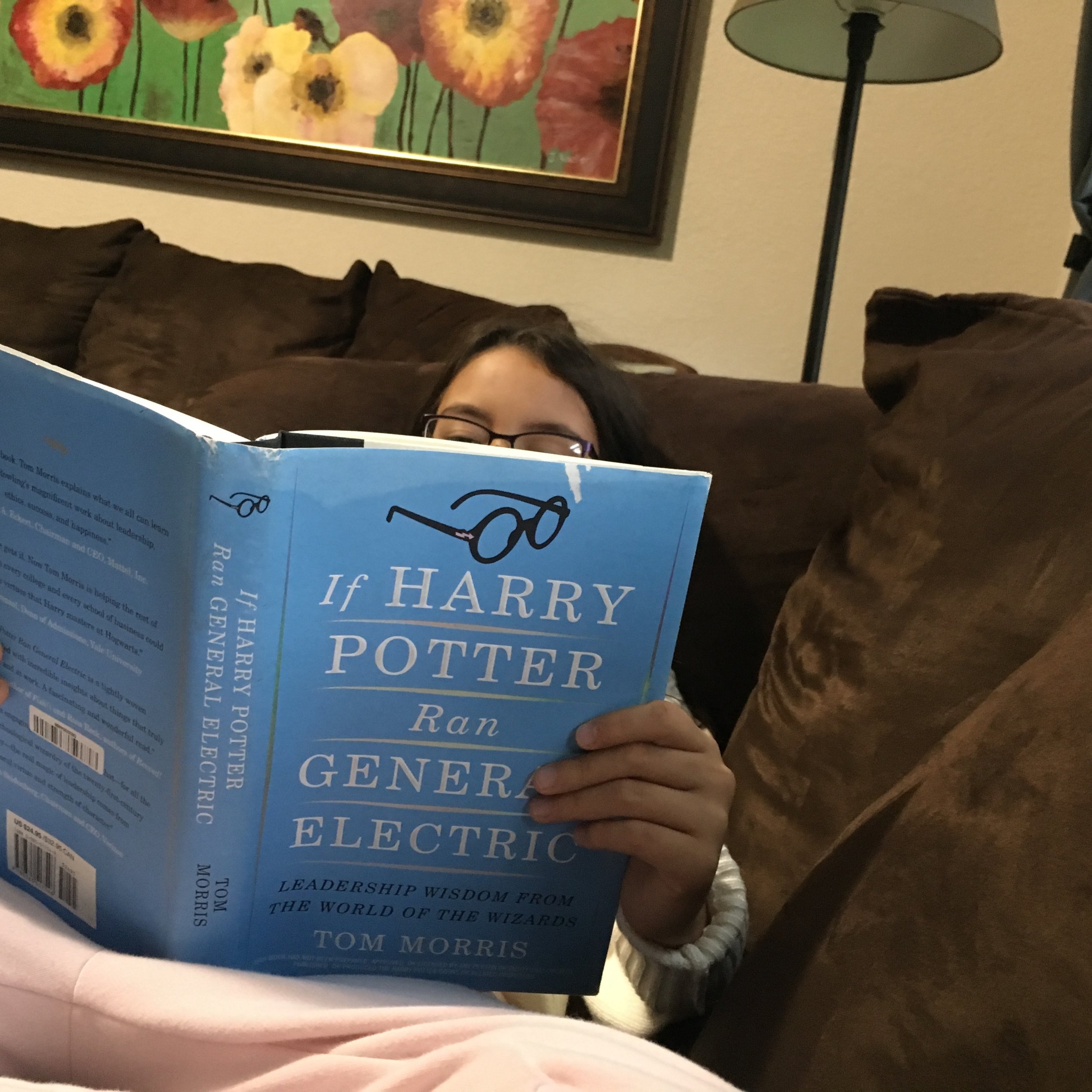
My Favorite Recent Photo: A young lady named Jubilee gets off to a head start in life by diving into some philosophy!

My Favorite Recent Photo: A young lady named Jubilee gets off to a head start in life by diving into some philosophy!

Great new Elizabeth Gilbert book on creative living and the creative experience.

Great new Elizabeth Gilbert book on creative living and the creative experience.

Two minutes on a perspective that can change a business or a life.

So many people have asked to see one of my old Winnie the Pooh TV commercials and I just found one! Here it is:

Long ago and far away, on a Hollywood sound stage, I appeared in two network ads for the wise Pooh, to promote his adventures on Disney Home Videos. For two years, I was The National Spokesman for that most philosophical bear. This is one of the ads. I had a bad case of the flu but I hope you can't tell. A-Choo!

One of my newest talk topics is "Plato's Lemonade Stand: Stirring Change into Something Great." Based on the old adage, "When life hands you lemons, make lemonade," this talk is about how to do exactly that. Inquire for my availability through the c…

One of my newest talk topics is "Plato's Lemonade Stand: Stirring Change into Something Great." Based on the old adage, "When life hands you lemons, make lemonade," this talk is about how to do exactly that. Inquire for my availability through the contact page above! Let's stir something up!

Above is a short video on finding fulfillment in anything you do, that was taped a few years ago. I hope you enjoy it!