Follow @TomVMorris
Retreats
Keynote Talks and Advising
About Tom
Popular Talk Topics
Client Testimonials
Books
Novels
Blog
Contact
ScrapBook
Short Videos
The 7 Cs of Success
The Four Foundations
Plato's Lemonade Stand
The Gift of Uncertainty
The Power of Partnership

Tom Morris

Great Ideas. With Power. And Fun.
Retreats
Keynote Talks and Advising
About Tom
Popular Talk Topics
Client Testimonials
Books
Novels
Blog
Contact
ScrapBook
Short Videos
The 7 Cs of Success
The Four Foundations
Plato's Lemonade Stand
The Gift of Uncertainty
The Power of Partnership
Blind man.jpg

Our Blindness

We're all blind to something. This election year proves it anew, in case you ever doubted it. But what we're blind to varies, all over the map. We're each self deceived in some way, and we're all vulnerable to the deceptions of others in a related manner. But it all starts within. We're masters of tricking ourselves through the subtle diverting of attention, that easy assumption, a longstanding resentment, an unexpressed hope, or the righteous indignation toward others that often masks our true need to rectify and reform ourselves.

The most self deceived person of all is the one who sees deception only in the lives of others, and never in his or her own heart and mind. To be blind to your own blindness is a most dangerous state indeed.

Our inability to see damages our relationships, our families, and our work. It fractures our communities and threatens our nation, as well as our world. The insight and empathy so desperately needed for a situation just may not be available when something deep occludes your vision.

But our blindness can be healed. And in every case, it's at least at bottom, a spiritual matter. Spirituality is all about depth and connectedness. It's liberated from the superficial or the alienated. It has counterfeits, of course, that are just in the thrall of other things. But true spirituality is free from such blockage, free from the worst forms of blindness, and therefore free for attaining healthy forms of unity. It's connected with others through kindness, compassion, love, and understanding. Jesus taught its necessity. And so have many other great individuals whose lives we most admire.

Plato urged us to leave the dark cave of delusions and dim appearances to journey in search of the light we need. And so did Pascal. In our time, we need their wisdom more than ever.

Amen?

PostedSeptember 10, 2016
AuthorTom Morris
CategoriesAdvice, Life, Philosophy, Wisdom
TagsIntellectual blindness, Spiritual blindness, Prejudice, anger, politics, philosophy, wisdom, Tom Morris, TomVMorris, The Oasis Within, TheOasisWithin.com
Post a comment
FlowersMountain.jpg

What is Existence?

I tend to blog on practical topics. But every now and then, we may benefit from diving deep. I was recently on a public broadcasting radio show where the host launched the hour of talk by asking "What is the meaning of life?" I said something like, "Wow, we're not going to start small here today." And, yeah, in case you're wondering, I told her the answer. But that's for another time.

My favorite Southern novelist asked me this week by email how I would define or characterize existence. And that's quite a question. To define existence is such a bear because, in order to be helpful, definitions have to be in terms of either more fundamental things or more familiar things. And what's more of either than existence? But what you can’t define or analyze into component parts, you can sometimes still elucidate or parse. And I'm willing to give it a try.


So: What is existence? Well. Let's try some things.


Existence is the wild unruliest child of thought, which thinks first itself.
Existence is whatever makes illusion possible.
Existence is the great grandfather of thought.
Existence is the domain encompassing all of necessity and a thin sliver of possibility, stirred and shaken.
Existence is the actualization of all the potential that just could not wait any longer.
Existence is the gossamer veil of reality that floats within the vast emptiness of surrounding nothingness.
Existence is the thick, rich, dense soup of the actual.
Existence is the play of divine creativity.
Existence is the actualized realization of potentiality.
Existence is the most basic quality everything shares, down deep, throughout, and shimmering on the surface.
Existence is the ontological moment, the evanescent bubble of being, the knife’s edge between the future and the past.
Existence is what bricks, dogs, numbers and rainbows have in common.
Existence is etymologically to stand out, to rise above the boiling yet somehow nonexistent abstract cauldron of mere possibility, breaking the thin eggshell of mere potential and emerging, whether for a brief moment or an eternity.
Existence is the sparkling foam from the roiling void beneath.


Existence is the gift of God, but a gift that's in the giver and giving as well as the receiving—that one unique metaphysical gift that calls forth the recipients one and all, inviting us to the party, and bringing us here with love and a fierce hope that we'll make the most of this most spectacular present.

PostedSeptember 9, 2016
AuthorTom Morris
CategoriesWisdom, Philosophy, nature, Life
TagsPhilosophy, Wisdom, Existence, Tom Morris, TomVMorris, Metaphysics
Post a comment
OceanTurbulence.jpg

The Peace of Mind From Living Deeply

Here’s a short conversation I want to share because of its relevance in our current political season. It’s a sneak preview from page 106 in my next book, The Stone of Giza, that’s due out soon, in November. The setting is 1934 in Cairo, Egypt. Thirteen year old Walid and his best friend, the younger but precocious Mafulla, are having breakfast together and talking. You may or may not yet know these characters from the previous books, The Oasis Within and The Golden Palace.

The boys have been talking about the Greek philosophers and their insights about life. The topic of superficiality has come up, and by contrast, what it’s like to live more deeply than just skimming the surface of life.

Walid is in mid-thought when he says:

“I had a talk with Uncle Ali once when he said that maybe life is toughest on the surface and much less difficult for those who live more deeply. It’s like what people say about the ocean.”

“What?”

“That there can be huge waves and churning on the surface, but deep down it’s calm.”

“Oh?”

“Yeah. The storms happen on the surface, but not far down below.”

“Oh, yeah. Ok. I see what you’re saying. Maybe people who live more deeply feel the troubles of life less and so have less need for trivial relaxations.”

“Yep. That’s what I’m thinking.”

“So it’s living superficially that wears people out because that’s where all the turbulence is.”

“Yeah.”

“And whenever the surface dwellers do confront anything hard or challenging and try to understand it, however little time they end up spending on that philosophical quest, they just don’t do it right—they don’t know how to because they’re out of their depth—and even a little bit of that sort of thought wears them out completely. And then they go running to something really trivial or superficial for rest.”

Walid pondered this for a moment. “I think you’re right. People who don’t ordinarily live life deeply can get all worked up about the least thing when they’re talking religion or politics or philosophy or life. They get all stressed and emotionally wear themselves out for no good reason. It’s like they think they have to protect themselves by either pushing away the issues or else really defending their opinions, whatever they might be. They get all resistant and hostile, and that’s always exhausting.”

Mafulla nodded and said, “It can get emotional pretty fast.”

Walid continued, “People who act that way just don’t realize that you sometimes have to relax into the search for truth, open your mind, and be ready to embrace a new sense of reality.”

“Good point.”

“There’s no reason to be afraid of new perspectives and new truth. Living in the truth is the best protection of all, the safest thing there is. And anyone who can help me do that, maybe by opening my eyes, or helping me change and correct wrong beliefs or attitudes—that person does me a great favor. And I can’t benefit from others in this way unless I relax a little and listen and really open my mind.”

Mafulla replied, “Yeah, it’s a bit like what Masoon says about judo and using energy in a fight.”

“What do you mean?”

“When someone comes at you, sometimes the best move is to relax and lie back and let the blow develop—don’t resist it, don’t meet it with more force, but let it play out, and then see what’s next. People often debate deep issues in religion and philosophy like they’re fighting for their lives and they’ve got to be tense and forceful, or they just get mad and walk away.”

“That’s true.”

“The strange thing is that it would often be best for them not to do any of that at all, but to be open and allow the new ideas to come, and let them develop and play out and then see what’s next.”

“Yeah. And there’s another thing about the Greeks and us.”

“What?”

“Lots of people, at least as adults, just seem to have no genuine curiosity about the world. The ancient Greeks were wide-open curious about everything.”

“You got that right, my very curious friend and fellow philosopher.”

“Thanks. If people would just let us, we could set them all straight real quick.” Walid looked serious and then grinned.


PostedSeptember 5, 2016
AuthorTom Morris
CategoriesAdvice, Attitude, Life, Wisdom
TagsWisdom, The Spirit, Depth, superficiality, philosophy, religion, politics, anger, hostility, ideas, curiosity, Tom Morris, TomVMorris, The Oasis Within, The Golden Palace, The Stone of Giza, Walid, Mafulla, Ali
Post a comment
BarberShop.jpg

Flannery O’Connor and The Limits of Political Reasoning

In the early 1940s, a young southern writer by the name of Flannery O’Connor spun a tale about an extremist politician and his base that resonates deeply today.

An election campaign is on for the governorship of a southern state. Every time the mild mannered college teacher Rayber goes to get a shave or a haircut, the men who work in the local barbershop are talking and laughing about their favorite candidate, the wildly racist strongman, Mr. Hawkson, known as “Hawk,” and they often repeat with enthusiasm something outrageous he’s just said at a public rally.

Hawk’s campaign is all bluster and insults. He’s got pet-names for his opponents, diminishing “effeminate” epithets that his followers relish and love to repeat. The head barber at one point says that all his talks are “killeroos,” as he recounts to the roomful of chortling and celebrating men some of their candidate’s most recent racist statements. Rayber is shocked that they’re speaking so crudely while quiet George, a young African American man, sweeps the floor of the shop toward the back. The professor has to speak up.

“A great many people,” Rayber said, “consider Hawk a demagogue.” He wondered if George knew what demagogue meant. He should have said “lying politician.”

“Demagogue!” The barber slapped his knee and whooped. “That’s what Hawk said!” he howled. “Ain’t that a shot! ‘Folks,’ he says, ‘them Mother Hubbards says I’m a demagogue.’ Then he rears back and says sort of soft-like, ‘Am I a demagogue, you people?’ And they yells, ’Naw, Hawk, you ain’t no demagogue!’ And he comes forward shouting, ‘Oh yeah I am, I’m the best damn demagogue in this state!” And you should hear them people roar! Whew!”

Rayber is stunned. He doesn’t know what to say. There are so many issues at stake in this election. There are too many obvious things deeply wrong about this man, Hawk. The progressive but timid college teacher can’t figure out where to start. He wishes the barber would read some things. The man says he doesn’t have to read nothing. All he has to do is think, using horse sense. No big words are going to make any difference. Doesn’t Rayber know that Hawk is gonna keep those other people in their place and make sure everybody like him and the teacher make more money if he’s elected? Rayber tries to point out that a little extra money isn’t going to mean anything if the state collapses under the weight of Hawk’s total incompetence and crazy beliefs. So he vows to defend his own sensible candidate some time soon in the barbershop and enlighten all of them. The barbers laugh more and say that he just can’t use the phrase ‘goodgovermint.’ That’s not allowed, they snicker.

Rayber goes home and writes a two page statement about the vast differences between the candidates. At first, it’s hard. The real issues are so obvious. Where should he begin? How do these men not see such things already? He laboriously writes out what’s wrong with Hawk and what’s right about the clearly better candidate, the reasonable and progressive Darmon. He then takes this little two page speech to a friend, the philosophy professor Jacobs, explains what’s going on, and reads it aloud to practice and get some feedback. The philosopher says, simply, “I never argue.” Rayber insists: But what if you’re right? “I never argue,” Jacobs repeats, knowing the futility of what his friend is attempting.

Our hero goes back to the barbershop and reads his treatise aloud, hoping to refute and reform these men, using the real issues and clear reason. They laugh and laugh and laugh. In the end, he punches the barber and runs out of the shop.

The seventeenth century French scientist Blaise Pascal, as well as the prominent eighteenth century British philosopher David Hume, both understood that, for most people, reason is the servant of passion and can rarely undermine or overturn its commitments. Emotion trumps all. So when a political candidate appeals to the basest and most fundamental fears, resentments, and sources of personal bitterness, no amount or quality of reasoning can possibly make a difference. You either walk away, or someone throws a punch.

It’s a sad commentary on the human condition. And in this classic story, “The Barber,” Flannery O’Connor anticipated well what’s going on in our current presidential election. She captures in the character of Rayber the total confidence of progressives in being right, the accompanying astonishment that anyone could possibly support someone like Hawk, and our often Quixotic approach to any attempt at explaining what’s what and turning things around.

Aristotle believed that politics is about how best to live well together. As such, in principle, political discussion should be among the most ennobling forms of discourse. When I recently suggested this during a breakfast in New York City at a table of corporate leaders overlooking the Statue of Liberty, everyone laughed so suddenly and loudly I thought a few might choke on their eggs. There can clearly be a huge gap between theory and practice. And it's one we're all experiencing quite vividly right now. And yet, despite Rayber’s ratiocinative failure in the story, and my own experience of strict limits in similar efforts throughout the current campaign, I remain stubbornly convinced that cool and sensible reason has a role to play. Or else, our democracy is doomed. And if you happen to disagree, please don’t tell me. I’d hate for somebody to have to get punched.


PostedAugust 25, 2016
AuthorTom Morris
CategoriesAdvice, Life, Wisdom
TagsFlannery O'Connor, Tom Morris, TomVMorris, Politics, Donald Trump, Trumpism, Liberals, Conservatives, Philosophy, Reason, Logic, Emotion
Post a comment
Anger.jpg

Anger in Our Time

What's the Number One emotion or attitude right now around the world? If we can trust at least a modicum of what we see and hear across all media these days, it just might be anger, followed at some distance by anxiety. Frustration is common. Disillusionment is widespread, but it's anger that seems to reign supreme in certain geographic areas of the globe, and closer to home in our own political climate. This emotion isn't a fount of hope, a typical building block of success or happiness. And yet, it's everywhere. And it seems that those who harbor it want to inflame it in others. Why?

First, I should acknowledge that there's nothing intrinsically wrong with anger. As Aristotle told us long ago, its rationality is all about such questions as "toward whom, for what reason, in what measure, for how long, and to what end?" Righteous indignation is proper toward the harming of the innocent. I can't imagine a persuasive moral tradition that reserves all judgment and urges us to accept even the worst, most vicious conduct. But, as Aristotle's questions suggest, in order to be reasonable, productive, and even healthy, anger needs to be the temporary reaction to a particular situation that goads us into solving the problem ingredient in that situation, and thus improving things for the better, overall.

Anger that's ongoing is corrosive and destructive. It's a poison. And yet, if a current sampling of Twitter and Facebook provides any reliable indication, there are many people who actually seem to embrace it and relish it in their lives.

C.S. Lewis had this wonderful little story in a book called The Great Divorce, where people in hell are given a bus trip to heaven, where they can look around as tourists. The surprise is that, if they like what they see, they're invited to relocate. The only condition is that they have to give up whatever "sin" or moral flaw kept them out of heaven in the first place. If it was bitterness, or resentment, they have to let it go and put it away for good. If it's greed, or unbridled ambition, they'd have to say goodbye to that. And if it's old fashioned anger as a way of life, they'd simply have to renounce it, cease to fan its flames, and turn away from it as their mode of existence. The surprise is that many people can't manage to accept the offer, however much they seem to value it. Their besetting sins have just become too important to them. They've said, in effect, "Evil, be thou my good." They've grown accustomed to some counterfeit of happiness, and can't let it go, even when faced with the real thing.

How could this be? I've known people of whom it was true. You may have, as well. It's hard for us to experience such negative emotions as disappointment, frustration, despondency, and discouragement. Such emotions can be a swamp, a bog for the soul. When our hopes seem to have been dashed, we often can't stand to endure those victim emotions, feelings that just seem to make our plight worse. So we transform the disappointment or discouragement into anger. We lash out at someone or something outside ourselves as the source of our problems, the cause. We're good. They're bad. And directing our ire outwardly is cathartic. We release all that pent-up energy, throwing it toward someone else. And when we can do so as a group endeavor, it's even better. Misery loves company the most when the crowd all joins together in confirming and reinforcing the anger that's substituted for all those other, harder, emotions. The irate growl together, almost as a sporting crowd would cheer together. And they're actually cheering their own substitution state for those more difficult emotions, or for the yet harder work that actually addressing the challenging situation might require.

The great philosophers join together in recommending that we not do this. Moreover, many suggest that we have compassion for those around us who are choosing this false path. They are taking themselves down a road that doesn't lead to heaven, but to a very different place instead. And they're cultivating a comfort with counterfeits that may one day rob them of their true capacity to love and live in a fulfilled, successful, and even happy way.

So as we see so many fanning the flames of fury around us, we are wise to refuse that road ourselves, and instead work to rectify the sources of the problems that we can, eventually, solve.

PostedJuly 28, 2016
AuthorTom Morris
CategoriesAdvice, Life, Philosophy, Wisdom
TagsAnger, CS Lewis, Anxiety, Politics, The 2016 Presidential Race, Tom Morris, TomVMorris, Wisdom, The Great Divorce
Post a comment

The Unconscious Mind: From The Golden Palace

In my new book, The Golden Palace, Chapter 16, there's a discussion of the unconscious mind that's been revolutionary for my own recent thinking and work. I'd like to share it here. The setting is a beautiful sitting room in the royal palace in Cairo, Egypt. The year is 1934. King Ali Shabeezar is speaking to his nephew, Walid, and Walid's best friend, Mafulla.

Ali leaned back on the sofa cushion. He said, “Something just occurred to me. Have you boys ever heard of the unconscious mind?”

“Not really,” Mafulla said, “I mean, I know my mind’s unconscious when I sleep, and sometimes in class.”

“Maybe I’ve heard the expression once,” Walid said, as he smiled at his friend.

“Well, there are many things stored in our minds, like information learned in the past, of which we’re not at this moment consciously aware. It’s in our minds for retrieval, but is not now conscious. There are also habits and dispositions that exist in the mind beyond our introspective self-awareness. You can consciously gaze within and not see them. And this is true of many other things that we take in about the world around us but that remain beneath the sweep of full awareness. We have huge resources in the unconscious mind that are not always quickly or easily available to consciousness.”

“I hadn’t thought about it like that, but this makes sense,” Walid said.

“What’s most important to realize is the perhaps initially surprising truth that the unconscious mind represents the vast majority of our mental possessions and abilities. Our conscious experience is like the very top few stones of the Great Pyramid. The rest of our mental ability is like the remainder of that huge structure, except that, in reality, the difference in the size and scope of those mental areas is much, much bigger.”

“I’d never really thought about that, Your Majesty,” Mafulla said. The king nodded and continued.

“Many things go on in our minds that we never consciously realize. There are patterns and indications picked up by deep processes of recognition within us that may or may not enter our explicit thoughts. But we can train ourselves to be more open to this deeper part of our mental activity. We can get to a point where we allow those otherwise hidden thoughts and hints to flow upward. That way, we become aware of much more than most people ever realize. Inventors do this. So do all great explorers and artists and scholars, and athletes. The most innovative scientists are very good at it. The best warriors like Masoon rely on it. Creativity in any walk of life requires it.”

Walid spoke up. “That’s connected to what we were talking about so much in the desert—the power of our minds.”

“Correct. And, Mafulla, in case you and Walid haven’t spoken of this, he and I talked much about the mind on our trip across the desert. Most people live in a terribly constricted and reduced circle of being. They’re in self-imposed exile from the best that life has for them. They can’t make the right decisions or even see the true possibilities that our world offers unless they access this deeper level of the mind. Exiles from their own greatness, they choose unhealthy relationships, pursue the wrong paths, and generally end up living in various levels of either misery, or emotional deadness. They exist on the most basic level as human beings, but they’re not fully alive.”

The king went on, as he looked over at Walid. “I’ve talked with you a great deal about the power of the mind. But it’s not just that our normal conscious awareness can be powerful. In fact, if it’s cut off from the deeper sources of thought and feeling, it will not be powerful at all. Only when we allow the deep parts of our minds and hearts to percolate upward into consciousness, and also directly touch our actions, can we tap into our true power. And only when conscious thought resonates with these deeper resources will it have its proper impact.”

He sat for a moment in silence, then said, “We have to get beyond the superficial chatter of our normal consciousness. We need to access all that’s available to us beneath the clutter, beyond the chattering voices and distractions of normal thought.” The king smiled. “We need to experience what I like to call the thought beyond thought. That’s where the deep power is.”

“How can we do this?” Walid asked.

“We calm our conscious minds. We relax our bodies and release whatever ordinary thoughts or feelings might be impinging on us. We then become open to allow deeper insights to appear. And they’re always near us, available to us, if we’ll just notice them and take them in. We’ll talk more about this in days to come, but for now, learn to listen carefully to any small thoughts that might seem to play about beneath the surface of your normal consciousness. When one appears, invite it to linger and develop in your mind.”

“This is what you do, Your Majesty?” Mafulla asked.

“Yes, it is. All the time. I want you boys to do this as well, to be sensitive to your inklings and feelings about the situations that develop around us. Never just dismiss these hints that sometimes fleetingly appear from the realm of the unconscious mind. Pay attention to them. They’re worthy of your notice. And then tell each other and me. That way, we can work together powerfully to resist and restrain those who have given in to the downward pull of evil. And that way, we can also make some very good and creative things happen.”

“Ok,” Walid said. “This sounds really important.”

“It is.”

“We’ll try to do exactly as you say.”

“Sure thing, Your Majesty,” Mafulla answered.

“As you seek to tap into your deeper potential, you’ll progressively grow in your ability to do so. It’s like any skilled behavior.”

“I’m sure you’re a master at it, Your Majesty,” Mafulla said.

“It’s very natural for me, and has been for many years. Just remember this. What we can know goes far beyond what most people suppose. And what we can do is just as vast.”


PostedJuly 20, 2016
AuthorTom Morris
CategoriesAdvice, Life, Philosophy, Wisdom
Tagsthe Unconsious Mind, Creativity, Mental power, Philosophy, Wisdom, Tom Morris, TomVMorris, The Golden Palace, The Oasis Within, Walid and the Mysteries of Phi
Post a comment
RedRidingHood.jpg

Dreams and Unconscious Creativity

The unconscious mind works in strange and sometimes wonderful ways. The other night, I was awakened by a loud thunderstorm passing over the beach. I law awake in the dark room listening to the booms that echoed over us. Then I fell back asleep and dreamed.

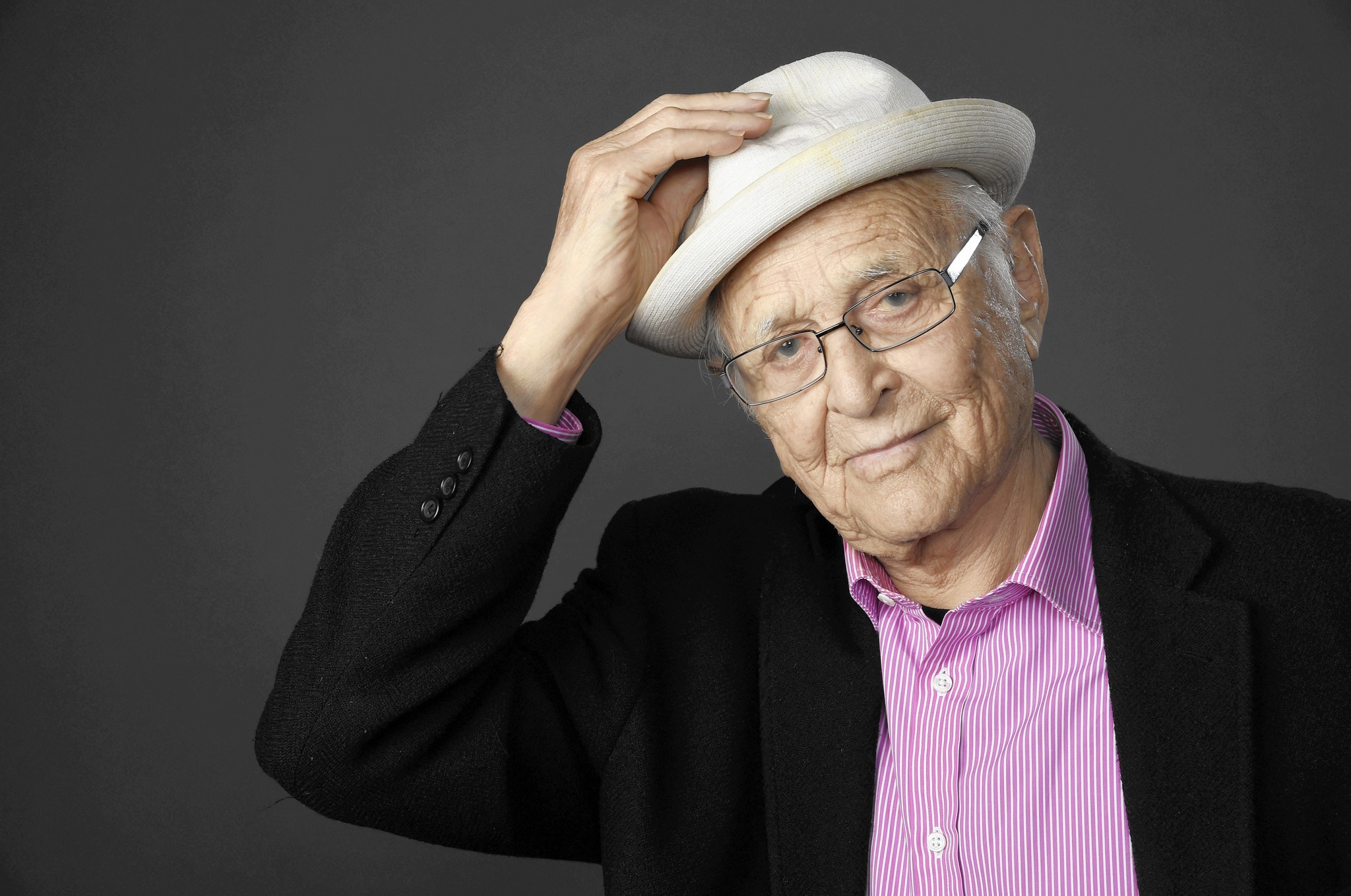
In the dream my old friend Norman Lear was taping some segments for a TV show. He asked me on camera, "Why are so many classic fairy tales so violent?" It was a question I had never been asked, and had never really contemplated. But as a philosopher, you can ask me anything and I'll start thinking about it—even in a dream.

In my most confident dream demeanor, I spontaneously answered that the classic fairy tales, like the grim fables of the Brothers Grimm, and also like many ancient myths and modern superhero stories, serve to prepare young people as well as the rest of us for a world that's challenging, sometimes scary, and always uncertain. These stories are like flight simulators for pilots, who are exposed virtually to every emergency situation imaginable so that in real life, if ever confronted with one, they can respond more calmly and with prior practice as to how to act and what to do. Now, it's not as if we're likely to come across an old lady in the woods who bakes little kids into pies for her oven, or a frightening wolf that's just eaten a grandmother, or a fire breathing dragon. But we will have scares and difficulties and unanticipated challenges in our lives, and we need to be ready to meet and overcome them.

Many old stories prepare us for this. And some give us the assurance or inspiration that we can stand up to danger and prevail, even against terrible odds and awful scenarios.

I woke up from this dream and my answers to the camera amazed at how my unconscious mind had knit together a variety of disparate experiences I had gone through over the previous weeks. My wife and I had been watching a Food Network competition show called Food Network Star, where the contestants trying to get their own television show were often asked to explain something for the first time in front of a camera. Ah. I had also recently been in touch with my old friend Norman Lear, the great television producer and creator. And my wife and I had just watched, back-to-back the movies "Joy" and "The Martian" where individuals are challenged in scary and daunting ways and, against overwhelming odds, manage to prevail. I had just been invited to help out on camera for a television special on superheroes in American history. And I had also been asked to speak to a large group of physicians about dealing with the career stress that results from all the challenges and uncertainties of modern medical practice. And all these unrelated things managed to bring elements into my dream.

That's one of the powers of the unconscious mind—it can knit together apparently unrelated things into insights and ideas we can use right away. It's a great cauldron of creativity. But we have to give it time to work, and then a way to bring its treasures into our conscious minds. Sometimes sitting meditation is just the thing. Sometimes, a mindful walk down the street is all it takes. Getting beyond the chatter and beneath the clutter of our everyday thoughts, moving them aside, turning down the volume, allows the great inventions or discoveries of our unconscious mind to bubble up into consciousness in a way that can often offer great guidance.

Open the door to your unconscious mind, and you may find that you have treasures of wisdom that surprise you.

PostedJuly 18, 2016
AuthorTom Morris
CategoriesAdvice, Business, Life, Wisdom
Tagsunconscious mind, conscious mind, meditation, dreams, creativity, business, life, wisdom, Tom Morris, TomVMorris, philosophy
Post a comment
Click on the book cover image for quick easy access to the hardcover, paperback, or e-book!

Click on the book cover image for quick easy access to the hardcover, paperback, or e-book!

The Golden Palace, Ideas, and You

I keep getting emails from friends and clients asking me whether The Golden Palace is available yet in print and as an e-book. The answer is YES!

People are having to ask because we've only done a "soft launch" of The Oasis Within and The Golden Palace in the past nine months. That means I haven't been on any national book tour for signings at retail bookstores everywhere, and haven't yet done any national print, radio, or television publicity for the books. My speaking schedule this year just wouldn't allow that, and yet I wanted to get these books in print and available to my circle of philosophy friends and enthusiastic audience members as soon as they were ready. Thus, the soft launch.

These are my favorite books I've ever written. And the early feedback on both books has been amazing! Thank you so much if you've emailed me about these books or posted a comment on Amazon or any other online book site! I've never had such positive feedback for books! It's deeply gratifying. These two books launch a series of at least eight books, now all written and being edited, that are about a 13 year old boy in Egypt in 1934 who is learning some deep life lessons as he accompanies his uncle on a path of action, adventure, mystery, intrigue, and profound and practical philosophical ideas.

In case you haven't yet seen The Golden Palace, let me show you just two recent comments. On Amazon, a prominent American philosopher wrote:

5 Stars! Let the Series Begin! An Amazon Customer.
What would you get if you locked Indiana Jones, Plato, and Obi-Wan Kenobi in a room and asked them to write a rousing tale of intrigue, adventure, wisdom, and suspense? Probably something a lot like this book! A lead-off home run to what promises to be the most exciting series of philosophical novels of our time.

An Australian reader just posted on Twitter these words:

The Golden Palace by @TomVMorris is Philosophy 101, Indiana Jones, and The Da Vinci Code all rolled into one.

It's very nice to be mentioned in such good company! Another philosopher has said,

The Golden Palace is a rich feast, baking the ancient wisdom of Plato and Aristotle into the timeless adventure of Lawrence of Arabia. Tom Morris serves up that wisdom in a coming of age story as contemporary as Harry potter, but with this intriguing twist: the true instrument of magic is not a wand, but the mind.

I wanted to blog about this today because I just finished editing what will be the next book in the series, The Stone of Giza, another tale of intrigue and wisdom, carrying on the adventures of the cast introduced in The Golden Palace. That book should be available in a few months. But the summer is a great time to start in on The Oasis Within if you haven't read that prologue to the series yet, or to get a copy of The Golden Palace, Volume One of the series, if you've already sampled the prologue and are eager to read more.

I'm also meeting with book groups on these books, for the first time ever, so don't hesitate to ask!


PostedJuly 14, 2016
AuthorTom Morris
CategoriesLife, Philosophy, Wisdom
TagsThe Golden Palace, The Oasis Within, Tom Morris, TomVMorris, Philosophy, Novels
Post a comment
Harley.jpg

Art and Social Responsibility

My wife and I were sitting at home and watching a bit of television. I think we had just flipped the channel and there was suddenly an ad for a forthcoming movie, soon showing in your local theater, called Suicide Squad. The new live action DC Comics thriller is about a group of supervillains who are set free from prison to save the world from some major threat. The Joker of Batman fame may be the tame one. But the ad just shows a bunch of people done up as anarchist freaks, heavily armed with an outrageous arsenal of weapons, and jumping over a police car on a city street in the dark of night, on their way to commit some form of mayhem.

I thought, "Really?" Then, "This week? With what's going on in our country right now and around the world?" Do we actually need wild images of crazy people threatening and shooting other people against a great rock sound track and with vibrant colors and heavy attitudes? And Will Smith plays one of them? Our Will Smith? I did a little Googling and saw a trailer that features a scene of Will Smith in prison being beaten viciously by police, or prison guards. Really? That's a good image for our day?

As soon as the commercial was over, and I was sitting there, mouth open at the sheer absurd inappropriateness of what I had just seen, given our current situation in the nation and the world, when a second ad came on, this time for a good old fashioned horror flick, where people are terrorized and killed in normal ways, by ordinary horror film bad guys, and with the standard gore to match. My evening was complete.

Sometimes, I understand why Plato wanted to ban creative artists from the good society. Some of them just seem to have no sense of social responsibility whatsoever.

I once lived next door to a pretty famous architect - Harvard, Berlin, and Bauhaus trained - a minimalist in aesthetics and a true intellectual. He designed some beautiful private homes in his day, if you like concrete and glass. But one day when we were talking, he went on a rant about modern architects and social responsibility. He said, "Have you ever really looked at the Art and Architecture Building at Yale, downtown in New Haven?"

I said, "Yeah, I went to look at it the other day and couldn't find the front door."

He laughed. "That's the problem. Paul Rudolph hated the world and the universe around us the year he designed that building. He specified porous concrete for the surface so that all the dirt and soot of New Haven would collect on the thing and it would look ugly and hideous, reflecting his view of the cosmos around us. They have to sandblast it every few years or it's a mess. And the door is placed to confuse you, like life, he thought."

I was shocked. He continued, "If you're a painter, and buy your own materials, paint what you like. It's up to you. But if your art is in public, like a building, and it's funded by other people, then you have a social responsibility as an artist—and most artists don't get that in the least."

I see all the time what my neighbor meant. Most new novels these days are described as "dark" and "grim" and "bleak" and "disturbing." I think: "THAT'S what we need now? REALLY?"

Don't we need hope and inspiration and wisdom and guidance? What's wrong with those things as the focus of art? Why can't more books and films and television shows give us that and still have high credibility as art?

As I write this, the two most recent news headlines this hour are:

Driver plows through Black Lives Matter Protestors in Illinois

Three Dead in Shooting at Michigan Courthouse

And the American city photo of the hour is this:

PoliceMilitary.jpg

We live in a time when we're knee deep in emotional gasoline. We don't need artists running around lighting matches, tossing them down, and laughing at the results, while hoping for the rest of us to keep them in luxury homes far from the fray.

I know. I sound like an old fart. But I had the same belief when I was young. Boycott the bad. Insist on something good. Free speech is great, vital, and the foundation of a democracy. But social responsibility is just as important.

PostedJuly 12, 2016
AuthorTom Morris
CategoriesAdvice, Life, Wisdom, Philosophy
Tagsart, violence, America, American politics, Black Lives Matter, Police, Peace, Wisdom, Philosophy, Social Responsibility, Suicide Squad, DC Comics
Post a comment
NormanLear2016.jpg

On Life, Age, Loss, Joy, and Learning

Oh, my. If you have 7 minutes and 44 seconds—and who doesn't, unless you happen to be on the wrong side of a firing squad right now, and if that's true, then get off this blog for crying out loud—and if you want a major blessing today—and who doesn't, including anyone facing that firing squad, especially given the fact that it could delay the dreaded action by 7 minutes and 44 seconds, PLEASE watch this short video on my old buddy Norman Lear, where you'll learn how dancing naked in front of a mirror at age 93 just might be the secret to longevity, you'll be delighted, and entertained, and made to think about television today, and age, and loss, and learning.

Click this: http://nyti.ms/29xbgRt And then come back here if you'd like.

I first met Norman when I was 39 and he was 69. I was just beginning to do philosophy beyond the classrooms of Notre Dame, out in the broader world, and we had made contact by telephone. Can you imagine what it was like for a kid who grew up watching All in the Family and debating the issues it raised around the living room to come back to my office one day after a class and press the answering machine and hear, "Tom! This is Norman Lear! Here's my home phone number. Give me a call!" I was just astonished.

Shortly after a bunch of great phone calls, he sent me plane tickets to come visit him at his beautiful vacation house in Vermont, an old home once owned by Robert Frost, then by the abstract artist Kenneth Noland. Its grounds are adjacent to a state forest and are as peaceful as you can imagine. I spent most of a day sitting on the big front porch with Norman and the Dean of the Harvard Divinity School and his wife, and with the co-founders of Tom's of Maine, one of the most ethically and environmentally sensitive consumer products companies of our time. We philosophized all day, and through a great lunch. Mid afternoon, Norman asked me to talk a short walk with him. We ended up lying in the grass on his spacious front lawn, pondering life and creativity. And we laughed a lot.

Then, a short time later, he brought a bunch of television producers to see me speak in front of my first audience of over 5,000 people—all convenience store owners at their national meeting in Las Vegas. We had lunch afterwards and since I was going to speak the next day to the top leadership of Merrill Lynch at a retreat in Santa Barbara, Norman invited me to fly to California with him on his plane, where the conversation continued. He got off in LA and let me have the G4 for the rest of the ride to my destination, and then came up the next day to hear that talk as well, on a different topic. I was due to go to LA for a third presentation the following day, so he offered to take me back with him. We talked and napped and talked more in the back of his limo. Then, after a visit at his amazing home in Brentwood, his driver took me to my next speaking event.

Norman played a big role in my life during those days, with his cheerful encouragement and belief in what I was starting to do as a public philosopher. He helped give me the confidence to leave university life and launch out on an adventure that was in its inception, and even now, nearly unprecedented for an academically trained philosopher in our time. Whenever I was with him, his assistants were taking calls constantly, and Fed Ex was delivering packages every few minutes, it seemed. But I never felt like I had only a fleeting sliver of his attention. His gift to me included full presence, full focus, and uninterrupted conversation of the liveliest and most probing sort. I try to remember that whenever a young person just starting his or her own adventure wants to talk—for advice, wisdom, or just encouragement.

We've kept in touch over the years, in fits and starts. He's called me several times about possibly getting involved in something he was doing. He's made me think, and made me laugh. I just love hearing his voice. Norman turns 94 on July 27. And he's still creating. He has a new show upcoming on Netflix, as well as a documentary of his life about to come out. Happy Birthday, old friend. Continue to learn and dance and create!


PostedJuly 7, 2016
AuthorTom Morris
CategoriesAdvice, Life, Wisdom
TagsNorman Lear, All in the Family, I'm not Dead Yet, Television, Movies, Tom Morris, TomVMorris, age, wisdom, joy, presence, philosophy, loss, love, learning
Post a comment

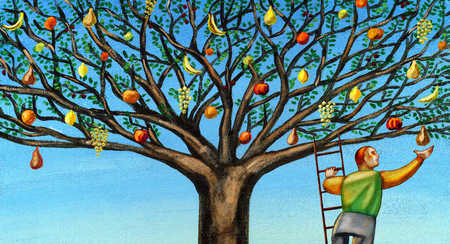
The Tree, The Fruit, and The Ladder

Here's a thought that came to me a few days ago and I've pondered it since then.

Imagine for a moment that we can represent true spirituality and even the purpose of our existence in this world as a tall tree. High up in the tree is the fruit that we're here to pick and enjoy. It's life changing. It's meant for us and is the true nourishment we need. But it's beyond our normal reach. So we find or build long, tall ladders we can climb to get to the fruit.

Imagine a positive religion as a ladder, or a life philosophy as one. Any enterprise, any structured activity or array of human activities could be conceptualized as a ladder propped up against that high tree. Some of the ladders may be rickety and dangerous or too short, but some are great and even truly inspired. Perhaps, many are. And you may properly believe that you're on the best one of all, a great ladder that's been explicitly designed for reaching the highest fruit of all. You've been taught how to climb the ladder. And suppose you've learned well. So you climb high. And you've not just mastered the techniques of ascent, you've learned lots of other things along the way because of what you've experienced and seen as you've climbed.

But here's the problem. Many people who climb in search of the ultimate fruit tend to cling tightly to their ladder with both hands. And they won't let go. Ladder climbing has been turned from a means into an end. And that's a problem. When people keep a firm grip on their ladder, some fearfully and with white knuckles, they can't actually reach out for the fruit that awaits them and take it and eat it, and share it with others.

Only those who are willing to let go of the ladder can reach for the fruit. They can still keep their feet firmly planted on its rungs, but they have to reach out beyond its structure with an open hand to get the real treasure they've sought.

And the tragedy, it seems to me, is that many people who have good ladders just become ladder experts, ladder specialists and aficionados. They work on their ladders a lot, and paint them, and polish them, and keep them in good repair. They may even gild them with gold and show them proudly to others. But when they climb, they simply cling and don't reach out for what's really the purpose of the climb.

The moral of this little metaphor is, of course, simple. Find a great ladder and climb high. But then learn to let go enough to reach for the fruit that's the real point of the climb. Life, after all, isn't about the ladder, but ultimately the fruit.

PostedJuly 3, 2016
AuthorTom Morris
CategoriesAdvice, Faith, Life, Wisdom
TagsReligion, Philosophy, Happiness, Meaning, Purpose, Spirituality, Priorities, Tom Morris, TomVMorris
Post a comment
Voting.jpg

Democracy and Education

When I was a first year graduate student at Yale, I once sat at a picnic table somewhere in New Haven, Connecticut, by myself, and worried about American democracy. I had just read the famous book by C. P. Snow, The Two Cultures. In it, he talks about the fact that, at the time, most elected British politicians were trained in the humanities, and yet most of the compelling issues of the day involved science. He wondered how people unprepared to understand the intricacies of science could possibly make the right decisions regarding research funding and policy, and the laws that ought to govern the development and use of technology.

As I sat at that small table outdoors, it suddenly struck me that a representative democracy like ours essentially depends on education. People can’t vote well for the right governmental representatives to decide issues of great complexity and import unless they understand those issues. At the time, in 1974, there were more and more reports of the decline of education in American. I remember the moment it occurred to me: Our national founders created a system that depends on an educated electorate. Without a broad and liberal education, we can never be well positioned to make wise decisions on fraught and complex matters, and we inevitably will be extremely vulnerable to shyster politicians who say what they need to say to get into a position where they can do what they secretly want to do.

We need to be extremely careful in this election cycle, because, as philosopher Bertrand Russell once said, in a democracy, we get the leaders we deserve. He added that the stupider the leaders are, the stupider yet the people were to elect them.

We need to take note.

PostedJune 26, 2016
AuthorTom Morris
CategoriesAdvice, Wisdom, Philosophy, Life
TagsDemocracy, education, C. P. Snow, The Two Cultures, Elecctions, Trump, Clinton, 2016, Tom Morris, TomVMorris, Yale, Philosophy, Wisdom
Post a comment
LauraBretan.jpg

What Moves Us Deeply?

I'm a fairly emotional person, but I've never teared up over a great business deal. I've smiled. I've laughed with pleasure. I may have gotten all tingly. But in such a setting, I've never had to rub my eyes or reach for a hanky. No tear has ever trickled down my cheek from the successful negotiation of a great contract or a big sale. And yet, I often get misty-eyed when I see other forms of human excellence. Why is this?

Just the other night on America's Got Talent, a show I haven't followed over the seasons, but that I happened to linger on while flipping channels, I had such an experience. A thirteen-year-old girl walked tentatively onto the stage and then amazed us all with her voice. Laura Bretan was cute, sweet, and humble in every way. And she looked so very young on that big platform. But her vocal abilities instantly took the audience to a new place. Everyone rose to their feet.  It was almost a spiritual experience. Simon Cowell said that in all his years, he had never seen anything quite like it.

In case you missed the performance, it's well worth a few minutes on YouTube. And make sure the Kleenex is nearby, if you're at all like me.

Maybe I'm just an emotional mess. But, almost like Robert DeNiro's character in Analyze This, I tend to get weepy at certain things. I don't sob and honk my nose, but I feel the tear ducts awaken, and sense a moistness around my eyes. I may even get a little choked up. It's a bit harder to speak for few moments. I think my sensibilities are much more selective than DeNiro's were in the famous film. But they still range over many things. I get misty when I see real courage in action, and wonderful acts of kindness. I tear up at exceptional displays of human excellence when they rise above expectations and somehow capture elusive aspects of beauty or goodness. An example of self-giving love that's shown in extraordinary ways can get to me and move me deeply.

What touches us in such situations? It may be something that's deeply of the soul, or at the core of the human spirit—even something of virtue, in the classical sense. The Greek word ARETE (Aratay), which can be translated as excellence or as virtue, may come close to capturing at least part of it.

It's especially moving when ordinary people rise above our common experience and in their actions reflect something that's both high and deep, something truly inspiring that hints at perhaps why we're here, and what we're all supposed to be living in our own ways and with our own opportunities. It's as if these moments remind us of the special wonders and mysteries of life that the daily grind can hide from us. And thus, they speak to us. Yes, that's why we're here. Yes, there's real beauty. Yes, there's genuine love. Yes, there's much more out there, or in here, in our souls, for us to embrace and live and enjoy.

So the next time you see something that moves you and you reach for the Kleenex, remember that it can also be a moment to reach for the stars, and aim high in your own life, with your own talents and opportunities, and in your own potential impact on those around you. Let the moment reconnect you to something great and reinforce the best that's in you.

PostedJune 4, 2016
AuthorTom Morris
CategoriesAdvice, Life, Wisdom, Philosophy
TagsExcellence, Emotion, Tears, Courage, Love, Kindness, America's Got Talent, Simon Cowell, Tom Morris, Laura Bretan, The Golden Ticket, TomVMorris, Wisdom, Philosophy
Post a comment
Edgerton

Another Big Mistake in North Carolina

In Wilmington, North Carolina, a local man with two children in a public elementary school recently noticed that there seemed to be some racial discrimination behind certain policies at the school, and he spoke up. As a result of his concern and action, he can no longer set foot on any school property throughout the county.

An Emperor once banned all philosophers from Rome and his popularity instantly increased. I don’t think that’s going to be the result for our local Superintendent of Schools who has banned Clyde Edgerton from all New Hanover County North Carolina school grounds.

I almost never blog about local events. But this one has national relevance and universal human resonance, so please indulge me for a moment about this man, Clyde, and his current exile.

Lest you think that this individual barred from school property must be some felonious gun toting, drug selling, rabble rousing, drunken, foul mouthed gang recruiter named ‘Clyde Edgerton,’ I should point out up front that it’s the University of North Carolina at Wilmington Kenan Distinguished Professor of Creative Writing, and North Carolina Literary Hall of Fame author of Rainey, Walking Across Egypt, The Floatplane Notebooks, Killer Diller, In Memory of Junior, and on and on including the Papadaddy’s Book for New Fathers: Advice to Dads of All Ages Clyde Edgerton, the amazingly artistic painter, guitarist, and astute banjo player Clyde Edgerton—yeah, the Renaissance Man Who Chooses To Live in small beautiful Wilmington Clyde Edgerton, one of the few people in the state or the nation whose mere presence on county school property would be in itself an education for all the students who beheld him or had the chance to interact with him. That’s the one who has been banned from ever setting foot again on school grounds in our county.

Of course, Socrates was given poison to drink because all the good he was doing for his town was interpreted as bad and he therefore shared the treatment of many great people through the ages. At least Clyde hasn’t been handed a hemlock cocktail, tarred and feathered, or invited to a big bonfire cookout featuring Roasted Author, like so many of his benevolent predecessors who crossed The Powers That Be.

Mr. Edgerton, according to our newspaper here, had been working actively as a tutor at Forest Hills Elementary School in Wilmington. Stephen Hawking was apparently unavailable for this role, Mother Theresa has long been out of the picture, and Billy Graham can’t travel like he once did. So instead we got Clyde Edgerton as a volunteer tutor for one of our schools, until he was just barred from setting foot on the property of this or any such county institution. His crime was working to make sure that some of the best opportunities at the school were available to all qualified children, regardless of race. And in doing so, he offended our superintendent. As I read on in the Wilmington StarNews piece about this insanity, it seemed to me that in this particular case, the emperor truly has no clothes. And if that makes no sense to you, it’s likely because you never had a Clyde Edgerton in your life, or on your school property.

For those who want more details on what happened to lead to such craziness, here’s the link to the news story Overwhelmingly White. I’ve been told that there will be at least two or three more articles in the news soon to expose the entire story in all its ugliness.

The sins of the malefactor seem to have consisted in his contacting other parents to see if they had been informed about a new and desirable school program, and whether they had been given a chance to put forward their children’s names to be included. Several more white parents were also concerned about the procedures being employed and tried to make sure that their nonwhite fellow moms and dads knew of the program, but they were strongly discouraged from their efforts. Clyde’s plight is just the most highly visible and incongruous of the results. And it’s a decree he learned of only when he arrived at school one day to do his normal tutoring and was denied entrance.

It’s Another Big Mistake in North Carolina, and is somehow deeply consonant with other such mistakes of late, which have tended to be authoritarian and exclusionary in various ways. Those who don’t agree with the odd Powers That Be should just “get out of our yard and go home.” This is the unfortunate childish mentality that currently prevails. But it’s surely not just my home state of North Carolina. We’re now seeing nationwide a frightening drift toward harsh authoritarian sensibilities that aren’t open to disagreement, rational discourse, or correction. I’m sure things like this happen in cities and towns all around out nation all too often. And when they do, we should speak up. So I’ve written our local paper. I’ve done this blog. I’ve gone to social media. I've written about it on The Huffington Post where, so far, over 5,000 people have been moved to hit the "Like" button. Thank you for your support. And I hope many more of my neighbors will protest this thing as well. It’s the 21st Century, Y’all. But not, apparently, all throughout my otherwise mostly wonderful state.

I hope this outrageous ban can be reversed right away, for the greater good of our—in other respects—fine community. And Clyde: If not, then you’re welcome on my property any time.


PostedMay 29, 2016
AuthorTom Morris
CategoriesLife, Philosophy, Wisdom
TagsRace, Discrimination, Clyde Edgerton, Socrates, Tom Morris, TomVMorris, Wilmington Star News
Post a comment
LionKing.jpg

The Lion King in All of Us

I saw the Lion King on Broadway last night. It was, of course, amazing. I first saw it with my wife and children right after it premiered in 1997. Last night, we took our granddaughter. And I thought it was even better as a show, which is testimony to a rare grip on the processes needed for extraordinary results over time.

In addition to the costumes, sets, lighting, music, and great acting and dance, the storyline was gripping in its simplicity. A young lion experiences tragedy, goes away, finds new friends, grows, learns, and then confronts a challenge of self knowledge. Who is he, really? What does he want? He discovers that he needs to return to his homeland and face a big challenge to reclaim his proper place in the world. This of course is the arc of the hero's journey. Leaving, learning, and leveraging that new knowledge for heroic results.

We should ask ourselves: Where am I in that adventure? Where am I in that arc? What new knowledge do I need, what new growth, what new challenge? How can a sense of self and even destiny play its proper role in my next steps? 

Each of us has our own way to roar.

PostedApril 21, 2016
AuthorTom Morris
CategoriesAdvice, Life, Wisdom
TagsHeroic Journeys, Self Knowledge, The Lion King, Tom Morris, TomVMorris
Post a comment
Cooper.jpg

Exuberant Spontaneity And Its Limits

There’s apparently a new book and documentary out on the lives of news reporter Anderson Cooper and his ninety-two year-old mother, the famous Gloria Vanderbilt. And in connection with all this, the New York Times just ran an article about the two of them in Sunday’s paper. 

At one point in the article, Anderson says about his mother:

“She has this enduring optimism and this sense that the next great love or the next great adventure is just around the corner, and she’s about to embark on it.”

What a wonderful thing, I thought to myself.

The writer of the piece later quotes Gloria making a relevant remark, and comments after it:

“The phone can ring, and your life can change in a blink,” she said, emphasizing that last word and concurring with her son’s assessment of her nature.

We rightly value spontaneity and optimism, and even an enduring exuberance about life. These can be wonderful things. But, as Aristotle once cautioned us, for every human strength that we can identify, for every virtue, there are two corresponding vices—the extreme of too little, and an equally problematic extreme of too much.

In response to need, for example, generosity can be a great virtue. In such a situation, the “too little” would be miserliness or a disinclination to open up and provide help to someone who genuinely needs it. The extreme of “too much” would be perhaps an over-the-top magnanimity that's simply out of control, a tendency to take care of others so lavishly as to endanger one’s own resources, or even health.

Likewise, in the face of danger, courage is a virtue. Cowardice is one opposite. But there is also a “too much” of crazy carelessness, or rash foolhardiness. The key to living well is to find the virtue and avoid the vices.

Optimism is good. And the sort of spontaneous exuberance displayed by Vanderbilt can be a wonderful thing. But there can also be, not just a “too little,” but also perhaps a “too much.”

Toward the end of the Times piece, we’re told this about the exuberant mother’s son:

Mr. Cooper’s own nature is signified by a profound wariness and a strong belief that disaster is always around the corner. He sees himself not just as a realist, but as a catastrophist. “I always wanted there to be a plan,” he said. “And with my mother, there wasn’t one.”

Apparently, Anderson's mother was always super excited that “the phone can ring and your life can change in a blink.” And he became equally worried and anxious about the same thing, but going the opposite way. Can an attitude of exuberance, an openness to spontaneity, and an enduring optimism be taken too far? Can they even come to damage people close to us?

I ask this as a person who admires exuberance, feels it often, and always tries to take the path of optimism myself. But does Aristotle have for us a cautionary note we should take in?

Perhaps spontaneity and exuberance, in order to be the good things they can be, must be understood and embodied in the right way, balanced between the potential excesses that they not only allow but, in one direction, even invite. Then, the free spirit doesn't so much endanger or worry those around her or him who may in response develop their own distinctive attitudes about the next time the phone might ring.


PostedApril 3, 2016
AuthorTom Morris
CategoriesAdvice, Life, Religion
TagsWisdom, Spontaneity, Exuberance, Optmism, Anderson Cooper, Gloria Vanderbilt, Tom Morris, TomVMorris
Post a comment
Socrates.jpg

The Philosophical Sensibility in Pursuit of Wisdom

Wonder. Curiosity. Openness. Adventurousness. Creative thinking. Questioning. Analysis. An insistence on precision. A desire to go deep. Empathy. A quest to link the theoretical and the practical. Suspicion of the superficial. Even-handedness. Caution. Boldness. Even courage. A patience for digging endlessly for the true gold that can only be found by persistent effort. A desire for guidance. A desire to be a guide. An optimism about intellectual effort. Hope.

PostedMarch 23, 2016
AuthorTom Morris
CategoriesLife, Philosophy, Wisdom
TagsPhilosophy, Wisdom, Tom Morris, TomVMorris, Socrates, Plato
Post a comment
PabloCasals.jpg

Digging Deep into the Obvious

“Each second we live in a new and unique moment of the universe, a moment that never was before and will never be again.” - Pablo Casals

I find this observation of the obvious to be both profound and inspiring. But I also know that there are a lot of pseudo-intellectuals in public life who would scornfully dismiss it, and label it tautological, or trivial, or trite—a platitude that tells us nothing we didn't already know, long ago, and that we don't need a musician to tell us. But then again, as Georg Christoph Lichtenberg said once about how critics view a longer form of the written word, "A book is a mirror. If an ape looks into it, an apostle is hardly likely to look out." We see what we're capable of seeing, and typically no more.

Philosophy is most often about digging deep into the obvious and finding the treasures that hide there. This remark by Pablo Casals reminds me to make each moment count, to seize the day, to venture boldly forth within the possibilities that each new moment affords me, and not to let any of these precious opportunities go to waste. Life can be a thrilling ride. It's a swirl of unique chances to grow and do and make a difference. Casals is certainly one who, within his own lifetime, made the most of this insight. We would all do well to follow his lead.

When someone of intellect and sensitivity draws our attention to a familiar facet of the world, it's not usually because he or she thinks we've never noticed the most superficial aspect of that thing; it's normally due to the fact that if we view it properly, it can contain within itself a spark, a goad, and an inspiration for us to enjoy.

PostedMarch 14, 2016
AuthorTom Morris
CategoriesAdvice, Life, philosophy, Wisdom
TagsPhilosophy, Time, Casals, Pablo Casals, Tom Morris, TomVMorris, insight, wisdom
Post a comment
PatConroy.jpg

My Evening With Pat Conroy, Prince of Stories

Years ago, I had the amazing experience of greeting a large audience at historic Thalian Hall in downtown Wilmington, North Carolina and introducing the main speaker for An Evening with Pat Conroy, the first of many events held that year to celebrate 100 years of story telling in the libraries of our county. I had the even more unusual opportunity of spending time with the author, just the two of us, for about an hour backstage before the festivities began, where we could talk freely.

He just wanted to talk about me and my time at Notre Dame. And of course, I only wanted to talk about him and his writing. If my wife had been there, we'd probably have spent all our time talking about her. But that's just the kind of man he was—gracious, kind, humble, and friendly.

Born and raised and educated in the south, Pat Conroy was a man who paid attention growing up and stocked his mind and heart with the stories of this distinctive region that he shared with the world for many years. He wrote his first book while he was still in school, and then followed up with a string of best sellers that continued for quite a run. I've read a bunch.

The Water is Wide is an extraordinary account of a heroic year of teaching on a small island off the coast of South Carolina, and the basis for two great movies.

The Great Santini is about growing up in the home of a fighter pilot, and having to fight for a small measure of independence and dignity in the midst of violence, prejudice, outrageous demands, and some surprising sides of love.

The Lords of Discipline gives us the experience of a southern military school and encompasses hazing, torture, friendship, self-mastery, hope, betrayal, and honor.

The Prince of Tides reveals one family’s struggles with tragedy and madness, much of it in the midst of great beauty, along with one man’s attempt at making sense of it all.

Beach Music helps us feel the gravitational force of family and how hard it is to achieve escape velocity from place and blood, no matter what you do. 

My Losing Season is a book where basketball meets the rest of life.

And, yes, I've even looked through the work that many people with culinary talents I don’t have tell me is one of the more compelling cookbooks of our time and place here in the south.

Pat Conroy’s themes were as universal as his sense of place was particular: The experience ofadversity, the power of friendship, the complex cauldron of family in which we’re all formed, the lure of the low country with its rich display of the wonders of nature, here at the edge of America. You can experience shock and trauma on one page, and find yourself laughing out loud in the very next chapter. 

Some of the best reading times I’ve ever had have been in Pat Conroy’s books. Probably like many of you, I’ve read them even when I really should have been doing other things around the house. I’ve relished every one, and I’ve even taken notes. Pat was a good philosopher, an astute diagnostician of human nature.  But, most of all, he was a master of stories.

You’ve likely read his books, you’ve probably seen and enjoyed the movies based on those books, maybe you’ve even cooked his recipes. With his passing, we all have the opportunity now to reflect with gratitude on his life and body of work. He was a southern original, a prince of his craft and a man I wish I could have gotten to know better. He will be missed.


PostedMarch 5, 2016
AuthorTom Morris
CategoriesArt, Life, Philosophy, Wisdom
TagsPat Conroy, Tom Morr, TomVMorris, The Water is Wide, The Great Santini, The Lords of Discipline, The Prince of Tides, Beach Music, My Losing Season, Thalian Hall, Wilmington, NC
Post a comment
Sphinx.jpg

It's a Wonderful, Spooky Life

It’s a wonderful life, and good-spooky, sometimes.

If you’ve been reading my blog recently at TomVMorris.com, you know I’m super excited about the publication of the new books, The Oasis Within and The Golden Palace. Almost every day, I get some nice affirmation that I’ve spent the past five years well, in writing the big series on Egypt that these books together launch. If you're a regular reader, you’ll also know that all this came to me as an inner vision, a movie playing in my head—something that I had never experienced before. An older physician friend asked me the other day, “Did it ever feel scary?” 

I had to smile. I said, “No. It was sort of spooky in its radical difference from anything I'd ever experienced before, but it all came to me with a tonality of goodness and benevolence, and a sense of joy.” Sometimes I think that life has more strange and cool stuff waiting for us than we ever might imagine.

Today, a shiny new black sedan was waiting for me outside my hotel in Philadelphia. I had just spoken to a group of CEOs and CFOs in The Lincoln Financial Field, where the Eagles play football. The driver took my bags and I slid into the comfortable backseat. I asked him how his morning had been so far. And his accent was interesting, sounding a little like some friends who are from northern India. So I said, “Is your accent Indian?”

He said, “No. Egyptian.” I instantly had one of those little spooky moments where you sort of can’t believe what you just heard. 

I said, “I’ve spent the past five years of my life writing a series of novels about Egypt, set in 1934 and 1935.”

He said, “My father was born in 1932.” Ok then. I had hit the jackpot here. So I told him the whole story, the movie in my head, and the feeling that I shouldn’t do any research on Egypt but just write what came to me. But I explained that I had also Googled stuff after writing it, just to see if there was any connection between my mental movie and reality, and that I was amazed at how much stuff had checked out to be true, even though I knew that my stories were about a re-imagined Egypt. I then told him that my main character is a boy named Walid.

He said, “That’s my name.”

“What?” 

“My name is Walid.”

I said, “That’s amazing.” The man pulled out his wallet and handed me his beautiful business card. Walid Omar. I was curious. “Could you pronounce your name really clearly for me?”

“WaLEED,” he said.

“Wow. That’s great. That’s exactly the way the people in my mental movie say the name. And my wife has been dubious. She’s thought I’m surely mispronouncing it, because a lady I know from Morocco had said it differently, as ‘WA-Lid.”

“No. It’s WaLEED. It’s spelled W-a-l-i-d but pronounced WaLEED.”

“Thank you so much for confirming what I heard in my movie.”

“You’re welcome.”

We continued to talk. He’s from Alexandria. And one of the books to be published will feature some events in that ancient city. I almost never carry my own books with me, but on this trip, I had a copy of The Oasis Within inside my computer bag. I was planning to re-read it on the flight home. But at that moment, I was overcome with a very strong conviction that I was supposed to give it to my driver, Walid. So I did. A book about Walid for my new friend Walid.

It’s a wonderful, spooky world in which we live, and a wonderfully spooky life we can have when we open up and step out and talk to people about things that mean something to us—and then listen.

May your day and week and upcoming month be wonderfully spooky, as well.

PostedFebruary 26, 2016
AuthorTom Morris
CategoriesLife, Philosophy, Religion, Wisdom
TagsCoincidence, Egypt, The Oasis Within, The Golden Palace, Tom Morris
Post a comment
Newer / Older

Some things that may be of interest. Click the images below for more!

First up: Tom’s new Silver Anniversary Edition of his hugely popular book on The 7 Cs of Success!

The New Breakthrough Guide to Stoicism for our time.

Tom's new book, out now!
Finally! Volume 7 of the new series of philosophical fiction!

Finally! Volume 7 of the new series of philosophical fiction!

Plato comes alive in a new way!

Plato comes alive in a new way!

On stage in front of a room full of leaders and high achievers from across the globe.

On stage in front of a room full of leaders and high achievers from across the globe.

Maybe, my favorite book of all time. Published in 1905, it's a charming and compelling tale about the power of the imagination and simple kindness in dealing with great difficulties. You'll love it. Click the cover to find it on Amazon!

Maybe, my favorite book of all time. Published in 1905, it's a charming and compelling tale about the power of the imagination and simple kindness in dealing with great difficulties. You'll love it. Click the cover to find it on Amazon!

My favorite photo and quote from the first week of my new blog:

I'll Rise Up and Fly.

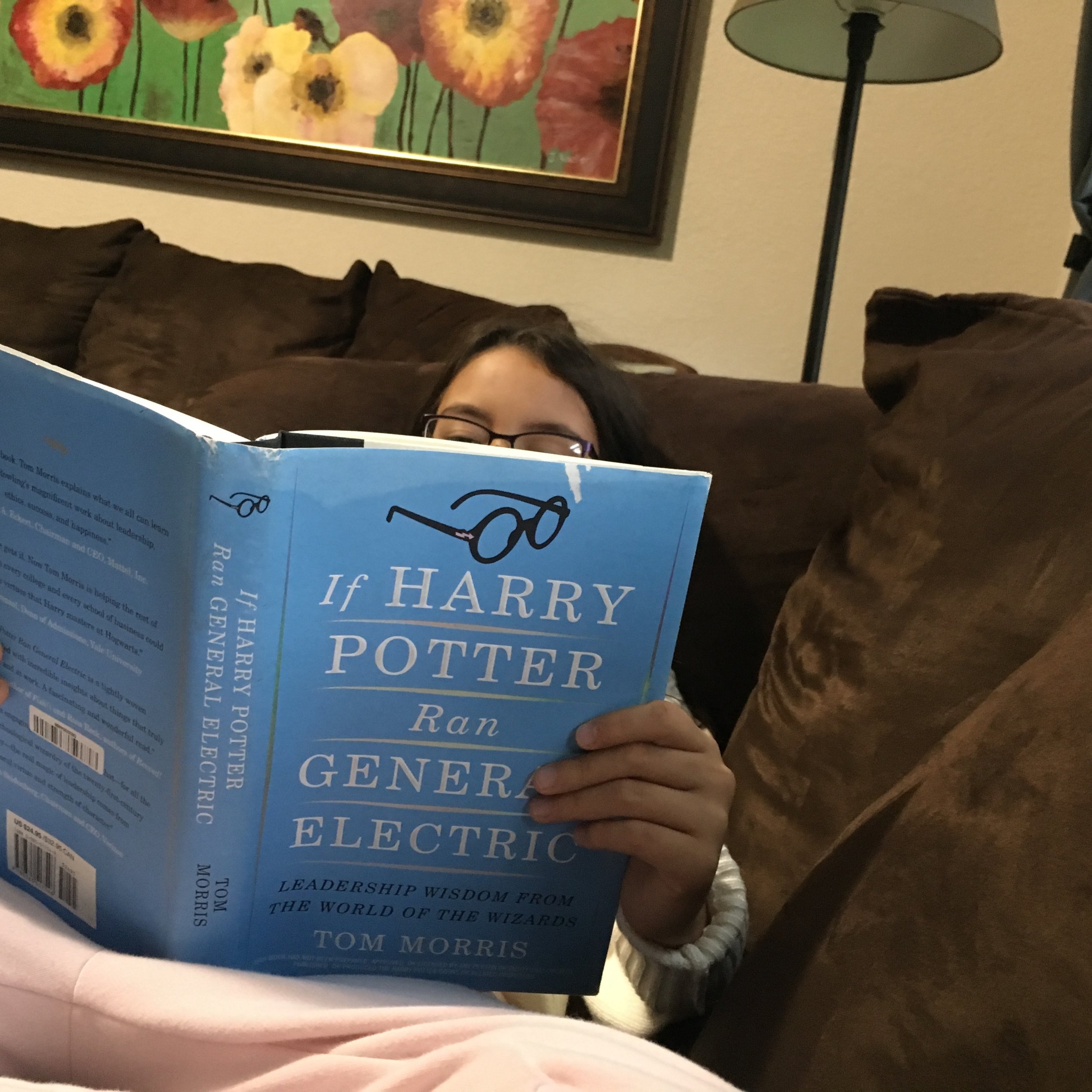
My Favorite Recent Photo: A young lady named Jubilee gets off to a head start in life by diving into some philosophy!

My Favorite Recent Photo: A young lady named Jubilee gets off to a head start in life by diving into some philosophy!

Great new Elizabeth Gilbert book on creative living and the creative experience.

Great new Elizabeth Gilbert book on creative living and the creative experience.

The back flap author photo on the new book The Oasis Within.

The back flap author photo on the new book The Oasis Within.

Something different. Paola Requena. Classical guitar. Sonata Heróica.

Two minutes on a perspective that can change a business or a life.

On the beach where we do retreats, February 16, 2018, 77 degrees. Philosophy in shorts and a T shirt done right.

On the beach where we do retreats, February 16, 2018, 77 degrees. Philosophy in shorts and a T shirt done right.

So many people have asked to see one of my old Winnie the Pooh TV commercials and I just found one! Here it is:

Long ago and far away, on a Hollywood sound stage, I appeared in two network ads for the wise Pooh, to promote his adventures on Disney Home Videos. For two years, I was The National Spokesman for that most philosophical bear. This is one of the ads. I had a bad case of the flu but I hope you can't tell. A-Choo!

Now, for something truly unexpected:

Five Years ago, a friend surprised me by creating an online shop of stuff based on my Twitter Feed. I had forgotten all about it, but stumbled across it today. I should get this shirt for when I'm an old man, and have my home address printed on the …

Five Years ago, a friend surprised me by creating an online shop of stuff based on my Twitter Feed. I had forgotten all about it, but stumbled across it today. I should get this shirt for when I'm an old man, and have my home address printed on the back, along with, "Return if Found." Click to see the other stuff! I do love the dog sweaters.

Cat videos go philosophical. The now famous Henri Le Chat Noir, existential hero. Click image for the first video I saw and loved.

Cat videos go philosophical. The now famous Henri Le Chat Noir, existential hero. Click image for the first video I saw and loved.

Another Musical Interlude. Two guys with guitars, one an unusual classical seven string, one a bass, but playing chords.

I memorized the "To be or not to be" soliloquy from Hamlet months ago, and recite it nearly daily. It's longer than you think, and is a powerful meditation on life and motivation, fear, and the unknown. To find some good 3 minute videos of actors pe…

I memorized the "To be or not to be" soliloquy from Hamlet months ago, and recite it nearly daily. It's longer than you think, and is a powerful meditation on life and motivation, fear, and the unknown. To find some good 3 minute videos of actors performing these lines, click here. Watch Branaugh and Gibson for very different takes.

This is a book I read recently, and it's one of the best I've read in years on happiness and success. Shawn helped teach the famous Harvard course on happiness, and brings the best of that research and more into this great book. Click on it. I think…

This is a book I read recently, and it's one of the best I've read in years on happiness and success. Shawn helped teach the famous Harvard course on happiness, and brings the best of that research and more into this great book. Click on it. I think you'll like it!

A favorite performance of the great Brazilian bossa nova song Wave, by Tom Jobim. Notice Marjorie Estiano's fun, the older guitarist's passion, the flutist's zen. Marjorie's little laugh at the end says it all. That should be how we all feel about our work. Gladness. Joy.

I happened across this great book on death and life after death. Because of some uncanny experiences surrounding the death of her father and sister, this journalist began to research issues involving death. Her conclusions are careful and well docum…

I happened across this great book on death and life after death. Because of some uncanny experiences surrounding the death of her father and sister, this journalist began to research issues involving death. Her conclusions are careful and well documented. If you're interested in this topic, you'll find this book clear, fascinating, and helpful. A Must Read! For my recent conversation with the author on HuffPo, click here.

Henri discovers the first book about his unique philosophical ponderings. Click image for the short video.

Henri discovers the first book about his unique philosophical ponderings. Click image for the short video.

My favorite website to visit nearly every day. Maria Popova may read more and write more than any other human being on earth, and her reports are always amazingly interesting. This is really brain candy, but with serious nutritional benefits as well…

My favorite website to visit nearly every day. Maria Popova may read more and write more than any other human being on earth, and her reports are always amazingly interesting. This is really brain candy, but with serious nutritional benefits as well. Visit her often!

One of my newest talk topics is "Plato's Lemonade Stand: Stirring Change into Something Great." Based on the old adage, "When life hands you lemons, make lemonade," this talk is about how to do exactly that. Inquire for my availability through the c…

One of my newest talk topics is "Plato's Lemonade Stand: Stirring Change into Something Great." Based on the old adage, "When life hands you lemons, make lemonade," this talk is about how to do exactly that. Inquire for my availability through the contact page above! Let's stir something up!

A frequent inspiration. Monday, 30, April 2012. Sarah Brightman and Andrea Bocelli perform "Time to Say Goodbye." Notice how they indwell the lyrics, and still manage to relate to each other so demonstratively.

My friend Bill Powers writes on how to handle the technology in your life and stay sane. A beautiful meditation on how we've always struggled with the new new thing, and sometimes win. Recommended!

My friend Bill Powers writes on how to handle the technology in your life and stay sane. A beautiful meditation on how we've always struggled with the new new thing, and sometimes win. Recommended!

Above is a short video on finding fulfillment in anything you do, that was taped a few years ago. I hope you enjoy it!

This is a beautiful and difficult book on the odd relationship between repeated failure and eventual success. It's full of great stories and moments of meditation. You will find yourself teasing out the insights, but they're powerful and worth the w…

This is a beautiful and difficult book on the odd relationship between repeated failure and eventual success. It's full of great stories and moments of meditation. You will find yourself teasing out the insights, but they're powerful and worth the work.

One of the best books in the past year or more, G&T is a wonderful look at how givers can rise high. Grant is the youngest tenured professor at Wharton and its most popular teacher. Here, he shows why! A really good book.

One of the best books in the past year or more, G&T is a wonderful look at how givers can rise high. Grant is the youngest tenured professor at Wharton and its most popular teacher. Here, he shows why! A really good book.