Follow @TomVMorris
Retreats
Keynote Talks and Advising
About Tom
Popular Talk Topics
Client Testimonials
Books
Novels
Blog
Contact
ScrapBook
Short Videos
The 7 Cs of Success
The Four Foundations
Plato's Lemonade Stand
The Gift of Uncertainty
The Power of Partnership

Tom Morris

Great Ideas. With Power. And Fun.
Retreats
Keynote Talks and Advising
About Tom
Popular Talk Topics
Client Testimonials
Books
Novels
Blog
Contact
ScrapBook
Short Videos
The 7 Cs of Success
The Four Foundations
Plato's Lemonade Stand
The Gift of Uncertainty
The Power of Partnership
Parkour.jpg

When To Take the Risk

During the first period of a man's life, the greatest danger is: not to take the risk." Soren Kierkegaard.

It starts in school. Major in something safe. The job market is everything. Choose your courses carefully. Treat your teachers like the future references they are. Then make sure you learn how to get the grades you need. Don’t sign up for anything that could possibly drop that all important GPA. Then find a job with security. Keep your head down. Do what you’re asked. Smile. Respect authority. Forget your individuality. And don’t ever, ever read Kierkegaard.

The father of existentialism, the thinker who advocated taking a LEAP OF FAITH whenever appropriate, would not fit into the mold of the Standard Guidance Counsellor Advice these days. When he was alive, he was utterly contemptuous of the herd mentality that seems to define so much of the modern world. Kierkegaard believed that you should follow your own sense of who you are and what you can do. And on occasion, be prepared to take a risk. By playing it safe in every way, you’ll never find out who you are. It turns out that always playing it safe ends up as the most dangerous way to live. You forfeit your soul. You lose who you're meant to be. You fail to grow into your best.

And this is just as true of companies as of people. 

You may need to heed the philosopher’s advice here. Or you may need to pass it on to some young friend who's just playing it safe and losing himself in the process. 

Think about it. 

Today.

PostedOctober 13, 2014
AuthorTom Morris
CategoriesAdvice, Life, Performance, Wisdom
TagsRisk, Adventure, Safety, Kierkergaard, Tom Morris, TomVMorris, philosophy, life
Post a comment
Laughingpeople.jpg

The People You're Around

You become like the people you're around.

A man sitting next to me on a plane told me an interesting story. A therapist friend of his asked him to make a chart on a piece of paper. On the left side he was to write:

Physical

Social

Emotional

Financial

Spiritual

Then, he was to draw vertical lines, making five columns to the right of these categories, and at the top of the columns to write the names of the five people he was around the most, but including only one member of his immediate family. Then he was to assess the health of each of these people in each of those categories, writing a brief summary or evaluation, in as few words as possible.

The therapist left him to the task for 20 minutes, then came back in, and read over what he had writen. He then said, "I want you to look over this carefully. You have just predicted your own future. Make sure it's the future you want. Or make the changes you need to make."

I said, "Really? What happened as a result?" 

He said, "The divorce was easy. But ending my business partnership was a lot harder."

I was surprised. We don't always have to take such dramatic steps. But we do need to remember that we become like the people we're around. That can be great. Or it can be scary, depending on who you're around and what you really want to become. We're all in a state of becoming, all the time. Ask yourself this: Am I associating with the right people who will help me to become the person I most want to be?

And if the answer is not a resounding YES, then start making some changes, however small.

Today.

PostedOctober 12, 2014
AuthorTom Morris
CategoriesAdvice, Life, Philosophy, Wisdom
TagsSocial Contagion, people, friends, friendships, colleagues, associates, becoming, Tom Morris, TomVMorris, philosophy, wisdom
Post a comment
CaveArt.jpg

Making Our Mark On the World

Hi everyone! Blogging this morning from the beautiful Wilmington, NC airport, preparing to board. I wanted to tell you about something interesting that came to light in the past few days.

The journal Nature reported this week that paintings of hands and animals in seven limestone caves on the Indonesian island of Sulawesi may be the oldest human art yet discovered. It's estimated that the people who did these simple paintings put their mark on the stone walls more than 39,000 years ago.

Since the beginning, human beings have wanted to make their mark in the world, to say "I was here!" I love it that so many of the paintings were outlines of hands. "This is me." Or, "This is my son." Or, This is my mate."

Those artists could have had no idea that we'd be talking about the hands and the animals they painted, more than 39,000 years after they made those simple, but inspired markings.

Likewise, we have no idea how far and wide our simple daily acts may reach and what impact they may have on others. The cave painters could never have predicted that their work would move us in 2014 to reflect on our own lives, and on how we make our own marks on the world.

And their lessons are many. One is that the smallest things can leap and fly across space and time with amazing results. Try to remember that in the little things you do.

Today.

PostedOctober 10, 2014
AuthorTom Morris
CategoriesAdvice, Art, Life, Wisdom
Tagswork, meaning, purpose, life, significance, importance, Tom Morris, TomVMorris, Philosophy, Art, Cave Art, Nature
Post a comment
BaseballStadium.jpg

The NaySayers in Life

"The great pleasure in life is doing what people say you cannot do." Walter Bagehot.

I once sat next to a man on an airplane who told me of his days as a high school baseball player and his dreams of professional ball. “You’re pretty good, but you’ll never make it to the pros,” people in his hometown would tell him. But then he made it to the pros and heard people say: “Enjoy it while you can in the Minors, but you’ll never make it to into the Major Leagues.” When he did make it to The Show, he had to listen to the newest verse of the old song: "There's no shame in sitting on the bench." But he didn't want to sit and watch. And he played, and then heard, “Don't even think about home runs, you’re lucky to be there at all.” 

But Willie Stargell would not believe the naysayers. And he took great pleasure in every home run he ever hit, each one of the 475. This Hall of Famer would have missed out on a lot if he had listened to the people around him who had no idea who he really was, deep down inside.

That day on the airplane, I showed Willie Stargell my laminated wallet card on The 7 Cs of Success. He read each condition carefully, and then said, "You nailed it with these ideas. You're the first person to ever explain to me how I became successful as a baseball player. I did each of these things you outline here, and I did them intuitively, instinctively, but I never could have put them into words. Thank you for this. This is a great gift to me."

The whole conversation was a great gift to me.

Remember that naysayers will always be with us. Even our best friends will sometimes warn us about how hard and unlikely our goals may appear, not wanting us to set ourselves up for disappointment. They just don't realize that we're often really setting ourselves up for success. The dream comes first, then the goal, then the work, but always, the belief and confidence deep inside. 

You have to know your own strength and follow your own heart, believing in your own sense of mission in life.  Then you can hit your own home runs, and take pleasure in the results. So step up to the plate.

Today.

PostedOctober 9, 2014
AuthorTom Morris
CategoriesAdvice, Attitude, Life, Performance, Wisdom
TagsDiscouragement, Confidence, belief, persistence, boldness, comments, Tom Morris, TomVMorris, Willie Stargell
Post a comment
Broadmoor.jpg

The Joy of the Journey

There’s a special joy in doing what you’re meant to do. 

This week, so far, I’ve travelled to Colorado Springs for a talk at the great Broadmoor hotel, speaking to 450 business owners. The hotel itself is spectacular, and I always seem to be put in the West Building, which is quiet and beautiful, with serene views outside the window of my suite. To get to the main building, where I had dinner last night with one of the top speaking agents in the country, a really great individual who also has an unexpected and interesting background as a songwriter, with tunes, so far, in eighteen films, I had to walk on a path bisecting a scenic lake, mounting a gently sloping footbridge in the middle, surrounded by mountains. The temperature was perfect. The evening was magical. 

Who knew that being a freelance philosopher could put me in so many wonderful places, where the glories of nature are on such magnificent display? And the people I meet along the way enrich my life immensely.

And then came the talk, the speech for which I had made the journey. I had forty minutes, a relatively short time these days for philosophy, but it was ethereal. We pondered, we analyzed, we laughed, and we explored the wisdom of the ages on one of the most important topics of all - how each of us can have our best impact on the world in the short span of years that we have, and how we can have true success, deeply satisfying and sustainable success that fulfills us, in everything we do.

It was a treat to represent the great philosophers, east and west, and to add my own interpretive frameworks. And everyone who was there went away with a laminated wallet card on the ideas we talked about. I’ve given out these cards on each of my topics, for more than twenty years. I’ve probably handed out millions as little gifts. And as a result, people stop me in airports and hotels, and in other places, and pull out their wallets and show me the card that they say they got six or nine or twelve years ago at a talk they heard me give and still remember. What a kick! Those little laminated wallet cards are almost the paper version of tweets, but they last, and can be carried about and kept and referred to again and again. The way tweets stand to blogs, these little cards stand to books, and have a special magic all their own.

My talk at the Broadmoor was, as such a thing almost always is, a joy, What Emerson would have called an ecstasy, and an honor. In the whirlwind of time allowed on a busy meeting day, we ranged through space and time, appropriating the insights of the ages for our own lives, and thinking anew about what we want from our time, and our efforts. 

It’s always a new experience for me. I never memorize talks and hit the play button in front of an audience. I do like the great jazz guys and improvise around a framework. I surprise myself. I sometimes say things I’ve never even thought before, but in that moment, I realize a new truth and pass it on to others.

Now, I’ll have two days at home, and then a quick trip to Florida, to philosophize again, for a small group of executives who make sure the lights stay on at such places as Google and NASA, operations where power reliability is crucial. We’ll get to talk about the life wisdom that’s also powerful and always reliable. And that will keep the lights on for them, as it does for me.

I tell you this today in hopes that you are also, in your own way, participating in the joy of living your proper mission and adventure. And if you haven’t quite found that yet, let me encourage you that it awaits you and can be both lived and loved.

So examine your own experience. You’re here to do great things, and to have great joys. I want that for you.

Today.

PostedOctober 8, 2014
AuthorTom Morris
CategoriesAdvice, Attitude, Business, Life, Philosophy, Wisdom
TagsWork, joy, meaning, purpose, adventure, Journey, life, happiness, Tom Morris, Emerson, TomVMorris, The Broadmoor
Post a comment
MarilynneRobinson.jpg

Fear and The Value That Overcomes It

A great profile of the novelist Marilynne Robinson in the New York Times a few days ago begins like this:

This June, as a grandfather clock rang the quarter-hour in her modest Iowa City living room, the American novelist and essayist Marilynne Robinson, a woman of 70 who speaks in sentences that accumulate into polished paragraphs, made a confession: “I hate to say it, but I think a default posture of human beings is fear.” Perched on the edge of a sofa, hands loosely clasped, Robinson leaned forward as if breaking bad news to a gentle heart. “What it comes down to — and I think this has become prominent in our culture recently — is that fear is an excuse: ‘I would like to have done something, but of course I couldn’t.’

Fear. It's amazing how often it holds us back, largely because we don't realize our own greatness, our deep resources, our resilience, and the magnificent purposes we can enact in this life. Marilynne Robinson is a believer in who we are, in our most fundamental souls. She's a religious novelist who has the rare, uncanny ability to depict goodness in compelling ways.

I wanted to bring this essay to your attention because I enjoyed it so much and I suspect you might, as well. In it, she says such things as:

“Being and human beings,” Robinson told me, “are invested with a degree of value that we can’t honor appropriately. An overabundance that is magical.”

It's good to be reminded of our astonishing core value, as human beings, in a world that often ignores it in so many ways, in favor of counterfeit values.

Robinson is a person who, learning her own value, and realizing the value that the rest of us embody, has not let any form of fear hold her back, but has launched out into a brave venture of writing that can show us, in subtle adumbrations, who we really are. And her honest boldness has garnered her both a Pulitzer Prize and a National Humanities Medal, in addition to many critical accolades.

Go check out her books here. I've started with Gilead.

I think you'd enjoy reading about her. It may spark a new sense of value in your life.

Today.

PostedOctober 7, 2014
AuthorTom Morris
CategoriesAdvice, Life, Philosophy, Wisdom
TagsMarilynne Robinson, Tom Morris, TomVMorris, Fear, Life, Life Lessons, value, New York Times
Post a comment
FakeHouse.jpg

Appearances That Mislead Us

"Things are not always what they seem." Phaedrus.

Appearances and realities. Don’t you wish you could easily tell them apart? Plato diagnosed our condition long ago. He believed that most people live lives of illusion, imprisoned by appearances, unable to break through to the underlying realities of life. How does anyone break free and grasp bedrock truth? With philosophy. By using the wisdom of others as well as your own powers of discernment. 

First of all question. Then, secondly, question some more. Anticipate motives. Ponder spin.  Peel back the first layers of what presents itself. Dodge the deceptive surfaces that come your way. What’s at issue, really?  And whose interests are at stake? Don’t always trust your senses or even initial judgments. Be a detective. Interrogate appearances. Dig deeper. And then be prepared to trust your heart, after the probing you most often need to do.

A really good book on asking questions to peel back appearances is Water Berger's recent effort, A More Beautiful Question. Another one for business people is Larry Bossidy and Ram Charan's short book Execution.

The stoics often said that almost nothing is as good as it seems or as bad as it seems, so we all need to calm down. Use this advice.  And help others to benefit from it. 

Today.

PostedOctober 6, 2014
AuthorTom Morris
CategoriesAdvice, Life, Performance, philosophy, Wisdom
TagsReality, Appearance, Questions, Illusion, Truth, philosophy, wisdom, Tom Morris, TomVMorris
Post a comment
Not actually my old Notre Dame office, but you can still get the idea. This guy is a little worse.

Not actually my old Notre Dame office, but you can still get the idea. This guy is a little worse.

How BIG Is Your Mess?

"Good order is the foundation of all good things." Edmund Burke.

When I was a philosophy professor, my office as was once described in Notre Dame Magazine as perhaps the messiest on campus. I liked to claim that the apparent disorder was just an extremely subtle and complex form of rational order beyond the comprehension of the casual glance. I was one of the early exponents of chaos theory. I was also a great rationalizer.

When I left the university and set up my own Morris Institute for Human Values, I quickly came to appreciate the value of order. A quirky, eccentric professor lost in the physical world can be not only tolerated, but even enjoyed within the safely protective environment of a major university. Out in the world, it’s a different matter. Any of us who are determined to create new forms of success have to respect the need for efficient access, clear records, and orderly procedures. If Architectural Digest wanted to photograph my office, it would still take me a few minutes, or - ok - maybe a few hours, over a period of days, to get it really nice looking, but it’s not the waste dump of resource materials and old book drafts that my chaotic professorial den once was.

How’s the order in your life? The degree of order and clear structure that you need will be a function of the person you are. Not everyone has to have labels on all drawers and a system for everything. There's a spectrum. But on the total mess end of the spectrum, I do believe that a measure of potential effectiveness is seriously inhibited, regardless of what absent minded creatives may think when they're ignoring it. 

Are you often wasting time looking for things that should be more rationally organized and more readily available? Would an uncluttered desk help you think better? And how about that old closet? Do you really have any idea what's in there? 

Philosophers have often been the closet organizers of the mind. We help people straighten up their thinking, get their ideas well ordered, and discover the treasures that may be hidden away within the deep and cluttered storage of their own minds.

Creativity flourishes best within a context of good order. So do we as people. Organize something, anything in your life, and enjoy the results that will come.

Today.


PostedOctober 5, 2014
AuthorTom Morris
CategoriesAdvice, Attitude, Life, Performance, Wisdom
TagsClutter, Mess, Order, Organization, The Mind, Tom V Morris, Tom Morris, Wisdom, Philosophy
Post a comment
CarsGarage.jpg

Success and Toil. Wait. Toil?

"Success, remember, is the result of toil." Sophocles: Very Successful Greek Playwright.

It’s not just who you know. And it’s not just the luck of the draw. The wisest people have always acknowledged that success ultimately comes from hard work. First, the mental work necessary to establish an appropriate goal, along with a planned path to that goal, and then the ongoing work, mental and physical, necessary to implement that plan consistently yet adaptively in pursuit of your goal.

The modern paradigm of success tends to revolve around the apparent magic of the right idea galvanizing the right people at the right time. Before you know it, there’s an investor and a startup company, then suddenly an IPO, and everybody’s buying expensive new cars to fill up the 6 garage bays in their recently purchased mansions. But behind nearly every tech startup magic story in modern times, there's a tremendous amount of that ancient activity: toil. 

The lubricant of success is the oil of toil. It always has been. It always will be.

There's no way around it. You may one day win a lottery without it, but you’ll never enjoy any form of true success except as the result of it. But that’s no problem. Toil and pride go side by side. Yeah, it rhymes. Say it. Sing it. And remember it.

Today.

PostedOctober 4, 2014
AuthorTom Morris
CategoriesAdvice, Business, Life, Performance, Wisdom
TagsToil, hard work, success, relationships, goals, planning, philosophy, Tom Morris, TomVMorris
Post a comment
SewingSeed.jpg

Little Things, Habit, and Life

"Sow an act and you reap a habit, Sow a habit and you reap a character, Sow a character and you reap a life." Statement by Charles Reade.

“Just this one time won’t hurt anything.” Statement by Almost Everyone Else.

How often do we use this reasoning, The-Insignificance-of-One-Time? Well, here’s the news from ancient times: Little things add up. One deed is never insignificant. 

This is bad news for bad actions, good news for the good. We're always in a state of becoming. Every decision, action, or reaction, every thought we have or emotion we feel sows seeds for the future. Anything we do now will make it easier to go do likewise in the future. And as the great diagnostician of human character, Montaigne, once said, “Habit is second nature.” The bad exception thus infects us. But the good effort grows in us.

Positive actions, however difficult, pave the way to a better future. Our actions create our character, and our character creates our destiny. The ancient philosopher Heraclitus proclaimed that “Character is destiny.” And he was right. Do something about your destiny today. In some little way, with some decision or act of initiative, however small, build toward the future you desire for yourself and those you love. 

However hard the right thing to do might feel, it will create a tendency that will carry you on more powerfully toward the future you genuinely want. So remember that.

Today.

PostedOctober 3, 2014
AuthorTom Morris
CategoriesLeadership, Business, Advice, Life, Wisdom
TagsHabit, Little Things, Decisions, Actions, Character, Charles Reede, Tom Morris, TomVMorris, Wisdom, Philosophy
Post a comment
Mistakes.jpg

Mistakes and Rebounds

"It is the nature of every man to err, but only the fool persists in his error." Cicero.

There's only one form of perseverence that's wrong and self-destructive: perseverence in error. It’s unbelievable how many people come to realize that they’ve made a mistake and yet keep on doing what they’re doing, apparently unable or unwilling to stop and make a change. Are they afraid of being called quitters? Are they loathe to admit having made a mistake at all? The inability to own up to error and rechart the course forward has ruined many people’s lives, both personally and professionally. Epictetus said long ago, “No one who lives in error is free.”

Everyone makes mistakes. Most of us make some doozies. It’s all part of the enterprise of learning. It’s all part of human growth. And it’s natural. Don’t be embarassed about making mistakes. Really. The only thing worth being embarassed about is a refusal to learn from your mistakes and make the changes that you need to make. But that can change! Do you find yourself persevering in error of any kind? Or do you see someone around you engaging in that sort of self-defeating activity? Use this bit of Cicero’s wisdom as a simple reminder to help turn things around. The wise adapt and rebound. So go and do so.

Today.

PostedOctober 2, 2014
AuthorTom Morris
CategoriesAdvice, Attitude, Life, Performance, Wisdom, Philosophy
TagsMistakes, error, learning, success, Cicero, Tom Morris
Post a comment
Hammering.jpg

Hammer Out That Bad Habit!

"A nail is driven out by another nail; habit is overcome by habit." Erasmus.

Have you ever tried to break a bad habit and been really shocked by its aggravating resiliency? Habit is like a second nature. We breathe by nature. We do many other things by second nature, or habit. 

Without habit, we couldn’t live. Life would be far too complicated if we had to always go around figuring out what sock and shoe to put on first in the morning. We have habits to make life possible. But the wrong ones quickly make life miserable.

How do you break the power of a bad habit? First, by the power of the imagination. You use your imagination to picture vividly where the bad behavior is taking you, envisioning the disasterous results as luridly as possible, and then picture just as clearly some alternative behavior and its contrary, great future. Then you act to establish a suitably contrary habit. No one finds it easy to just stop some form of self-destructive ineffective behavior that has become habitual. Bad habits are displaced by better habits. 

Let me say that again. Bad habits are displaced by better habits.

If you need to make a change in your life, use the wisdom of the great Rennaissance thinker Erasmus. Take a new nail to drive out the old one. Work at forming a new habit that will displace the old and still serve whatever positive purpose the old one did, but better, and without the negative consequences. Use your imagination. And get moving. 

Today.


PostedOctober 1, 2014
AuthorTom Morris
CategoriesAdvice, Life, Performance, philosophy, Wisdom
TagsHabit, Action, Change, Wisdom, Philosophy, Erasmus, Tom Morris, TomVMorris
Post a comment
DropsofWater.jpg

The Near Magic of Persistence

"Great works are performed, not by strength, but by perseverance." Samuel Johnson.

Eastern sages love the dynamic properties of water. What happens when water, the softest of elements, contends with stone, the hardest of elements? Looking at the manifest properties of each, most of us would place our bets on the stone. 

Water drops. A stone is in the way. The stone stops the water and deflects its path. It continues to drop. And it keeps bouncing off. Until one day there is a roughness, then a depression, and then a hole in the stone and the water finally has its way. 

This is an image of the power of persistence, otherwise known as perseverance. Don’t give up. Whatever your dream is, whatever your goal is, use the dynamic powers of perseverence to overcome the obstacle that stands in your way, even the one that right now seems as hard as stone. 

Do you need the help of another person? The same strategy applies. Henry Wadsworth Longfellow once offered these encouraging words: “Perseverence is a great element of success. If you only knock long enough and loud enough at the gate, you are sure to wake somebody up.”

So: Get knocking. Or dripping away.

Today.

PostedSeptember 30, 2014
AuthorTom Morris
CategoriesAdvice, Life, Business, Wisdom
Tagswater, perseverance, persistence, hard work, trying, success, achievement, philosophy, Tom Morris
Post a comment
AriannaKobe.jpg

Sunday Bonus: Kobe and Arianna on Success

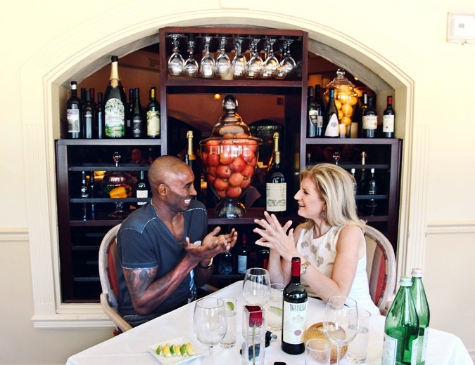
There's a remarkable conversation in the New York Times today. The writer Philip Galanes sits down with Kobe Bryant, thought by many to be our greatest active basketball player, and Arianna Huffington, founder of the Huffington Post and bestselling author, to talk about their struggles and successes, difficulties and coping mechanisms. I recommend it heartily. It's chock full of great insights and reminders. 

For example, I often speak on the topic of True Success - what the great philosophers have said that it takes for satisfying and sustainable achievement in any challenge. I've isolated seven universal conditions for success, from the world's deepest wisdom literature through the centuries, and tested these conditions repeatedly in the lives of contemporary people. I call them The 7 Cs of Success (as in "Seven Seas"). In the briefest statement, in any major challenge, we need: a clear Conception, a strong Confidence, a focussed Concentration, a stubborn Consistency, an emotional Commitment, a good Character, and a Capacity to Enjoy the Process along the way.

Kobe and Arianna speak of, or allude to, many of these tools for achievement in their fascinating exchange. The two have known each other for a while, because Kobe often seeks out highly successful people in other fields, hoping to enhance his own understanding of achievement.

At one point, we get, for example, relevant to my C7 - a Capacity to Enjoy the Process and my own repeated insistence that life is supposed to be a series of adventures, of journeys we enjoy as we move toward our goals:

KB: My heroes growing up, the Jordans, the Bill Russells, the Magic Johnsons, they all won multiple times. I wanted more. But it wasn't just the result. It was the journey to get there.

PG: You like the process?

KB: I love the process. The result comes later.

AH: He talks the same way about getting back to the game after injuries: doing the research, collecting the team. Kobe found joy in rehab. That's amazing because so many people are goal-oriented only.

Joy in rehab. Who would even think of that?

Go read more, about sleep, meditation, struggle, focus, and so much more. Click to read it here. And have a great day.


PostedSeptember 28, 2014
AuthorTom Morris
CategoriesAdvice, Business, Life, Performance, Wisdom
TagsKobe Bryant, Arianna Huffington, Tom Morris, TomVMorris, Philip Galanes, New York Times, Life, Success, Struggle, Meditation, True Success
Post a comment

An Imagined Exchange Based Loosely on True Events

Editor: We all admire your previous books, and find your platform as an author to be quite impressive. It's wonderful that you bring philosophy into the broader culture! And your current book manuscript doing so is certainly very elegantly written. I enjoyed it immensely. But I'm afraid that there's a problem that prevents our publishing it.

Me: What's the problem?

Editor: There's really nothing new in the book, nothing completely original.

Me: Hmmm. If that were true, why would it be a problem, exactly?

Editor: We publish new books to provide people with new ideas.

Me: Why do you do that?

Editor: Well, to help people solve their problems.

Me: What if that's not the best way to help them do that?

Editor: I don't understand.

Me: You want to provide new answers to old problems - problems people already have, or have had?

Editor: Yes.

Me: Have you ever considered, instead, the very different strategy of providing old answers to new problems?

Editor: What does that mean?

Me: Good. You've asked your first question.

Editor: What?

Me: We're on a roll now. And thank you for asking. I want to address new problems - the next ones that we'll face, the ones that will come our way tomorrow, and next week, and next year.

Editor: Ok. How?

Me: With old answers - ancient wisdom, ideas that have stood the test of time, reliable perspectives and recommendations, the tried and true, the deep and enduring insights that our upcoming problems will require, and that alone can provide the solutions we'll need.

Editor: So, instead of new answers to old problems, you're giving old answers to new problems?

Me: Yes.

Editor: Well, that is indeed original, and new.

Me: You think?

Editor: I do, but we still can't publish anything like that.

Me: You can't?

Editor: No. But, good luck with it. It deserves a great home.

Me: Thank you.

Editor: You're welcome.

PostedSeptember 28, 2014
AuthorTom Morris
CategoriesBusiness, Life, Philosophy, Wisdom
TagsPhilosophy, Wisdom, insight, Tom Morris, TomVMorris, Books, Publishing
Post a comment

Learning From Each Other

"Some wisdom must be learned from one who is wise." Euripides

Are you ever tempted by a completely do-it-yourself approach to life? Do you ever harbor thoughts that in business or in your personal life, you can successfully make it all up as you go along, figuring it all out, at least sufficiently for your own purposes? 

Whether we ever explicitly think like that or not, that’s often the way we act. Why don’t we consult the wisdom of others more? There are people all around us who have insight to share if we’d just tap into it. They don’t have to be wiser than you to have something to offer you. As long as they think of something differently from the way in which you customarily think, as long as they approach life from a slightly different angle - and, let’s face it, everyone does - there’s something you can learn from the people around you, perhaps in unexpected ways.

Socrates taught Plato, Plato taught Aristotle, and Aristotle taught Alexander the Great.  Who are you teaching? And who is teaching you? Don’t think you can do it all yourself. Consult with someone who is wise. 

Today.


PostedSeptember 27, 2014
AuthorTom Morris
CategoriesAdvice, Leadership, Performance, Philosophy, Wisdom
Tagsmentoring, wisdom, conversation, society, people, philosophy, Tom Morris, TomVMorris
Post a comment
Virtue.jpg

Constancy Again. Wait. What?

"Constancy is the foundation of virtues." Francis Bacon.

We rarely hear the word 'constancy' any more. And that's too bad. Because constancy is deeply connected with virtue. But wait.

We rarely hear the world 'virtue' any more, either. And that's also too bad. From the ancient Greek and Roman philosophers who thought deeply about the challenges of life and the strengths we need in order to face them well and prevail, we have some great insights regarding both virtue and constancy.

Virtues are just strengths of character, like courage. They are also habits. A patient man is a man who has the habit of patience. A courageous woman has a habit, or deep disposition, to respond to danger with bravery. No virtue is a one shot deal. Each of the great virtues requires repeated exercise, or a form of constancy, in our response to the world.

Spontaneity gets maybe too much good press. It can be a source of creativity, and adventure, and great fun, but without a foundation of virtue, even creativity can be destructive. Who wants to be around a creative sadist? And so, spontaneity has its proper place within a context of constancy, the foundation of a reliable character. Not all sameness is boring. Not all predictability is a guise of stagnation. A deep moral constancy is the basis for any good journey through this world. Think about that , and examine yourself for that constancy of soul that will give you strength. And then go boldly and virtuously forth.

Today.

PostedSeptember 26, 2014
AuthorTom Morris
CategoriesAdvice, Life, Performance, Philosophy, Wisdom
Tagsconsistency, virtu, habit, strength, life, meaning, philosophy, wisdom, TomVMorris, Tom Morris
Post a comment

Making The Wonderful Accessible

I've blogged a couple of times about one of my favorite companies, Frederique Constant, a remarkable maker of fine watches in Geneva, Switzerland. Their distinctiveness is what they call "Accessible Luxury" and their slogan is "Live Your Passion." In discovering more about their history and brand, I came to realize that their distinctive approach to watches parallels my own approach to wisdom. Since I left a great university position nearly twenty years ago to spread ancient wisdom across the culture and globe, I've actually been focused on what you could call "Accessible Wisdom" - not wisdom that you need a PhD to understand, or years of study in distinguished libraries to acquire, but deep and practical insight of the highest order that applies to the challenges of everyday life, and answers the questions that we all inevitably ask.

Peter and Aletta Stas, the founders of Frederique Constant, were lovers of fine watches in their early years together, and wanted to find a way to put such a luxury within the reach of more people. They understood that luxury is not at its core about inaccessibility, or elitist cost, but rather that it essentially embodies such qualities as great beauty, excellence, high functionality, comfort, and ease. With the right focus and tremendous ingenuity, they've been able to live their passion and realize their dream of including more people within the realm of high end luxury, making it more widely accessible. And they're having resounding success around the world, as a result.

Wisdom, also, is not about inaccessibility. The truth is that you don't have to be a legendary guru, or a top scholar, in order to attain and benefit from the greatest insights available for living in this world. But too often, the deepest wisdom has been treated as exactly that - as if you have to be first inaugurated into an esoteric cult, or initiated into a gnostic order of insiders who study rare documents in arcane languages, or you have to learn to speak a technical jargon far beyond the comprehension of those who have not been trained in its use, or else, unfortunately, the best of human insight can't be yours. And that, I've been determined to show for the past twenty years, is just not true.

It has indeed taken me years of formal training and decades of dedicated work, like a top Swiss watchmaker, to be able to separate truth from falsehood, and insight from illusion, in matters of human life and aspiration, where the differences can sometimes be subtle but crucial. What are our greatest insights? How can they best be applied? How do we separate mere appearance from reality? Part of the reason I'm so impressed with Frederique Constant is that they're doing for watches what I've long sought to do for wisdom. And their passion has helped me to clarify mine. On the basis of all my own hard work and study, refining my sensibilities and logical acumen to the highest degree, I'm now able to offer people accessible wisdom that they can use and enjoy, and that can enhance their lives, as it does mine, every day. 

The more we can make accessible to others what we've perhaps worked so hard to achieve ourselves, the more we make our distinctive mark on the world, and we can seek to serve from the riches and blessings of our own lives, bringing these riches and blessings to others.

What are you really good at? What can you make more accessible to others? How can you do and share with passion? These are questions always worth asking. 

Ask them today.

PostedSeptember 16, 2014
AuthorTom Morris
CategoriesAdvice, Art, Business, Leadership, Performance, Philosophy, Wisdom
TagsWatches, Timepieces, Frederique Constant, Tom Morris, TomVMorris, Peter Stas, Aletta Stas, Work, Success
Post a comment
ManReadingDoc.jpg

The Schopenhauer Plan and You

If there is any merit or importance attaching to a man’s career, if he lays himself out carefully for some special work, it is all the more necessary and advisable for him to turn his attention now and then to its plan, that is to say, the miniature sketch of its general outlines ... If he maps out important work for himself on great lines, a glance at this miniature plan of his life will, more than anything else, stimulate, rouse, and enable him, urge him on to action, and keep him from false paths.  Arthur Schopenhauer

Authorities on success have recommended for decades that we all write down goals for ourselves, and that we frequently review what we’ve written. More recently, personal growth experts have suggested that individuals and families as well as businesses create mission statements to express what they see themselves here in this world to accomplish. The great nineteenth century German philosopher Schopenhauer said something interesting about the importance of laying out a big picture plan for our lives or careers. It serves to focus and refocus us amid the demands and distractions of life.  It stimulates us, ennobles us, and motivates us to do what we ought to do, and helps clarify what we ought to avoid. It can act as a useful reminder of our own sense of who we are and what we should be about.

Let's go through the philosopher's list. Do you have a plan for yourself that will:

Stimulate you - Catch your interest, grab your attention, wake you up;

Rouse you - Get you excited, elicit your passion, work you up;

Enable you - Offer you guidance, help, and assistance;

Urge you on to action - Suggest what's next and get you moving;

Keep you from false paths - Help with consistency and focus?

What do you hope to accomplish? How would you like to see it happen? Take the philosopher’s advice today, if you haven’t done this already, and sketch out in miniature a big picture plan for your life or work, or even the next challenge you face. Consider it a first draft. And go back to it tomorrow for expansion or change. Then use it as an adaptable map for moving forward.


PostedSeptember 15, 2014
AuthorTom Morris
CategoriesAdvice, Attitude, Business, Leadership, Performance, Philosophy, Wisdom
TagsGoals, Plans, Success, Motivation, Schopenhauer, Tom Morris, TomVMorris
Post a comment
From the ancient world, Ovid, who has been teaching us for a long time.

From the ancient world, Ovid, who has been teaching us for a long time.

Endure and Persist

Endure and persist. This pain will turn to your good, by and by. Ovid

Have you been hurt, in body or soul? Is there some pain due to difficulty in your life right now? The ancient poet Ovid wants us to know that every pain can produce positive results if we respond to it properly.

We must endure and persist, he says. Persistence is a forgotten concept in our quick time culture. We do indeed want instant gratification, and we’re often strangely surprised when it isn’t forthcoming. But the ancients saw more deeply. Anything of value takes time, and persistence. The word itself comes from two Latin roots that mean, “standing through.” To persist is to stand firm through time and challenge and difficulty. To endure is to take up a purpose or set yourself a goal and stick with it, regardless of the inconvenience or pain that may come between you and it.

Endure and persist.

Enjoyment, gratitude, and even a celebratory attitude toward the small daily joys of life, along with wonder at life itself should be important parts of our experience. But so should persistent effort toward worthy goals, and the ability to endure difficulty, buttressed by the realization that any the pain we experience can be a deep opportunity for growth, and a rich source of wisdom for the future.


PostedSeptember 12, 2014
AuthorTom Morris
CategoriesAdvice, Attitude, Business, Life, Performance, Philosophy, Wisdom
TagsOvid, Tom Morris, TomVMorris, Endurance, Persistence, Difficulty, success, achievement, wisdom, insight, philosophy
Post a comment
Newer / Older

Some things that may be of interest. Click the images below for more!

First up: Tom’s new Silver Anniversary Edition of his hugely popular book on The 7 Cs of Success!

The New Breakthrough Guide to Stoicism for our time.

Tom's new book, out now!
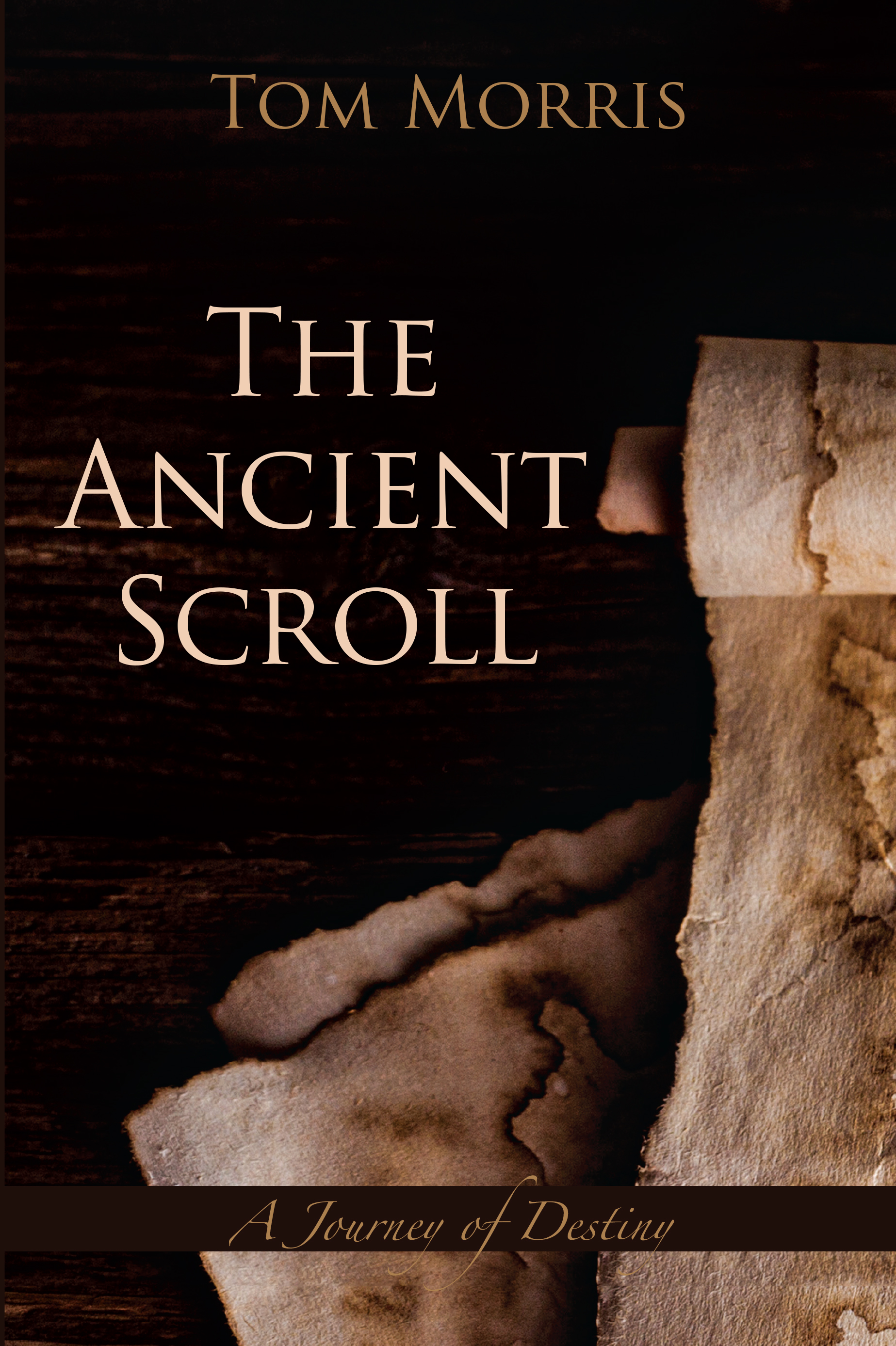
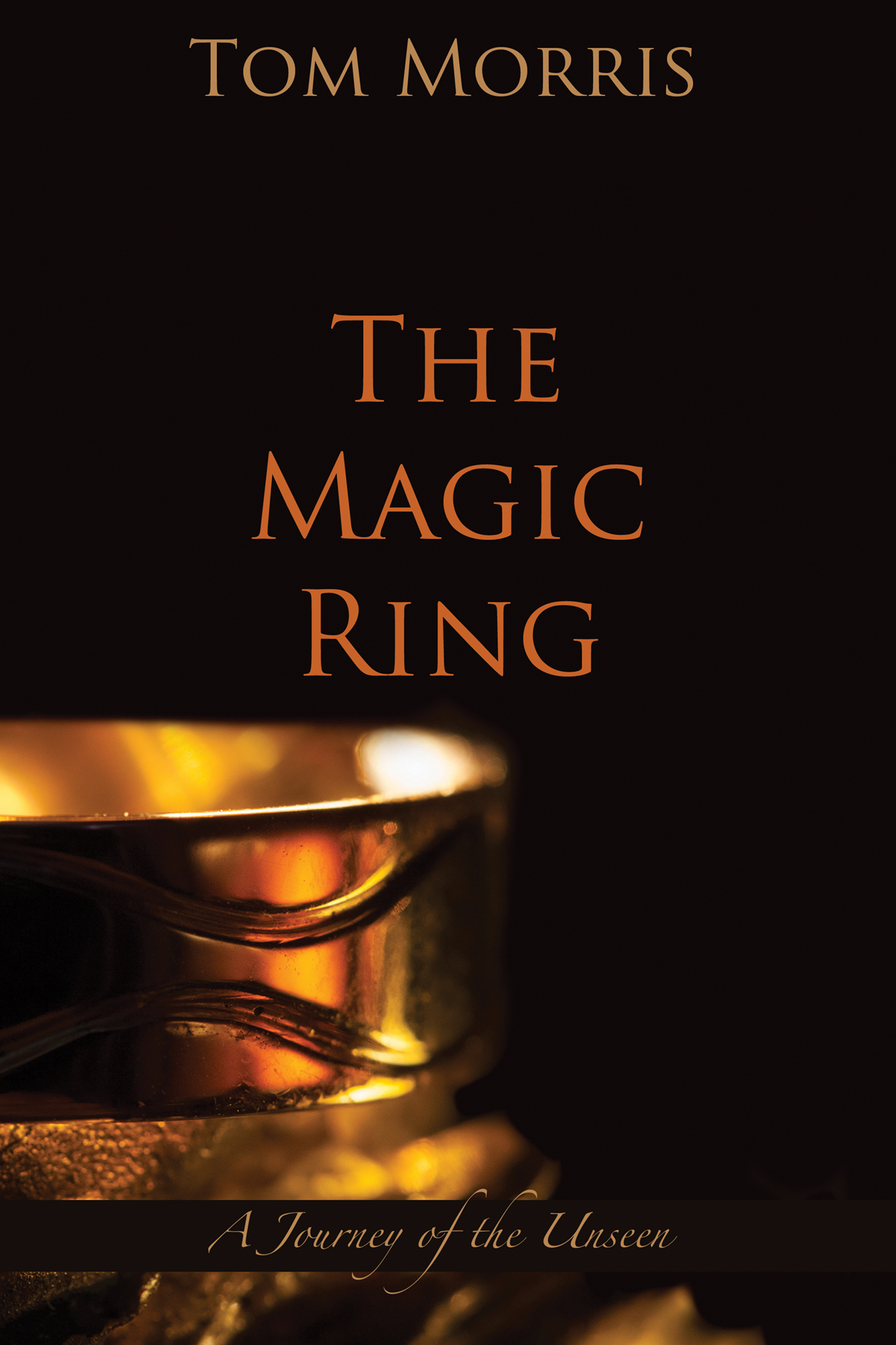
Finally! Volume 7 of the new series of philosophical fiction!

Finally! Volume 7 of the new series of philosophical fiction!

Plato comes alive in a new way!

Plato comes alive in a new way!

On stage in front of a room full of leaders and high achievers from across the globe.

On stage in front of a room full of leaders and high achievers from across the globe.

My Favorite Recent Photo: A young lady named Jubilee gets off to a head start in life by diving into some philosophy!

My Favorite Recent Photo: A young lady named Jubilee gets off to a head start in life by diving into some philosophy!

Great new Elizabeth Gilbert book on creative living and the creative experience.

Great new Elizabeth Gilbert book on creative living and the creative experience.

Two minutes on a perspective that can change a business or a life.

So many people have asked to see one of my old Winnie the Pooh TV commercials and I just found one! Here it is:

Long ago and far away, on a Hollywood sound stage, I appeared in two network ads for the wise Pooh, to promote his adventures on Disney Home Videos. For two years, I was The National Spokesman for that most philosophical bear. This is one of the ads. I had a bad case of the flu but I hope you can't tell. A-Choo!

One of my newest talk topics is "Plato's Lemonade Stand: Stirring Change into Something Great." Based on the old adage, "When life hands you lemons, make lemonade," this talk is about how to do exactly that. Inquire for my availability through the c…

One of my newest talk topics is "Plato's Lemonade Stand: Stirring Change into Something Great." Based on the old adage, "When life hands you lemons, make lemonade," this talk is about how to do exactly that. Inquire for my availability through the contact page above! Let's stir something up!

Above is a short video on finding fulfillment in anything you do, that was taped a few years ago. I hope you enjoy it!