Follow @TomVMorris
Retreats
Keynote Talks and Advising
About Tom
Popular Talk Topics
Client Testimonials
Books
Novels
Blog
Contact
ScrapBook
Short Videos
The 7 Cs of Success
The Four Foundations
Plato's Lemonade Stand
The Gift of Uncertainty
The Power of Partnership

Tom Morris

Great Ideas. With Power. And Fun.
Retreats
Keynote Talks and Advising
About Tom
Popular Talk Topics
Client Testimonials
Books
Novels
Blog
Contact
ScrapBook
Short Videos
The 7 Cs of Success
The Four Foundations
Plato's Lemonade Stand
The Gift of Uncertainty
The Power of Partnership
OldMan.jpg

Old Age: Sneak. Thief. Guide.

If you live long enough, old age will some day begin to sneak up on you. There's a pain here, a strain there. Some food you've always loved starts bothering you. Too much cabernet or champagne will suddenly make you snore. Or at least, if other people's reports are to be trusted. It doesn't all happen at once. And each thing, in itself, can normally be explained away. 

What makes old age such a sneaky thief is that when it starts to take things away from you, it typically most often brings them back - at least, at first, and for a time. You're hobbling around with a back injury, unable to do your normal stuff. And then a few days or a few weeks later, the pain goes away. The stiffness disappears. Oh, Ok. I'm fine.

Or age takes away, bit by bit, your natural ability to sleep solidly through the night. You have lots of fitful evenings. You're exhausted. And maybe cranky. And then you have one or two or more deep slumbers again. Oh, Ok. I'm fine. It was just the full moon, or the dog moving around too much, or those neighbors, or that spicy burger.

That's what makes old age so tricky. It takes away and then often gives back, and it's typically so subtle about its depredations that you can almost always, for a while, blame something else. 

Now, I'm saying this as a youth of 62. I'm stronger than I've ever been in my life, and vigorous and energetic in almost every possible way. And yet, when I go crazy in the gym, it's easier to mess up that rotor cuff, or those hip flexors, and then I'm semi-benched for a while, until I come back, full force, but a little more cautious. My greatest strength and weakness at once is that I'm a person of extremes. And youthful resilience will tolerate extremes that middle age, and the early onset of maturity may not so readily indulge.

I have a friend who at 92 just published his memoir and has been on book tour promoting the autobiography on most of the major talk shows. He gives me hope. But he may even slow down in ten or twenty years. Most of his peers are already not as full of life and energy.

It looks like old age is going to eventually take away pretty much everything we have. It will take away beauty and power and all sorts of possibilities. In some cases, it seems to rob people of most everything they are, at least in this world. And yet, that's an important qualification. There's a wild option here.

In the end, it may be that old age isn't just a liar and a thief of the worst sort. Maybe it's a teacher and a guide. We say it has its compensations. And wisdom can certainly be one of them. But maybe this thing called wisdom goes far deeper than we suspect, and part of the wisdom that age has to convey to us is the realization that we need to shed a lot of the baggage of this world before transitioning to a new adventure in the next one.

Some may object that part of the baggage that age has helped them shed already is such a belief that there is something more. And in their journey, perhaps, that shedding in its own way has helped in their preparation for what does indeed come next. But it's my view that they'll be surprised. They think nothing is on the horizon. I suspect something big is. And I realize we can't both be right. But I can't help but feel that I am.

Age. I'll still wrestle with the joker, while laughing at his pranks. And the more I fight him, the more I'll get of him, if I'm successful. But of course, in the end, I can't win, because there is an end. Or, wait. What if somehow we both win, in the end, age and I, if we do it just right? Maybe old age is the guide it needs to be, in many ways - if we take the right attitude about dealing with it.

I know, I'm still young. But we need to plan ahead.

Age well, my friends.
PostedFebruary 15, 2015
AuthorTom Morris
CategoriesAdvice, Attitude, Life, Wisdom
Tagsage, old age, senility, weakness, strength, death, wisdom, Tom Morris, TomVMorris, Philosophy
Post a comment
WillSmith.jpg

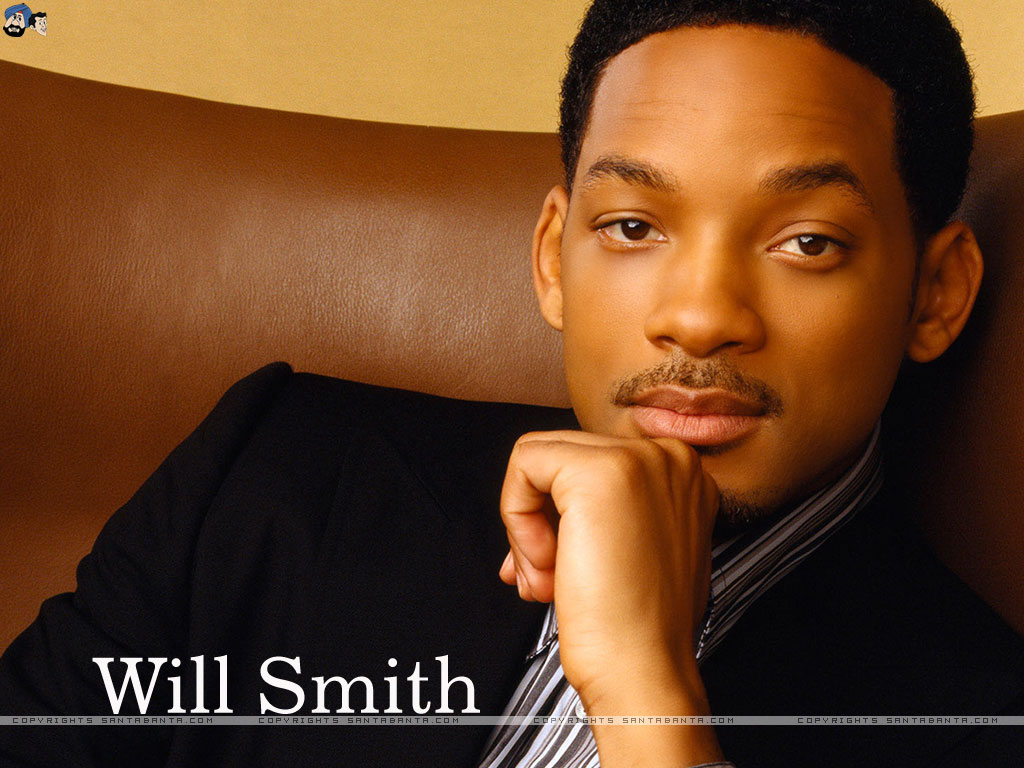
Will Smith, on Success and Love.

We've all seen him in the movies. We've heard his music. Some of us first discovered him on television. But now, as the new interview with Scott Raab in the current issue of Esquire makes clear, Will Smith has become a philosopher.

Reflecting on his career, he describes something that many of us have felt.

I always thought there was some place I was going, that there was some success or some achievement or some box-office number that was going to fill the hole. And what I realize is that life is a hole. It's a process of continually trying to find and reinvent myself. I'm the type of person who is always going to be somewhat dissatisfied with myself. I'm never going to be smart enough. I'm never going to be a good enough father. I'm never going to be a good enough husband. I'm never going to be a good enough actor for myself. I just never will be, and I have to get comfortable with waking up every day and trying to move some little increment closer to the person I have always dreamed of being.

Lesson Number One: Even being a huge star and celebrity, with great wealth and social power won't complete us. Yeah, we knew that. But we have to be reminded, now and then, to keep us from fruitlessly chasing our own versions of this, in our own efforts to "fill the hole."

Later on, he talks about a movie that failed at the box office and what he felt when he got the very bad numbers. 

And that Monday started the new phase of my life, a new concept: Only love is going to fill that hole. You can't win enough, you can't have enough money, you can't succeed enough. There is not enough. The only thing that will ever satiate that existential thirst is love. And I just remember that day I made the shift from wanting to be a winner to wanting to have the most powerful, deep, and beautiful relationships I could possibly have.

Lesson Number Two: If we define success in isolation from love and relationships, we'll never be satisfied or happy. We need to start at the core of who we are as human beings. And that core is supposed to be all about love. When we use that as our foundation, we can build a life that matters and a success that's not only real, but that feels deep and true and fulfilling.

A friend of mine named Matt Ham has just written a book all about that. It's called Redefine Rich, and is well worth a read. It offers a diagnosis and a reminder that we all need.

Love first. All else, second.


PostedFebruary 14, 2015
AuthorTom Morris
CategoriesAdvice, Life, Business, Wisdom
TagsWill Smith, Esquire, Scott Raab, Success, Love, Fulfillment, Satisfaction, Money, Power, Fame, Celebrity, Tom Morris, TomVMorris, Matt Ham, Redefine Rich
Post a comment
RedHeartandArrow.jpg

Urgent Valentine Advice

Guys, this is for you. Ladies, please pass it on to any significant other or clueless man you think could use it. Quickly.

I decided in the early days of knowing my wife that I'd have a theme for the special Valentine's Day gifts I'd buy her every year. My theme would be Red. I'd get her something red for this special celebration each time around. That was it. Very simple. And, themes are good, right?

There's always a red enamel bracelet to be found, or a cute red T shirt or sweater. Red shoes are nice. A ruby anything is always appreciated. A bright red Prada bag can be a hit, as I discovered one year by sheer luck. And, yeah, sports cars do come in that color, too. But let's not get carried away. 

I'm writing to you today for a very important reason. Over the years, I have learned something vital about gifts appropriate to the occasion.

You can't always go with your first instincts on these things, as I've found out the hard way. Not every red gift works. The bright red Swiss Army Knife didn't quite cut it, after all, as I had imagined it would. I ended up explaining at great length all the cool things she could do with it - other than stabbing me, of course. And I hate to even mention this - I suppose I should promise I'm not kidding - but the novelty store wind-up chattering white teeth with very red plastic lips and gums didn't evoke quite the level and warmth of unrestrained merriment that I was aiming for, either.

Rule One. Think this thing through in advance.

Rule Two: If the gift will take ANY AMOUNT OF EXPLAINING, get another one. The romance holiday of the year is not a good time for explaining - an activity most of us engage in mainly when we're in trouble and something has gone badly wrong.

Rule Three: If you're even thinking about a funny gift, examine all facets of the potential humor or lack thereof. Again, this might not be the occasion for bold risk taking of this particular sort. It can work, but tread carefully.

My ultimate lesson about all this was the year I thought I was really showing ultimate love and concern by getting my wife something for her safety in the kitchen. Again, gentlemen: Take Note.

Rule Four: Kitchen gifts are not generally ideal for Valentine's Day. It's maybe not the right message, regardless of your sterling intentions. A older friend bought his wife what he thought was a super nice personal gift - the very best, top of the line frying pan he could find, with no expense spared. And, as he later reported to me, "She cried a lot, but not in a good way."

If you even consider anything practical, you might want to get a really nice card instead. And champagne. Or a nice Spanish Cava. Otherwise, you're in danger of entering the territory of Platonic Love, and I'm guessing that's not the philosophical consequence you want on this particular day.

My ultimate lesson came about as a result of what I thought was incredible creativity on my part. I bought my wife a bright red fire extinguisher for kitchen use - to show, as I've mentioned, my love and concern for her safety. And I have to tell you, it put out the fire in ways I had not anticipated. Honestly, it never occurred to me that this particular gift might be taken as a commentary on her culinary skills, which are, I should add, exceptionally excellent.

Please let me repeat myself on this one. It's not a day to go for practical. And in relation to this particular holiday, forget that you even have a kitchen unless YOU plan to cook in it and clean up perfectly afterwards.

It's not too late to take back that well intentioned practical item you've already gotten that even monumental explaining won't make work.

Remember, my friends: It's all about showing love in a way that your special person will immediately see as a show of love, and one that's not about you or what you love.

And, now that I say this, maybe I need to go back and do a little more shopping.

Happy Love Day in Advance.

FireExtinguisher.jpg
PostedFebruary 13, 2015
AuthorTom Morris
CategoriesAdvice, Life, Wisdom
TagsValentine's Day, Presents, Gifts, Advice, Philosophy, Platonic Love, Tom Morris, TomVMorris, Wisdom, Love
Post a comment
Blowtorch.jpg

The Blowtorch Mistake

Don't use a blowtorch to light your cigar. You know the problem. It's the same as swatting a fly with a sledgehammer. I prefer to open the door and let it out. But that's another issue. The problem I want to focus on now is that of using the wrong tool for a job, and one that's far too sweeping or powerful for the precise need you have.

Consider the common problem of anxiety. Any focused form of anxiety typically arises out of a belief or expectation that one or more of our desires will not be satisfied. You want to get the deal or ace the exam and you're afraid you won't. You hope to win the new client or get a standing ovation, and worry that you'll fail. 

We aim for something high, and fear the world may give us only something low. That's what I like to call the disappointment gap. It's possible that what happens will be greatly disappointing. So we get nervous or grow anxious.

Some extremist philosophers historically have said, "Shed all your beliefs, and you'll shed your anxiety." Others haver counseled, "Get rid of all desires, and you'll get rid of your anxiety." But either of those strategies is lighting your cigar with a blowtorch. It's not necessary. It's going too far. And it's dangerous in its own way.

The middle path is simpler. I think you're in trouble if you believe too much or believe too little. I'm convinced that it's a problem if you desire too much or desire too little. The key is having the right beliefs and the right desires, and using your mind properly in your governance of your beliefs, your desires, and your actions. That advice won't fit easily onto a bumper sticker. But neither will your life.

And the more general advice here is in fact simple. Use the right tool for the right job. And you can slap that one on the bumper with so much glue that it will take a blowtorch to get it off.

PostedFebruary 11, 2015
AuthorTom Morris
CategoriesAdvice, Life, Wisdom
TagsPhilosophy, Anxiety, Worry, Tools, Ideas, Desires, Beliefs, Tom Morris, TomVMorris
Post a comment
Kindness.jpg

The Power of Kindness

In a world of bristling egos, kindness can sometimes seem as quaint as it is rare. We're in a hurry, and have to get things done. We confront obstacles, irritants, and demands. There's little time to pause and recognize a need and then go to the trouble of treating someone else kindly. As I've heard it asked, recently: "Who's got the bandwidth for that?"

We all do. And we ignore kindness to our own detriment. Whether you believe it's a quality that reflects our Creator, or you think it's a strange and wonderful anomaly in a universe of particles and energies, if you look deeply enough, you can see that it's a nearly magical elixir for great relationships and inner peace.

Do you want to get a lot done? Do you even aspire to the excellent, the exceptional, the extraordinary? Surround yourself with great people. And treat them with justice, fairness, and kindness. Truly great people will do the same thing, themselves. And your work together will flourish.

Kindness is the extra, supererogatory "beyond" - an overflow of goodness that takes place beyond the demands of duty, and occurs only as a manifestation of love. It plants the seeds of great relationships and then nurtures them into a full flowering. It resonates in the heart.

When you contrast the soul of an irate or callous individual with that of a person filled with kindness, you find a clash and disparity no greater than which can be conceived.

And here's a secret. Kindness toward others is, perhaps, the greatest form of kindness toward yourself. When peace is given, it grows within. When love is given, it grows within. The small kindnesses of life obey a mathematics not imagined by the unjust and surly among us. Their consequences multiply beyond any reasonable expectation. Those often quiet actions make for great business teams, sports organizations, schools, neighborhoods, and families. They are a hidden source of excellence in all our endeavors.

Kindness has power. And as one of Shakespeare's characters says about mercy, it's always twice blessed - it blesses him that gives and him that takes. And the great surprise is this. The more you give, the more then is given for you to take. That's the power of kindness.

KindnessNinja.jpg


PostedFebruary 9, 2015
AuthorTom Morris
CategoriesAdvice, Business, Life, Wisdom
TagsKindness, Mercy, Justice, Goodness, Greatness, Tom Morris, TomVMorris, Philosophy, Wisdom
Post a comment
Sunburn.jpg

Emotional Sunburn

When a small problem comes along and makes a grab for your emotions, do you give it power or refuse it power? 

Many people walk around with the emotional version of severely sunburned skin - contact with almost anything will cause them upset, distress, or even pain. They're always getting worked up about little things, except that if you asked them, they wouldn't ever acknowledge that any of their problems is little. "What are you talking about? This is HUGE!" Such a person manufactures drama out of whatever is available, while actually thinking that it's other people who are causing it.

There is a better way to live. You can rise above the fray, keep calm, and stick to the high road. It's up to you. With the right mindset, you can utterly ignore what others see as slights, insults, provocations, schemes, and even threats. With the right way of thinking, you don't give little irritants the power to bother you. It's all about perspective, and a measure of inner peace.

As the stoics taught us, it's always up to us how we interpret the world. We can blame external events for how we feel, but it's in every case our own opinions about those events that are to blame.

Your world isn't responsible for your feelings. Change your mind, and you change your world, in just the right way as to free your emotional life for truly bigger and better things.

Take a deep breath. Smile. Release the initial worry or irritation or anger. Rise above it. It's in your power. And it's the only way to prevent that sunburn.


PostedFebruary 7, 2015
AuthorTom Morris
CategoriesAdvice, Attitude, Life, Wisdom
TagsEmotions, Drama, Irritations, Frustrations, Anger, Inner Peace, Thought, The Power of the Mind, The Stoics, Tom Morris, TomVMorris, Philosophy
Post a comment
Crash.jpg

Worst Case Scenario Thinking

Worst case scenario thinking is healthy, worst case scenario believing is not. And there's an important difference. Prudence in life requires that we understand the ways in which things could go wrong, and have some idea as to what we would do if they did. That's worst case scenario thinking. We imagine various negative scenarios enough to prepare for them, but no more than that. Too much imagination can actually become anticipation, and that easily can turn into belief.

When I was a teenager, my father used to tell me stories about effective worst case scenario thinking. A dump truck driver had imagined what would happen if the bed of the truck was in the up position and there was a catastrophic failure causing it to fall onto the cab. He had visualized jumping into the floorboard to keep from being crushed. And then one day it happened. And he was unhurt, because he instantly had done exactly what he had imagined.

At its best, worst case scenario thinking is a form of "what if" planning. It prepares us for remote possibilities, and thereby helps us to avoid the most damaging consequences that could otherwise ensue. As such, it's actually a way of building confidence and assurance, rather than anxiety. But at its worst, the same sort of thinking can become both believing and fearing. Out of control, it unhinges us and impedes our performance. It's up to use to use it in the best way, and avoid the worst case scenario with it.

PostedFebruary 5, 2015
AuthorTom Morris
CategoriesAdvice, Business, Life, Wisdom
TagsNegatives, Danger, Damage, Possibility, Worst case scenario thinking, anticipation, Prudence, Rational planning, Tom Morris, TomVMorris, Philosophy, Wisdom, Anticipation, Anxiety
Post a comment
VanGoghRoom.jpg

A Slow Start. A Pause. An Improbability.

Some people come into the world like they've been shot out of a cannon. The rest of us, not so much. Some of us are slow starters. It takes us a while to find our path and to get moving along it. And many of us can find ourselves, after a vivid beginning, in an extended time of pause, where our forward momentum seems diminished, or even gone, and we appear stuck. Many of us struggle, to apparently no avail, and come to view any sort of qualitatively different, and better, future as a sadly immense improbability.

But we have to remember how many slow starters and late bloomers have gone on to tremendous success. It's amazing how often a long pause in life's journey has been the prelude to something great. And, ironically, it's astonishing how much the improbable actually happens, all the time, confounding everyone's expectations.

A book review in a recent Sunday New York Times, tells of a young man who wanted to be an artist, and who ended up, in his twenties, in a psychiatric asylum, which did not exactly bode well for his future. And then, when he was released, he seemed to have absolutely no prospects at all. To quote the reviewer:

"A 30-year-old with no money, no job, and no plan, van Gogh retreats to his parents' home."

Yeah. Vincent van Gogh. And the rest, as we love to say, is history.

There are countless such stories in our past. There will be just as many in our future, or more. So, if you feel that you're off to a slow start, in a job, or in life, or you think that destiny has hit the pause button on your career, or for your life, keep hope alive, keep believing, and keep your eyes wide open, looking for the next development that can make all the difference.

Your Starry Night, and next brightly sunlit day, may be just around the corner.

PostedFebruary 1, 2015
AuthorTom Morris
CategoriesAdvice, Life, Performance, Wisdom
TagsHope, Success, Delay, Patience, Belief, Opportunity, Greatness, Tom Morris, TomVMorris
Post a comment

Stoic Joy. Natural Joy.

In preparation for a trip across the country not long ago, I did something I rarely do: I took one of my own books along to read. It was The Stoic Art of Living: Inner Resilience and Outer Results. It was published ten years ago, and I had not re read it since the early days after it first appeared on bookstore shelves. I tried to approach it objectively, as I would any book. And I have to admit that I really enjoyed it! I had forgotten various little discoveries I had made when I first wrote the original draft of the book, going back almost twenty years. The top three Roman stoics, the slave Epictetus, the prominent lawyer Seneca, and Roman Emperor Marcus Aurelius had great and practical insights about life that can tremendously enhance our experience of the world today. Their wisdom, at its best, will never go out of style.

The stoics had many perspectives that can help us. Inner resilience is the best path for outer results. Things are not often what they seem. Most of our difficulties come not from the world, but from how we think about things in the world. Nothing can truly harm a good person. By changing our thoughts, we can change our lives. Nothing is to be feared. And I could go on. But, to me, perhaps chief among their insights was the claim that joy is our natural state.

Think about that for a second. Joy is our natural state. If any stoic philosopher was right in thinking this, then either you are experiencing joy right now, or there is some unnatural, unnecessary obstacle in your life blocking that joy, and it's an obstacle you can remove.

If you are, right now, in a state of joy, congratulations. If you aren't, then you should be asking yourself what's getting in the way. What's blocking you from the state of mind that should be your natural default setting? The possibilities are many. And you can't do anything about the ones operative in your life right now until you can identify them. The stoics were confident that, whatever the obstacles might be, you can eliminate them through controlling your emotions, and in turn, you can do that by controlling your thoughts. It's just that simple.

The stoics were philosophers who wanted to help us peel back the worry and anger, the suffering and agitation, the distraction and confusion that too often rules our lives, and get back to the natural state of joy. When we experience that natural joy, we flow forward with all the power that we're meant to have in this life. And that's the power, in the deepest sense, of love.

What's keeping us from it?

PostedJanuary 30, 2015
AuthorTom Morris
CategoriesAdvice, Life, philosophy, Wisdom
TagsStoic philosophy, Joy, Worry, Anger, Anxiety, Suffering, Agitation, Distraction, Confusion, Love, Tom Morris, TomVMorris, Epictetus, Seneca, Marcus Aurelius
Post a comment

The Urge and the Pause

What makes you eat that extra burger, get that additional serving, have just one more drink, and maybe at least half a one after that? What pulls the trigger on that negative comment or angry outburst in response to what strikes you as idiocy, or as an insulting remark? What moves us to do almost anything that we later regret?

There's an urge, an insistent urge, and we act on it. Or, to use another helpful metaphor, there's a big itch, and we scratch it. In her practical little book on change, Taking the Leap: Freeing Ourselves from Old Habits and Fears, the American Buddhist nun Pema Chodron, passes on some useful advice. Consider poison ivy. When we have it and scratch, we spread the problem. We end up itching even more. And that most often results in even more scratching, and an even bigger problem. Great metaphor.

The meditative approach that she recommends instead is to pause, notice the itch, feel it fully, live with it, and refrain from reacting quickly and naturally by scratching. It's often more helpful to consider the itch than to obey it. You might ask yourself why the itch is there. You might remind yourself what will happen, as it always does, if you scratch, as you normally do. How will you look back on the scratching tomorrow? The intense urgency of the urge is always a passing thing. Resist for thirty seconds, or a minute, and the battle is won.

Scratch it now and you'll have to fight a bigger battle later. Now is always the time to pause, and consider, and learn to feel, before giving in to the urge that never makes things better, but worse.

Small pauses can solve big problems, and help to erase long term habits. When we use our minds properly, we can defeat what may long have defeated us. What we need is a new urge - to pause.

PostedJanuary 29, 2015
AuthorTom Morris
CategoriesAdvice, Life, Wisdom
TagsAddiction, Overeating, Drinking problems, bad habits, Meditation, Mindfulness, Pema Chodron, Taking the Leap, Tom Morris, TomVMorris
Post a comment

Running the Race Well

I just came across an old image. Life is like a relay race. So is your work. Someone has passed a baton to you. And you're now running with it. At some point, you'll pass it on to someone else. As you run, you should reflect on at least these considerations:

1. The person who gave you the baton - Who was it? What do you owe him or her, as a result of the gift of that baton? What responsibility has been passed on to you with it?

2. The person you'll eventually give the baton - Who will it be? Do you know? Do you care? Are you selecting a proper recipient, even now? What do you owe that person? What responsibility do you have to him or her? What duty, or possibility, or momentum, will you pass on?

3. On a deeper level, is this the right race for you? When you pass off the baton, should you then find a different race, or a different track?

To run the race of your life or work well is to take care of these things. And, while you hold the baton, you move forward as well as you can, and you uphold the process at its best.

That's running the race well.

PostedJanuary 27, 2015
AuthorTom Morris
CategoriesLife, Business, Wisdom, Performance
TagsLife, Work, Race, Obligation, Duty, Responsibility
Post a comment
MCExLife

Create an Extraordinary Life

Create an Extraordinary Life. That's the motto of the Morehead-Cain Foundation, the people who sent me to college. And it's piece of advice that each of us should heed.

No one in my family background, so far as I could tell, had ever been to college. My relatives were mechanics, truck drivers, and farmers who went to work, or served their country in the military, right out of high school. When I was a senior at Durham High, my mother told me there was no money for college. Then, out of the blue, or to be more precise, the Carolina Blue, I was nominated for what at the time was called a Morehead Scholarship, now a Morehead-Cain. After writing an application and going to three interviews, they told me I would have a completely free education at The University of North Carolina, Chapel Hill. I soon learned that I also had a magic ticket to meet all the best people, work with the top professors, and follow my instincts wherever they might lead. The scholarship was a doorway, and a long red carpet, that would guide me to an extraordinary life.

I love the way the Oxford English Dictionary defines the word ‘extraordinary.’ It uses terms like ‘exceptional,’ ‘surprising,’ and ‘unusually great.’ By contrast, the word ‘ordinary’ gets this treatment:  

"Regular, normal, customary, usual, not exceptional, not above the usual, commonplace…"

There is, in principle, absolutely nothing wrong with what’s ordinary – except when it’s also poor-to-mediocre, or significantly less than our best. But that’s exactly the problem, isn’t it? That’s just what ordinary most ordinarily is.

The ordinary life is typically one defined by the past rather than by the possible, by other people’s expectations rather than our own aspirations, by what’s easy rather than what’s right, and by always considering the safe path rather than the best one. Ordinary efforts seldom yield exceptional results.  
    
Why should we settle for ordinary when so much more is available? Something extraordinary beckons to us all, and simply awaits our passionate, determined response. But we don’t have to answer the call alone. Some of the most exceptionally wise people in all of human history have left us incredible insights on how to create and live an extraordinary life. That's why I urge people all the time to read the great practical philosophers of the past - people like Lao Tsu, Confucius, Epictetus, Seneca, Marcus Aurelius, Hadrat Ali, Balthasar Gracian, and Ralph Waldo Emerson. They are some of our best guides to what an extraordinary life can be, for each of us.

This past weekend, the Morehead-Cain Foundation celebrated the thirtieth anniversary of its wonderful Associate Director, Megan Mazzochi, who arrived at her job in Chapel Hill at a time when the foundation had no computers and was debating whether it needed a fax machine. For three decades, she's helped waves of young students, such as I once was, to enter the doorway of an extraordinary life. She and the great director Chuck Lovelace, with their remarkable staff, have made extraordinary things possible for more people than they can ever know. They've encouraged and supported me in every way imaginable throughout my career as a university professor and now as a public philosopher. They've shown me in vivid ways how we can each live extraordinary lives while helping others to do the same. They inspire me in an ongoing way. And through their work with future leaders in every facet of our society, they give me an additional source of hope for the future.

Megan at the Morehead-Cain Foundation, The University of North Carolina - Chapel Hill

Megan at the Morehead-Cain Foundation, The University of North Carolina - Chapel Hill

Like Megan Mazzochi, like Chuck Lovelace and the exceptional staff of the Morehead-Cain Foundation, and like the great thinkers of the ages who have left their wisdom behind for us to use, let's all try to play a role in helping others to live their own version of an extraordinary life, as we do so, likewise, to our own great benefit.

Oh, and for a short video of people congratulating Megan and thanking her for all her hard work over the decades, plus, at the end, a little country music style ditty I composed and played in honor of her truly super extraordinary extraordinariness, click here.


PostedJanuary 26, 2015
AuthorTom Morris
CategoriesAdvice, Leadership, Life, Wisdom
TagsMegan Mazzochi, Chuck Lovelace, Tom Morris, TomVMorris, The Morehead-Cain Foundation, Morehead-Cain Scholarship, Morehead-Cain Scholars, UNC, University of North Carolina, Chapel Hil, Extraordinary Life
Post a comment
Journaling.jpg

Some Journal Entries on Wisdom

I just finished editing the last of eight novels that I've been writing over the past four years. No, don't go Amazon them, or Google them yet. I haven't yet shopped them around to publishers. They're still our little secret. So, Shhh.

But, today, I wanted to share a few journal entries from one of the characters, some realizations he's had about wisdom. The character is only 14 years old, but he's been mentored by some amazing people, and has had many insights that are typically far beyond his years. Here are just a few short entries you may enjoy, as you contemplate the past year and envision the new year that's already been born.

Wisdom may come to us in words, but it lives with us in actions.

Knowledge is in the mind. Wisdom is in the heart.

We’re meant to possess knowledge. Wisdom is meant to possess us.

A life without wisdom is barren, regardless of the fireworks it contains.

Wisdom and love go together. You can't truly have one without the other.


PostedJanuary 25, 2015
AuthorTom Morris
CategoriesAdvice, Life, Wisdom, Philosophy
TagsWisdom, Action, Knowledge, The mind, The heart, Tom Morris, TomVMorris, Philosophy
Post a comment
WomanInMirror.jpg

Self Reflective Consciousness

Self Reflective Consciousness is the distinctive type of awareness that carries within itself the ability to consider and think about ourselves. It's the mind's inner mirror that reflects to us what we're doing and thinking, and lets us ponder that. It provides the capacity for self appraisal, self judgment, self correction, and self guidance.

It's our great glory, and our big problem. It allows us to consider, choose, adapt, and transform our lives. It also lets us critique, doubt, second-guess, and worry about our lives. It's the chief engine of  what we know as personal excellence. And it's the chief obstacle to that same exalted state. We need to make the most of it, and equally, to rise above it.

Fortunately, the phenomenon of self reflective consciousness can itself help us to get into a position to leave it behind, as we enter "The Zone" or "Flow" or the "Deep Play" of creative work, athletic mastery, musical reverie, or even a great relationship, at its best.

Is it then a ladder to be climbed and eventually kicked away? Or is it a lifeline that we need always with us, at least in the background, despite our equal need to transcend it?

The top performers in any art, science, or work, in their greatest moments, as they report later to us, rose above it, kicked it aside, and shed its limitations as they soared to their highest achievements. They became self forgetful in order to reach the pinnacle of self fulfillment.

This reflective state of consciousness, this inner mirror and critic, is a blessing when it helps us to find our way, and a curse when it just gets in our way. We need to grow better at using this capacity so well that it will help us to soar far beyond its limiting and commenting chatter. 

Then, we enter the realm where we can fly.

PostedJanuary 23, 2015
AuthorTom Morris
CategoriesAdvice, Art, Life, Performance, Wisdom
TagsSelf Reflective Consciousness, Self Awareness, Transcendence, The Zone, Flow, Deep Play, Excellence, Greatness, The Extraordinary
Post a comment

Luck and You and Me

Are you lucky or unlucky? It just might be that this doesn't really matter - unless, of course, you're in Vegas, like I am today. Believe it or not, philosophy often happens here. Maybe even more often than good luck.

Let me quote Diane Ackerman, from her great book Deep Play, where she is exploring how even our hardest work can be undertaken as a form of play. While pondering the role of something like luck in the game of life, she refers to an ancient text and writes: 

"In the Sanskrit Mahabharata, for example, we find men, who represent the seasons, deciding the world's weather and crop yield by rolling gold and silver dice. But, aside from luck or the favor of the gods, the player succeeds by his or her own talents." 

What does she mean by 'luck' here? Maybe anything beyond human choice, the force or cluster of forces that brings things into our lives apart from our own contrivance. You could equally speak of fate, or destiny, or divine providence. But for the sake of understanding Ackerman's remark, let's stick with luck. Then, we can articulate what I take to be her insight. We can say it a number of ways.

Luck sets the course. We decide how to play it.

Luck arranges the obstacles. We figure out how to move around and through them.

Again, perhaps: 

Luck paves the road. We choose how to travel it.

We all have challenges. Everyone has opportunities. Sometimes, one situation is both. And, viewed properly, the world presents much more of this duality than you might imagine. An opportunity turns out to be, also, and perhaps unexpectedly, a problem. A problem is revealed, in the end, to contain an opportunity. This happens all the time. I like to think of this phenomenon as a turnaround. Things that come into our lives can be, ultimately, quite different from what they at first seem. It's up to us how to react, respond, and rearrange our expectations.

Of course, luck is also often referred to as chance. And there's an ancient perspective on this. Chance favors the prepared mind, the skilled hand, the creative spirit, and the person with lots of great relationships.

We need to remember, the world isn't here to give us what we want, but to help make us into what we can be. And I, for one, could use a little help.

What luck!

PostedJanuary 21, 2015
AuthorTom Morris
CategoriesLife, Wisdom, Philosophy, Advice
TagsTomVMorris, Luck, Sanskrit, Skill, Freedom, Preparation, Decisions, Diane Ackerman, Creativity, Choice, Relationships, Deep Play, Tom Morris, Mahabharata
Post a comment
StonesInWater.jpg

Philosophy as Necessary

What can help provide the stepping stones to the future we most want and deserve?

You can likely guess my answer: philosophy.

In a fascinating essay in Sunday's New York Times Book Review, where he ruminates on the nature of our culture right now, which can look very non philosophical, Leon Wieseltier nevertheless wrote:

Wherever mortal beings are thoughtful about their mortality, and finite beings ponder their finitude, at whatever level of intellectual articulation, there is philosophy. Philosophy is ubiquitous and inalienable; even the discourse about the end of philosophy is philosophy.

And while Wieseltier is correct in what he says, as far as he goes, it's not just when we're contemplating our mortality or finitude that we're engaging in philosophy. As he hints later in his essay, whenever we're trying to figure out real matters of worth, we're doing philosophy.

In our work lives, we're always thinking about the setting and attaining of goals. We do that in our personal lives, too, if we have any measure of ambition concerning personal growth and change. But whenever we think of goals and the means to them, the question will always arise, at least implicitly, as to what goals are worth our pursuit and what means or methods are worth our time and energy. And those questions can't fully be answered without a sense of what sort of life is worth living. And that's the core of philosophy, in it's most practical and existential mode.

What's worthy of us? What's a waste? Who do I want to be? What am I becoming, as a result of what I'm doing? Does a certain activity lift me up, or lower me down? These are serious questions, but asking them and guiding our lives by them doesn't require that we be serious in the sense of somber. We can have fun in all the best ways. We can play and frolic, mentally and physically. We can enjoy immensely what the world has to offer, while still guiding our steps with wisdom and what the ancients called virtue, their own concept for personal strength, or power. 

Philosophy may be one of the most under-appreciated necessities in life. But that doesn't keep it from being necessary. The more we come to appreciate it, the better we can do it, and the more our lives benefit, as a result. Let it help provide you with the stepping stones to the future you most want and deserve.

PostedJanuary 20, 2015
AuthorTom Morris
CategoriesLife, Philosophy, Wisdom, Advice
TagsMortality, Finitude, Goals, Methods, Life, Personal Growth, Tom Morris, TomVMorris, Philosophy
Post a comment
ManWalking.jpg

The Most Important Thing I've Learned

Perhaps the single most important thing I've learned as a philosopher is, that life is supposed to be a series of adventures, lived with love, confidence, and a real concern for others, as well as for ourselves. The adventure we're on right now, whatever it might be, and however great or challenging it seems, is preparing us for the next one, and often in ways we can't even imagine.

The uncertainty of the future is just the open field of possibility for adventure and creativity that we all need, moving forward, even though it can feel uncomfortable and even, at times, scary.

The key to successful living is to be open to new ideas and new paths along the way. The world is an endless kaleidoscope of opportunities, many of which may be so hidden as to require your investigative discovery, as well as openness.

Your ongoing job that's connected with this is what I call 3-D Living:

Discover your talents,

Develop those talents, and

Deploy them into the world for the good of others, as well as yourself.

3-D Living is a process that, ideally, never ends.

The most important moment in your life is the Right Now that allows for the Soon Next. And even though that sounds a little bit like a prolix fortune cookie, it's true, whether Confucius said it or not. Life is a dynamic process. We're to carry with us a dynamic orientation, leaning forward with the adventure we're now on, embracing the present, and preparing for the future.

PostedJanuary 19, 2015
AuthorTom Morris
CategoriesAdvice, Life, Wisdom, Philosophy
TagsAdventure, Life, Living, Uncertainty, The Unknown, Talents, The Present, The Future, The Past, Tom Morris
Post a comment
ManWithQuestion.jpg

Questions

Questions bring us new truths, new perspectives, and sometimes new possibilities.

Is there a question you should be asking now that you're not yet posing? That was, actually, mine. But I hope it soon leads to others.

Questions begin to unwrap the presents that life has for us - the great gifts and challenges and delights that can lie ahead.

It's easy to ask little questions: "I wonder what I should have for lunch today?" But it's the hard questions that can be life changing.

Is there a question you've been avoiding? Is there one you should be asking?

Socrates lead the way, and showed us that, even when we can't get clear answers, posing and considering the right questions can still lead us forward in powerful ways.

It may be time for a mood - the interrogatory mood. What should you be asking yourself now?

PostedJanuary 18, 2015
AuthorTom Morris
CategoriesAdvice, Life, Wisdom
TagsQuestions, Inquiries, Socrates, The Future, Tom Morris, TomVMorris, Philosophy, Wisdom, Life
Post a comment
Jungle.jpg

The Adventurous Mind

Where is your next adventure? What will it be? When will it happen? And, how?

In her book, Deep Play, the modern poetic explorer of all things, Diane Ackerman, writes: "People often ask me where they might go to find adventure. Adventure is not something you must travel to find, I tell them, it's something you take with you."

The adventurous mind is always on the lookout for the new and challenging and wild - something to be explored, tackled, or tamed. Adventure is an attitude, a dynamic inclination, a way of living and working. It's best found where you are. And then it takes you to where you need to be. It's always about what's next. It's the way curiosity moves through uncertainty with danger or delight.

Where do new things come from? The adventurous mind finds them, or makes them. It's the mindset of discovery and creation. It's also the soul of intentional becoming and growth. It's a spirit and a cousin of courage. Its enemy is inertia, armed with fear. It's up to us to cultivate it and free this wellspring of the new from whatever would chain it down and hold it back.

So: Where's your next adventure?

You carry it inside you.

Bring it to the world.

PostedJanuary 17, 2015
AuthorTom Morris
CategoriesLife, Attitude, Advice, Wisdom
TagsAdventure, attitude, uncertainty, courage, Diane Ackerman, Tom Morris, TomVMorris, Philosophy, Wisdom, Life
Post a comment
CharlieRally.jpg

Insult, Offense, and Rage

Contrary to apparently widespread opinion, it’s not possible to insult, offend, demean, or disparage a great leader, prophet, religion, nation, or individual. It’s easy, of course, to insult and enrage lesser people. Many seem prepared to take umbrage at nearly anything. But true greatness is in this distinct way completely untouchable. The target is too far from its detractors. Any arrow of invective or caricature will fall short.
 
Public events of recent days and decades can seem to indicate the opposite. A movie is announced to be an offense and an insult to a revered leader, or to an entire swath of the human population. A cartoon, a video, or a passage in a book can be said to have committed a grievous injury that must be avenged “by all means necessary.”
 
The problem is that all this rage and reaction is based on a faulty understanding of the very notions of insult and offense that are being used to explain and justify the responses of anger, threat, and violence that seem so enormously out of proportion to whatever incited the response.
 
You just can’t claim with logical consistency both that your leader, or nation, or cause is great, and that he, she, or it has been insulted, offended, or demeaned by any words or works of art. It’s literally impossible to successfully insult, offend, demean, or disparage real greatness.
 
There’s an old proverb: The lordly lion ignores the yapping of small dogs. This is an image of a philosophical insight. Greatness has, within itself, its own intrinsic honor and worthiness of respect. When it’s not shown that respect, a wrong is done, not to the great person, nation, movement or religion being attacked, but both by and to and in the one communicating the disrespect. With anything other than greatness, however, things are quite different. But true greatness has an essential immunity to such diminishment.
 
Socrates believed that others could harm us only physically. We alone are capable of hurting and demeaning ourselves spiritually. He was also convinced that the worst efforts of lesser men could never do genuine harm to the souls of greater men, however they might contrive to inflict that damage.
 
Of course, there’s often a dynamic of insult, offense, and rage within businesses and industries, as well as within cultures. And far too much energy is wasted on these things. Any who react with anger and even rage to such perceived wounds need to engage in the age-old enterprise of self-examination. Are they defending their honor, or their great mentor’s honor? True honor needs no such defense. It’s fine, as it is. Once they understand this, then, perhaps, they'll be able to discover what's really going on in their own hearts and minds, and make some changes that can result in something philosophically and emotionally healthier.


PostedJanuary 15, 2015
AuthorTom Morris
CategoriesAdvice, Life, Business, Wisdom
TagsInsult, Offense, Rage, Anger, Violence, Honor, Character, Greatness, Charlie, Tom Morris, TomVMorris, Wisdom
Post a comment
Newer / Older

Some things that may be of interest. Click the images below for more!

First up: Tom’s new Silver Anniversary Edition of his hugely popular book on The 7 Cs of Success!

The New Breakthrough Guide to Stoicism for our time.

Tom's new book, out now!
Finally! Volume 7 of the new series of philosophical fiction!

Finally! Volume 7 of the new series of philosophical fiction!

Plato comes alive in a new way!

Plato comes alive in a new way!

On stage in front of a room full of leaders and high achievers from across the globe.

On stage in front of a room full of leaders and high achievers from across the globe.

My Favorite Recent Photo: A young lady named Jubilee gets off to a head start in life by diving into some philosophy!

My Favorite Recent Photo: A young lady named Jubilee gets off to a head start in life by diving into some philosophy!

Great new Elizabeth Gilbert book on creative living and the creative experience.

Great new Elizabeth Gilbert book on creative living and the creative experience.

Two minutes on a perspective that can change a business or a life.

So many people have asked to see one of my old Winnie the Pooh TV commercials and I just found one! Here it is:

Long ago and far away, on a Hollywood sound stage, I appeared in two network ads for the wise Pooh, to promote his adventures on Disney Home Videos. For two years, I was The National Spokesman for that most philosophical bear. This is one of the ads. I had a bad case of the flu but I hope you can't tell. A-Choo!

One of my newest talk topics is "Plato's Lemonade Stand: Stirring Change into Something Great." Based on the old adage, "When life hands you lemons, make lemonade," this talk is about how to do exactly that. Inquire for my availability through the c…

One of my newest talk topics is "Plato's Lemonade Stand: Stirring Change into Something Great." Based on the old adage, "When life hands you lemons, make lemonade," this talk is about how to do exactly that. Inquire for my availability through the contact page above! Let's stir something up!

Above is a short video on finding fulfillment in anything you do, that was taped a few years ago. I hope you enjoy it!