Follow @TomVMorris
Retreats
Keynote Talks and Advising
About Tom
Popular Talk Topics
Client Testimonials
Books
Novels
Blog
Contact
ScrapBook
Short Videos
The 7 Cs of Success
The Four Foundations
Plato's Lemonade Stand
The Gift of Uncertainty
The Power of Partnership

Tom Morris

Great Ideas. With Power. And Fun.
Retreats
Keynote Talks and Advising
About Tom
Popular Talk Topics
Client Testimonials
Books
Novels
Blog
Contact
ScrapBook
Short Videos
The 7 Cs of Success
The Four Foundations
Plato's Lemonade Stand
The Gift of Uncertainty
The Power of Partnership
Series6.jpg

A Reflection on my Novels and What They Reveal

I’m editing the final book in my series of philosophical fiction, set in Egypt in 1934 and 1935. As I’ve said here many times, the stories simply came to me as a mental movie, playing in my mind’s eye and ear for five years, with all the dialogue and details already there. The story chose me to tell it. It was out of the blue. My job was just to write what I was seeing and hearing.

And yet, somehow, mysteriously, the books are all about me. I hope they’re also all about you. But I just came to realize that they’re about my deepest hopes and dreams and values and aspirations. They’re about my fears and joys and uncertainties and suspicions. They’re about weakness and strength, wisdom and virtue, friendship and animosity, uncertainty and hope, life and death.

The stories are all quite particular, but the lessons are universal.

And I’m bringing these tales into the world very differently from the vast majority of my books. Instead of contracting as I have for my nonfiction books with a Doubleday or Penguin to publish many tens of thousands of copies and place them into bookstores nationwide, announcing them in big circulation newspapers and magazines, as well as on radio and television, I created my own imprint, found the right people to help in this endeavor of love, and have published them in the new format of print on demand for paperback and hardcover, with the two basic ebook formats also available. That has allowed for something I’ve never been able to do before.

First, I have total control of what goes into print, including the great cover art done by my daughter. And there is something else. After the prologue to the series, The Oasis Within, was available for about the first six months, I realized I wanted to re-edit it. And I was able to, right then. I didn’t have to wait years, until 20,000 or 50,000 copies of the original edition had sold and that many people had bought less than the best I could do. I could make the improvements right away. And the same thing happened with The Golden Palace. Less than a year into its life, it got a new paragraph on the first page, and dozens of small changes throughout that enhanced it immensely. I had never been able to do that with a book before. And as readers have written me about their experience with these novels, their insights have helped me in editing subsequent books. There has been a feedback loop I’ve never had before. And it’s made the books better. This should be a universal experience for writers and readers.

The one problem is that I don’t have a national promotion and marketing machine behind these books. So they have to find their readers on their own. And they are, but very slowly. My workout partner told me today that he just finished The Mysterious Village and really loved it. I was so glad to hear and told him that he’s probably the fourth person to get that far in the series! I was exaggerating a little. But just a little. It will have been worth the seven years of work so far, and the rest of the eight years I anticipate, for them to have a few great readers whose lives are enhanced and maybe even transformed by the stories. And of course, it would be even more gratifying to see even more people enjoying and using the books for the renaissance of understanding about wisdom and virtue, life and death, that they can potentially provide. They’re about success and failure, struggle and victory, defeat and persistence, and the power of committed partnerships along the way. They’re about leadership and love, and staying on your path even when it’s hard, and giving others what they need as you also discover your own deepest needs and gifts. The stories are about so much. And they reveal so much.

In all my philosophy, business, and life nonfiction books, I tell stories from my own experience. You get to know my kids, my wife, as well as friends and neighbors and both the silly things and the deeper things that I’ve encountered along the way. And in the novels, there are no stories about my life. Yet, somehow, they’re the most autobiographical of anything I’ve ever done, the most deeply revealing, and if I had written nothing else ever, I would want to leave them for my kids, and grandkids, and anyone who might be interested in the experience of a philosopher meandering from the mid twentieth century into these first days of the twenty-first, and trying to get his bearings for making the world a slightly better place with the ancient wisdom that’s exactly what we need now.

For the series, go to www.TheOasisWithin.com.

PostedOctober 2, 2018
AuthorTom Morris
CategoriesPhilosophy, Wisdom, Religion
TagsNovels, Tom Morris, TomVMorris, Philosophy, Fiction, Walid, The Oasis Within
Post a comment
FirstPerson.jpg

The Con Man and Moral Contagion

It's a phenomenon based on an increasingly popular philosophy of life. And it's sadly contagious.

I’ve just read a remarkable book for our time. The title is First Person. It’s about a young author named Kif who’s hired to ghost write the autobiography of a major con man business tycoon in Australia in the early 1990s. The man’s name is Siegfried Heidl, known to his close circle as Ziggy. On the surface, he’s a prominent character in the culture who has been arrested for his outsized, gaudy, outrageous, flashy business endeavors that, it turns out, have bilked and defrauded banks of at least seven hundred million dollars. But deeper down, the man represents an increasingly common philosophy of life. As in the case of every grifter, the con man has first conned himself, and then he corrupts everyone around him with a sort of moral contagion. We see it happen all the time. It even gets played out in the daily news now, in a constant drip of tawdry revelation.

The book begins with the young writer, who is trying to write a first novel, getting hired to work on the other book project instead and commuting from his home on a poor island to labor during the week in Melbourne, where he is to interview this celebrity CEO before his coming trial and imprisonment, take notes, and draft out a book quickly. But the con man doesn’t want to reveal anything about himself at all. And so the writer struggles. He comes to hate this blowhard, authoritarian, CEO/Grifter, and yet gradually begins to become like him in the end. I’ve copied down some sentences throughout the book that you may find fascinating, individually, and then especially in their cumulative epiphanies. The main voice is that of the young writer. No quotation marks are used. When first confronted with this man, he is astonished. Here are the passages he jots down from his early encounters with the man:

He contradicted his own lies with fresh lies, and then he contradicted his contradictions. (110)

Flattery, he said. So obvious, so easy. It’s not foolproof, but it is proof of fools. (115)

Without secrets, how are we to live? he said. (125)

And the more I saw of him, the more I found every smile, every gesture full of falsity, and each day the more frightened of him I grew. (126)

A man of unexpected shadows, in another life he might have risen to be a self-help expert, topping the New York Times bestseller lists and giving overpriced motivational lectures. And who knows what else? Personal branding. Perhaps even fragrance lines. (128)

I think he just lies. Maybe he doesn’t even care about the money and it’s just a game. (136)

And with that, he leaned back, performance done, puddles of arguments drowned in a sea of nonsense. (153)

It couldn’t last, though, I said.

Why not? So much does. (154)

He said that a coward was the most terrifying man, because there was no end to the things he might do to prove both to himself and others that he had courage. (173)

Put a corpse behind a desk and people will see their superior, he told me brightly as he put the phone down from another call to the media. (175)

… and with a seeming pride out of character he told me that for every con man born so too are a thousand fools willing to be deceived. (176)

It was his need in some fundamental way to possess everyone he encountered. At times, he felt more a contagion than a human being. (179)

(Heidl Speaking in the next three quotes):

Look around you, Kif—sickness, war, the poverty that makes people savage, the riches that make them worse. Do you think the evidence of the world is that the good are rewarded? Oh no! They’re punished. They’re beaten and tortured. They have the skin peeled off them and they’re left hanging in trees to die. The evidence of the world is that the world is evil. Cheats and liars win out, Kif. Money wins out. Violence wins out. Evil wins out. (181)

Make your choice: be a fool, lie to yourself that the world is good, and go with the good. But you will lose. … Everyone and everything is destroyed in the end by evil. You can choose good. Or you can be like me and accept the world as it is. (181)

Why deprive myself of anything, that’s what I think. Would you like a car like that? A woman? Money? You would, wouldn’t you? (182)

He went on about how he was just an ordinary man who just happened to see the world a little more clearly than other men. (183)

That was what was so confusing about him—what was genuine? What was fantasy? What was fact? All I knew was that whatever or whoever he was, I was fed up with him. (185)

Exhausted by his unbelievable laziness, his lies, his greed, his selfishness, his lunatic melodramas, I felt my frustrations transform into a wild hatred. (185)

Now I think that was precisely the point of all Heidl’s stories: to make me believe my life was based on illusions—the illusions of goodness, of love, of hope. And persuaded of that, I would betray something fundamental within myself and embrace his world as my real life. (187)

He was crazed, impossible. I was exhausted by him, angered by him, insulted by his continuing idea of me as one more credulous goon who would believe any garbage he spun. (230)

I couldn’t stomach the falseness of it all, the toying with people it involved, the perverse curiosity of placing people in extreme situations to see how they might react. (233)

Nothing about him was real. I yelled at him all that I thought: about his cowardice. His laziness. His lies. His greed. His manipulation. (235)

You’re a monster, I spat.

Whoever fights monsters should see to it that in the process he does not become a monster. (236)

You want to live without enemies, Heidl said, that’s your problem. You think if I am good and kind and don’t speak ill of others I won’t have enemies. But you will, you just don’t know it yet. They’re out there, your enemies, you just haven’t met them. You can seek them out or pretend they don’t exist but they’ll still find you. Trust me. You want to be like a dog everyone likes, but there’s not a dog alive someone doesn’t want to kick or kill. You want everyone to be your friend? Why? Why bother? (256)

I stole the sun, he said. Souls, I stole souls. I ate them whole and no one saw. I am eating the world. I am eating myself. (257)

I want grandeur, he said. To shit grandeur. (257)

All the rules, all the morals, all the mysteries, they didn’t apply. For a short time I flew above them, beyond them. I was the world and the world was me … (259)

Everything they pretended to hold dear, I trampled beneath me. (259)

The world will burn. And why? Because of me … (259)

There was nothing there. His whole life had been a lost search. (267)

He wasn’t evil. That was too grand an idea when his truth was much more mundane. He was just pathetic. (291)

-------

TM Note: The Writer’s Life Itself Later On. Kif becomes a television show writer, then a prominent producer, giving up his literary ambitions for the sake of money. He has become like the man he hated and now, looking back, writes (and in the second passage quotes an old childhood friend, Ray, who was the bodyguard of the con man):

--------

I’m not saying thought that what I did was a con. I am asking the question: what is not? (311)

At the time I wanted to succeed, and I had thought that life was about success. Later I came to a different point of view. Living is about being wrong, as Ray once said. But hopefully getting away with it. To live is to be defeated by ever greater things, and it may be that you learn from your defeats, but mostly you are defeated by what you learn. Perhaps the soul purpose of life, I came to think, is learning to understand the measure of your own particular failure. (311)

I rode out the good years, the golden decades, rode them hard, had fun, made money, and lost most everything else. (319)

You can do that, you know. Lose some fundamental part of yourself. and you cannot have it back. Ever. (319)

In my own humble way, retailing lies as reality, I see I have become just another con man. (320)

First Person: https://amzn.to/2MZosyG


PostedAugust 19, 2018
AuthorTom Morris
CategoriesBusiness, Life, Wisdom
TagsRichard Flanagan, First Person, Wisdom, Warnings
Post a comment
0507-big-small.jpg

Enjoy the Little Things. And, Surprise: It's All Little Things.

This morning, I was talking to my wife about a new connection on LinkedIn with a man who has long worked with Merrill Lynch. It led me to reflect on the unusual fact that, years ago, over a three year period, I had done 43 talks for that company, in the midst of what would be their Golden Age of iconic prosperity and reputation, under the guidance of then legendary Co-CEOs Dave Komansky and Dan Tully. I said to my wife, “It makes me remember the email I got from Tully’s Chief of Staff, when I had requested a testimonial from Tully for the back of my book If Aristotle Ran General Motors. He said that Dan got lots of requests for blurbs, and could agree only to a small few, but that he, the Chief of Staff, was the one who normally did the reading and blurbing, given how busy Tully was with the business of the company. But he wanted me to know that Tully was so impressed with what I do as a philosopher that he said he would read the book himself and write the testimonial, which ended up on the back cover of the hardback and the front cover of the paper edition. Here’s the part the publisher chose to excerpt and use:

“If Aristotle Ran General Motors goes to the heart of what makes people and organizations successful … Tom Morris’ message is a guide to the highest level of excellence in your company and your career.”

Daniel Tully, Chairman, Merrill Lynch

I told my wife the story as I shaved and then said, “That’s a little thing I’m really proud of, that Tully wanted to read the book and that he personally chose to write such a nice testimonial.” My wife said, “Well, that’s not such a little thing.” I replied, “But it’s the sort of thing that never gets onto a resume. It's a tiny little fact that almost no one knows but that means a lot to me.” I was thinking that it would never appear in an official bio or on a Wikipedia page, and yet it brought me great satisfaction. She said, “The little things that really matter are like: Do you enjoy letting someone in front of you in a line?” I said, “Yes, I do.” She said, "Good." And then I said, “But it’s also fine to enjoy stuff like the Tully thing.” And then I pondered it all some more.

It’s nice to be recognized as the Number One Salesman this year in your company. It’s something to be proud of and relish. But what makes it great is not the fact that you beat lots of other people, who are all now a bit disappointed, but rather the focal thing is all the hard work you put into the job to make possible the success you had. You feel great. But: Why should we ever celebrate or relish being the person who is keeping other people from having that feeling? It’s the little things you did persistently, and maybe relentlessly, that added up and that are worth enjoying and celebrating. The big result? Maybe there’s a way in which it’s an illusory, or true but misleading, side effect of all the stuff that really matters.

None of us needs to be King of the Hill. What we need is to discover our talents, develop those talents, and deploy them into the world for the good of others as well as ourselves. A certain level of income, or status, or a widespread public recognition may or may not come along with that. But even if it does, it’s never the core of what’s to be relished or celebrated. We get it backwards or upside down when we seek and fixate on the seemingly big things, which, after all are merely the cumulative effect of the little things, with a dash of luck or providence added in, factors that we never control and so can never take credit for. So maybe the big things are really in a sense little, and the little things are really big. And if so, then that wouldn’t be the first time that life shows us a deep paradox that’s the portal to great wisdom.

A little conversation produced a big insight which, in the grand scheme of things, as I put it out here for a few good people to read, is really just a little thing after all.

PostedJuly 22, 2018
AuthorTom Morris
CategoriesAdvice, Life, Wisdom
TagsSuccess, Excellence, Achievement, Tom Morris, TomVMorris, Wisdom, Philosophy, If Aristotle Ran General Motors
Post a comment
Socrates.jpg

A Short Manifesto for Wisdom and Virtue

TRUTH, BEAUTY, GOODNESS, UNITY.

We don't depend on others to bring these four transcendental ideals into action, day to day. We do it ourselves, wherever we are and whatever we're trying to accomplish. We lead the way. We seek to elevate our activities with them, and inspire others to embody them. We realize that the best ideas can make their difference only in us and through us. When we fail, we adjust and persist. We respect and nurture the intellectual, aesthetic, moral, and spiritual dimensions of everyone around us and in everything we do. We know it matters. And we care. We make the world a little better whenever we get this right.

PostedJune 4, 2018
AuthorTom Morris
CategoriesAdvice, Leadership, Wisdom
TagsWisdom, Virtue, Truth, Beauty, Goodness, Unity, Tom Morris, If Aristotle Ran General Motors
Post a comment
Emma.jpg

Doing Your Best

"Where a man does his best with only moderate powers, he will have the advantage over negligent superiority." - Jane Austen's Emma, in the eponymous novel.

The concept of negligent superiority brilliantly captures an all too common phenomenon to be seen among the lavishly gifted, talented, and connected. But as the twentieth century philosopher Wittgenstein once opined, to rest on one's laurels is as dangerous as falling asleep in the snow. Those frozen in their sense of superiority do not flow on to further success.

But modest endowments put to great use can accomplish much. In fact, it's the negligence of superiority that allows for many others with lesser gifts to prevail by doing their best. My wife's parents told her when she was young that the grades she brought home didn't matter nearly as much as the fact that she did her best. It's really both a reassuring and a daunting concept, but it does carry promises and hope. So, in all that you do, do your best.

PostedJune 2, 2018
AuthorTom Morris
CategoriesAdvice, Wisdom, Life
TagsTalent, energy, effort, success, Jane Austen, Tom Morris, TomVMorris, Wisdom, Work, Life
Post a comment
French Press.jpg

Think Small. Aim Low. Set Modest Goals.

Think Small. Aim Low. Set Modest Goals.

Has any motivational speaker in history said those things? Probably not. And they constitute amazingly good advice.

At age 58 I had never done the famous exercise called Bench Press. I started small, at 85 pounds, because I saw a guy about my age or older doing it with that weight. Pretty soon I was lifting 100 pounds, then 120 and even 150. The day I hit 200 was amazing. When I first tried 240 I was over 60 and it felt like I had a truck on me. My workout partner was yelling “It’s moving! It’s going up!” I thought I was stuck. I was using a Smith Machine that has the bar in a slot and you don’t have to use any small muscles to balance the load. I eventually made it to benching 315 pounds. If you had asked me at any point along the way if that was my goal, I would have thought it absurd.

Now I do free weight bench, where I have to balance the bar. So I had to back up, a lot. I did days at 140, days going up to 190, and recently 200 and even 230. But today, I had my personal best on free weight bench of 250, at age 66. Again, I could never have set that as a goal. I started small. I aimed low, so as not to hurt myself. I set modest goals along the way.

What we easily forget is that thinking small, aiming low, and setting modest goals gets you in the game, in any dimension of life. As you acquire skill and strength you can then step it up. But if I had been told today that I could go to the gym only if I was willing to try 250, I could have stayed at home. Honest. By aiming only for a modest goal today I positioned myself for much more.

Consider the immense benefits of thinking small, and adjusting along the way.

PostedMay 31, 2018
AuthorTom Morris
CategoriesAdvice, Life, Wisdom
TagsGoals, Goal setting, Exercise, Life, Tom Morris, Wisdom, TomVmorris, Philosophy, Success
Post a comment

A Blessing

I'm halfway through the editing of my next novel, The Mysterious Village, and just came across this passage that expresses wishes and blessings that I want for us all. In the midst of travel across the desert, and at a special Oasis, Walid is in the presence of a mysterious lady who seems to have special knowledge not available to most. He asks about the future. She's reassuring but elusive. And this happens.

She reached out her right hand and spread her fingers wide, pointing her palm toward Walid but not touching him or even coming close to him. She spoke several words in a language he didn’t know or understand, and in a strange tone, both softly and quickly, with her eyes closed. And then she opened her eyes wide and said, “May you and your friends be richly blessed as you move on deeply into the adventures that now await you. May a firm faith and a resilient hope be with you and in you at all times. May you persist with courage and prevail through any difficulties you’re called upon to face. And may you then be able somehow to share the story of your journey with future generations. Great blessings will go with you and be on you, enduring blessings to you and your friends and all who learn of you, my golden young man of the kingdom. We are blessed to have you with us for this short time, Prince Walid.”

For information on the series in which this will appear, early summer, go to www.TheOasisWithin.com.
 

PostedApril 19, 2018
AuthorTom Morris
CategoriesFaith, Wisdom, Life
TagsAdventure, Courage, Persistence, Tom Morris, TomVMorris, Wisdom, Philosophy, The Mysterious Village, The Oasis Within
Post a comment
Little-Women-girls-2412638.jpg

The Novel, Little Women

I just read a wonderful book that I want to recommend to you all, one that I might never have tried, were it not for an upcoming Masterpiece Theater series scheduled to begin in May on PBS. And it has reconfirmed my view that some of the best reading business people can do is not to be found in business books.

In an age of dystopian novels, and stories about deeply damaged and disturbed people doing awful things, it's a breath of fresh air to read a book about good people growing to be even better. And that's exactly what I've been writing in my own recent Egyptian novels, swimming hard against the contemporary tide with all my might. For a long time, we've heard that it's much easier to write about evil than good. But I've not found that to be true, and I would suppose that neither did the author Louisa May Alcott, as she composed her glorious epic story, Little Women. I just read the beautiful Puffin edition designed by family friend Anna Bond, founder of the wonderful Rifle Paper Company.

In the world of business, we need to understand the people around us. What motivates them? What bothers them? What are their ambitions, and their secret sufferings? How can we best deal with the various personalities of our colleagues and clients? Sometimes, a good novel can provide perspectives on these issues like nothing else. I came away from Little Women refreshed, energized, inspired, and wiser than when I began to read it.

Do yourself a favor. Get yourself a copy and read the 777 pages of this book (No worries: Big Print) for its deep wisdom, homey ethos, and incredibly inspiring philosophy. Just click the link below, or visit your local library. Some of the best philosophers of the nineteenth century were women who wrote novels, not philosophical treatises, and taught us a lot more about life than their male counterparts of the era. You'll love this book.

Little Women: https://amzn.to/2qzIjuj

PostedApril 15, 2018
AuthorTom Morris
CategoriesArt, Life, Wisdom
TagsLouisa May Alcott, Little Women, Novels, Tom Morris
Post a comment
ritz.png

Ritz Crackers

I'm newly smitten with Ritz Crackers. It's as if, in a springtime long ago, a beautiful French croissant suddenly fell in love with a sturdy American saltine. It was a surprise, and certainly a forbidden liaison. And yet, a whirlwind courtship and marriage was then inevitable, followed by the arrival of boxes full of round little cherubic children named for the place of their conception, the famous Ritz Hotel in Paris, in the 1st arrondissement, overlooking the Place Vendôme at number 15. These delightful children now bring to us the best of their parents, in a magical mix perfectly made for our own new springtime snacks.

And now, I'll end the metaphor, so as not to seem like a character in a Greek Myth or Germanic fable when I begin to eat the children. I enjoy my round delights festooned with Sun Nut Butter and Bonne Maman orange marmalade, and paired with a hot dark roasted coffee. C'est bon!

I can't always just talk about philosophy here. I like to share whatever moves or enlightens me. But now, perhaps, I'll go read some Camus. C'est la vie.

PostedApril 4, 2018
AuthorTom Morris
CategoriesLife, Wisdom
TagsRitz Crackers, Philosophy, Tom Morris
Post a comment
Tomb.jpg

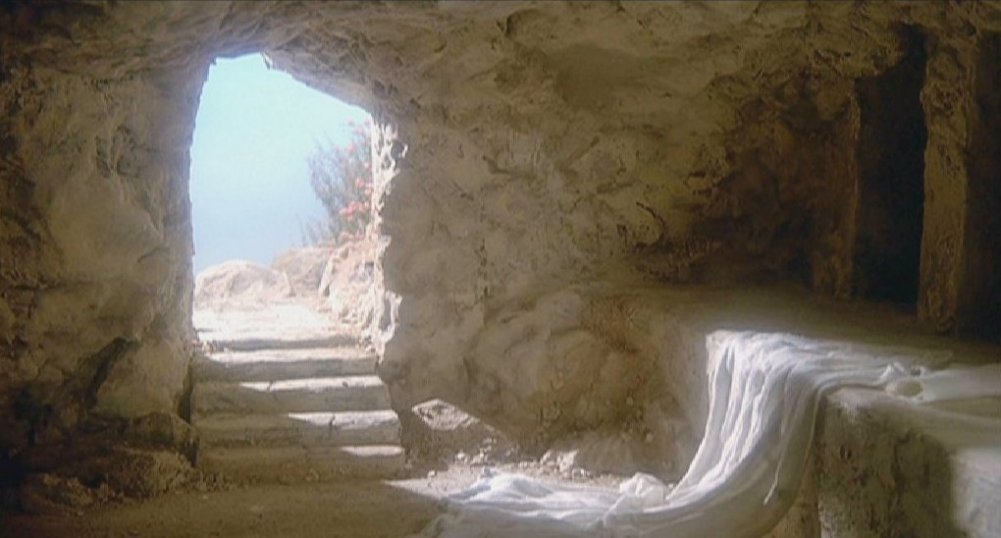
Resurrection

I just realized on this Easter Weekend that I’ve been writing about resurrection for seven years without realizing I was doing so.

Our word comes from Latin roots, from a verb that meant to rise again or arise anew. Since February of 2011, I’ve been writing and editing a story about a boy and his friends in a reimagined Egypt in 1934 and 1935. As the story played out like a vivid movie in my spirit, I gradually learned that the story is about the power of the mind, the depth of the human spirit, the strength of love, the nature of true friendship, the vital importance of wisdom in everything we do, and the many contours of goodness. It's also about the special abilities we all have available to us that we too rarely experience. What I didn’t realize was that perhaps resurrection is the main thread around which all the others are woven.

Can a boy rise anew from the life of an ordinary child in a small village to serve his kingdom as a prince? Can a nation rise from the ashes of turmoil and great political damage to a new and better life? But finally, and most importantly, is a moral and spiritual resurrection possible within the confines of this life or beyond for a individual whose journey has been corrupted by decades of wrong choices and motivations?

As a Christian, I celebrate a unique resurrection this weekend. But as the best theologians of my tradition have long pointed out, the myth of resurrection has long been present in the human spirit, across cultures, and throughout history. The distinctive Christian claim is that at one particular place and time, and in a distinct individual from another small village, the myth was finally embodied and made real at a new level, for the benefit of us all.

The idea reverberates through all of life. In the world of vegetation, there is death and then revival. In our careers in the world, we’re sometimes like the fantastical Phoenix, who goes down in flames and rises afresh from the ashes. We want to believe in radical and positive transformation. But is it really possible? I think it is. And that’s an implication of the message of Easter, when a tragic death brings new and transformed life. I see now that I’ve been writing about it without realizing I was doing so for the past seven years—its possibility and hope and reality.

My Easter wish is that we all experience that possibility and hope and reality anew in this special season and throughout the days to come.

PostedMarch 31, 2018
AuthorTom Morris
CategoriesFaith, Wisdom, Religion
TagsResurrection, Easter, Philosophy, Rising anew, Novels, Tom Morris, TomVMorris
Post a comment
Odie in repose.JPG

Ode to Odie

One small cat, age 5, left this world on March 14, 2018, leaving it better than he found it, and my life greatly enriched.

An Ode for Odie.

If you want to know how good a cat

he was in this world: It would be my great honor and joy

to clean his litter box twice a day in eternity, forever.

*****

He prayeth best, who loveth best/ all things both great and small: for the dear God who loveth us,/ he made and loveth all. - Rime of the Ancient Mariner, Coleridge.


PostedMarch 23, 2018
AuthorTom Morris
CategoriesLife, Wisdom
TagslIfe, Death, Cat, Odie
Post a comment
BizSport.jpg

Ethics in Business and Sport

Today while walking the dogs, I was thinking about parallels between business and sport. No, not the aspect that first might leap to mind, about winners and losers. And you know, I don’t think either business or sport is primarily about those two categories in the first place. 

Imagine that an industry or even a profession is like a sport. Healthcare, tech, banking, investments, law, medicine, academics, manufacturing, are in a sense analogous to big overall team sports like football, baseball, basketball, and soccer. Individual companies, firms, or practices in those industries or professions are akin to teams, and they have within them more teams. An industry, or profession, like a sport, provides us human beings with a framework where we can develop our talents, grow, and make a difference in the world.

Hang with me for a minute. Let’s think of business and sport as frameworks, or matrices, within which human talent can be developed, molded, and unleashed to pursue excellence, and perhaps greatness. As such, they are spiritual endeavors. Leaders are needed in all such frameworks. So are strategies and tactics and education or training. And I think talent then has to be developed in three ways:

1. Through the development of skill.

2. Through the development of character.

3. Through the development of intellect.

Excellence depends on all three. The skill component is the most obvious. Football players need to learn to tackle, and block, and handle a ball. Basketball players need to develop skills of moving, defending, passing, rebounding, and shooting. But character is just as important. Excellence in any competitive sport or industry requires courage, grit, tenacity, determination, persistence and honesty. At its highest and broadest levels, it requires empathy, kindness, and fairness to others. And then there is the mind. Great performers hone their minds, cultivate their intellectual understanding, and then know how to use the deeper realms of the mind, such as the unconscious, or the imagination, to go where no one has gone before and do what no one has done before.

Ethics in business, a profession, or a sport, is about being true to those three forms of development, while being true to yourself and others. Nothing less is ever genuinely great. So ethics is never just icing on the cake. It’s a crucial aspect of the entire baking endeavor, and the cake itself. Of course, the Greek word from which ethics derives, ethos, meant character. The character of a team, business, or professional endeavor depends on the development of individual skill, character, and intellect on the part of all the players involved. Their proper personal growth makes possible great teamwork, which then makes possible further growth, in what philosophers call a virtuous circle of flourishing. This is the power of ethics in everything.

PostedFebruary 15, 2018
AuthorTom Morris
CategoriesBusiness, Leadership, Wisdom
TagsSports, Business, Professions, Ethics, Excellence, Tom Morris, TomVMorris, Wisdom
Post a comment
Noodles.jpg

Me, Myself, and I—Oh, You!

I’m reading a wonderful little book by Japanese Billionaire and Buddhist Priest Kazuo Inamori, A Compass to Fulfillment: Passion and Spirituality in Life and Business, and he tells a simple and powerful story. I'll retell it briefly in my own words.

A young Buddhist comes up to his priest and says, “Can you explain to me the difference between heaven and hell?”

The priest says, “Well, both places are a lot alike, as places. It’s the people that are different.”

“What do you mean?”

“Well in hell, people have all their meals at large round tables seating eight. They discover on arrival, to their surprise, that all the chopsticks are three or four feet long, and must be held in the proportionately normal place. When they dip into the big pot in the middle of the table to get their noodles, and try to eat, they find to their great frustration that the sticks are far too long and they can’t get the food to their mouths. They keep trying and failing, and it goes on and on. Everyone is starving and irritated and angry.”

“That’s awful.”

“Yes. Then, in heaven, the setup is the same, but the actions are quite different. Realizing what they’re confronted with, everyone there uses the long chopsticks to pick up the noodles and offer them to the person directly across the table, for their enjoyment. And that person does the same. Everyone feeds his neighbor and is fed by him, and a great and wonderful feast is enjoyed by all.”

PostedFebruary 8, 2018
AuthorTom Morris
CategoriesAdvice, Attitude, Wisdom
TagsSelfishness, Partnership, Collaboration, Altruism, Kindness, Wisdom, Inamori, Tom Morris
Post a comment

Good Work

The man here is mowing a very big field. And he's accomplishing it one step at a time. Nothing he's doing is newsworthy. No one is going to be on the sidelines cheering him on. And if he were to stand still and look around, gazing over the entire field, the size of the task he has might feel overwhelming. But he's not doing that. He's moving forward, bit by bit, and with persistence through time, the job will be done. And then, of course, it will soon need to be done again. And again. And again.

Very little in life is lasting. Most of what we face and accomplish is temporary. But there is great and lasting worth in the doing, when it's done well. And that's what we're called to focus on and be responsible for: doing what needs to be done, and doing it well. If we want the result to be beautiful in every way, though, I suspect we need to do whatever we do in love, from love, and for love. That's the great motivator and goal both. Whatever the field of endeavor, that's the ultimate secret and source of power for good work.

PostedJanuary 19, 2018
AuthorTom Morris
CategoriesAdvice, Life, Wisdom
TagsWork, Values, Tom Morris, Wisdom
Post a comment
Ladder.jpg

Thought and Action

I saw this photo on LinkedIn today, with an inscription wishing us all a brave new week. I loved it, and then began to think. I wrote a comment and now will expand a bit.

I love this picture for many reasons. For one, it shows the importance of paying attention to the gaps. Don't just look at what's there before you, put in place prior to your arrival, but also attend carefully to what's not there. Every plan and path forward has gaps. And you're much better off seeing them in advance rather than, unaware, stepping into them.

Second, this is an image that can give many people inner chills. And that's good. Even when you don't do extreme sports and outdoor challenges like the one depicted, you can metaphorically confront a version of the same sort of fear as you try anything new and daunting. All genuine adventures are surrounded by fog and fraught with danger and seem to promise a precipitous fall if things don't go just right. So, it's only the equally brave and careful who can reliably get to the other side. Thought and action together work best. And those with the vision to see the unseen most often gain the most of both.

PostedJanuary 15, 2018
AuthorTom Morris
CategoriesAdvice, Wisdom, Life
TagsThought, Action, Attention, Focus, Challenges, Difficulties, Goals, Inspiration, Tom Morris, TomVMorris, Philosophy, Wisdom
Post a comment
manger-800x258.jpg

A Christmas Reflection

Christmas is about new beginnings. It's about the miraculous entering the mundane and transforming it, while also revealing its genuine nature. It's about the true power that comes in real humility. The big in the small. The most remarkable in the least expected of places. A gift that unfolds over the years. It's about the tiny beginnings of forgiveness, redemption, and reconciliation. It speaks of the great high value of the sojourner, and the power the lowest of us have to both witness and help usher in a new era. It's a call to us all. And a reminder of the joy at the bottom and pinnacle of this cosmic adventure.

Merry, Joyous, Happy Christmas, Y'all.

PostedDecember 25, 2017
AuthorTom Morris
CategoriesFaith, Life, Wisdom
TagsChristmas, Philosophy, Tom Morris
Post a comment
wisdom and virtue.jpg

Wisdom and Virtue

The most dangerous things in our time may be counterfeit wisdom and faux virtue. Without real wisdom and virtue, there is no peace, no authentic partnership, no true courage, no genuine friendship, and no chance at all for any deep and abiding happiness.

Wisdom and Virtue: Simple. Elusive. Vital.

PostedDecember 15, 2017
AuthorTom Morris
CategoriesAdvice, Philosophy, Wisdom
TagsWisdom, Virtue, Frienship, Partnership, Peace, Happiness, Tom Morris, TomVMorris
Post a comment
Elf.jpg

Elf on the Shelf and the Specter of Cognitive Decline

So. Apparently it was me. I was the one at fault. Without any shred of mindful, occurrent awareness of what I was doing, I had closed the kitchen cabinet doors, shutting in and away from view, our very own Elf on the Shelf.

I had been instructed before bedtime that our small thin and red-garbed guest would be residing overnight in the kitchen cabinet amid such items as pepper, and pasta, and assorted baking goods. And I was to leave the cabinet doors wide open so that he and his faithful steed, the silent reindeer, could be suitably discovered in the morning by our granddaughter, who has successful espied the capricious imp in creative recline, lo these many December days for countless years past.

And, apparently, when I paused a viewing of A Place to Call Home (Australian TV through subscription service) to prepare a bowl of popcorn and festoon it with fresh ground black pepper alongside blistered southern North Carolina peanuts, I grabbed the pepper mill from right under the visiting lad's dangling feet and spiced the corn, and then performed the forbidden act of closing the cabinet doors on Elf, who then had to endure the entire night in the company of boxes of uncooked pasta and sundry spices. But of course, the true crime was the rendering of him as relatively undiscoverable in the morning's dash to school.

I tell this sad tale for a reason. When confronted with the evidence of my wrongdoing, the clearly closeted Elf, I had literally no memory of having performed the heinous deed of shutting him away. Zero visual recall. And of course, I assumed that either my wife was the unintentional culprit, or that our large black and white cat had, on the prowl, decided to close the cabinet doors, but then of course, so silently as to give no hint of his mischief. It could not have been me. It was epistemically impossible that I could have done such a thing without even the slightest trace of memory. I could have accepted the hypothesis of rambunctious poltergeist before admitting that I could have been the doer of the deed.

I tell you all this for a reason. Don't worry. I haven't forgotten my point, as I had my mistake. Anyone at my age, and especially with my profession, sensibly prefers never to entertain a possible implication of poor memory, indicative as it might be of any measure of cognitive decline. It couldn't have been me! I cast a suspicious glance at the border collie. They are known for their canny intellect and prodigious feats of physical surprise. But no. All signs pointed to the philosopher. It was truly alarming.

But then I remembered the phenomenon of "selective attention." A decade or more ago, a video was being passed around of some boys playing basketball on an outdoor court. Viewers of the short clip were then asked if they had seen anything unusual. And I, like most others, replied with some perplexity that I had not. It was then revealed that a man in a gorilla suit had walked slowly through the video frame behind the action of our focused attention. We could not have been more surprised. So, perhaps, in my intense focus on popcorn and pepper and peanuts, and getting back quickly to the show, I had astonishingly not noticed the Elf of whose presence I had been warned, sitting just above the pepper. I had fixed my snack and, out of habit, closed the cabinet —a habit to whose superiority any married man will gladly attest. So that was it, not a memory lapse due to age, harbinger that it might be of untoward things to come, but merely the trick of selective attention, a weakness that can accompany any of us, whatever our age. That was it!

But then, I had been told of the Elf's location and need for fresh air. That, I had clearly forgotten in my own late night kitchen raiding activities. And this element was not about selective attention. So I had to admit to myself, the most stringent of judges on matters of evidence and reasoning, that a common attendant of age had been responsible for my lapse. And at that exact moment, I suddenly also realized I'd been waking around the house all morning without remembering to zip up my pants. Oh, well.

But then, the Elf himself comforted me with tales of his boss, and the Jolly Old Elf's own forgetfulness, after all the centuries of lists and appraisals of childhood conduct, and changes of address. You yourself may have been victim to a "naughty or nice" mix-up at some point. Mrs. Claus could only roll her eyes. And yet, still, he somehow gets the job done. And so, shall, perhaps I, despite such momentary, and at the same time, monumental, reminders that as the years pass, so will some of our capacities of mental retention. But don't yet put me on the shelf, Ok?

PostedDecember 14, 2017
AuthorTom Morris
CategoriesAttitude, Life, Wisdom
TagsMemory, Age, Wisdom, Perspective, Tom Morris, TomVMorris, Philosophy, Christmas, Elf on the Shelf
Post a comment
Charlies-Brown-Rumination.jpg

Rumination

Our noun comes from a Latin verb meaning "to chew." In the life of the mind, rumination is chewing over some idea or problem thoroughly. And that can be a very good thing to do.

But as with nearly all good things, rumination is subject to the Double Power Principle. The power it has for good is matched by the power it has for ill. I recently read a short article about the downside that's manifested in the mental activity of going over and over and over something that's negative in your life—mulling it, stewing over it, pondering it, trying to figure it out, repeatedly sensing anew how wrong it is, and endlessly asking, "Why has this happened to me?" Here's the problem. When the situation is something you can't control or even act on productively, rumination can become a very unhealthy habit. A better approach is to act on what you can control and walk away from what you can't control. Sure, seek to understand it. But then: Drop it. Forget about it. Move along.

Sometimes, we break out of the chains of rumination best when we find other things to do, creative projects, fun activities, any alternative things to keep our minds busy. Rumination has its place. But out of place, it can turn into a destructive loop of obsessive thoughts. The good news is that our thoughts are ultimately up to us. It make take effort, but with enough work, we can keep ourselves on a healthier track.

PostedDecember 5, 2017
AuthorTom Morris
CategoriesAdvice, Life, Wisdom
TagsThought, Rumination, Negativity, Anxiety, Problems, Troubles
Post a comment
Beliefs.jpg

Go Deep. Be Wise.

It's time we stopped defining ourselves and others by our opinions, our beliefs, and even our knowledge, or ignorance. It's as bad as defining anyone by color or ethnic origin or gender. We're much more than that. And we have to look more deeply in order for understanding and compassion and love to get a firm hold in our lives.

It's also time we stopped defining ourselves by the perspectives and habits that have worked well for us in the past. We too easily fall in love with our own mindsets and frameworks, intoxicated by the sweet smell of their success. When we learn to hold more loosely to all our property, and that includes our "intellectual property," we then become more open to the new and perhaps superior path that a subtle form of arrogance or comfort would otherwise block us from seeing.

The moral structure of the spirit requires us to be closed off to very few things and their implications. Otherwise, to be open is to be empowered. To go deep is to be wise.


PostedDecember 1, 2017
AuthorTom Morris
CategoriesAdvice, Philosophy, Wisdom
TagsBeliefs, Success, Definition, Getting Along with Others, Openness, Tolerance, Wisdom
Post a comment
Newer / Older

Some things that may be of interest. Click the images below for more!

First up: Tom’s new Silver Anniversary Edition of his hugely popular book on The 7 Cs of Success!

The New Breakthrough Guide to Stoicism for our time.

Tom's new book, out now!
Finally! Volume 7 of the new series of philosophical fiction!

Finally! Volume 7 of the new series of philosophical fiction!

Plato comes alive in a new way!

Plato comes alive in a new way!

On stage in front of a room full of leaders and high achievers from across the globe.

On stage in front of a room full of leaders and high achievers from across the globe.

My Favorite Recent Photo: A young lady named Jubilee gets off to a head start in life by diving into some philosophy!

My Favorite Recent Photo: A young lady named Jubilee gets off to a head start in life by diving into some philosophy!

Great new Elizabeth Gilbert book on creative living and the creative experience.

Great new Elizabeth Gilbert book on creative living and the creative experience.

Two minutes on a perspective that can change a business or a life.

So many people have asked to see one of my old Winnie the Pooh TV commercials and I just found one! Here it is:

Long ago and far away, on a Hollywood sound stage, I appeared in two network ads for the wise Pooh, to promote his adventures on Disney Home Videos. For two years, I was The National Spokesman for that most philosophical bear. This is one of the ads. I had a bad case of the flu but I hope you can't tell. A-Choo!

One of my newest talk topics is "Plato's Lemonade Stand: Stirring Change into Something Great." Based on the old adage, "When life hands you lemons, make lemonade," this talk is about how to do exactly that. Inquire for my availability through the c…

One of my newest talk topics is "Plato's Lemonade Stand: Stirring Change into Something Great." Based on the old adage, "When life hands you lemons, make lemonade," this talk is about how to do exactly that. Inquire for my availability through the contact page above! Let's stir something up!

Above is a short video on finding fulfillment in anything you do, that was taped a few years ago. I hope you enjoy it!