Follow @TomVMorris
Retreats
Keynote Talks and Advising
About Tom
Popular Talk Topics
Client Testimonials
Books
Novels
Blog
Contact
ScrapBook
Short Videos
The 7 Cs of Success
The Four Foundations
Plato's Lemonade Stand
The Gift of Uncertainty
The Power of Partnership

Tom Morris

Great Ideas. With Power. And Fun.
Retreats
Keynote Talks and Advising
About Tom
Popular Talk Topics
Client Testimonials
Books
Novels
Blog
Contact
ScrapBook
Short Videos
The 7 Cs of Success
The Four Foundations
Plato's Lemonade Stand
The Gift of Uncertainty
The Power of Partnership
wise-owl-2.jpg

Is it Wise?

We live in an unwise time. To use an old fashioned word, foolishness abounds and surrounds us. Smart people do idiotic things. The uninformed, lazy, self-indulgent, and the perpetually irate unintentionally harm themselves and make their own lives worse. They don't do much to help the rest of us, either.

There's a simple question we too often forget to ask. It's one we need to pose about nearly anything that presents itself to us as a choice: Is it wise?

It may be easy, but is it wise?
It might feel good, but is it wise?
It could seem safe, but is it wise?
It may be interesting, exciting, or impressive, but is it wise?
It could be what everyone's doing, but is it wise?
It might be the hot new thing, but is it wise?
It promises to bring money or power or fame, but is it wise?
It could be what you've always done. but is it wise?

Now, let's be clear. We won't always ask the question deeply enough or answer it well. After all, it takes a measure of wisdom to see what's wise. That's where the guidance of the already thoughtful, and experienced, and even sagacious can help us. And yet, we'll still occasionally mess up. But no process has to be perfect to be advisable. As we seek the path of wisdom, we'll more likely find it.

What's wise will make you a better person, lift others up, and leave the world a slightly better place. It will do genuine good. What's unwise is otherwise. It will always bring some form of harm.

Wisdom is real insight into proper, healthy living. Wise choices express or encourage human flourishing, or both. Wisdom takes us along the path of true human excellence. Foolishness distracts us and gets us lost. Wisdom directs us to what's worthy of us. Foolishness lures us to the counterfeit and false.

The wise live a life that the foolish can't comprehend. It’s rich and deep and peaceful.

Therefore, seek to act wisely in all things. And in every such choice, you'll choose to be on the path of wisdom; you'll choose to be, in however small a way, wise.

Whatever presents itself as good, or as convenient, or as true, ask first: Is it wise?

PostedJanuary 7, 2020
AuthorTom Morris
CategoriesAdvice, Wisdom, Life, Philosophy
TagsWisdom, Foolishness, Philosophy
Post a comment
GilgameshandEnkidu.jpg

Gilgamesh and Our Motivations

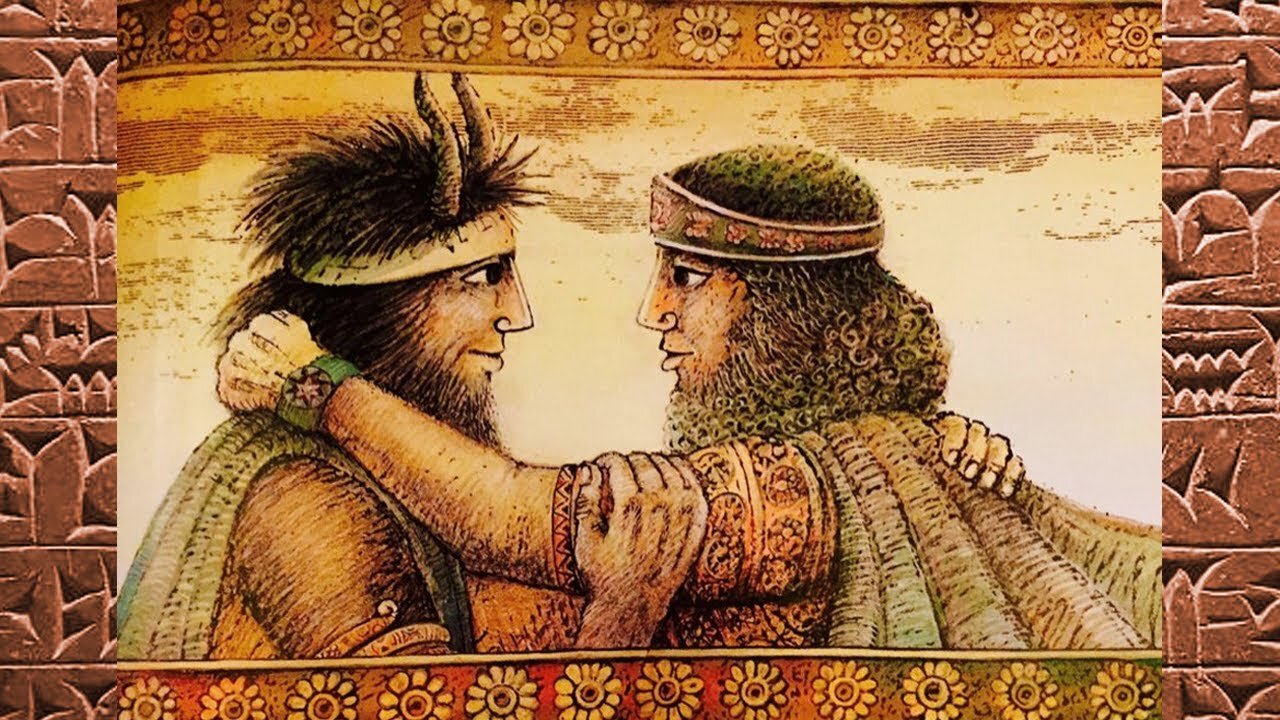
The Epic of Gilgamesh is one of my favorite books ever. It’s also the oldest epic tale we have, describing events that date back to about 2,500 years BCE.

Gilgamesh was tall, handsome, strong, smart, and the King of Uruk, a walled city-state in what is now Iraq. He was reported to be 2/3 divine and 1/3 human. He was also a pretty major malignant narcissist. As a consequence, he was a very bad king, who viewed the kingdom as his personal candy store. His position as a leader was all about getting everything he wanted at the expense of whomever had to pay. He exploited his position and his people for his own base enjoyments and personal enrichment. When we meet him, he’s not married, but he insists on always being the substitute groom who spends the wedding night with any young woman of his kingdom who is married, and then he moves on to the next special treat he plans to give himself. He wears out the young men of the kingdom in competitive games just so he can win, over and over, and continue to prove his immense superiority.

The people complain to the gods, “Help us with this guy! We can’t take it any more!” And the gods do something creative. They make him a counterpart, an equal to him in size and strength, and they initially put this man into the woods to live with the animals as their protector. While Gilgamesh is a man of the city, this new creature Enkidu is a child of the forest. Gilgamesh has experienced the height of sophistication in an urban setting that at its peak had up to 80,000 inhabitants. Enkidu as a nature boy has a mindset of simple innocence. Rumors of his existence, great strength, and exploits in saving the animals from hunters make their way to the city, and Gilgamesh is both intrigued and troubled. He has to meet this individual and perhaps once again prove his superiority over what is quickly becoming an urban legend and, in that sense, a threat to his own reputation as the strongest and greatest man alive.

Gilgamesh goes to the big religious temple in town and approaches the beautiful temple prostitute—which was apparently a well-known job in ancient times, serving to unite the world and the spirit in distinctive ways—and he asks her to go find this legendary man in the woods and use her special skills to lure him to town. She agrees and is successful. I'll elide over all the fascinating details.

To summarize: Enkidu arrives just as Gilgamesh is about to exercise his jus primae noctis (right of the first night) or, as it later came to be called, his droit du seigneur, and the wild hairy man of the forest intervenes to stop the king from this presumptuous deed. They fight violently and it’s basically a tie. Gilgamesh is very impressed. So is Enkidu. They instantly become best friends, and soon go off on adventures together. The prayers of the people have been answered. The king is no longer interested in exploiting them. He has bigger fish to fry with his new buddy. But the things the two big guys get involved in bring the wrath of the gods, and Enkidu has to die. Gilgamesh is stunned and falls into intense grief. He goes on a challenging and difficult quest to find the secret of avoiding death, any key to eternal life possible, having heard that there is one man far away who has this unique gift. In the midst of his daunting journey in a desperate search for immortality, he oddly comes across a wine bar in the middle of nowhere, and a wise barmaid named Siduri, who advises him to abandon this inevitably futile search and learn to be happy with what he has.

In one of the most beautiful and wise passages in all of literature, Siduri says:

“Gilgamesh, where are you going? You’ll never find the eternal life you seek. When the gods created man, they gave him death, and they kept life without it for themselves. Humans are born, live, and die. This is the order that’s decreed. But until your own end comes, enjoy your life. Live it in happiness and not despair. Relish your food and drink. Make each of your days a delight. Bathe and groom yourself well. Wear nice clothes that are sparkling and clean. Let music and dancing fill your house. Love the little child who holds your hand. And give your wife pleasure in your embrace. This is the way for a man to live.”

He’s unable to listen to this great advice, and continues on his mission until when it fails, as Siduri knew it would, and he returns to his city, chastened, and humbled, and perhaps ready to live as the wise woman had suggested.

It’s often been said that the two great forces in life are love and death, or the polarity of desire and fear. The Greek word ‘Eros’ is often used for the former, and ‘Thanatos’ for the latter. When the story begins, Gilgamesh is motivated by Eros, but in a bad and corrupted way. Then, with Enkidu’s death, his motivation changes. He’s moved by Thanatos, but also in a bad way. I believe the power of the story is that he discovers in the end how to be motivated by both in a constructive and positive way.

I won’t follow Freud in his famous uses of Eros and Thanatos, which I take to be the claim that we’re either motivated by a constructive creativity that moves toward unity and life, or a destructive aggression that delights in dissolution and death. I would rather see these two polarities in a different way.

The force of Eros is a pull toward life. The force of Thanatos is a push away from death. Or to put it more comprehensively:

The Pull of Eros is about embracing life, strength, pleasure, and growth.

The Push of Thanatos is about avoiding death, suffering, deprivation, and weakness.

The common human quest for money or power, status or fame can be driven by either of these forces. Gilgamesh experiences the full range of this, and for most of the story only in bad or unwise ways. Siduri recommends to him a life of proper Eros in a constructive mode. Before the death of his friend, the king had been living a life of Eros in an improper or destructive mode.

The proper mode of Eros is to bring good to others as well as yourself. The improper mode is to focus only on yourself.

When Enkidu dies and Gilgamesh is plunged into the shock and grief that results, his motivation changes. He is desperate to avoid death in his own life. But perhaps even before he met Enkidu, there was a negative motivation from the side of Thanatos in his life. The destructive mode of Thanatos, like destructive Eros, is also to focus only on yourself, but in this case in a willingness to sacrifice the good of others in order to avoid your own vulnerability to death, suffering, deprivation, and weakness.

By contrast, a proper and constructive mode of Thanatos motivation is to focus on helping others to avoid needless death, suffering, deprivation, and weakness.

Done right, the two motivations of Eros and Thanatos both can be manifestations of love. Done wrong, they’re the opposite.

Love: Care, Compassion, Nurture, and Delight: That’s what Siduri wanted Gilgamesh to learn to experience and give to others. And I think eventually he does. If there was hope for him, there may be hope for nearly anyone. It’s a story well worth your time.

For the best translation of the tale, scraped together from various clay tablets, click HERE.


PostedJanuary 5, 2020
AuthorTom Morris
CategoriesAdvice, Leadership, Wisdom
TagsLeadership, Motivation, Love, Death, Gilgamesh, Tom Morris, Philosophy, Wisdom, Living
Post a comment
Socrates.jpg

The Lessons of Socrates and Christmas

Socrates called philosophy a preparation for death. I guess he never heard of estate planning. Philosophy in my view is a preparation for life—a full and good life. For death, it gives us very little solid guidance. For life, it offers a lot.

And yet then, perhaps the wise and good life it prescribes is in itself also the best preparation for death, or the final ending of this life. So, in a sense, the old boy was right. But then, I think I am too. And he left out the middle part, which is not to be ignored. But then again, our Christmas and Easter stories imply that even the finest intellectual guidance or theoretical preparation for life or death is never enough. Inner transformation is required of us. We come into the world like unmolded clay. We need first to be formed, and then transformed. And while that never comes from philosophy, it can be mediated through it. Perhaps that was the one more thing Socrates would have told us if he had not been required to drink the particular spiked punch that ended his time here. But don't worry about him. He was prepared.

Happy Christmas. May the joys and lessons of the season infuse the new year for you and yours.

PostedDecember 26, 2019
AuthorTom Morris
CategoriesPhilosophy, Life, Wisdom
TagsSocrates, Christmas, Philosophy, Easter, Transformation, Life, The Good Life, Death, Tom Morris
Post a comment
TomTalk.jpg

Wisdom For the Culture!

Today my new publishing endeavor got some great and unexpected publicity from one of the best book and film reviewers in the country, a man I'm honored to know. We had coffee together the other day (actually Diet Coke for him) but we had a great talk that I didn't know would generate a very nice write-up that went out over the wires and into papers this morning. It’s about part of my ongoing effort to bring practical wisdom into the culture by every means possible. I’m just thrilled that philosophers around the country are now asking me to publish their books! And don’t worry. I’ve tamed my hair since this photo of me philosophizing earlier in the year.

For the short piece, click HERE.

PostedDecember 15, 2019
AuthorTom Morris
CategoriesLife, Philosophy, Wisdom
TagsPhilosophy, Wisdom, Books, Philosophy in the News, Tom Morris, Publishing, Wisdom/Works
Post a comment
telOdy2.jpg

We Don't Always Know What We Need

Ok, Homer once more. When The Odyssey opens, King Odysseus has been away from home for nearly twenty years. For ten, he fought at Troy. For the remaining time, he’s been trying to get home. His wife Penelope is besieged by suitors, all the young men of the region, princes and kings, who admire her beauty and want to marry her. They’re constantly trying to convince her that her husband is dead and so she should move on. She has done everything she can to delay the day when, for the sake of her son, she should indeed remarry and move out with a new husband, allowing her son to have the palace, grounds, and crops and herds he is to inherit. The suitors are crowding into the house every day, feasting constantly, and eating up a lot of the boy’s inheritance.

Telemachus, the son of Odysseus, is of course now twenty years old. He has the genetic endowment of his heroic father and smart, beautiful, and resourceful mother, but he has grown up without his father’s influence and, instead, surrounded by anxiety as to the welfare of Odysseus, and then the grief of all who loved him that he might indeed be dead.

Telemachus is in despair that the suitors constantly harass his mother and blatantly consume the family’s resources on a massive scale, day after day. And he is not yet old enough, strong enough, or bold enough to do anything about it. He feels helpless, and despondent that no one knows for sure whether his father is dead or alive. But at this point, he and his mother have emotionally had to accept the worst and assume that he’s gone and never coming home.

Early on in the story, there’s a puzzle. The Goddess Athena, a great friend to Odysseus, comes to Ithaca and the family home of Penelope and Telemachus disguised as an old friend. She greets Telemachus and speaks with him. She tells him that his father is alive somewhere out there in the world, but he doesn’t believe her. As a top goddess, she has the power to make him accept her words, but she doesn’t. She doesn’t put him into a hypnotic state to elicit assent, or do any of the other things she could have done to change his mind, which she thinks is important to do. And this is puzzling. Instead, she suggests that he go on a voyage, a quest to learn if anyone has word of his father, as to whether he’s still living or may have perished in his efforts to get home. She urges him to visit King Nestor and Menelaus, old friends of Odysseus who fought with him at Troy.

Now the problem, the conundrum for the careful reader who may have learned from the Iliad and other mythology what Athena was capable of, is why she didn’t just change the boy’s beliefs on the spot, so that he would have the hope of awaiting his father, and the courage to do what might be necessary to prepare for his arrival home to end the scourge of the suitors. Why didn’t she just implant in his brain the crucial information he needed to accept?

And the answer is as simple as it is revelatory. Athena knew that what Telemachus most needed was not just information but transformation. She had to send him on a quest that would grow his sense of self, his self knowledge, and the self esteem that would be required for the courage he would need in the coming days. It would be hard, and risky, but it was also necessary.

And that’s a lesson for all of us. In a summer seminar for school teachers long ago on meaning in life, one of the participants actually became angry because he thought, a week or two into the seminar, that I was playing a game and withholding a crucial piece of information, a sentence or statement that, if I would just share it with the group, would clarify his questions about the meaning of life. He had been left by his young wife, with nothing more than a goodbye note on the table when he got home from work, a day before he was to come to my seminar. He was in a tailspin. He wanted information.

But I, like Homer, and like Jesus, understood that there are matters where what’s needed isn’t propositional information but personal transformation. And before those deep changes, it may not even be possible to know what we most want to know. In the story, it turns out that Athena was right. Telemachus goes on his adventure and returns changed and ready, even though he’s not aware of how ready he is until Odysseus shows up and they join together to do what needs to be done.

Oh. And the student. I went to his dorm room and sat with him for two hours, listening at first to a tirade, and then a dirge, and then I worked hard to explain to him the limited role of propositional knowledge in wisdom and existential understanding, and how we need to be formed in order to see certain things and be certain things, and how it's our struggles and sorrows that deepen us the most. And in the end, he understood. He and I, like Telemachus and his dad, were able together to slay the philosophical suitors who had besieged the home of his heart.

PostedDecember 7, 2019
AuthorTom Morris
CategoriesWisdom, Philosophy, Life
TagsInformation, Transformation
Post a comment
Odysseus1.jpg

Heroic Endurance

I've read The Odyssey three times this year, over five or six times in my life, and that's not nearly enough. People have read it and talked about it for over three thousand years, across 150 generations. It's that good and important. But why?

It's a tale about a flawed hero, a man of intellect and action and excellence in many things who faces nearly endless obstacles to the one thing he wants the most—simply to get home to the wife, son, father, and friends he loves. But everything seems to stand in his way. Any of us who have ever faced adversity, especially repeated difficulties that threaten to end our dreams and extinguish our hopes, can find inspiration in this doggedly determined human being. He's sometimes punished by the gods, and at other times favored by them.

To give you a flavor of who he is, I've copied every major description of him in the Robert Fagles translation. There are some repetitions, because of the epic's background in oral recitation, but what's chosen to be repeated says a lot about how the character of Odysseus is viewed by the bard. It's quite a list of terms, many of which appear in apposition to his name in the telling of the tale. But I thought it would be useful and illuminating to give you them all. May he inspire us all. So here we go.

Cursed by fate

luckless man

longs to die

one who excels all men in wisdom

never at a loss

the most unlucky mortal man ever born

one who outperformed all men of his time

the godlike man

cunning

More than all other men, that man was born for pain

no one there could hope to rival Odysseus, not for sheer cunning

at every twist of strategy he excelled us all

brave Odysseus

No one, no Achaean, labored hard as Odysseus labored or achieved so much

the crafty one

that fearless Odysseus

More than all other men, that man was born for pain

Never an unfair word, never an unfair action

Never an outrage done to any man alive

who excelled the Argives in every strength

that luckless man

that godlike man

long-enduring

a spirit tempered to endure

Man of misery

Long-enduring

weighed down with troubles

the man of many struggles

seasoned, worldly-wise

long-suffering

long-enduring

raider of cities

seasoned man of war

most cursed man alive

unlucky friend

man of twists and turns

born for exploits

master of exploits

man of pain

the unluckiest man alive

the man of countless exploits

mastermind of war

man of tactics

cunning

famed for exploits

luckless man

equipped with the gods’ own wisdom

who had suffered twenty years of torment

sick at heart

man of misery

foxy, ingenious, neer tired ot tricks and twists

far the best at tactics, spinning yarns

the cool tactician

so winning, so worldly-wise, so self-possessed

kind

the man for all occasions

raider of cities

full of tactics

no one could touch the man at plots or battles

man of exploits

a brave man in war and a deep mind in counsel

the great raider of cities

strong, enduring Odysseus

the one who knew the world

master of many exploits

the man of many trials

master of craft

a man who’s had his share of sorrows

the master improviser

the great master of subtlety

the man of craft

sly profit-turning

There was a man, or was he all a dream?

The Son of Pain

man of exploits

man of exploits

the unluckiest man alive

Impossible man!

great and strong as a god

mastermind in action

master of craft and battle

the wily fighter

the wily captain

mastermind of war

master of tactics

raider of cities

the crafty rascal

long-enduring

the best on earth, they say, when it comes to mapping tactics

the most understanding man alive raider of cities

the soul of cunning

long -suffering great Odysseus

Happy Odysseus

mastermind

long-enduring

the most unlucky man

Man of strife

luckless man

master of exploits


To get the book, click HERE.

PostedDecember 5, 2019
AuthorTom Morris
CategoriesLife, Wisdom, Performance
TagsThe Odyssey, Odysseus, Endurance, Struggle, Difficulties, Heroes, the heroic, Tom Morris, Homer, Robert Fagles
Post a comment
Socrates.jpg

The Birth of Philosophy

Philosophy was born in a time of massive self deception. I don't mean that a lot of people suddenly thought, "Wow, if I study this stuff, I can surely get a good job and end up popular, rich, and happy!" No. You can go to your local university's philosophy department and see that this is not the inevitable result of serious pondering. It won't typically look like life on a cruise ship, unless it's one ... with norovirus. But then, the academic study of a thing is rarely the thing itself. Philosophy is a path, a way of life, and not a profession.

The Athens around Socrates was full of people who thought they knew things that they didn't know at all. Many of them arrogantly presumed they had life figured out. And Socrates realized they didn't even have themselves figured out. Through intensive questioning, he unearthed a massive amount of self deception all around him. And once he started charting the possibility of an alternative, young people began to respond. This activity of philosophy was something different. This alternate path departing from smug prejudice and personal delusion might offer light and air and hope.

And so, given the massive self deceptions of our own time, we can be optimistic that, perhaps, philosophy will be reborn out of its own ashes and lead us once more to that light, and air, and hope.

PostedNovember 23, 2019
AuthorTom Morris
CategoriesPhilosophy, Wisdom, Life
TagsPhilosophy, Self deception, delusions, culture, Socrates, self examination, Self knowlege, Tom Morris
Post a comment
Iliad.jpg

Our Need to Read the Iliad

When you read a classic more than once, you can come to realize in a new way why it's a classic. I just finished my second reading this year of Homer's Iliad, an ancient tale about the tenth year of the Trojan War. And it's actually all about ego and anger. Plus, it's really good and it’s full of lessons we need today.

An older Greek king, Menelaus, has a young and beautiful trophy wife, Helen. Ego. A handsome young prince from Troy named Paris visits them and seeks to seduce Helen. Ego again. She enjoys the attention from this gorgeous man and accepts his advances. Ego. They run away to Troy and Menelaus, rather than realizing his mistake in the mismatch, gathers a huge army to go and get Helen and bring her back. Big Ego and it's almost inevitable pal, Anger.

But this is all backstory. The real tale opens with Agamemnon, the brother of Menelaus, who has become leader of all the assembled Greek forces besieging Troy. The battle has lasted nine years. And Agamemnon, in his own ego and bloated sense of self entitlement, decides that he hasn't had enough of the spoils from this war so far for his own enjoyment. He's irritated. Ego and Anger. He's had his eye on a ravishing beauty earlier given to Achilles, the greatest of the warriors. And so he decides to take her for himself, apparently unaware that he's just repeating what Paris did to Menelaus with Helen. Unfortunate Ego. A god keeps Achilles from just killing the man on the spot and guides him to comply with his leader's demand. Agamemnon is the top commander, after all. So the great warrior goes along with the unjust order, but in a rage. Bad Anger to the Max. His rights and deserved glory have been violated. Ego all over the place. So he vows to fight no more, and allow his fellow Greeks to be killed en masse until they appreciate anew how great and needed he is.

Fast forward: Thousands die. Without Achilles, the Greeks and Trojans are evenly matched, and whenever they're not, the gods get involved on one side then the other. The balance keeps changing, yet always lives are lost. But Agamemnon won't relent and admit he was wrong. And neither will Achilles. It's a battle of the egos and their anger. That's the deeper war fought at Troy.

But when far too many of his favorites die and he feels the disaster's pain, Agamemnon finally decides he needs to bribe Achilles to come back and fight for the cause. He'll return the woman, and add in lots and lots of treasure to appeal to the ego needs of Achilles. The warrior refuses. But then his BFF, Patroclus, begs Achilles to let him put on the great man's armor and appear on the battlefield where the Trojans might think Achilles himself is back, and flee in panic. The charade takes place and after killing lots of the enemy, Patroclus is killed by Hector, chief warrior among the Trojans. And of course, Achilles has to take revenge and kill him, then dishonor his body in the most outrageous ways. Ego beyond the pale once more. And the band plays on.

Our lesson: The bloated egos of a few can create disaster for many. As further confirmation, check the daily news.

For one easily accessible version of the classic, click HERE.

PostedNovember 11, 2019
AuthorTom Morris
CategoriesLife, Philosophy, Wisdom
TagsEgo, Anger, Iliad, Performance, Leaders
Post a comment
sis.jpg

Sisyphus, The Rock, and the Roll.

Y'all may have to help me out with this one.

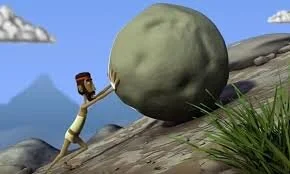
“I think of Sisyphus as a hero.” A great psychologist, top leadership expert, and a good friend said this to me the other day on the phone. Sisyphus is of course the guy who rolls a rock endlessly up a mountain, only to have it roll back again, and he has to repeat his task endlessly, with the same result. I had never heard him called a hero. “Really?” was my astute reply. “Yep,” I recall my friend explaining to me. I was surprised. “I’ll have to think about that.” And a day later I called him back to ask for a bit more detail.

Before I go on, I should give you the basic back story of the famous mythological figure. And I’m not making this up. According to ancient sources, a baby boy named Sisyphus was born into money and power that came from his father. He went on to become, like that father, a king. And he came to be known as a greedy, avaricious, self-aggrandizing and deceitful ruler, who often killed those who sought to come into his country. This may be starting to sound vaguely familiar. His only concern was to maintain his own power, and he devoted most of his time and energy to that end. He had a brother he hated and so he seduced the man’s daughter as part of a failed plot to kill him. Two children resulted from the sorry episode, and their mother, the niece Sisyphus had seduced, is said to have killed them both. It wasn’t a happy group of people.

The bad king also made another major error in later on betraying Zeus for his own intended gain. He wasn’t much for respect and loyalty to others. As a punishment, the chief of all gods sent Death to visit the man and put him into chains. But the slippery king was not to be so easily stopped, and he managed to trick Death into showing him how the chains would work, and the Grim Reaper himself ended up locked in place. Zeus, as you might imagine, was not to be thwarted so easily. So he took charge himself and bound Sisyphus to the endless task for which he has become famous. His new life was to push a large rock up a mountain to the top, but right before fully accomplishing the job, the rock would elude his control and roll back down the hill. So Sisyphus would have to start all over again, pushing it back up again fruitlessly, since it would always roll back down, and this would be repeated forever.

We can see here several patterns. One is the cycle of aspiration, striving, near success and ultimate failure. Rinse and repeat. We find it too often in life. Is this the dog chasing his own tail? Is it a metaphor for all of existence? What exactly is it?

When we think of the man now, we tend to envision only this endless end state. The rock. The roll. The return. The redo. And on, and on. The French existentialist philosopher Albert Camus saw this portrayal as emblematic of our condition, viewed as absurd. We strive; we fail. We try again; we fail again. We’re born, we work hard at an education, and then at a life, and when we finally get to the point high enough on this mountain to have some real wisdom, we roll back down and die. And of course, there are religions that tell us we’re then born again to roll that rock back up another hill.

So, I asked my friend, absent all the hideous background information on the mythical character that might these days qualify him as a certain political party’s next nominee for high office: How can he be thought heroic?

He quickly told me about Admiral William McCraven’s excellent graduation speech which has been turned into the book, "Make Your Bed." McCraven talks about Navy Seal Training, and how the first lesson is to make up your bed in the morning and to do it perfectly. That reminded me of a conversation I had with my college roommate many years ago. I asked, “Why don’t you make your bed?” He said, “I’d just have to do it all over again the next day, and over and over. What's the point?” I mentioned the conversation to my wife and she said, “With a lot of people, it’s cleaning the sink, an equally endless task.” Or else, sweeping the floor. Or, you-name-it. Consider for contrastive pondering a parallel: “Why didn’t you eat anything today?” Answer: “I’d have to do it all over again tomorrow. What’s the point?”

Some things are just going to need to be redone or repeated. There are very few actions in our daily lives that are “one and done" forever. But, let’s get back to Admiral McCraven. He says this about making your bed:

<<The wisdom of this single act has been proven to me many times over. If you make your bed every morning, you will have accomplished the first task of the day. It will give you a small sense of pride and encourage you to do another task, and another, and another. And by the end of the day, that one task completed will have turned into many tasks completed. Making your bed will also reinforce the fact that the little things in life matter. If you can’t do the little things right, you’ll never be able to do the big things right.>>

With a lot of great football coaches, regular practice isn’t often about learning fancy plays and developing great strategies. It’s about blocking, tackling, running, and catching. “What are we going to do today, Coach?” – “Block, tackle, run, and catch.” – “What about tomorrow?” – “The same.” When I was an undergraduate, the UNC tennis team was often number one in the country and also known for how much they ran in practice, around and around the track and in wind-sprints. You’d think they were the track team. They’d run and run and run and run. And in a big tournament, near the end, when their opponents could barely move or breathe, they still had gas in the tank, from all that basic, simple, repetitive running.

So I thought about Sisyphus. Not mainly about his greed and deception and awful behavior as king, but about his endless task after those years. And then I saw the connection. Hubris. Pridefulness. Ego. There are endless mountains to climb for the undisciplined grasping ego. Nothing is ever enough. You roll the rock up the hill and then you have to do it again. You’re only as successful as what you’re doing now. Yesterday is gone. The world you always feel a need to impress has just one question: What have you got for me today?

Whether 100 days or 100 months or 100 years into his punishment, even Sisyphus may have gotten the message. The bloated ego can never be satisfied. The desperate quest of getting to the top of the hill never ends.

So let’s imagine our man has had an epiphany, a “mountaintop experience” on one of his trips up, or down. He realizes how foolish he had been, how evil, how duped by his own endless, self-defeating self-deceptions. And he takes a new attitude, maybe like a Navy Seal. Each day, making up the bed perfectly is a task worth doing. It’s a job in which you can take pride. It has a beginning and an end, each time. It doesn't have to lead to anything else to be worth your work. But it most often does, anyway.

But wait. What about rolling a rock? Let's get creative: Does Sisyphus do exactly the same thing every day? Well, on a superficial level, he pushes the rock up for the first time only once, and for the second time only once. He rolls it on Monday, then on Tuesday, and maybe from the front of the hill and perhaps then the side. He may angle it up like the stripe on an old Barbershop pole. It could be that he shoves it all the way with his arms once, then with his shoulder the next trip. He next uses his feet. Maybe he backs it up, inch by inch by foot by yard, or meter, depending on the metrics of Hades. He very likely becomes the best rock roller of all time. Those 10,000 hours are now ancient history. He's the Master. He can do it in so many different ways it’s mind-boggling. He zens out at some times, just feeling his breath and the feet in his shoes, and at other times he sings while he shoves, then maybe recites ancient poetry. He makes up stories. He prepares to sing again, or talk to the birds. You can even hear him at a distance saying, “I dedicate this roll to Hera, for putting up with Zeus.”

Maybe he rolls it because he has to, only until that magic moment when he rolls it because he wants to, and that’s a major change. Perhaps he begins to roll it as an object lesson for all the rest of us, as a cautionary tale on one level, and an inspirational story on another. You can imagine his thought, as he projects it out to us: "No matter how many times this stone rolls down, I’m on it. I’m pushing it back. I won’t be defeated. Ever. And neither should you. You’re as free as your attitude and your choice to persevere. And: So am I. We can push on, as often as it takes. And is it without meaning? Who says? I hereby give it meaning. Watch me."

So. Who is a hero? One who works for the good of others and never just his own narrow ends. A hero engages in arduous or dangerous activity for the sake of other people, for their good, for our benefit. And maybe after a life of the opposite as a king, old Sis finally got the message and changed his tune to do exactly this.

When I was talking to my wife about the rock and the roll, I said, “Can you imagine weeks and months into this business how amazingly fit and STRONG this guy would have become?” She said, “How about the pain?” Yeah, maybe he’d be sore, aching all over. But he’d have the chance to work through it, right? No pain, no gain. Maybe that's a part of it, too. So, yeah, he could have become a strange and powerful hero with the inner judo, the spiritual alchemy that we all often need.

For Make Your Bed: https://amzn.to/36rpE88

The McCraven video: https://www.youtube.com/watch?v=TBuIGBCF9jc

PostedNovember 1, 2019
AuthorTom Morris
CategoriesAdvice, Life, Wisdom
TagsDifficulties, Repetition, Boredome, meaning, Life, Sisyphus, Tom Morris
Post a comment
problems.jpeg

Goals and Problems

The secret connection of Goals and Problems don’t get talked about much.

The problems we face form us. Those that we choose define us.

Have you ever pondered the fact that when you set a new goal, you invite new problems into your life? Many situations around you and facts about the world that would have been of no special interest to you suddenly become problems when they stand between you and a goal you've chosen. Apart from that goal, they would not have counted as problems for you. Many of those situations you might never have noticed at all. Others would have come to your attention, but not as difficulties or hardships for you. They didn't impinge on you personally. Until you set the goal you wanted to pursue. And then suddenly, you begin to notice circumstances anew, as problematic, as obstacles, as irritations.

Other situations will develop as personal problems while you pursue your goal. You'll get yourself into hard places that you could have avoided. You'll face challenges that are of your own doing. But that's Ok. It's your goal, after all. And it's important to have goals, even though they bring problems. It's part of the package deal in this world. We'd have vastly fewer problems if we had no dreams, or aspirations, or goals. It's the purpose of our goals to stretch us and grow us. And they often do that through the problems they bring with them. And as the Roman poet Horace once said, we often find that, "The greater the difficulty, the greater the glory." We feel best about the success that comes out of challenge.

Therefore, hence, ergo. When you fall down, don't worry about it. Just pick yourself back up. Recall how the journey you're on may have brought you to this fall. You'd be back in your armchair without the goals you're pursuing. And you wouldn't be falling. But you wouldn't be going anywhere, either. And bouncing back from a fall may be just what you need.

So when you're facing a new problem, obstacle, or difficulty, ponder how your dreams and aspirations and goals may have brought it into your life. Embrace it with cheerfulness as a part of the process. Solving it may just give you the wisdom you need down the road. Even the sheer process of struggling with it might accomplish that same end. We're always becoming, never just doing. With the right attitude and practice, we can become great, falls and all.

PostedOctober 29, 2019
AuthorTom Morris
CategoriesArt, Life, Wisdom, Philosophy
TagsGoals, goal setting, problems, obstacles, difficulties, adversity, wisdom, Tom Morris
Post a comment
obSTACLES.JPG

The Obstacle as the Way

The bestselling author Ryan Holiday recently interviewed me for his mega email newsletter and sent me gift copies of some of his books. Today I just finished his empowering short book, The Obstacle is the Way: The Timeless Art of Turning Trials into Triumph. Ryan presents the essence of stoic philosophy for modern living. Every obstacle is an opportunity for something good. It's up to us to use that obstacle to find the way forward, learning and growing as a result.

We waste too much time on irritation, frustration, anger, despondency, and sadness when things go wrong. We're in a world where things often will go differently than we expected and hoped, but rather than this being something we should be mad about, it's something we should accept, explore, and use well. How? By developing a can-do attitude in the toughest of situations. There's always a way forward. There's something to be learned. There's growth to be had. Maybe there's a new path to your goal, or a new goal that will be even better.

On reading Ryan’s fun and useful book, I became aware at a deeper level that my book The Oasis Within, and the Egyptian novels to which that is a prologue, are a deeply stoic study in exactly how to implement the wisdom of the ages wherever we are, and whatever we face.

In this book, Ryan is a stoic cheerleader for any of us who feel burdened, or blocked, frustrated, or frantic. He will help you to calm down, focus on the right things, and take action that will matter. Do yourself a favor. If you don't already know the stoics, get this book (after reading my own on the topic - The Stoic Art of Living - Ha!). If you do, you'll still enjoy its breezy conversational cadences and reminders through lots of great stories of how we human beings can make things work for us well, even the toughest of things!

Find the book HERE.


PostedOctober 27, 2019
AuthorTom Morris
CategoriesWisdom, Philosophy, Advice
Tagsobstacles, challgnes, adversity, pain, failure, Tom Morris, Ryan Holiday
Post a comment
goodluck.jpg

Luck

Luck. The world is a kaleidoscope of constantly changing configurations. And I see a pattern within them. Those who develop some form of true goodness or excellence and persist in trying to do fine things are likely to get into a position where what's called good luck can meet and boost them. It can seem to happen to others, but that's appearance only. The corrupt, venal, and vicious have no truly good luck. In a sort of reverse alchemy, they taint anything they touch, and whatever may seem to come to them as a good most often ends up as a curse, not a blessing, until they themselves engage in inner change. But then, any curse evoking such a change ends up as a blessing, and perhaps the first of many that can now come.

PostedOctober 24, 2019
AuthorTom Morris
CategoriesAdvice, Wisdom, Philosophy
Tagsluck, providence, good luck, bad luck
Post a comment
angry4.png

The Most Surprising Way I Make People Mad

I post on controversial things across social media. I call out corruption, blast the worst forms of self dealing leadership, name and shame vicious behavior in all domains of human life, and dive into controversial issues with questions and distinctions and cautionary notes that many people don't want to hear. I don't intend to do it, but I sometimes make people mad. Some are merely irked. Others are enraged. How dare I? Well, I'm just following in the footsteps of Socrates. Yeah, and look what that brought him. I know. So I'm not utterly perplexed by this phenomenon.

But the thing that really does surprise me is that the posts of mine that seem to spark the most ire are often my recommendations of kindness. No, I'm not kidding: simple kindness. I often mention it here and on other social platforms, and in a very positive way. We should be kind. We need to bring more kindness into our work lives, our home lives, our politics, our simple daily interactions with others. And rather than everyone nodding and agreeing that we do need to be reminded of that now and then in our time, and maybe sending me a cute stuffed teddy bear for my efforts, I often see angry and offended people shoving these recommendations back in my face.

Kindness is a cheap perfume, they seem to say. Manners can mask monsters. Nice is syrupy and saccharine and utterly inauthentic. Some cynics will rail about Southern Hospitality and down-south friendliness as if it's always a case of some spider inviting a fly into her vast web of deception. Say WHAT?

There is plenty of counterfeit wisdom in the world, and faux virtue. There are false versions of nearly everything that's good and true and honorable. But should that for a second make us hesitant about what really matters? It's only an unkind view of the world and those of us in it that will automatically interpret a recommendation of kindness as a suggestion that people be duplicitous and false, when they're actually better off indulging the inner jerk and treating others awfully, or with disdain, or at least as if they don't matter at all. Here’s the real news: Not every appearance of goodness is a matter of hypocrisy and deception.

Kindness, by actual contrast, is the first level for applying the famous Golden Rule, treating others the way we'd want to be treated if we were in their place. And it's actually the first step in self care. It's only when we're kind to ourselves that we can improve ourselves in healthy and wise ways. I think that kindness is where morality and ethics all begin. It's a thing of the spirit, and is as powerful as it is simple.

I'm not the first to push kindness, and I hope I won't be the last. And if anyone reads this and you somehow feel your blood pressure rising, I would hope that you'll be kind to yourself and take a deep breath, and reconsider your irritation before you shoot me an authentically mean reply. As we say in the South, "Namastay!"

PostedOctober 12, 2019
AuthorTom Morris
CategoriesAdvice, Life, Wisdom
TagsKindness, Wisdom, Tom Morris
Post a comment
joetouchdown.jpg

The Joy of Writing and Speaking

I love being a writer and speaker. When my wise friend Vinod Rangra read my book on Steve Jobs, Socrates in Silicon Valley, he told me that he drew from it an important lesson. He said something like: The problems that we confront and grapple with throughout our lives form us; the problems we choose to tackle along the way in part define us. Steve Jobs chose problems that were as big as his passions.

I remember thinking, "Wow." Vinod showed me something in the book I had not even been explicitly aware of. And he was right. That's a part of the joy of writing and speaking. I can put something out into the world to be pondered by wise people who may see a side of what I'm saying that I had never consciously recognized. It's almost like the quarterback who throws the ball downfield. A talented receiver has to catch it and often run with amazing moves of his own in order to get the touchdown that the quarterback alone could not have attained. And then Joe Montana, or whoever, celebrates it all, arms in air. And I can tell you that Joe isn't celebrating his nice pass, but what happened after the ball was out of his hands. I feel the same when the idea is out of my hands and some wise friend or reader or audience member takes it across the line to score a great insight or achievement as a result.

Of course, when you share thoughts with a smart friend, you can have the same sort of experience to enjoy. Wise partners help us understand the world better and more deeply. Write that note, share that thought, have that conversation, and you may end up celebrating a score you didn’t anticipate.

For the book, click here.

PostedOctober 8, 2019
AuthorTom Morris
CategoriesAdvice, Life, Wisdom
TagsIdeas, friends, writing, speaking, sharing, understanding, philosophy, Wisdom, Tom Morris, Vinod Rangra
Post a comment
HouseofMirth.jpg

Courage and Cowardice in The House of Mirth

Wow. I just finished reading Edith Wharton's classic The House of Mirth. It follows a young woman, Lily Bart, through her energetic and often successful efforts to ensconce herself well within the most elevated echelons of high society in New York at around the turn of the previous century. The insights of the story about success, happiness, wealth, reputation, and status are deep and lasting. It's an incredible book. And, what an ending! But no spoilers here are to be feared. The main lesson I took away from it is how common and awful and damaging cowardice is in human life.

Many of us have times when we refrain from speaking up as needed, or doing the right thing, the hard thing, and the best thing, out of cowardice. But it's often terribly hard to admit that, and why? Again, cowardice. It's a quality that hides itself with itself. The word has such a demeaning negative connotation that no one wants to use it of themselves, even to themselves. But sometimes, the first spark of courage is the frank recognition of cowardice.

When I've been courageous, most often great things have ensued. When I've been ... the other thing ... events have not tended to go so propitiously. And that's just a way of saying that the fears ingredient in cowardice tend to be self defeating in their unintended consequences, a matter which is both ironic and noteworthy.

Cowardice is just the momentary state of being overcome by the feared consequences of an action that we believe to be right, or demanded of us. The problems with it go even beyond its self undermining tendencies. First, it typically depends on an overheated imagination, an inner mental vision of consequences that's often very wrong in its projections, either about what would happen if we did the brave thing, or about how we'd make it through those troubles that we envision as following from it.

Second, individual instances of cowardice, moments of failure in this regard, tend to create a habit of allowing its fear nature to hold us back. And with a strong enough habit, you have a disposition or an ongoing character trait that you don't want to have. No one seeks to be a coward.

The morally preferable alternative of courage isn't about doing dangerous things, or living on the edge. It's only about being able to do what's right, even when it's challenging or difficult, or when it may have some personally unpleasant consequences. Courage is guided by higher values. Cowardice is never the path to happiness or success. Courage often is. And that's a deep lesson in many works of illuminating fiction, including The House of Mirth.

PostedSeptember 15, 2019
AuthorTom Morris
CategoriesAdvice, Life, Wisdom
TagsMoney, Status, Reputation, Fame, Wealth, Happiness, Success, Edith Wharton, Tom Morris, TomVMorris, Philosophy, Wisdom, Classics
Post a comment
wordshavepower.jpg

How To Do Things With Words

I called my wife's cell phone and she answered "I'm at Rhodes Jewelry with Wayne Rhodes, negotiating …" (for all non-Wilmingtonians, it's a top high-end shop, and she was with the owner). I didn't know if I should respond like 90% of the men I know and say, "Uh, Oh," or simply, "Oh, No!" - or whether to go the way of wisdom represented by the shrewd 10% who know what they're doing and respond, "That's great, honey, really great! Say hi to him. I hope you have a wonderful time there!" Instead, I told her to tell him that, depending on how the negotiation worked out, I could just bring him my car as a trade and walk home.

"Uh, Oh," versus "That's great." Our words matter. And they send signals beyond their obvious content.

I've begun this post with a title that reflects the name of a famous little book in linguistic philosophy, by the British writer JL Austin, that was one of the classics of its time, many decades ago. Austin wanted to remind us that linguistic acts, or speech acts, can do more than one thing at the same time. And it's good to remember this in our fraught political time.

When my wife ways, "It's hot in here," I know not to just agree with her and perhaps lament the truth of what she says. I know to get up, walk into another room, and turn down the thermostat. When I say, "It's hot in here," she may simply remind me that I know where the thermostat is. Our reactions are different but both show we understand that more can be going on in such a statement than the mere declaration of fact or perceived fact itself. There is an implicit request or suggestion for an action or series of actions that underlies the saying.

Politicians and their words do that all the time. Journalists talk of "dog whistles" when a political figure by his choice of words or retweets means to be signalling someone of something that's best unsaid. But those same political figures are also most often seemingly unaware that their other words and statements in other contexts send multiple signals beyond their propositional or clear linguistic content. Austin and others have called this "conversational implicature" to distinguish it from logical implication. The lesson for us all is to be careful in what we say and how we say it, for many listeners may hear things we never intended, and before we know it, things are happening that we may or may not have invited with those words, and we're on the way to turn down the thermostat.

PostedAugust 29, 2019
AuthorTom Morris
CategoriesAdvice, Philosophy, Wisdom
TagsWords, Power, Language, implication, implicature, JL Austin, Philosophy, Politics, Discourse
Post a comment
NDBand.jpg

Yesterday, The Beatles, and Me

The Movie Yesterday and My Very Own Beatles Story. No. Really. Well, sort of. "Let me take you down, 'cause I'm going to, Irish Green Fields ... [Sing along now]." So. I had a great relationship with the Notre Dame Marching Band. I had taught lots of its members Intro to Philosophy, where we had tons of fun. In fact, one semester, I was worried about the second exam in that huge class. Lots of students had done poorly on the first exam, and I knew they'd be nervous. I had to change the atmosphere. So, once the hordes had taken their seats in the large auditorium and we were ready to hand out the hundreds of exams, lots of doors suddenly banged open in the back, scores of young thinkers swiveled around to see what was going on, and the Notre Dame Marching Band came into the room, playing the famous fight song! The Freshmen jumped onto their chairs, yelling and clapping and singing along. The song ended in a thunderous ovation and the band left. It was shocked, happy pandemonium. And everyone scored higher on that exam. Everyone.

But that's not the story I want to tell. I had just written the first rock and roll fight song for a university, called The Fightin' Irish Are Back, to celebrate our new coach Lou Holtz turning the team around and returning it to its legendary greatness. I had talked to previous championship coaches like Ara Parseghian and Dan Divine to get the lyrics just right. Champion sportswear had decided to make up a special T Shirt to celebrate the song, with a big version of the mascot Leprechaun on the front, playing my sunburst 1964 Fender Stratocaster rock guitar with my initials on the headstock: TVM. The front of the shirt would say The Fightin' Irish Are Back. The back of the shirt would announce: Bringing Back the Rock and Roll. I would assemble a studio band and record it soon. An NBC Affiliate would do a music video. It was all planned out. But then that October I got a call from the famous Coach Holtz himself. He had heard about the song. He asked me to wait a year to release it. I asked why. He said, "This year, we'll have a winning season, but next year we'll win the national championship, so if you can hold it for a year, it can be our celebration song." I said, "I will if you will." And that was football history. National Champions: 1988.

But that's not the story I want to tell. I had written out the song and decided I wanted to start it with a guitar solo borrowing from the classic Notre Dame Fight Song. I'd call the Band department and get permission. They were my buddies. It would be no problem. So I told them my plan and that I probably needed written permission to use part of the famous tune they played all the time. "Boy, Professor Morris, your song sounds great! But we don't own the rights to our fight song."

What? "Who owns it?" The band guy said, "Paul McCartney." Whaaaaaaat?

He had bought it as an investment. So I had to talk with his lawyer in New York to get the permission I needed. A Beatle owns the rights to our fight song. Notre Dame has to pay him every time it's played in the stadium. Yep. SIr Paul's attorney turned out to be a nice guy. He said to me, "We'll give you seven bars of the song for free. But if you use one note beyond that, it will cost you more money than you can even imagine." I used exactly seven bars. I sang and played the guitar part and we had great musicians to fill out the band. When it was mixed in my absence, another musician had come into the studio and listened and said, "How the hell did you get Boz Scaggs to do a Notre Dame song?" Yeah, that was me. Boz Tom. And so we released the recording just in time for the championship season and the song was launched with the T shirts and Regis Philbin played it on his national morning show and danced to it, and whenever you went to a game you could hear it on the radio and on boomboxes around the stadium in lots of the tailgate parties.

And so, I know from first hand experience how utterly remarkable it was for Paul and Ringo to give permission to the new movie Yesterday to use SO MANY of their songs. MUCH more than seven bars. There's a reason you never hear Beatles songs in movie, soundtracks or on tv commercials. The rights are that dear, that controlled and pricey. But then, one movie comes along and does the impossible and uses song after song after song. Paul and Ringo loved the concept and made it happen. Relationships do rule the world. The seemingly impossible can happen. After all, the Beatles did. So if you see it or have seen the new film and agree with me that it's a remarkable movie, I wanted you to know how remarkable it really is that it got made at all. The gang who wrote and produced it had the luck of the Irish for sure. And, there's only one thing left to say.

Hey, Dude: Go Irish!

PS: Someone just posted on FaceBook a low tech digital conversion of the original tape, with its cover and liner notes pictured. Just so you guys will know that I'm not just making this up. Ha! So for The Fightin' Irish are Back, go here and turn on your speakers loud:

https://www.youtube.com/watch?v=EnO3awjlFi4&fbclid=IwAR3VlLIUPNjqPeIM0ylICixMM5PB3wq243oD5QMoge81AWRMW0572CoW3II&app=desktop

PostedAugust 8, 2019
AuthorTom Morris
CategoriesAdvice, Business, Wisdom
TagsYesterday, The Beatles, Tom Morris, Notre Dame, National Champions
Post a comment
Yesterday.jpg

Yesterday

My workout partner and his family treated me to a movie last night. When we got to the multiplex, I realized I was really tired from not enough sleep the night before. I was dragging. We showed our tickets and were told go to to Theater 3. There it was, down the hall. Here's how tired I was: When we got to the door, the sign above it said, "6:40. Yesterday." And I promise I actually thought: "Wait. We're a day late???"

So yeah. Yale PhD. Philosopher. Idiot.

The Movie Yesterday (now in both senses of the word) was amazingly good. It woke me up fast. And I was enthralled. Forget the 2.5 stars you may see. Go to it. Let yourself experience it. It's an incredible thought experiment on culture, ambition, morality, music, business, and life. It's vivid, well acted, and chock full of great tunes, as you might imagine. It's a love story, a buddy caper, a meditation on happiness and success and so much more. And don't worry, it's actually showing Today and Tomorrow at a theater near you.

PostedAugust 4, 2019
AuthorTom Morris
CategoriesAdvice, Life, Wisdom
TagsMovie., Film, Yesterday, Beatles, Life, Happiness, Success, Money, Pressure, Stress, Buddies, Love, Wisdom
Post a comment
regret.jpg

Main Life Regrets

Main Life Regrets:‬ Buying too much stuff. Believing too many people. Being an idiot more than once. Often mistaking appearances for realities. Rationalizing. Confusing the easy way with the right way too many times. Saying yes to things deserving no and no to things deserving yes. Working too much. Not speaking up. That pair of bell-bottomed pants in 1970. Not bringing my own inner calm and joy to enough situations needing it. Thinking I looked dapper in a bow tie in 1990. Second and third servings.‬ Believing for even a minute that it's possible to live well with no regrets whatsoever. Thinking I could convince any other person to avoid completely any one of these things.

We can redeem our mistakes by learning from them. My philosophical conclusion is that it’s not just Ok but good to have regrets, as long as you don’t have them in a way and with an emotional intensity that you’ll … regret.

If you think a friend would benefit from my own little blush of honesty here on this issue, please pass this on to spark him or her. It’s never too late to adjust course and learn. Those who are wise do now what those who are otherwise never think to do.

PostedAugust 2, 2019
AuthorTom Morris
CategoriesAdvice, Life, Wisdom
Tagsregrets, wisdom, life, values, mistakes, failures
Post a comment
FatherSon.jpg

My Father's Advice

My father was a country boy who didn't act or sound like one, and a high school graduate who read all the time. The few books he owned were mostly by philosophers. He led me to believe that there’s more to life than meets the eye, and that we cal all know more and do more than we think. He gave me some great advice about life that has helped me every step of the way. Here's a small sample.

Do a job as long as you love it and you think you have something distinctive to contribute. If either of those things changes, you need to make a change.

Life is supposed to be a series of adventures. Each one is preparing you for the next one in ways you sometimes can't even imagine. Be open for what's coming.

When you learn how to relax your body, you'll learn how to relax your mind.

Never forget the small joys of childhood. Never outgrow your eagerness to play. Try to have a little fun every day.

The Power of your mind is greater than you know. Learn how to use it. Quiet your racing thoughts. Turn down the volume. Then, the deeper areas of your mind can percolate upward and tell you what you need to hear.

Nature can be our best classroom. We can learn from its ways. But to do that well, we have to get outside and pay attention to what we see in the smallest natural things. And we have to remember that nature is not just around us, but also in us, too.

Take your time. Patience in your work allows your art, whatever it is, to grow and reach its capacity for beauty and usefulness.

Go fly a kite. Skip a stone across some water. Use a Yo-Yo. Try target practice with a sling shot. Build something just for fun. Your childhood is still inside you and needs a little care and attention now and then.

You never have to ask "What do I want to do for the rest of my life?" You just have to ask "What do I want to do next?" The rest of your life will take care of itself.

Read good books. Life is too short to read bad books, and too important and challenging not to read books at all. Invest in yourself. Read good books.

PostedJuly 12, 2019
AuthorTom Morris
CategoriesAdvice, Attitude, Life, Wisdom
TagsAdvice, Fatherly Advice, Tom Morris, TomVmorris, Hugh Thomas Morris
Post a comment
Newer / Older

Some things that may be of interest. Click the images below for more!

First up: Tom’s new Silver Anniversary Edition of his hugely popular book on The 7 Cs of Success!

The New Breakthrough Guide to Stoicism for our time.

Tom's new book, out now!
Finally! Volume 7 of the new series of philosophical fiction!

Finally! Volume 7 of the new series of philosophical fiction!

Plato comes alive in a new way!

Plato comes alive in a new way!

On stage in front of a room full of leaders and high achievers from across the globe.

On stage in front of a room full of leaders and high achievers from across the globe.

My Favorite Recent Photo: A young lady named Jubilee gets off to a head start in life by diving into some philosophy!

My Favorite Recent Photo: A young lady named Jubilee gets off to a head start in life by diving into some philosophy!

Great new Elizabeth Gilbert book on creative living and the creative experience.

Great new Elizabeth Gilbert book on creative living and the creative experience.

Two minutes on a perspective that can change a business or a life.

So many people have asked to see one of my old Winnie the Pooh TV commercials and I just found one! Here it is:

Long ago and far away, on a Hollywood sound stage, I appeared in two network ads for the wise Pooh, to promote his adventures on Disney Home Videos. For two years, I was The National Spokesman for that most philosophical bear. This is one of the ads. I had a bad case of the flu but I hope you can't tell. A-Choo!

One of my newest talk topics is "Plato's Lemonade Stand: Stirring Change into Something Great." Based on the old adage, "When life hands you lemons, make lemonade," this talk is about how to do exactly that. Inquire for my availability through the c…

One of my newest talk topics is "Plato's Lemonade Stand: Stirring Change into Something Great." Based on the old adage, "When life hands you lemons, make lemonade," this talk is about how to do exactly that. Inquire for my availability through the contact page above! Let's stir something up!

Above is a short video on finding fulfillment in anything you do, that was taped a few years ago. I hope you enjoy it!