Follow @TomVMorris
Retreats
Keynote Talks and Advising
About Tom
Popular Talk Topics
Client Testimonials
Books
Novels
Blog
Contact
ScrapBook
Short Videos
The 7 Cs of Success
The Four Foundations
Plato's Lemonade Stand
The Gift of Uncertainty
The Power of Partnership

Tom Morris

Great Ideas. With Power. And Fun.
Retreats
Keynote Talks and Advising
About Tom
Popular Talk Topics
Client Testimonials
Books
Novels
Blog
Contact
ScrapBook
Short Videos
The 7 Cs of Success
The Four Foundations
Plato's Lemonade Stand
The Gift of Uncertainty
The Power of Partnership
KentuckyDerby.jpg

When You Run, Run Free

Imagine for a moment that The Kentucky Derby is underway. It’s a beautiful day. The horses are all rounding a turn in full stride, close together, hooves pounding, sprays and clumps of dirt flying up from the track. The colors are dazzling. The jockeys’ bright silks are glistening in the sun – green, red, yellow, in solids, stripes, and patterns of diamonds. The action is frenetic. Whips pop against the horses’ flanks. You can hear the thunderous pounding on the track.

Now consider this. Many of us are those horses. We’re racing around a track we didn't create. We have jockeys on our backs urging us on, guiding us, and at times whipping us forward. If we’re good enough to win, someone gets a trophy. And when this race is over, there’s always the Preakness. And then we’ll get ready for the Belmont Stakes. And so it goes.

I was recently at a weekend retreat for incredibly high achievers. It was the triennial Morehead-Cain Forum that brings together from around the world and across the decades hundreds of men and women, along with their spouses, who have attended The University of North Carolina on a Morehead-Cain Scholarship, the nation’s oldest and most prestigious full merit scholarship. This honor pays for all college expenses, sends its recipients around the globe and across disciplines to continue their learning in the summertime, and gives them extra funds for personal and intellectual discovery along the way. Long ago, it allowed me to be the first person in my family and its history on both sides ever to go to college, something that would otherwise have been impossible for a young man like me who grew up in an eight hundred square foot rental house and could eat only two meals a day at home. I’m sure the Morehead-Cain also helped get me a full ride to graduate school at Yale, where I was able to study free of cost for six more years after college and earn a double Ph.D. in philosophy and religious studies. 

And here I was in a big room full of Morehead-Cains, as I have been over a long magical weekend every three years for the past couple of decades. Many of those around me are prominent doctors and lawyers who have changed their hometowns, or their prestigious big city practices, for the better, transforming things wherever they go. They’ve started companies, or television channels, produced movies, run global enterprises, made films, created Broadway plays, or performed in such venues. They’ve discovered, invented, created, and published. They’ve helped save the US Postal Service from insolvency, transformed blighted inner city neighborhoods, launched film festivals, fought wars, and run companies like Ancestry.com where we can get our bearings in the world by discovering our historical roots. Some of the former scholars are household names. Others quietly work behind the scenes to do incredible things that boggle the mind and help create the future for us all. 

And in one of our weekend sessions, we were discussing throughout small breakout groups how we define success. In two of the groups I sat in, it became clear to me, hearing everyone else speak, that we all got to college as great young race horses who knew how to win. And we all had small but powerful jockeys on our backs – the hopes and expectations of our families, the pressures of our peers, and our own needs for praise and accomplishment, along with various other forces that pushed us and prodded us to run faster, and always faster. As a result, we had indeed won lots of races and garnered vast arrays of trophies.

But at some point, it seemed, most of the older achievers in the room were starting to ask new questions. Do I want a jockey on my back? Am I running a race that I feel compelled to run or that I choose to run? Am I enjoying the process, or is it all for the water trough and big feedbag at the end?

As I listened to my esteemed colleagues speak of their lives in a vast array of very different terms, this vivid image came to me to organize most of what I was hearing. Are we content to run someone else’s race, on their track, for the entirety of our lives? Or is there perhaps a time to leave the winner’s circle at those venues and find our own paths?

Are we prepared to follow our hearts and go our own way, even if there’s no one to hand out a trophy as a result of what we do? Are we free enough in our inner selves to set our own standards, find our own goals, and pursue dreams that are distinctively ours, outside the glare and glamour of the track where everyone gathers? That’s a key to what I call true success.

There’s actually nothing wrong with running on someone else’s track, as long as that’s what we truly enjoy and freely want to do, and as long as there’s no bright smocked jockey pushing and forcing and prodding us along. We need to shake off the blinders and bits that have been constraining us, and make sure we’re finding our own way and doing what we do because it’s truly ours to accomplish and contribute to the world.

It was still a day away from when I would stand in front of all these successful people from around the world and close the weekend with my own session on “Wisdom for the Journey.” And I had other things to say. But as I sat in the final summation around the room of our small group discussions, I was moved to raise my hand and share these simple thoughts. And when I did, the great thoroughbreds in the room broke into spontaneous applause – something that surprised me. But then I realized that we had touched a nerve, and articulated a feeling.  The only smart bet for true success is that when you run, you need to run free, and stay true to your deepest self.


PostedNovember 10, 2015
AuthorTom Morris
CategoriesAdvice, Life, Performance, Wisdom
TagsSuccess, Achievement, Ambition, Pressure, Accomplishment, Self Knowledge, Philosophy, Morehead-Cain Scholars, Morehead-Cain Scholarship, The Morehead-Cain Foundation, Yale, UNC, Tom Morris, TomVMorris
Post a comment
NFL.jpg

On the Team: The NFL and You.

I’m sitting in the Little Rock Airport at Burger King. It’s 9:40 AM and time for lunch. Yeah, that’s how messed up you get when you travel too much. So, a guy in a brightly colored pro football team T-shirt walks by and stops when he sees another guy wearing a different team’s jersey. He gives the stranger a thumbs up and says, “You guys did real good the other day.” And then I hear:

“Yeah, thanks.”

“You got a great defense.”

“It’s been a surprise. We didn’t know we’d be this good.”

“Well it was a nice win.”

“Yeah, thanks, we needed it. And you guys are going to be Ok.”

“We got to work on offense a little more.”

“Yeah. It’ll happen. You’ll be fine.”

And so it went on, for a little longer, as if these semi-portly middle-aged men shuffling through the airport with roller-bags were themselves players or back office executives at their respective NFL teams. There was a sense of identity and belonging that got my attention. All the “you guys” and the “we” references spoke to a deep human need for affiliation. What’s really interesting is that we don’t often get that need met in our neighborhoods, or churches, or workplaces where we spend most of our time, but in connection with favored sporting teams.

Something that distinctively impressed me about these two men was their affable spirit. The other team was something to be respected, and even admired, and not at all disliked, and so was the fan of that team. They spoke of their respective tribes like they were really involved, first hand, in tribal activities. And I suppose they actually are, in their own ways. Not everyone who is part of the action has to be on the turf, wearing protective equipment.

We should remember this deep need for belonging, or for affiliation. If we can cultivate more of it at work, we can connect up with deep resources in the human spirit that need to be called into play for the best results to happen.

And then, who knows? We may make it to the playoffs.

PostedNovember 5, 2015
AuthorTom Morris
CategoriesAttitude, Business, Life, Wisdom, Performance
TagsSports, Affilitation, Teams, Unity, Community, Spirit, Business, Excellence, Tom Morris, TomVMorris
Post a comment
MrWorry.jpg

The Superfluity of Worry

I have an old friend who once told me that it's his job to worry. My first thought was simple: That's not a job I'd ever apply for or aspire to have.

Worry never adds anything positive that can't be had more directly and without the anxiety. Does worrying make you more cautious? Just be more cautious. Does it make you really pay attention to a situation? Simply pay more attention. Does it goad you to double check, or be more creative, or get in gear and take action? Ditto. Ditto. Ditto. Anything we think worry produces can be had without the worry. So: Why worry?

As an emotion, it's superfluous, redundant, and useless. And it takes energy. Plus, I really believe it erodes the calm clarity of thought required to unravel a complex challenge and arrive at an optimal solution to a knotty problem. It's also unpleasant. And it makes you no fun to be around.

So, I've decided to shed it as much as I can. I'm on the lookout for it. I try to become aware of it, as soon as it creeps into my sensibilities and dismiss it as unneeded. "Thanks, but I can get on just fine without your help today."

And when you think about it, so many of our negative emotions have the same problem. Any good they produce can be had another way. So, perhaps we can appreciate what they're trying to accomplish for us, and yet briskly send them on their way.

Their particular companionship seems not to enhance my enjoyment of life or my positive impact in it. I think that a moment's introspection may deliever to you the same realization. And then deliver you from worry.

I hope so. And hope is something that's not at all superfluous to a good and happy life.

PostedNovember 3, 2015
AuthorTom Morris
CategoriesAdvice, Attitude, Life, Wisdom
TagsWorry, Anxiety, Happiness, Hope, Experience, Joy, Negative Emotions, Wisdom, Tom Morris, TomVMorris
Post a comment
Megaphone.jpg

The Megaphone of Power

The famous South African film director jumped out of his chair and ran up to me, stopping only when his nose was six inches from mine. "I'm right here. I'm this close," he nearly whispered to me. And then he held up his right thumb and index finger four inches apart and said, "I'm this big and I live in the lens of that camera. You're talking to somebody this big. Do you understand?"

Yeah. I suddenly understood. I was making television commercials for Disney's Winnie the Pooh, and I had never acted before in front of film cameras. I was speaking to fill the enormous sound stage. I needed only to reach the microphone. Later, I saw a great video on acting done by Michael Caine where he talks about people making a transition from stage to film. Actors accustomed to projecting back to the cheap seats and gesturing on a big scale had to become accustomed to a medium where a raised eyebrow might be all that it took to convey a point.

In today's New York Times, I came across a very good article by Adam Galinsky, a professor at Columbia Business School, entitled, "When You're In Charge, Your Whisper May Feel Like a Shout." The point of the article was that when you're in a position of power or authority over others, your words tend to get amplified far more than you may realize. A whisper can sound like a shout. You have to watch what you casually say, because there's a megaphone effect at work, and you're not on the end where you hear the extra volume.

I had been a Notre Dame professor speaking in the early years without a microphone to hundreds of students in big auditoriums. My wife always had to remind me at home that I didn't need to project. Oratory was not required in the kitchen. And it wasn't just me. Winston Churchill knew a man who could not make the transition from public speaking to private conversation, and once said of him, "He addresses me as if I were a multitude." We're not always aware of our tone, or volume, when talking to others. Adam Galinsky's essay reminds us that when we're in charge, our words are large. We need to be aware of that, and modulate appropriately.

In my favorite blog, Brain Pickings, I came across a remark this morning that was once made by Gloria Steinem that's both related to this point and wise. She said,

One of the simplest paths to deep change is for the less powerful to speak as much as they listen, and for the more powerful to listen as much as they speak.

When we listen to people more, we learn better what they need to hear and how they need to hear it. And when we encourage them to speak up, we can become less likely to use our own voices, as leaders, in ways that are loud and alarming.

I'm a pubic speaker. But I've learned over the years that to do it well, I have to be just as good at being a public listener. Then I know what to say, and how to say it. I hope the same for you.

PostedOctober 28, 2015
AuthorTom Morris
CategoriesBusiness, Advice, Leadership, Wisdom
TagsSpeaking, Listening, Leaders, Leadership, Sensitivity, Tom Morris, TomVMorris, Winston Churchill, Adam Galinsky, Columbia Business School
Post a comment
G2.jpg

Unusual Places to Philosophize

I'm just back from a great national meeting in Orlando for ValMark Securities, where I had the chance yesterday to philosophize with hundreds of wonderful people, thanks to the sponsorship and support of Lincoln Financial. We were in a beautiful ballroom in one of the few top Orlando hotels I had never spoken in before. The Loews Portofino Bay was an elegant and perfect venue for relexing and exploring the wisdom of the ages.

And in the midst of that great environment, a question arose in conversation. Where was the most unusual place I'd ever spoken to an audience as a philosopher? I had to think. And I ended up with an interesting list. I've philosophized in such places as:

A private home in Texas, on the family's third floor, full-size basketball court, to 150 people

The middle of the Baltic Sea, in the ballroom of what seemed to me a titanic cruise ship, that later sank

The Detroit Lions Football Stadium, on the fifty yard line

Outside in a big field in Alabama, in 100 degrees, under a tent, after another big field talk out in the country near Roanoke Rapids, NC 

On a large, private Gulfstream Jet, pictured above, where I used a white board while speaking to 11 company presidents

In the Mecca in Milwaukee, where the Bucks used to play basketball, to 5,000 people

In an old Elk's Club in rural Illinios, where I was given the Key to the City by the Mayor but was told that no one ever locked anything anyway

In Camp Snoopy, inside The Mall of America

In an otherwise regular looking, fairly nondescript room whose most notable feature was that it was big enough that it could accommodate the 10,000 people philosophizing with me that day

In the Monteverde Cloud Forest in Costa Rica, at a rural mountain lodge

In the middle of the East Carolina University Basketball Arena, to thousands of teachers

At a well known New York City Disco, on the dance floor, under the disco lights, and surrounded by an audience of hundreds of people around a balcony and on the floor holding drinks

There have also been many schools, churches, retreat centers, old buildings, glass buildings, high rise, low rise, and no rise locations amid all the ballrooms and convention centers along the way. 

The lesson I take from this when I relfect back over it all is that you can philosophize to good effect almost anywhere, and under nearly any circumstances. For over a hundred years, our culture has too often limited serious philosophy to college and university classrooms, where the discussions can sometimes rise so high in abstraction that they seem to lose all breathable air. But Cicero once praised Socrates in these words, or actually their Latin equivalent:

He was the first to call philosophy down from the sky and establish her in towns, and bring her into homes, and force her to investigate the life of men and women, ethical conduct, good and evil.

It's been my unexpected joy to be able to do something of the same in our own time, on my own level, and in my own way, redoing the job begun by the famous progenitor of public philosophy, a job that needs to be done anew in every century, in every generation. I feel a deep gratitude to all who have invited me to come and do it, in whatever circumstances. And I look forward to the locations yet to come! I hope you get to join me in one of them for some philosophical reflection on our lives. 


PostedOctober 27, 2015
AuthorTom Morris
CategoriesAdvice, Life, Business, Philosophy, Wisdom
TagsPhilosophy, Wisdom, Socrates, Cicero, Tom Morris, TomVMorris
Post a comment
Focus.jpg

Focus and Flow

One of the most endangered skills in our time, and one of the most important, is the art of focus. The New York Times just ran an op ed about the importance of great lecture classes in our schools, and especially college, where students learn to listen and focus on complex ideas and sequences of ideas.

Call to mind a totally unfocused photograph, blurry and indistinct. Now contrast that with a picture that's crisp, clear and well focused. Our minds can range through a similar spectrum. Successful people in every domain of human activity tend to be those who can attain and keep a clear focus on what they want and what it takes to get there. 

At its peak, focus becomes flow, a transcendent mindset of absolute absorbedness in an activity or enterprise. And flow seems to be the key to both creativity and masterful levels of excellence.

The world around us conspires to distract us from ever experiencing focus or flow. But the only way we can contribute our best to the world is to resist its siren songs enough that we master focus and grow more adept at flow.

With focus and flow - Oh, the places you can go!

PostedOctober 22, 2015
AuthorTom Morris
CategoriesAdvice, Life, Business, Wisdom, Performance
TagsFocus, Concentration, The Mind, Clarity, Flow, Tom Morris, TomVMorris
Post a comment
DogChasingTail.jpg

Dogs Chasing Their Tails

The biggest danger in a capitalist economy is that we all become dogs chasing our tails. In the weight room the other day, a number of us began to discuss the benefits and perils of modern capitalism as we lifted. The conversation was spurred by one of our number commenting on how outrageous online news story titles have become. People will say anything to get you to click on their story, whether the title and lead-in have anything to do with the content of the piece or not. It's All Hyperbole All The Time. When Aliens do land on the White House Lawn, we won't believe it for a second - even if Donald Trump is swearing it took place and that it was the MOST INCREDIBLE THING THAT EVER HAPPENED and that, no, it wasn't how he came to be among us in the first place.

Here's the problem. Any country that gets the blessing of free market capitalism sees a decrease in poverty and an increase in living standards for lots of people. And for a while, things look very promising. And then, before you know what's happened, you get billionaire oligarchs, people moving money around for no reason other than profit, lots of people chasing oversize profits, and everyone else struggling. You also get an economy in which we all become dogs chasing our tails.

What's corrupted journalism? It's become a big business, chasing clicks and eyeballs. Why? Because it's really chasing advertising dollars. In medicine, doctors are trying to see more patients for more profits. Drug companies are trying to charge more for life-saving drugs. Lawyers are desperate for more billable hours. And here's what eventually happens. Years ago, backstage before a talk, I met the CEO of a very large drug store chain. I said, "How's business?" He said, "It's been a terrible flu season." I said, "I don't know anyone with the flu." He said, "Exactly."

It took me a second to realize what he was saying. And how he was thinking.

Our weight room talk became a discussion of the professions. Traditionally, something was a profession when the pursuit of it had to do mostly with internal motivators - doing an excellent job, serving people well, providing a useful and satisfying product or service. Medicine, law, journalism, and education were all professions. But mom and pop grocery stores and local clothing shops and corner bookstores had a lot in common with them, as well. Work was about making a positive difference for your neighbors and fellow human beings. Do that well, and you'd make a good living. But then the professions became businesses, focused on the bottom line and profits. And that unintentionally created distractions, distortions, corruptions, and ultimately the sort of mindsets represented by the drug store CEO.

Fifty years ago, doctors had to make a living. So did people in all the professions. But they weren't chasing profits first and foremost. Even businesses outside the professions could view profits as wonderful side effects of pursuing other valuable things well, and not as the focal point of everything.

When dogs are healthy and normal, and do things right, their tails follow along right behind them, as a matter of course. They go places, do things, and have a great time. They don't have to worry about the tail not accompanying them. It keeps up. But when their focus changes and they start chasing their own tails, well, they go around and around in circles and never get anywhere.

We can't let our economy and society become nothing but dogs chasing their own tails. We need to go out in pursuit of things that matter and take a healthier view that the profits we need will accompany good work, following us where we usefully go with the right things in view.

Otherwise, as another modern image has it, the view never changes.

PostedOctober 20, 2015
AuthorTom Morris
CategoriesAdvice, Business, Life, Wisdom
TagsBusiness, Profit, Capitalism, Professions, Tom Morris, TomVMorris, Philosophy, Wisdom
Post a comment
Zimmerman.jpg

The World Needs Us

I came across an obituary online this past week that gave me pause. In case you didn't see it, it's instructive to read. Here's an abbreviated version:

Jamie Zimmerman, who served as a doctor and reporter for the ABC News medical unit, drowned while on vacation in Hawaii. She was 31. Zimmerman was attempting to cross the Lumhai River on Kauai's north shore when she lost her footing and was swept out to sea. Zimmerman's mother, Jordan Zimmerman, confirmed her death with a message on Zimmerman's Facebook page:

"Those of you who knew Jamie or perhaps read some of her writings knew that she loved people above all else. It was her passion to be of service, and teaching meditation was her calling," Jordan Zimmerman wrote. "In her short 31 years Jamie traveled the globe representing America as a caring mindfulness ambassador. Her accomplishments included helping Congolese refugees in Zambia, volunteering in a cash-strapped hospital in India, building classrooms in Uganda, and working with indigenous people on the Amazon in Peru. Jamie served as a United Nations Global Health representative in Haiti and she even taught meditation at the U.S. Capitol.

"She was honored with UCLA's prestigious Charles E. Young Humanitarian Award, was a Rhodes Scholar finalist, and earned the title of Dr. Jamie at the Mount Sinai School of Medicine. All this was in addition to her work with ABC News in their Medical Unit as well as The (Goldie) Hawn Foundation where she trained educators and school administrators to teach meditation to children."

This was a tragic death, as are so many in our world. And when we read of the loss at age 31 of someone who was doing so much for so many, we're reminded that the world needs those of us who are still here to step up and make up for some of the difference in the world that Jamie could have made had she stayed among us longer.

Of course, there's no such thing as replacing such a person who has been lost, either in the lives of those who knew her, or in the world more broadly. But there is a point worth pondering. This young woman did great good. And she would surely have done much more, had she lived a more normal lifespan. The world is in need of that good, still—all those years of all that service. And so the rest of us should be inspired, when we notice a need, or happen to think of a way we could help someone around us, to take action like Jamie Zimmerman presumably would.

She made herself available to others, and lavishly. We don't have to travel the globe to do that ourselves, in our own way, and in the time we have remaining. But wherever we are, and whatever we notice that could use our help, the world needs us to take action.

PostedOctober 17, 2015
AuthorTom Morris
CategoriesAdvice, Life, Wisdom, Performance
TagsJamie Zimmerman, ABC News, UCLA, Death, Life, Service, Tom Morris, TomVMorris
Post a comment
LifeStages.jpg

The Four Stages of Life's Journey

I've come to think that there are, ideally, four basic stages of life. Let's imagine a lifespan of 100 years. And with this assumption, we can imagine each of the stages as spanning about 25 years, give or take. if you think that's unrealistic, I should share a recent experience. 

One of my friends is very active internationally in top track and field events, at the age of 66. Recently, I read somewhere about another man who is 100 years old and is setting new records in track and field competitions. So I told my friend about this guy and asked if he knew such a person. He said, "Which one?" It turns out that he knew five people 100 years old or older who have been competing and setting records in track and field events. So, there you go.

Each of the four 25 year periods that structure our lives has a focal activity definitive of it. This is not an activity exclusive to the stage, but it rather serves to organize and structure most other activities that take place during the stage.

The First Stage - Up to Age 25 or so: We're Focused on Learning

In our first 25 years, our focal activity is Learning. From the moment we're born, we're learning about the world, about other people, and about ourselves. We're learning to move, to walk, to talk, and then finding out how to do things that we see others do. We go off to school and the learning gets formalized. But so much still takes place outside the structure of the classroom. We're learning sports. We're learning the difference between true friends and false friends. We're often learning another language. We're learning how to reason, and how to see as an artist would, or a scientist, or historian. Until our mid-twenties, at least, this is, in a sense, the main activity among many in which we're engaged. 

The Second Stage - Age 25 Up to Age 50 or so: We're Focused on Building

Throughout the second stage, from around 25-50 or beyond, we're building. We're building careers, families, homes, and networks of friends that can endure. We're building skill sets, lifestyles, reputations, and habits within which we'll engage in launching ourselves independently into the world. We don't usually think of it at the time, but this is when we begin building our own legacies for the future. It's an exciting period, often for trying new things, for being creative, and for gleaning the first deep satisfactions we may experience from making a difference for good for other people as well as ourselves.

The Third Stage - Age 50 Up to Age 75 or so: We're Focused on Serving

This can be a subtle shift or a big one. We begin to think of our work more than ever before as an act of service to other people. We may have lived competitively and sought to be winners in all that we did, until now, but this period in life often sees a shift. Leo Tolstoy had a famous midlife crisis at about the age of 49. He realized he had been living his life up until then trying to get as rich as possible and as famous as he could become, and that he had finally attained all of his desires through the books he had created. But when he thought more deeply about why he was doing all this, he couldn't figure out the reason for any of it. And he went through a two-year crisis as a result. In the end, he writes in his great little book Confession, and sums up a subsequent discovery that revolutionized his attitudes in the words: "What then should man do? Man should live his life in service to others." During this period of our journeys, ideally, this refocusing begins to happen in a clear and compelling way. We begin asking more how we can be of service, to our neighbors, our communities, and our world.

The Fourth Stage - Age 75 Up to Age 100 or so: We're Focused on Guiding

We've had by this stage a lifetime of learning, building, and serving. And with good nutrition, ample exercise, and help with managing whatever genetic glitches we may have been born with, or whatever accidents we may have experienced along the way, we can still have a vibrant and meaningful fourth quarter, where the focal activity is ideally that of guiding. If we do it right, we're still learning, and even building, and certainly serving. But the new focus of this period is on guiding others with the accumulated experience and wisdom that we've earned over the years. Many other cultures do better than we do in making this possible, and expected. The elders are revered for their stories and lessons. But we need this in our time and society as much as it's ever been needed, if not much more.

Each Stage Along the Way

At each stage along the way, again, ideally, all four activities I've named are taking place. Children  often learn by building - forts, playhouses, snowmen, sleds, fishing poles, and countless other things. And I've seen plenty of people under the age of 50 serving their fellow human beings - working with The Boys' and Girls' Club, Big Brothers and Big Sisters, or Habitat for Humanity, for example. Furthermore, at any stage, we can guide others with what we've learned. Again, none of these activities is exclusive to their focal stages, and should never be. We do best when we involve ourselves in all these things. But at different life stages, there are different priorities and main activities, or perhaps, orientations. A full life allows for these differences and shifts of perspective.

How we think of success, and what makes us happy, may also vary stage-to-stage. Approaching every one of life's journeys as if they're all the same will miss out on the subtle differences that can make all the difference.

Of course, I'm just doing my best here to capture an aspect of the human experience, but in the end, treat these ideas with all due respect given the basic fact that I'm just making all this up. But at age 63 my focal intent, of course, is to serve you with ideas that may spark insight.

And in a dozen more years, come to me for all the guidance you want.

But what then, after 100? I hear you ask. And I've pondered it.

Then, the focal activity may just be hanging on for dear life, by our fingernails. Or preparing for the next big adventure.


PostedOctober 16, 2015
AuthorTom Morris
CategoriesAdvice, Life, Wisdom
TagsLife, Stages, Tom Morris, TomVMorris, Wisdom, Philosophy
Post a comment
Morehead.png

A Great Wisdom Weekend

I had an amazing time this weekend at the seventh triennial Morehead-Cain Forum Weekend. Over 400 Morehead Cain scholars and spouses got together for a nonstop weekend of wisdom, wine, and wonderment. I just had to sleep for 12 hours to recuperate. During the weekend, there wasn't much slumber.

The format is interesting and varied. In addition to food trucks, receptions, and a magical dinner on the floor of the UNC basketball arena, the Dean Dome, we had talks, panel discussions, a film or two shown, and afterparties till 2 or 3 AM. They had a a lot of the scholars give 7 minute talks, almost like mini Ted talks. The executive editor of Fortune talked about the role of humans in a world of technology. An accomplished man from the class of 1957 talked about how great things can come from small beginnings, and how at his final interview for the scholarship, he sold to one of his interviewers two bottles of a product his father had invented - Happy Jack Dog Tonic Mange Cure. In my own session, I later commented that the entire weekend was like an existential version of Happy Jack Dog Tonic Mange Cure For the Soul, and that I was certainly wagging.

A corporate attorney and professional boxer ranked in the top ten for his weight class talked about subtle forms of prejudice. A young British Morehead talked about reforming the banking system in London. Another young grad talked about 3-D Virtual Reality and how it will be able to give us soon an experience of being in a third world village, or on stage with a ballerina. There's hope for its helping as a new stimulus for empathy. Then there were panel discussions, on dealing with difficulties in life, entrepreneurial start ups, cancer research, our political challenges now, and on and on. Sallie Krawcheck, a former CEO of Smith Barney, Merrill Lynch and US Trust who now runs Elevate Network for professional women talked about personal branding. Then I got to close it all with a talk called "Wisdom for the Journey." 

I came away with many insights and reminders:

We should network with sages as much as possible, hang out with wise people, and talk about things that matter.

A great thing can indeed come from small beginnings. Passion starts it, persistence grows it, and patience allows it the time for full blossoming.

Have the courage to do what makes your heart sing. Whether as your profession, or as your joy. Or both.

Don't let the past define you. Just let it prepare you for what's next.

Political conversations can be productive when you're guided by empathy, goodwill, and a keen desire to listen and learn. 

It's not so much what you do in life as how you do it.

If you can, travel, and talk to the world, but most of all listen.

I also got a chance during the weekend to sign 250 copies of my new book The Oasis Within for my fellow Morehead-Cain scholars. I look forward to hearing what they think as they read this first in my new multi-volume series of fictional and factual explorations into the world of wisdom. It's gratifying to be a current pioneer of what my friend, the pop culture philosophy guru Bill Irwin, has called Phi-Fi, Philosophical Fiction. It was an ongoing topic of conversation with my old and new friends throughout the weekend. I heartily recommend, wherever you are, and whatever you do, that you give yourself, at least now and then, the opportunity for conversations with smart friends about important things that really matter.

Advemture.jpg
Salliequote.jpg

As the first person in the history of my family of origin to ever go to college, I'm grateful for the Morehead-Cain Scholarship that allowed that to happen, and just as much for the Foundation Staff and the community of Morehead Cain scholars around the world who keep me inspired and energized. The new Morehead-Cains call each other "cousin" and that's how it feels. As one of our tribe, the CEO of Ancestry.com put it in his dinner talk, we're all cousins in the end. But it's especially good to have family like this.

PostedOctober 12, 2015
AuthorTom Morris
CategoriesAdvice, Life, Wisdom
TagsMorehead-Cain Scholars, The Morehead-Cain Foundation, Alumni Forum, Wisdom, Tom Morris, TomVMorris, Philosophy
Post a comment
Platosgym.jpg

Plato's Gym

At the Sports Center gym where I workout every day, there's a cafe or deli. One day this week, when I was walking by the counter, the young lady who works there making sandwiches and ladling out soups, putting together salads, and handing out sports drinks, called out to me. "Mr. Morris, can you help me with something?"

I thought she needed help lifting and carrying something heavy. So I said, "Sure," and turned around to go heft whatever burden she had been struggling with. But she didn't move as if to show me what big box or sack she needed to have repositioned.

Instead, she said, "Can you explain to me virtue ethics?"

That gave me pause. It's not a request for help you often hear in a gym. "Yeah, no problem," I replied, before figuring out how the heavy lifting was going to be done on this one. What angle did I need to take? What leverage could help?

So I explained that Aristotle and a bunch of other ancient philosophers believed that we bring into any situation various personal strengths and weaknesses of character. The strengths, they thought of as virtues. Our word 'virtue' comes from the latin 'virtu' which meant strength or prowess. And that in turn came from 'vir' which meant man. The Greek word was 'arete' which itself could mean excellence or virtue. Aristotle thought it was worth figuring out what strengths or excellences would be universally good to have, and built his conception of ethics (from the Greek word 'ethos' or character) around these virtues.

He identified as virtues such things as honesty - a strong inclination toward truth - and liberality, a habit of giving to those in need what they could well use, and courage - an ability to do what's right rather than what's easy, even if it's quite challenging. He then came to see courage as perhaps the most crucial of the virtues, since you probably won't exercise any of the others in difficult circumstances without courage.

Modern approaches to ethics have focused on rules. Perhaps inspired by scientific laws, or the civic rules and legal regulations that make civilized society possible, philosophers began to hunt for the rules that ought to govern our conduct. The ten commandments are a start. But as important as rules are, you can never have enough, and paradoxically you quickly get too many. Something more is needed. Rules need interpreting. Every rule is general. Any situation is specific. We need discernment. We need wisdom and the habit of acting in accordance with wisdom, which may even be another nice general definition of virtue.

One of my colleagues during my days at Notre Dame decades ago, Alastair McIntyre, almost singlehandedly revived the ancient tradition of virtue ethics, a focus on character more than rules, as being what's at the heard of ethics. For a masterful and difficult account of it all, you might want to consult his book After Virtue.

There are now many qualities you can call virtues. I read an article today about positive passion as perhaps being one. The author mentioned also patience. And that got me thinking. Positive passion is a hot virtue. Patience is a cool one. Passion gets you started. Patience keeps you going. Passion can fuel a journey. Patience can keep it on track. Passion is a youthful virtue. Patience is a mature one. You have to wait for it, appropriately. If your passions bring you too much success too quickly in life, you often never develop the virtue of patience.

My friend at the gym cafe seemed to be sincerely pleased by our discussion. And I was equally pleased at the vigorous workout with weights that followed.

Whenever you're confused by anything, that means it's time to get out of Plato's Cave and get yourself to Plato's Gym. Give yourself the mental workout of thinking things through, carefully and clearly. Or if the issue seems too heavy, just elicit the help of a workout partner of the mind.

PostedOctober 8, 2015
AuthorTom Morris
CategoriesLife, Advice, Wisdom, Philosophy, Performance
TagsVirtue, Virtue Ethics, Aristotle, Plato, Tom Morris, TomVMorris
Post a comment
GirlSearching.jpg

Questions and Answers

Buckle up your seat belts. We're going to ponder the role of questions and answers in our lives. Today's blog post has been copied and pasted from the introduction of Chapter Twenty in a book I'm editing, the big novel that follows The Oasis Within, a book called The Golden Palace. Occasionally, a chapter in the book will begin with a philosophical reflection. But more often, chapters open with a stunning plot twist that controverts our expectations. This is book two of what I've written just by watching the mental movie that came to me. So I'm always as surprised as readers will soon be. But onto our reflection, which came to me just as unexpectedly as any dialogue or plot twist. 

Questions are normally easier to arrive at than answers. They can just come to us, unexpected and uninvited. They can sometimes almost force themselves on us. But answers, we normally have to go looking to find. And some will elude us, no matter how hard we look. And yet, there’s a bit of a paradox here. Not all questions are easy. It can take a true genius to come up with the right breakthrough question for any domain of human life or inquiry. That’s not easy at all. In fact, the first secret to pioneering accomplishment in most areas of life is to ask the right questions. This is because, once you’re inquiring in the right direction, your path will almost inevitably lead you to interesting and important new realizations, if you keep at it and don’t give up. Great questions often define the creative spark.

And even before any answers materialize, merely living with the right questions can deepen your life, alter your understanding, and make you a different person. Those who can’t live with unanswered questions can’t function well or dwell at the highest level of existence in this world.

It’s been said that a little philosophy is a dangerous thing. That’s because a modicum of philosophical reflection gives us most of the ultimate questions, but without most of the answers. And many people, learning that the answers aren’t nearly as easy to identify as the questions, get discouraged and then despair of finding the truth, or even of there being any truth about these deepest of issues. It’s only with extended and persistent philosophy that the answers to our most challenging questions can be pursued effectively, and eventually found. They’re hard to dig up, and some of them can seem impossible to attain, as you journey hard in their direction. 

There are many lines of basic inquiry about life that have been pursued for centuries, even millennia. An initial surprise is that the people who have thought about them the hardest don’t often agree. That can be troubling, and even disheartening, because these great thinkers of the past can sometimes even be worlds apart. A conclusion then begins to emerge. The full form of the final answers about the ultimate contours and conditions of life may just elude us, even through the entirety of our earthly adventures. But typically, on any deep subjects regarding the core issues of our existence, the harder the answers are to find, the more important they may be. This means that all the work required to seek them out should, in the end, be worth the effort. Yet, this will be true only if we persist. 

Using our minds well to chase the truth can be an extraordinarily beneficial activity. If we’re open, and genuinely curious, we’ll almost always benefit in some way from the pursuit. And with some lines of inquiry, it may be that the most beneficial result of the quest will be not a propositional answer, a statement of truth realized by the mind, so much as a personal transformation, a new lived understanding felt in the heart. The blinders finally come off, and we see anew.

PostedSeptember 30, 2015
AuthorTom Morris
CategoriesAdvice, Life, Wisdom, Philosophy
Tagsquestions, answers, philosophy, searching, transformation, genius, Tom Morris, TomVMorris, wisdom, curiosity, inquiry
Post a comment
Glory.jpg

Glory

The word 'glory' is interesting. It's old-fashioned. But it's important. Maybe it's even a key to our deepest fulfillment. And it's a word that's rarely used in our time.

I knew a man twenty-five years ago who brought it to work every day. He was a janitor, a custodian in a building of a hundred PhDs. He vacuumed up, emptied trash cans, and washed windows. But really, he was a custodian of souls. And when any of those PhDs was having a bad day, they went looking for him, for just a chat. To maybe feel, for a moment, something that could turn around their heart, and their day. It was something that shone through that man. And everyone felt it.

Glory. To me, it connotes a dazzling fullness of greatness and love. With that in mind, here's a thought. Maybe our highest calling is to bring glory into whatever we do. But we can't accomplish that when the smallness of a swollen ego gets in the way. Again, humility and nobility work together. Then you get, sometimes, glory. And everyone is lifted up. Amen?

PostedSeptember 25, 2015
AuthorTom Morris
CategoriesAdvice, Attitude, Life, Business, Wisdom
TagsGlory, Humility, Nobility, Ego, work, inspiration, character
Post a comment
PopeFrancis.jpg

Humility, Nobility, and Leadership

There was a great article in the New York Times the other day, with an eye-catching title:

“A Humble Pope, Challenging The World.”

The Times ran this teaser and explanatory line under the title:

“Francis, the first Latin American pope, has drawn from his life in Argentina to try to create a humbler papacy, albeit one with lofty ambition.”

It’s not often that we see humility and lofty ambition mentioned together. And that’s too bad, because they’re perfect partners. In fact, lofty ambition is closely connected with a fundamental quality that is, together with humility, crucial for great leadership. The best explanation I know of has come from the mouth of a character in my new book, The Oasis Within. He’s seventy years old. His name is Ali. And he’s just said something about humility and nobility to his thirteen-year-old nephew Walid, as they sit and talk under the stars in the vast desert of western Egypt. The year is 1934. The boy wants to understand what nobility and humility really are. Ali explains it all better than I can, so let me quote this short passage. Ali speaks.

“Nobility is a sense of your own greatness, and the true greatness of what you rightly value, along with the importance of what you’re doing in this world. Nobility comes from inside you. It arises in your soul. It’s an attitude and a sensibility that you bring to everything you do, every action, by caring about little things, knowing they’re actually big, and attempting big things, knowing that they’re never bigger than your calling, your quest, and the adventure for which you’re here.”

“That’s a good answer.”

“Thank you.”

“So: What about humility?” The boy was entranced by these ideas and suddenly found himself wanting to understand more.

“Humility is a sense of our smallness in the vast sweep of things, and a recognition of the greatness in other people, along with a realization that we need each other in order to accomplish our best dreams. Absolutely anyone and anything can teach us, as I’m teaching you on this marvelous night.”

“I see. This makes sense to me. But it’s also strange. I’m big and I’m small.”

“Yes. And so are we all. Each of us is of inestimable importance. None of us owns all the wisdom and virtue of the world. You need others. And they need you. Humility recognizes our wonderful limits. Nobility embraces what is also ours and is limitless.” This was a lot for Walid to take in all at once. But he could feel that these words resonated with truth.

The old man continued. “Humility means being open to learn from everyone and everything that crosses our path. The camel can teach us. The storm can teach us. The viper can teach us. Our mistakes can teach us. The stars can, too. If you’re humbly open to learning and growing, then you can become everything you’re meant to be, in the fullness of your inner nobility. In addition, a proper humility allows you to serve others eagerly and well, and there is nothing nobler than that.”

“So, nobility and humility go together.”

“They’re meant to walk arm-in-arm. But, unfortunately, each of these qualities often wanders along without its intended mate. When they work together, there’s magic, and there’s tremendous power for good. Combined, they lead to extraordinary things.”

This was important for the boy to grasp well. The old man thought for a moment, and then continued. “The greatest kings and leaders on earth are both noble and humble. One who is noble and not humble is presumptuous and arrogant. One who is humble and not noble is hesitant and lost, and never in possession of his full power. To be the great regent you’re here to become, you must embrace both these qualities, my friend. Nobility and humility together form the path of true greatness.”

This is important for us all to remember as a new presidential political season gets underway. It’s not just the Pope who benefits from blending these two great qualities. Any leader should embody them, and keep them in proper balance.

There's a lot more on this topic and related issues in the new book. If you have a chance to read it soon, I hope that it speaks to you, and that you will enjoy it deeply. Please let me know what you think. It always helps me as a philosopher to hear the perspectives of other thoughtful people.

For more, go to www.TheOasisWithin.com.


PostedSeptember 22, 2015
AuthorTom Morris
CategoriesAdvice, Business, Leadership, Life, Wisdom
TagsNobility, Humility, Pope Francis, The Oasis Within, Tom Morris, TomVMorris, Leadership
Post a comment
IndianaSupremeCourt.jpg

A Most Remarkable Book Signing

I recently had the great joy of speaking to nearly 600 Indiana judges, hosted by their Chief Justice and the Indiana Supreme Court, pictured above. After a lively hour of philosophy, a lot of the honorables stood in line during their lunch hour, trading food for philosophy, to buy a copy of The Oasis Within and have me sign it. The conversations we had as a result were amazing.

Judges confront daily the most troubling problems of our society, and most often the people causing those problems. They face difficulty, tragedy, and the entire range of human emotions played out in their courts. It has to be emotionally exhausting. And the workload never lets up. They don't have a hard week followed by a light load. It's endless. And the wonderful irony is that, surrounded by the greatest threats to societal disorder, they play such a crucial role in maintaining the order that allows for a flourishing culture. And, as you can imagine, it's never an easy job. Then, in their spare time, as if they have any, they do volunteer work in their communities. I was inspired just being with them.

One man recalled having heard me speak 21 years ago. He said the meeting occurred at the lowest period of his career and life, and that the hour had been just the inspiration he had needed. And now here he was, all those years later, flourishing and loving his work.

Another remembered that same event, all those years ago, and thanked me for in that talk having gotten him excited about philosophy, which he has read now for over twenty years. He works with addicts and tries to impart to them the best wisdom for living. He snatched up a copy of the new book as perhaps just the thing he needed to share with those he counsels.

The judges' enthusiasm for the new book was great to see. The Oasis Within is about inner resilience, outer results, and so much of the wisdom we need in navigating a challenging and often gratifying world. I look forward to hearing from the judges as they begin to read, ponder, and use the ideas in the book. It's a rare book signing where you see so many new books go out the door with so many avid readers who are in a position to use its ideas for great good in their communities and in their lives.

If you have a chance, thank a judge for all that they do! I sure took the opportunity I had to do so.

PostedSeptember 18, 2015
AuthorTom Morris
CategoriesAdvice, Life, Philosophy, Wisdom
TagsThe Oasis Within, Tom Morris, TomVMorris, Philosophy, Wisdom, Books, Book signings, Indiana Supreme Court, Indiana Judicial Association, Justice, Order, Society
Post a comment
ManinDiner.jpg

The Man With the Thousand Dollar Bill

I have a good story and an ethical conundrum for you today.

My father built some of the early radio stations throughout the southeast US in the late forties and early fifties of the last century. He wasn't ever the money guy, just the expert hired help who knew how to set up a radio station, find the right person to put in the electronics, get a guy to build the tower, and then call on all the local businesses to sell ad time on the new station before it went on air.

In the course of working in small towns in North and South Carolina, Georgia, and Florida, he met some real characters along the way. One guy he told me about when I was growing up was a man who always dressed very nicely and carried in his wallet only one thing: a one thousand dollar bill. He took my dad out to eat several times in small restaurants and diners and it was only on the second or third occasion that he told my father his special trick.

He never had to pay for a meal. Ever. He had done this for at least a year. He'd go into a local joint, looking like a million dollars in his sharp suit, order a meal, and at the end, when the check came, he'd get out his wallet and open it up, and then exclaim: "Well, my goodness. Would you look at that? All I have is a thousand dollar bill? Can you change it?"

The waitress would be shocked. She'd ogle the bill, and exclaim, "Goodness Gracious!" or some such Southernism, and call the cook, or owner over to see. They'd then continue to exclaim.

The man would be so apologetic. "I usually try to carry something smaller than this! I'm so sorry!" The locals would be simply stunned.

"Is that real?"

"Yes, ma'am, as real as it gets!"

"I've never in my life seen such a thing!" Everyone would examine this rare specimen of US currency. It would be like seeing the Hope Diamond in person. And then whoever was in charge would inevitably say, "Well, it's just a treat and quite an honor to see a greenback like that. I bet you only come across those in New York City or Hollywood!"

"And hardly ever there!" our character would knowingly remark.

"Well, look. Dinner's on the house! We just appreciate you coming in today. I wish my wife was here to see this. It's my treat."

"You don't have to do that."

"Heck. I can't change that anyway. And I'm just pleased to have a fellow like you come into the joint and grab a bite. It's been a great pleasure to meet you and talk to you. Let it be on the house."

"Well, if you insist. That's quite gracious of you. And, next time, I'll try to have a more ordinary collection of bills in my wallet." They'd then shake hands, all around. And the character would leave, with one of the restaurant's mints in his mouth, or a toothpick in his teeth.

Now, the question: Was this guy's action ethical? Was he ethical? Or was what he was doing wrong? Please explain your answer.

I'll have the graded copies back to you next week. Class dismissed.

PostedSeptember 15, 2015
AuthorTom Morris
CategoriesBusiness, Life, Philosophy, Wisdom
TagsEthics, Rules, Intent, Tom Morris
Post a comment
GreekWarriors.jpg

Amazon and The Warrior Virtues

Do you need a work environment that pushes you relentlessly to be tougher and better at what you do? Is it good to have harsh feedback and to be pressured during all your waking hours? Will that make you dig deep and excel? Is it legitimate to treat a business as involving something even remotely like Navy Seal Training?

There's been a lot written recently about the retail giant Amazon and its company culture. A New York Times article unleashed the firestorm of controversy when it portrayed Amazon as a modern Darwinian jungle where there is survival only of the toughest and most ruthless. Some former employees have subsequently written their own accounts of how difficult and demanding an environment it can be, while others have taken issue with the portrayal in the Times and agree with Jeff Bezos that the brutal description there is nothing like the real environment of the company. I don't want to wade into the controversy over this one organization or its values, but simply to comment on the main issue I see the controversy as raising.

Aristotle, along with the tradition following his lead, long ago identified a set of virtues, or strengths for human life - characteristics that empower us in any challenging situation - that we benefit from embodying as we live and work with other people. Those virtues include the following, with the now old fashioned labels, and my gloss on what they mean:

Courage - A commitment to do what's right, in the face of risk

Temperance - Moderation and proper self-restraint

Liberality - A freedom in giving to others what can help them

Magnificence - A capacity for acting on a big, or grand, scale

Pride - A true sense of honor and worthiness

Good Temper - An inner calm displayed outwardly

Friendliness - The demeanor of treating others sociably

Truthfulness - A strong disposition toward honesty

Wittiness - The ability to see and express humor appropriately

Justice - A basic commitment to treating others well.

It's quite a list. And it has some initially surprising components, considering that the virtues add up to what Aristotle saw as good character. In my books If Aristotle Ran General Motors, and If Harry Potter Ran General Electric, I suggest that these are universally great qualities to have, in business and in life.

But prior to Aristotle, the ancient Greeks, joining people from most other early cultures, had their focus on another set of virtues, or strengths, what we can insightfully call "The Warrior Virtues" - qualities that empower us in times of physical warfare. Here's a representative list, that starts with the same quality to be found at the top of Aristotle's list:

Courage

Physical Power: Force, Stamina, Endurance

Mental Acuity: Perceptiveness, Clarity

The Ability to Adapt and Create

A Disdain for Mediocrity

An Intolerance for Weakness

Craftiness

The Ability to Deceive Convincingly

Fierceness: An Intensity just short of Brutality

A Willingness to Kill

We might also call these The Homeric Virtues, as in the west, we first encounter them, typically, in Homer's ancient poetry. It's well known, and has often been noted, that American business leaders throughout most of modern corporate history have very often had athletic backgrounds or military experience. Given the widely recognized fact that most sport in some way re-enacts warfare, it's then safe to say that most business leaders have had experience with, and a tendency to embrace at least most of the Homeric Virtues, the warrior virtues. And some very tough corporate environments are a lot like the military in times of war. The demands are high, excuses are not allowed, and everyone is expected to be utterly dedicated to the mission. In some circumstances, companies have risen and succeeded by emphasizing at least most of the warrior virtues. And at least some people in those companies can appear to flourish as individuals in such an environment. But I think we have good reason to question or reject the application of at least a couple of those virtues outside contexts of real physical battle. I hope you instantly join me in that rejection. In fact, I've argued in several of my books that the subset of warrior virtues that do apply in business endeavors need to be guided and constrained by the more Aristotelian virtues, as well as by such transcendentals as Truth, Beauty, Goodness, and Unity - what I call The Four Foundations of Greatness.

The problem often seen in companies that exalt the warrior virtues in isolation from an Aristotelian framework and The Four Foundations is that the warrior mentality quickly and easily becomes a cloak for something very different than a quest for excellence. And, in fact, you begin to see what I like to call counterfeit warrior virtues:

Arrogance

Callousness

Vengefulness

Cruelty

Sadism

Rapacity

A Touch of Evil

And this is clearly not a recipe for a great company culture, to put it mildly. But this is exactly what you often get when people proudly focus on the warrior virtues as centrally ingredient in their enterprises. The warrior mindset outside any real battle field easily becomes a cloak for vices to pass as virtues, and the whole environment quickly turns poisonous.

When people say "Business is War" or even just that "Business is Sport," the danger is that they can easily break loose from the civic virtues of Aristotle, and stray into the realm of warfare virtues where counterfeits easily tempt people in any leadership or management position to create a thoroughly corrosive and corrupt enterprise that will eventually collapse of its own weight.

Again, I don't write this to point a finger at any particular company, but only to warn of something vitally dangerous that is often seen in corporate contexts where it can do only great harm. The war we do need to fight is to bring the Aristotelian virtues front and center, supported by The Four Foundations. Then greatness can be both attained, and sustained.

PostedSeptember 10, 2015
AuthorTom Morris
CategoriesLeadership, Business, Performance, Wisdom
TagsCulture, Corporate Culture, Virtue, Pressure, Stress, Amazon, New York Times, Tom Morris, TomVMorris, Aristotle, Homer
Post a comment
PicnicBeach.jpg

What We Celebrate on Labor Day

Each year, we set aside a day to celebrate an aspect of our lives whose importance is often underestimated, or even badly misunderstood. On Labor Day, we’re meant to commemorate work, as well as those of us who do it, and all who have done it long before us. What we’re being called upon to celebrate isn’t a necessary evil – an unfortunate and arduous requirement for simply gaining the resources it takes to live in an increasingly costly world. Work isn’t the sort of thing we can and perhaps should regret every other day of the year, but then get away from it to, paradoxically, raise a glass and praise it for just one twenty-four hour period, annually. We’re meant to be celebrating on this day a good thing, even a great thing, that’s worth celebrating on every day.

Aristotle taught us long ago that we are all essentially goal-oriented beings, and that this facet of our nature is deeply connected both with individual happiness, as well as with what we often think of as the living of a good life. We all need things to do, work to accomplish, and goals to achieve. Without some form of work, whether externally compensated or not, we just can’t flourish in the fullness of our nature.

At its best, work is even a spiritual activity. It’s an expression of our souls into the world around us, an endeavor that ideally allows us to improve some aspect of the world, however slightly, on each day that we labor. And, of course, in working to enrich the world, we deepen and enrich ourselves in a great variety of inner ways, regardless of outer consequences. Through our work, we can become wiser, more insightful, hardier, and more capable. We can enlarge our capacities, expand our relationships, and deepen our sense of ourselves.

The good work of any person benefits, however indirectly, every person by improving the stage on which we all act out our individual dramas. We’re, all of us, connected, even though that’s a truth whose reality is sometimes hard to detect. But it’s a truth that allows our work to have an impact far beyond what we might realize, on any given day. And that’s something to be celebrated, indeed.

Happy Labor Day!


PostedSeptember 7, 2015
AuthorTom Morris
CategoriesAdvice, Business, Life, Wisdom
TagsLabor Day, Aristotle, Tom Morris, TomVMorris, Philosophy
Post a comment
BoyMeditating.jpg

Becoming More Intuitive

In every field of endeavor, there are innovators who naturally seem to pioneer new ways of doing things. There are individuals who are known for their endless creativity. They are often also people who, over and over, seem to be in the right place at the right time to make the right connections to do great things. The rest of humanity struggles, but these golden individuals, as if touched by the divine, seem to flourish effortlessly.

There are two things to say about such people. One is that their trajectory of success isn't typically as smooth or as easy as it seems. Such people tend to work very hard. And they long have. Because of that, they've attained a level of mastery in their field that's unusual. And this allows their work to have exceptional results. Like the metaphorical swan, all still and serene above water, they can seem to be at ease, but their hard paddling below the surface is what gets them across the lake.

And yet, there is a second thing to say, even more important than this.

These people tend to be highly intuitive. They don't just depend on normal "rational" thinking. And they don't feel a pressure to do everything the way everyone else does it. They listen to their heart, or maybe it's something beyond their heart.

The ancient Greeks talked of a spirit or muse. The Romans spoke of a guiding genius, not in you, but outside you, that's available to help you. However we conceptualize it, there seems to be an avenue of knowing and doing that's in some sense spiritual in nature. Accessing it requires us to get beyond our normal thought world, to reduce our mental chatter and clear out the clutter that otherwise blocks us from something deeper, and open ourselves to this powerful guidance. Sometimes it happens in extreme circumstances, during times of great danger. A switch flips. A strong clarity arises. And we're transported to a new level of being, feeling, thinking, and doing. It more often happens when there is preternatural calm within, a quietness and emptiness that allows itself to be filled. A supreme focus can facilitate it. A  great relaxation of the body, or a repetitive engagement of it, as in walking, or jogging, can at times create just the right soil, fertile for new ideas to be noticed and planted and to grow.

In a small meeting room yesterday at the large pharmaceutical development company PPD, I talked about how I have discovered my own best intuitive work. I told my story of unexpectedly coming to write eight novels in a period of four years, after forty years of authoring nonfiction philosophy books.  In this unexpected adventure of becoming a novelist, I've learned how to relax my body in order to disengage the normal flow of my conscious mind. And this is when the magic can happen. I think we all have that ability. And we can use it in whatever we do. Why don't we do so more?

My new book, The Oasis Within, begins the epic story whose main characters have taught me almost all I know about becoming more intuitive. I hope you'll also have a chance to learn from them as I have, and that it will have as big and deep an impact for you as it has had for me.

PostedSeptember 4, 2015
AuthorTom Morris
CategoriesAdvice, Art, Life, Business, Wisdom
TagsThe Oasis Within, Tom Morris, TomVMorris, Intuition, Genius, spirit, Spirituality, muse, inspiration, creativity, innovation, PPD
Post a comment
CamelTrain.jpg

The Insights We Need

I was talking with my friend Jack yesterday. He's in his 20s, from Pittsburgh, and is an actor. He's been in several short films and is getting ready for work on his first feature. When I saw him, he told me that he had just started reading my new book, The Oasis Within. I was pleased. Then, I was especially happy to hear him say, "It's really great. I'm just in chapter three and I've already come across a bunch of things that I need, insights I can use right away."

I was very glad to hear that. I told Jack that one of the main characters in the book, a seventy-year old Egyptian man named Ali, had taught me more than any other mentor in my life. The fact that he's fictional doesn't seem to detract at all from his wisdom and effectiveness as a teacher. Over and over, what he says just knocks me out. It will be the perspective, or image, or insight I've needed in order to make sense of something in my life, or to take the next step forward.

Jack surprised me by saying something else I had not expected, despite hearing it before. He commented, "In some ways, what I've read so far reminds me of The Alchemist." That's of course the classic little book by Brazilian writer Paulo Coelho that's sold over 50 million copies. So, it's good to hear someone make a comparison. Actually, when I had just written The Oasis Within and the next bigger novel that follows it, I was still trying to figure out what was going on with this unexpected, exotic movie in my head and this stuff that I was writing down in transcribing it all. I sent what I had to a former philosophy student of mine who is a highly acclaimed thriller novelist (not many people have each of their books praised to the highest by New York Times reviewers) and I anxiously awaited his reaction. He wrote me, "This is The Alchemist Meets Harry Potter Meets Indiana Jones." I was excited and hoped he was right. But he also said that what I was writing was different. He surmised that the books seem to contain all the wisdom we need for living a good life, even a great life. That comment resonated deeply. The characters in the books were teaching me, guiding me, giving me just what I had for so long needed. I had to wait until I was entering my seventh decade of life to learn all this stuff at the level Ali was teaching me. But it's never too late. And the truly exciting thing is that I get to pass it on now to people who are much younger, like Jack, and perhaps even younger still.

I've read The Alchemist three times - once when it first came out, a second time when my former student compared The Oasis Within to it, to make sure I wasn't unconsciously channeling or copying it, and a third time recently, to make double sure how it and my book are related and are distinct. The books are actually very different in lots of ways. But there are indeed points where they touch. I've come to appreciate one theme in The Alchemist that I didn't realize was also in my book until I read Paulo's famous text for the third time: In our lives, things often look worse before they get better. Right before something great is going to happen, something bad can intrude, as if to test or challenge us. The question is: How do we react? So if you're in a difficult time now, the good news is that it's often a doorway, or portal, to something great. Knowing that can help you to keep the attitude and the spirit that may be needed to make it happen.

Yesterday, Jack and I talked about one of the philosophical ideas revealed early on in The Oasis, the principle of the two powers: Almost everything in this world has two powers, a power to harm and a power to help. It's often up to us which of those powers comes into play. Even bad things have two powers. Of course they can hurt us. But they can often also help us, depending on how we use them, and what we do with them. Growth requires struggle. As Ali himself says to describe his own practice and attitude, "We can't control the day, but only what we make of the day. And we'll always make the best of whatever comes our way."

If you have a chance to snag one of the early copies of The Oasis Within, and have the time to begin reading soon, like Jack, I'd love to hear how it resonates in your life. You can contact me here, in a comment, or through the Contact page at www.TomVMorris.com, or using my email address, also on the Contact page. I'd love to learn from you what you're learning from the desert as described in the book.

PostedSeptember 2, 2015
AuthorTom Morris
CategoriesAdvice, Life, Wisdom
TagsThe Oasis Within, The Alchemist, Paulo Coelho, Tom Morris, TomVMorris, Good and Bad, Difficulty, Chellenge, Hardship, Growth
Post a comment
Newer / Older

Some things that may be of interest. Click the images below for more!

First up: Tom’s new Silver Anniversary Edition of his hugely popular book on The 7 Cs of Success!

The New Breakthrough Guide to Stoicism for our time.

Tom's new book, out now!
Finally! Volume 7 of the new series of philosophical fiction!

Finally! Volume 7 of the new series of philosophical fiction!

Plato comes alive in a new way!

Plato comes alive in a new way!

On stage in front of a room full of leaders and high achievers from across the globe.

On stage in front of a room full of leaders and high achievers from across the globe.

My Favorite Recent Photo: A young lady named Jubilee gets off to a head start in life by diving into some philosophy!

My Favorite Recent Photo: A young lady named Jubilee gets off to a head start in life by diving into some philosophy!

Great new Elizabeth Gilbert book on creative living and the creative experience.

Great new Elizabeth Gilbert book on creative living and the creative experience.

Two minutes on a perspective that can change a business or a life.

So many people have asked to see one of my old Winnie the Pooh TV commercials and I just found one! Here it is:

Long ago and far away, on a Hollywood sound stage, I appeared in two network ads for the wise Pooh, to promote his adventures on Disney Home Videos. For two years, I was The National Spokesman for that most philosophical bear. This is one of the ads. I had a bad case of the flu but I hope you can't tell. A-Choo!

One of my newest talk topics is "Plato's Lemonade Stand: Stirring Change into Something Great." Based on the old adage, "When life hands you lemons, make lemonade," this talk is about how to do exactly that. Inquire for my availability through the c…

One of my newest talk topics is "Plato's Lemonade Stand: Stirring Change into Something Great." Based on the old adage, "When life hands you lemons, make lemonade," this talk is about how to do exactly that. Inquire for my availability through the contact page above! Let's stir something up!

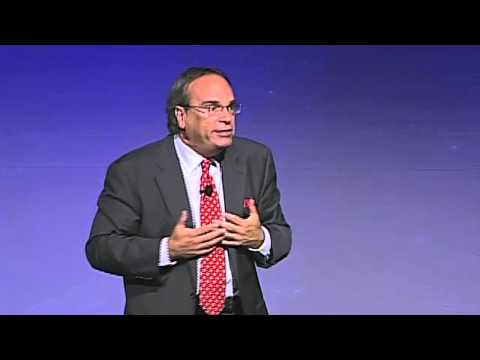
Above is a short video on finding fulfillment in anything you do, that was taped a few years ago. I hope you enjoy it!