Follow @TomVMorris
Retreats
Keynote Talks and Advising
About Tom
Popular Talk Topics
Client Testimonials
Books
Novels
Blog
Contact
ScrapBook
Short Videos
The 7 Cs of Success
The Four Foundations
Plato's Lemonade Stand
The Gift of Uncertainty
The Power of Partnership

Tom Morris

Great Ideas. With Power. And Fun.
Retreats
Keynote Talks and Advising
About Tom
Popular Talk Topics
Client Testimonials
Books
Novels
Blog
Contact
ScrapBook
Short Videos
The 7 Cs of Success
The Four Foundations
Plato's Lemonade Stand
The Gift of Uncertainty
The Power of Partnership
PicnicBeach.jpg

What We Celebrate on Labor Day

Each year, we set aside a day to celebrate an aspect of our lives whose importance is often underestimated, or even badly misunderstood. On Labor Day, we’re meant to commemorate work, as well as those of us who do it, and all who have done it long before us. What we’re being called upon to celebrate isn’t a necessary evil – an unfortunate and arduous requirement for simply gaining the resources it takes to live in an increasingly costly world. Work isn’t the sort of thing we can and perhaps should regret every other day of the year, but then get away from it to, paradoxically, raise a glass and praise it for just one twenty-four hour period, annually. We’re meant to be celebrating on this day a good thing, even a great thing, that’s worth celebrating on every day.

Aristotle taught us long ago that we are all essentially goal-oriented beings, and that this facet of our nature is deeply connected both with individual happiness, as well as with what we often think of as the living of a good life. We all need things to do, work to accomplish, and goals to achieve. Without some form of work, whether externally compensated or not, we just can’t flourish in the fullness of our nature.

At its best, work is even a spiritual activity. It’s an expression of our souls into the world around us, an endeavor that ideally allows us to improve some aspect of the world, however slightly, on each day that we labor. And, of course, in working to enrich the world, we deepen and enrich ourselves in a great variety of inner ways, regardless of outer consequences. Through our work, we can become wiser, more insightful, hardier, and more capable. We can enlarge our capacities, expand our relationships, and deepen our sense of ourselves.

The good work of any person benefits, however indirectly, every person by improving the stage on which we all act out our individual dramas. We’re, all of us, connected, even though that’s a truth whose reality is sometimes hard to detect. But it’s a truth that allows our work to have an impact far beyond what we might realize, on any given day. And that’s something to be celebrated, indeed.

Happy Labor Day!


PostedSeptember 7, 2015
AuthorTom Morris
CategoriesAdvice, Business, Life, Wisdom
TagsLabor Day, Aristotle, Tom Morris, TomVMorris, Philosophy
Post a comment
BoyMeditating.jpg

Becoming More Intuitive

In every field of endeavor, there are innovators who naturally seem to pioneer new ways of doing things. There are individuals who are known for their endless creativity. They are often also people who, over and over, seem to be in the right place at the right time to make the right connections to do great things. The rest of humanity struggles, but these golden individuals, as if touched by the divine, seem to flourish effortlessly.

There are two things to say about such people. One is that their trajectory of success isn't typically as smooth or as easy as it seems. Such people tend to work very hard. And they long have. Because of that, they've attained a level of mastery in their field that's unusual. And this allows their work to have exceptional results. Like the metaphorical swan, all still and serene above water, they can seem to be at ease, but their hard paddling below the surface is what gets them across the lake.

And yet, there is a second thing to say, even more important than this.

These people tend to be highly intuitive. They don't just depend on normal "rational" thinking. And they don't feel a pressure to do everything the way everyone else does it. They listen to their heart, or maybe it's something beyond their heart.

The ancient Greeks talked of a spirit or muse. The Romans spoke of a guiding genius, not in you, but outside you, that's available to help you. However we conceptualize it, there seems to be an avenue of knowing and doing that's in some sense spiritual in nature. Accessing it requires us to get beyond our normal thought world, to reduce our mental chatter and clear out the clutter that otherwise blocks us from something deeper, and open ourselves to this powerful guidance. Sometimes it happens in extreme circumstances, during times of great danger. A switch flips. A strong clarity arises. And we're transported to a new level of being, feeling, thinking, and doing. It more often happens when there is preternatural calm within, a quietness and emptiness that allows itself to be filled. A supreme focus can facilitate it. A  great relaxation of the body, or a repetitive engagement of it, as in walking, or jogging, can at times create just the right soil, fertile for new ideas to be noticed and planted and to grow.

In a small meeting room yesterday at the large pharmaceutical development company PPD, I talked about how I have discovered my own best intuitive work. I told my story of unexpectedly coming to write eight novels in a period of four years, after forty years of authoring nonfiction philosophy books.  In this unexpected adventure of becoming a novelist, I've learned how to relax my body in order to disengage the normal flow of my conscious mind. And this is when the magic can happen. I think we all have that ability. And we can use it in whatever we do. Why don't we do so more?

My new book, The Oasis Within, begins the epic story whose main characters have taught me almost all I know about becoming more intuitive. I hope you'll also have a chance to learn from them as I have, and that it will have as big and deep an impact for you as it has had for me.

PostedSeptember 4, 2015
AuthorTom Morris
CategoriesAdvice, Art, Life, Business, Wisdom
TagsThe Oasis Within, Tom Morris, TomVMorris, Intuition, Genius, spirit, Spirituality, muse, inspiration, creativity, innovation, PPD
Post a comment
CamelTrain.jpg

The Insights We Need

I was talking with my friend Jack yesterday. He's in his 20s, from Pittsburgh, and is an actor. He's been in several short films and is getting ready for work on his first feature. When I saw him, he told me that he had just started reading my new book, The Oasis Within. I was pleased. Then, I was especially happy to hear him say, "It's really great. I'm just in chapter three and I've already come across a bunch of things that I need, insights I can use right away."

I was very glad to hear that. I told Jack that one of the main characters in the book, a seventy-year old Egyptian man named Ali, had taught me more than any other mentor in my life. The fact that he's fictional doesn't seem to detract at all from his wisdom and effectiveness as a teacher. Over and over, what he says just knocks me out. It will be the perspective, or image, or insight I've needed in order to make sense of something in my life, or to take the next step forward.

Jack surprised me by saying something else I had not expected, despite hearing it before. He commented, "In some ways, what I've read so far reminds me of The Alchemist." That's of course the classic little book by Brazilian writer Paulo Coelho that's sold over 50 million copies. So, it's good to hear someone make a comparison. Actually, when I had just written The Oasis Within and the next bigger novel that follows it, I was still trying to figure out what was going on with this unexpected, exotic movie in my head and this stuff that I was writing down in transcribing it all. I sent what I had to a former philosophy student of mine who is a highly acclaimed thriller novelist (not many people have each of their books praised to the highest by New York Times reviewers) and I anxiously awaited his reaction. He wrote me, "This is The Alchemist Meets Harry Potter Meets Indiana Jones." I was excited and hoped he was right. But he also said that what I was writing was different. He surmised that the books seem to contain all the wisdom we need for living a good life, even a great life. That comment resonated deeply. The characters in the books were teaching me, guiding me, giving me just what I had for so long needed. I had to wait until I was entering my seventh decade of life to learn all this stuff at the level Ali was teaching me. But it's never too late. And the truly exciting thing is that I get to pass it on now to people who are much younger, like Jack, and perhaps even younger still.

I've read The Alchemist three times - once when it first came out, a second time when my former student compared The Oasis Within to it, to make sure I wasn't unconsciously channeling or copying it, and a third time recently, to make double sure how it and my book are related and are distinct. The books are actually very different in lots of ways. But there are indeed points where they touch. I've come to appreciate one theme in The Alchemist that I didn't realize was also in my book until I read Paulo's famous text for the third time: In our lives, things often look worse before they get better. Right before something great is going to happen, something bad can intrude, as if to test or challenge us. The question is: How do we react? So if you're in a difficult time now, the good news is that it's often a doorway, or portal, to something great. Knowing that can help you to keep the attitude and the spirit that may be needed to make it happen.

Yesterday, Jack and I talked about one of the philosophical ideas revealed early on in The Oasis, the principle of the two powers: Almost everything in this world has two powers, a power to harm and a power to help. It's often up to us which of those powers comes into play. Even bad things have two powers. Of course they can hurt us. But they can often also help us, depending on how we use them, and what we do with them. Growth requires struggle. As Ali himself says to describe his own practice and attitude, "We can't control the day, but only what we make of the day. And we'll always make the best of whatever comes our way."

If you have a chance to snag one of the early copies of The Oasis Within, and have the time to begin reading soon, like Jack, I'd love to hear how it resonates in your life. You can contact me here, in a comment, or through the Contact page at www.TomVMorris.com, or using my email address, also on the Contact page. I'd love to learn from you what you're learning from the desert as described in the book.

PostedSeptember 2, 2015
AuthorTom Morris
CategoriesAdvice, Life, Wisdom
TagsThe Oasis Within, The Alchemist, Paulo Coelho, Tom Morris, TomVMorris, Good and Bad, Difficulty, Chellenge, Hardship, Growth
Post a comment
PeopleAtWork.jpg

Corporate Values That Work

The New York Times has recently stirred the pot on issues of corporate culture and working conditions in America. Some philosophical issues are being talked about anew that I think are crucial for any business. 

In 1997, my book If Aristotle Ran General Motors: The New Soul of Business was published. It was all about what it takes to create a great company culture - whether it's a big company like GM or a small mom and pop business or anything in between. I came to realize that the principles and values that make for great workplaces apply just as well to any friendship or marriage. We're people wherever we are. And we have certain deep needs that will govern what we're able to accomplish in any situation. What then does it take for people to feel great together and do great things in their interactions, in their relationships? Aristotle and the other practical philosophers had some amazing insight for this.

When that book of mine was first out and I was flying coast-to-coast to be on radio and television shows promoting it, the one person interviewing me who had read it the most carefully and thoughtfully was Matt Lauer, on the NBC Today Show. We had nearly nine minutes of conversation about it on the show, which is forever in morning TV time. He told me that, in his opinion, the book captured everything he believed about ethics, and he even asked if it was Ok if he quoted from the book in some talks he was going to be giving about ethics in journalism. But he also challenged me that day by asking me whether American corporations were really ready to become great places to work, focusing attention on such things as Truth, Beauty, Goodness, and Unity - the intellectual, aesthetic, moral, and spiritual values that my book was built around. There was even a chapter on "Business and the Meaning of Life." Matt wondered whether any big company could really pay attention to such an issue. Is there time? Is it business-efficient to care about such things? Would a necessary concern on the bottom line allow it? 

My answer was simple: Yes. People can't do their best over the long run unless they feel their best about what they're doing. Aristotle understood the deep role that our unconscious quest for happiness, or wellbeing, plays in any of our lives. And he knew that this is the most deeply motivating factor for anything we do. When we aren't happy in our work, when it doesn't contribute to our sense of deep fulfillment in our lives, we can't attain and sustain the highest, most creative excellence. Ultimately, meaning and mastery go together.

In a big front page essay called "Rethinking Work" in the New York Times Sunday Review this week, psychologist Barry Schwartz argues that companies had better pay attention to such issues. And Schwartz has evidently touched a nerve, because 24 hours later, it's the most emailed article in this week's paper. I commend it to your attention. And if it resonates with you, take a look at If Aristotle Ran General Motors and tell me what you think. In light of the recent controversies surrounding Amazon and corporate culture in America these days, I think we need to return to some of these issues. I'll likely write more about them this week.

Meanwhile, may you experience Truth, Beauty, Goodness, and Unity in what you do and where you do it. Aristotle would want it that way.

PostedAugust 31, 2015
AuthorTom Morris
CategoriesAdvice, Business, Leadership, Wisdom
TagsWork, Corporate Culture, Business Ethics, Happiness, Amazon, Barry Schwartz, New York Times, Meaning, Work excellence, Fulfillment, People, Human Resources, Matt Lauer, Today Show, NBC, Tom Morris, TomVMorris
Post a comment
MoralHeroes.jpg

Can You Be The Hero?

What does it take to be a hero? On a train, in a crowd, or in the quiet of your office? If you're ever in a situation of great peril or stress, can you step up and be the hero?

Lots of popular books and films are about apparently ordinary people who are thrust into situations of danger and step up to act courageously. Think of Harry Potter, Katniss Everdeen in The Hunger Games, Tris Prior in Divergent, or the Bruce Willis character in all those old Die Hard movies, An ordinary person is pushed into an extraordinary situation and steps up. 

I've just published a book called The Oasis Within, which is the prologue volume to a new series of novels where one of the main themes is how we can be prepared for greatness. One philosopher who has read that first book has written me that it's the first portrayal of a hero that really digs down deep into how a grounding in the right wisdom can equip any of us for more heroic action. 

There's an interesting article about this in the New York Times. Professor David Rand with his colleague Ziv Epstein studied 51 winners of the Carnegie Medal for Heroism and came to a conclusion that surprised them. The overwhelming majority of heroes who act to save another person or to otherwise do what needs to be done in a tense and pressure filled situation, do not deliberate or think it through carefully before doing anything, but instead act instinctively, intuitively, and fast.

There's an old saying. "He who hesitates is lost." That seems to apply to many situations of great value and risk. We often think of ethics and morality as all about rational decision making, as if the moral agent must first weigh all the values involved in a situation and then choose which to prioritize and pursue. Wrong. The late Iris Murdoch, philosopher and novelist, wrote a fascinating little book called The Sovereignty of Good. In it, she says that, typically, at the moment of moral decision making, the precise moment we choose this or that, the decision has already long been made by what we've been doing, valuing, thinking about, feeling, and paying attention to, in the minutes, hours, days, weeks, months, and years preceding that moment. Most big decisions, and especially those involving some measure of courage or boldness, aren't deliberated at all, but simply arise out of who we are, or what we've become prior to the point of action. We do this or that because we are already committed to this or that, or because we already are this or that. 

Our actions show who we are. They arise from within, and in a way that can be quick and intuitive.

The Americans on that high speed French train recently didn't hold a short seminar on the costs and benefits of all the possibilities and alternative potential responses available when they noticed the guy with the gun. They saw it and somebody said "Let's go." They took action. That's normally the trajectory of heroism. It sees a need and acts to meet the need. So, when you find yourself deliberating extensively over some choice, weighing the pros and cons, chances are that you're not getting ready to be a hero. The hero simply sees and does. The lesson for us is then simple. We need to be preparing ourselves carefully to do the right thing instantly when such a situation arises.

Are you paying attention to the right things, day-to-day? Are you valuing the truly best things? Are your feelings guided by real wisdom? Do you have enlightened commitments, or is the culture getting under your skin a little bit, to encourage selfish superficiality, personal aloofness, or short term ease? We become what we habitually do, in the life of the mind, the emotions, and in our actions. Today, you can begin to create the moral hero within who will act fast and instinctively tomorrow. Or you can deepen and reinforce the good tendencies you already have. It's up to you.

PostedAugust 29, 2015
AuthorTom Morris
CategoriesAdvice, Attitude, Life, Leadership
TagsHeroes, Heroism, Bravery, Boldness, Action, Wisdom, Philosophy, Tom Morris, TomVMorris, Iris Murdoch
Post a comment
CandlePaperQUill.jpg

The Diary of Walid: On Thoughts, Feelings, and Difficulties

This is our second day of sharing excerpts from "The Diary of Walid" at the end of my new book The Oasis Within. This thirteen-year-old boy notes down at the end of the day what he's learned from his uncle or from what he's experienced since he woke up. In doing so, he's following the example of Marcus Aurelius, emperor of Rome, who asked himself every evening, "What have I learned today?" and took down notes in answer. Those notes became the amazing book The Meditations of Marcus Aurelius, a bestseller throughout the centuries that provides great wisdom for living. By reflecting and writing, however briefly, we can clarify and solidify the insights that events can provide us, if we pay attention. In this time of tumultuous stock market events, Walid's insights can speak to us powerfully.

Many things have two powers – they can be helpful or harmful. It’s often up to us which role they play.

Most situations also have a double potential, for good or ill. We would be wise to keep that in mind.

It’s important in life to pay attention all the time – to look, listen, and learn.

We should discipline our thoughts and feelings, then listen when they suggest that something’s not right.

Most dangers in the world will provide us with some kind of warning, if we’re alert and aware.

Emotions, like most other things, can help us or harm us. We need to learn when to act on them, and when to resist them for a greater good.

Great things are accomplished by great thoughts. Our thoughts can be very powerful.

A good attitude about difficulties, combined with a wise perspective, can help us overcome any trouble.

We should be more surprised when things don’t change than when they do. If we expect change, we can deal with it better.

We shouldn’t worry about what we can’t control. We should focus on what we can control and make the best of it.

It’s important to live fully each day.


PostedAugust 25, 2015
AuthorTom Morris
CategoriesAdvice, Attitude, Life, Wisdom
TagsThe Oasis Within, Walid, The Diary of Walid, Insight, Wisdom, Tom Morris, TomVMorris
Post a comment
Walid'sDiary.jpg

The Diary of Walid: On Inner Peace

From the Appendix at the end of The Oasis Within, these are excerpts from a diary kept by the thirteen-year-old Egyptian boy, Walid, as he's crossing the desert in 1934 with his uncle Ali. At the end of the day, he writes down things he's learned from what he's heard, seen, and experienced.

An oasis is fun, safe, and relaxing. We can carry an oasis within us wherever we go, an inner place of calm and refreshment, by using our thoughts well.

We all have in our minds something like an emotional telescope. If we look through the end everyone uses, things will seem bigger than they really are. But we can flip it around and look through the other end. That will make things appear smaller and less threatening. So whenever anything looks big and overwhelming, say to yourself, “Flip the telescope!”

Almost anything needs interpretation. That’s where freedom begins.

Whether something is a big deal or not often turns on how we see it. If you think it’s a big deal, it is. But you can change your mind on many things and shrink them down to size.

Wisdom for life is about seeing things properly. It’s about perspective. This gives us power, because it brings peace to our hearts, and then we can think clearly, even in difficult times.

If I live most fully with my heart and mind in the reality of the present moment, I will feel better and be more effective.

Things are not always what they seem. In fact, they often aren’t.

Whenever life brings us a storm, we should use what we have, stay calm, and move quickly to respond well.

An oasis within us is a place of peace and power in our hearts.

We can learn the most from the most difficult things.

We can’t control the day, but only what we make of the day. We should always try to make the best of whatever comes our way.

PostedAugust 24, 2015
AuthorTom Morris
CategoriesAdvice, Life, Wisdom, Philosophy
TagsThe Oasis Within, Walid, Diary, Thoughts, Wisdom, Insights, Tom Morris, TomVMorris
Post a comment
Maturity.jpg

The Forgotten Ideal of Maturity

There's an old ideal that we seem to have forgotten throughout much of our culture. What I have in mind is maturity. Say the word now and people think: Senior Citizen, old age, wrinkles, slowing down, and worse. But it wasn't always that way.

Maturity. What is it? Actually, I think maturity is a quality, or characteristic comprised of many others, like, for example: Compassion, Kindness, Consideration, Equanimity or Inner Peace, Wisdom, Prudence, Perspective, Practicality, Honesty, perhaps a proper Awe regarding existence, and what some call "Hardihood" - the ability to persist in the face of difficulty, a capacity to endure hardship without constant complaint or a feeling of victimization. A mature person is not quick to anger. Such a person isn't careless with actions, thoughts, or feelings. Maturity rises to a level of appreciation and gratitude concerning all the good and beautiful things in life, while accepting the existence of limits and imperfections in the world. A mature person may want and work hard to change and improve the things around them, but they won't wallow in irritation, resentment, and frustration about those things that need changing.

For most of history, throughout most civilizations and societies, people have regarded maturity as something to aspire to, hope for, and respect. In past times, many would often actually try to act more mature than their age might indicate should be expected. That occasionally happens still, but in very limited contexts, as for example when someone is trying to get his or her first job. But immaturity, by contrast, now seems to nearly rule the culture. We see lots of people acting less mature than their age would lead us to expect. Turn on a reality TV show. Or consider standard political behavior. Or, you could just simply listen in on conversations in your favorite restaurant or bar. 

The ancient philosopher Diogenes was said to walk around everywhere during the daytime, carrying a lighted lamp, or lantern. Asked what he was doing, he liked to say, "Looking for an honest man." In our own time, he would have nearly as endless a trek looking for real maturity.

A clarification is needed here. We're a youthful culture. We celebrate the young and a great many of the things that young people like. Many of us try to keep such things in our lives. And that can be very good. It's perfectly possible to be youthful without being immature. There's an important difference. I knew a famous scholar at Yale, a world renown historian, who at the age of 89 was stunningly youthful, and lots of fun, but not at all immature.

Immaturity is wrapped up in ego, a sense of entitlement, a lack of responsibility, and a tendency toward anger, as well as an inclination to delight in the flaws and sufferings of others. Immature people are prone to whining, resenting, and feeling slighted when others aren't suitably celebrating their specialness. Immature people throw fits and tantrums, regardless of age. They also tend to be as callous toward others as they are fragile in their own sense of need.

When you consider immaturity closely enough, you come to understand why its opposite was for so long an admired ideal. And it makes you wonder how we ever got so far away from an appreciation of what it is to be truly mature.

Maturity is about proper growth and exemplary health. We should encourage it in others and seek to enhance it in our own lives. If you disagree, that's perfectly fine ... for a poopie head.

PostedAugust 21, 2015
AuthorTom Morris
CategoriesAdvice, Attitude, Life, Wisdom
TagsMaturity, Immaturity, Kindness, Consideration, Wisdom, Understanding, The Culture, Ego, Responsibility, Hardihood, Tom Morris, TomVMorris, Philosophy
Post a comment
WindowWaiting.jpg

Patient Waiting

Patience means waiting. But waiting doesn't necessarily mean not doing. We all understand the former. And yet, few seem to grasp the latter.

There are times when we need to be still and at peace, take a break, and rest from our work, while simply allowing the world its turn to play a role in our endeavors. Every quest for achievement in the world is a partnership with powers that go beyond our own. And often it takes patience to allow our partner to do the work that we can't do alone. We have a phrase, "Watch and Wait." We've done all we can. We've tossed our little toy boat into the stream. Will it float? We await the results.

Waiting. It's something we might do in repose, on a beach, in a hammock, or utterly relaxed in a comfortable chair. We can wait on a yoga mat, or even while taking a nap.

But waiting does not have to be an utterly passive state. It's not the same thing as being inert, frozen, now helpless, and without options for action. "Waiting" is a verb. And it can connote all sorts of different actions. 

Waiting. It's a good time to pray, or play, or otherwise turn away from the focus of activity that has otherwise occupied us. A cook puts a pot on the stove. And then it's the pot's turn to boil. Sometimes, the cook can merely turn away to chat, or check email, or sit and sip coffee while gazing at the garden outside. Waiting can take many forms. And, of course, in some of those forms, the cook can stay quite busy in the kitchen.

Waiting often means preparing.

You've done all that you can do to get the project out there into the potential client's hands. Now, you wait. What does that require? Well, it can mean preparing for the positive go-ahead you hope to receive, and in this way playing a different role in the process, getting yourself ready for the success you want. There will be a next step. So, while you wait, you prepare for whatever is next. Waiting here takes the form of preparation. And at other times, it can mean just turning your attention elsewhere, while allowing the water to heat.

So, in the most general sense, there are two forms of waiting. One does involve resting. But the other involves a different form of doing. Either can help equip you for whatever is to come. But neither will serve you well if it's heavily spiced with hot anxiety. And that, for many people, is the problem. 

You're awaiting a decision. It could go either way. Uncertainty mixed with desire produces anxiety. Or you're awaiting a result that's not uncertain, but is not as yet in hand. Anticipation mixed with desire, or the very different aversion of fear, brings another form of anxiety. There are many ways in which waiting is fraught, tense, and hard. But, fortunately, there are two solutions to any such anxiety.

First, you can emotionally release the situation, whatever it is. Shed it. Let it go. Find a zen peace within. Trust God. Or reconcile yourself to the constant vicissitudes of the cosmos, as the stoics did. They believed that hardly anything is as good as it seems or as bad as it seems, so we should all just calm down. They understood that the discipline of waiting is largely the skill of governing our emotions well. But they also understood something else that's vital.

We all have to learn how to turn our attention from what we can't control to what we can control. And that's often facilitated by engaging in some new, and even slightly different, activity that engages our minds and hearts while we wait. Maybe it's in preparation for the result we want, or the one we'd prefer to avoid, or both. At other times, it's another activity altogether, perhaps one that has nothing to do with the focus of our concern. That doing then becomes a useful and happy distraction that can ease the worry, or the anticipation, which otherwise can be so tough. Action can displace agitation. And action can be the form that waiting takes.

If you have trouble waiting for things, analyze what exactly the problem is, and then take the proper action to solve it. For as you see, action can be just what waiting needs.


PostedAugust 17, 2015
AuthorTom Morris
CategoriesAdvice, Attitude, Life, Business, Wisdom
TagsPatience, Waiting, Action, Worry, Anxiety, Stoics, Tom Morris, TomVMorris, Wisdom, Philosophy
Post a comment
Pen.jpg

Blogging By Ballpoint Pen

I'm sitting alone in a hallway outside the ballroom of a great resort where I'll be speaking in a few minutes. The session before mine is running long. So, I wait. Most people would be on their iPhones now. I'm just relaxing. And in my relaxed state, I get an idea - which happens pretty often. So, I reach into my speaking bag, where I carry laminated wallet cards, Snickers Bars, an extra pair of glasses, some hand sanitizer, and other assorted necessities for being in front of a lot of people, and pull out that rare tool of bloggers - a Bic pen.

I usually leave my iPhone back in the hotel room. Whenever I can, I choose to be untethered to it all. It's not like I'll ever have mere seconds for the launching of a philosophical missive. My communication connection to the world isn't ordinarily a thing of great urgency. Plus, being unplugged allows for more contemplation. And inner peace. I'm not listening for the next notification ding and poised to reply that instant. I'm at ease. And my blogging tool in this instance isn't distracting me constantly with other options for its use and my attention. Of course, life can't be all ink and paper, all the time, or you wouldn't be reading this. But it still can be, sometimes. And those times are special.

My use of a pen isn't about smart phone avoidance. It's about moderation. And in our connected world, moderation is something we're forgetting, to our detriment. At the holiest spot in ancient Greece, the Oracle at Delphi, two vital pieces of advice were inscribed in marble:

Know Yourself.

Nothing in Excess.

These are great reminders of two basic necessities for a happy and flourishing life. And our frantic pace make both difficult for us to live out, day-to-day. My ballpoint pen helps me slow it all down, get back in touch with some deeper thoughts, and clear my mind for what's ahead.

Ah. There's the applause. The session's ending. I'm up next.

Now it's time to go have a little fun dishing out some of the great wisdom from the great thinkers. But, of course, in moderation.

This blog post powered by Bic.

Click.

PostedAugust 13, 2015
AuthorTom Morris
CategoriesAdvice, Attitude, Life, Wisdom
TagsSmart Phones, iPhone, Pace, Living, Moderation, Ballpoint pens, Wisdom, Waiting, Tom Morris, TomVMorris, Philosophy, Speaking, Blogging
Post a comment
FlyHigher.jpg

Friendly Encouragement

How often are we tempted to pressure people to get better at what they're doing? How much do we actually do it? Maybe we push. Or we pull. We criticize and lay down the law. We demand. Some of us may even threaten. Well, not me. And, likely, not you. But it's too common, isn't it?

We want to get better, ourselves. We want to grow. And we want our kids, and our colleagues, and our employees, to get better, as well. But can we push and pull and force it?

Consider a garden. The plants aren't growing fast enough for you. You're wanting more. What are you going to do, grab them and pull? That's obviously not going to work. And it won't with people, either.

People grow best with friendly encouragement and guidance.

Yeah, I know. There are some people who don't respond to friendly encouragement or guidance. So why do you have anything to do with them? Move on. Or move them on.

Friendly encouragement is one of the best things we can give good people.

So: Encourage someone today. Help them fly higher.

PostedAugust 6, 2015
AuthorTom Morris
CategoriesAdvice, Attitude, Business, Leadership, Life
TagsEncouragement, Motivation, Guidance, Threats, Force, Badgering, Leadership, Management, Growth, Improvement, Kindness, Tom Morris, TomVMorris
Post a comment
Language.jpg

Our Philosophy of Language Matters!

I posted a version of this blog during the campaigns of 2016. But I think it's important to revisit it now that we're hearing from supporters of our new administration, and members of it, about "alternative facts" and truth being just something "in the eye of the beholder." We need to understand the two different views of language in order to see what the new administration is trying to do.

In the upcoming days of the new administration, we're apparently going to hear a lot of people distorting the truth, and actually lying to us. Of course, that's no revelation. It's already been happening. And it's unfortunate. But we come across this a lot in business, as well, and in any other area of life where something of value is at stake. And there's an important reason that distortion and lying is so widespread at present. It may surprise you.

There are two very different philosophies of language out in the world. Which one we operate by matters. The noble view, on my analysis, holds that the overall two-fold purpose of language is to connect and cultivate. It connects us first with reality, and with each other, and even within ourselves, in a variety of ways. And it cultivates us, or develops us as human beings, in just as many ways. This view of language is focused on linking our words to truth, beauty, goodness, and unity—the four transcendental values of ancient philosophy. We can call it The Spiritual View of Language. At its best, language connects and cultivates the spirit.

Going back in human history and prehistory, language has always had many uses - for example: to warn, call, express, exclaim, inquire, infer, inform, and create. It's also had a deviant use, interestingly dependent on these more straightforward uses. It can be employed to deceive. But that's a secondary and parasitic use. If language had not already first been used to inform, warn, and express, for example, it could never have been used to deceive. The reason is simple. In deceiving, you're pretending to inform or express, or warn, and so on, but your use of language departs from the expected connection with truth that those uses ordinarily presuppose and convey. At the same time, you're depending on your listener to simply assume that you are sincerely informing or warning, and so on. But to the contrary, you say what you know to be false. You warn when you know there's no real danger. You express an anger or an empathy that you don't actually feel. The primary uses of language had to be established and accepted in order for any twisting of them into deception to work.

If you hold the Spiritual View of Language, you're going to see deception as something forgivable or appropriate only at the extremes of human behavior—in competitive games or sports, and in life or death situations. In games or sports, when we're outside the normal spheres of life, and we're playing, however hard, it's ok to bluff, or fake. We don't morally judge the quarterback who fakes a run but passes instead. But secretly deflated footballs are something else. There are rules within which the deceptions can take place.  In basketball, a great fake under the basket shows not corruption but skill. Certain such forms of deception are fine. And in situations of life or death, it's normally thought to be strongly preferable to use deception if that's the only way to avoid an act of killing or being killed, or maiming or being maimed.

In game situations, we've suspended "normal life"—whereas, in life or death situations, we've arrived at an extreme, on the other end, beyond normal life, where an intensity of conflict or likelihood of severe bodily damage has gotten so bad that a lie or a deception can be not only excused, but actually demanded in order to prevent something much worse and potentially irreversible. Lying in politics or business doesn't normally qualify—to put it mildly.

But there's another philosophy of language altogether and it's the one that now tends to dominate highly partisan or extremist politics, and even some business circles. It's a view that the primary purpose of language is to gain, exercise, and hold power—power over people, situations, and things.

On this Machiavellian view, language isn't tied to truth, beauty, goodness, or unity. It's not a spiritual vehicle for connecting and cultivating ourselves. It's a cruder tool. It's about manipulating. It's all about getting others to do your bidding. On this view, language is about crafting perceptions, and evoking those beliefs and feelings in others that will open doors for you and feed into your own purposes. It's a clearly ignoble view of language. And it's as parasitic as deception is in any of its forms. If most people didn't hold, at least implicitly, what I'm calling the Spiritual View of Language, no one could hold this Manipulative View of Language and make it work. The manipulators pretend to be doing the things that the rest of us expect them to be doing—truly informing, accurately warning, honestly expressing, and so on. But they're often only pretending to do such things, at least much of the time. They'll actually seek to show a concern for truth, beauty, goodness, and unity now and then, when they believe it's their interest to do so, but only to fortify their basic strategy of manipulation. They want power. And they talk to get it and use it and keep it.

We all need to persuade other people, and help position others to see the value of our projects and propositions. But we can do that by connecting and cultivating, rather than by manipulating. And that's the only path of honor. It's also the only one that's sustainable, long term. Those of us who hold the Spiritual View of Language can use our words in all sorts of creative ways, to inspire, enthrall, or entertain. But if we ever catch ourselves manipulating another adult human being, we need to do a philosophical self-check. Is our context that of a game or sport? Is it truly like war? When too many people start to think of politics or business as primarily a game, or a sport, or as the equivalent of war, there comes to be a subtle and secret shift in how they think of language. As a result, we all suffer.

Who knew? Our philosophy of language matters!


PostedJuly 29, 2015
AuthorTom Morris
CategoriesAdvice, Business, Leadership, Life, Wisdom, Philosophy
TagsLanguage, Truth, Beauty, Goodness, Unity, Manipulation, Power, Lies, Lying, Deception, Politics, Business, Campaigns, Presidential Race, Tom Morris, TomVMorris
Post a comment

The Importance of Optimism

"We Need Optimists." That's the title of a front page Sunday Review essay in the New York Times this week by Arthur  C. Brooks, president of the American Enterprise Institute and author of the new book, The Conservative Heart. He starts off with a quick story. His son had made a really bad grade on a test. After a parent-teacher conference about it, Arthur's wife broke the silence in the car by saying, "At lease we know he didn't cheat." That glass is always half full for the optimist, and ready to be topped off.

Brooks reports recent psychological studies that indicate optimists are generally healthier than pessimists, and more resilient in the face of setbacks. Optimists also self-report greatest levels of perceived happiness. In my own analyses of human performance, I've learned that optimists tend to have a more complete form of access to all their resources, inner and outer, than pessimists.

If optimists are, generally, healthier, happier, more resilient, and more resourceful, then why wouldn't everyone seek to be one?

Well, first, there's The Cautionary Tale of the Irrational Optimist - the many examples that almost any of us can produce of people whose enthusiasm for life and their own ideas makes them oblivious to problems, obstacles, and the real probabilities of a situation. This is the mindset so thoroughly critiqued by Barbara Ehrenreich in her scathing book, Bright-Sided. But to be an optimist, you don't have to be a simpleminded idiot or a stubborn fool. In fact, it helps greatly not to be either. You can be a realistic optimist - and that turns out to be, not surprisingly, the best kind there is.

A realistic optimist moves forward with eyes wide open, seeing obstacles, understanding challenges, and yet maintaining a determination to be creative in solving all problems. The realistic optimist never just hopes for the best, or blithely assumes the best, but works hard to make the best happen, in full realization that it may take longer than it should, and be harder to accomplish than anyone could have imagined. But it's precisely the element of optimism that fuels a hopeful and persistent struggle forward. Optimists don't prematurely give up, or surrender, in their efforts to create good things. And optimists like me promote the optimistic mindset, just like I'm doing now. Why? We really believe it works and that it can work for you.

Of course, pessimists want to convert us all to their alternative way of thinking. And I've always wondered why they even try. Don't they have to believe they're unlikely to succeed? They are pessimists, after all.

Martin Seligman, in his classic study, Learned Optimism, argues that you don't have to be born sunny side up. You can become an optimist. And you can benefit greatly from adopting this pervasive attitude.  Plus, if you're already moderately optimistic, you can enhance that proclivity.

I just know you can.

I really do.

PostedJuly 27, 2015
AuthorTom Morris
CategoriesAdvice, Attitude, Life, Wisdom
Tagsoptimism, pessimism, attitude, Martin Seligman, Arthur C Brooks, Barbara Ehrenreich, Tom Morris, TomVMorris, Philosophy, Wisdom
Post a comment
SeekingGood.jpg

The Goodness Guarantee

There are very few guarantees in the world. One of the rare ones is that if, from a perspective of basically true belief, you try to do good or try to do evil, you're guaranteed to succeed. Let me make it clear what this means.

The single condition for this guarantee is that you have mostly, and at least roughly, true beliefs about what's good, and what's evil. You don't have to be a master of ethical insight, but have generally accurate and non delusional views of what's right and wrong, at a simple and basic level. Then, the guarantee kicks in. If you're trying to do good for the world, beyond your own narrow interests, in your pursuit of a goal or in your treatment of another person, then, whether you succeed in accomplishing exactly what you're attempting or not, your effort to do good is itself a form of good. In even trying to do good, you've brought a dose of good into the world.

Likewise, and conversely, if you're trying to do evil in the world, of any kind, in your pursuit of a goal or in your treatment of another person, then, whether you succeed in accomplishing exactly what you're attempting or not, your effort itself is a form of evil. It is evil to try to accomplish evil. 

To sum up, armed with a basically correct grasp of good and evil, then you get a rare guarantee. When you try to do good, you actually do good. When you try to do evil, you really do evil. And this is true regardless of circumstances. Because of that truth, something important follows.

There's aren't many such guarantees in life. When you try to make a lot of money, there's no guarantee that you'll succeed financially. If you try to get famous, there's also no guarantee that your intent will be realized in any form. Likewise for the pursuit of power, or status, or any other external thing distinct from good or evil.

So, therefore what should we make of this realization? Our conclusion is crucially important, and potentially even life changing.

Consider this. One way not to waste your time and energy in this life is to seek first and foremost a goal that's guaranteed. That leaves two options. Whatever we do, we should either seek to do good, or to do evil. But seeking evil, as Socrates long ago pointed out, is in itself wrong and, in addition, will just make your world a worse place for you. We should not seek evil. Therefore, the opposite conclusion follows quickly: We should always intentionally seek to do good, whatever the particulars might be. 

This conclusion then comes with a cosmic promise. Your effort to make a positive addition to the world will itself be one. And then, everything else is gravy. Or icing on the cake - depending on whether you prefer the savory or the sweet, each of which is available to the seeker of good.

First, seek to know what is good and what isn't. Strip off false beliefs, and escape illusion. Then, the job is clear. Determine, whatever you do, to do good, and good will follow. Even if you're somewhat mistaken in your understanding of what the good requires, a sincere and humble pursuit of the good is more open than any other mindset to correction about what it truly entails. That way, in seeking to do good, you position yourself to both do good and become better. And I have just one question: As a fundamental starting point, what could be better than that?

PostedJuly 21, 2015
AuthorTom Morris
CategoriesAdvice, Attitude, Life
TagsGood, Evil, Action, Intention, Guarantees, Money, Fame, Power, Status, Wisdom, Tom Morris, TomVMorris, Philosophy
Post a comment
Snowboarder.jpg

Life Skills

How skilled are you? Do you seek to identify, acquire, develop, and improve the most important life skills, in an ongoing way? 

We often think about success, and even happiness, as if it's mostly about talent and luck - what you're born with, and what comes your way, completely apart from your control. But obviously, this is a passive and even fatalistic viewpoint. We don't get to choose our talents, or innate levels of talent, and we can certainly position ourselves for luck to strike, but we can't call it down from the heavens. It happens, or it doesn't. That's inherent to the concept of luck.

I've come to realize that this common way of thinking is both wrong and terribly unhelpful. Life success is more about skill than it is about either talent or luck. A skill is something that can be learned and developed. Riding a bike, swimming, dancing, and golf all involve skills. You don't start off in life innately knowing how to do these things well, but you can learn, and you can get better with time, effort, and deliberate practice.

A lot in life is like that. Goal setting is a skill. Listening well is a skill. And because of that, great conversations tend to result from the cultivation of a skill, or a set of skills. Building and maintaining confidence is a skill. So is the mental act of concentration. Building a business, or a career, is all about cultivating the right skills and using them well.

I've come to think that building a life of fulfillment and happiness is like that, too. There are skills to be learned and cultivated. They are things we can get better at doing, as we seek to improve. But if we have a passive mindset, we won't even try. To me, the exciting thing about the concept of a skill, and especially the idea of life skills, is that once we have the concept and begin to apply it, we can change our lives for the better, and improve greatly. We begin to see little things everywhere that we can work on in our emotional and behavioral repertoire. And as we become more skilled at doing the things that count, that elusive partner called luck seems to find us more often, and treat us much better.

For good books related to this, books that will help you to understand this more and develop your own best life skills, go get Talent is Overrated, by Geoff Colvin, and Mindset, by psychologist Carol Dweck.

PostedJuly 20, 2015
AuthorTom Morris
CategoriesAdvice, Life, Business, Wisdom
TagsLuck, Skill, Talent, Success, Happiness, Tom Morris, TomVMorris, Carol Zweck, Geoff Colvin
Post a comment
Atticus.jpg

Harper Lee's Complicated Heroes

I was never going to read To Kill a Mockingbird. I escaped it in school, and wrongly thought that it was a dull book about a courtroom trial. I read it this week, and I loved it. It's now one of my favorite books ever. Harper Lee is a master storyteller, and her creative use of language is a true joy. Plus, the story's just great.

The book is told through the voice of Scout, who begins the story as a six year old tomboy Alabama small town girl with a precocious vocabulary that's both hilarious and fascinating. We quickly fall in love with Scout, and her entire family. Mockingbird is a book that will embrace you as a reader so much that you will have to love it back, especially if you read it as an adult, or revisit it now after a first youthful acquaintance. I read it this week only because of the incredible hoopla surrounding the "new" book by Lee just published, fifty five years after Mockingbird, which I've also now read.

The official story on this week's publication is that it was the original manuscript Lee sent to publishers in the late 1950s, and it tells an interestingly different story about mostly the same characters. The editor at Harper loved the characters but wanted an extensive rewrite that focused on their lives when Scout was younger and that expanded on the account of a courtroom trial that was originally mentioned in only a paragraph. Lee took the advice, pretty much started from scratch, in terms of the overall narrative, and produced the classic To Kill a Mockingbird. The original manuscript she had turned in was about the lives of the same characters 20 years later and in a different social time in America. It's what was published just this week.

There's almost too much to talk about in the new book Go Set a Watchman. I loved it, then I hated it, and then I loved it again. Finally, I went away deeply impressed by the way it raises fundamental social, political, and personal issues of a philosophical nature. A good book helps us see the world differently. A great book helps us see ourselves differently. This book may do both.

Almost every published review of the new book gets it wrong. Once you read it yourself, Google the reviews and you'll see what I mean.

I've read nearly all the first wave of reviews. They tend to consist of a sophisticated veneer over a tabloid alarmist screeching approach to what's portrayed as a shocking revelation about everyone's hero from Mockingbird, Atticus Finch. But what we really learn in the book is the complexity of his, and every hero's, true character, which is always more complicated than we at first realize. Scout goes through the biggest challenge of her life in coming to understand this, and comes to important realizations about herself as well as about her father.

I hope you'll read these two books as soon as you can. Click on the titles here if you want to get them through Amazon. I plan on blogging on them both, but will wait a few days so as not to be too much of a "spoiler" concerning plot and revelations. I hope there will be thousands of book groups considering all the ideas to be pondered in this new publication. It's shocking in many ways, provocative in more, and will surely give any careful reader new insights into the human condition, while at the same time being just a great, great quick read.

We'll talk more later.

PostedJuly 17, 2015
AuthorTom Morris
CategoriesAdvice, Life, Philosophy
TagsHarper Lee, To Kill a Mockingbird, Go Set a Watchman, Books, Tom Morris, TomVMorris
Post a comment
AA.jpg

A Philosophy for Success

I’m a philosopher. That gives me access to the wisdom of the ages – as well as an answer that completely perplexes people when they ask what I do for a living. But, on airplanes, and at parties, after the puzzlement subsides, people often ask me, within a few minutes, if the great thinkers of the past had any good advice about life, or life success, that we can use now. The answer is yes. From Plato and Aristotle on, the wisest people have left us powerful advice for success in anything we do. It boils down to seven universal conditions. I've alluded to this or talked about it in this blog before. Let's take a brief overview. Reminders can be helpful.

The 7 Cs of Success

For the most satisfying and sustainable forms of success, we need:

(1) A clear CONCEPTION of what we want, a vivid vision, a goal clearly imagined.

(2) A strong CONFIDENCE that we can attain that goal.

(3) A focused CONCENTRATION on what it takes to reach the goal.

(4) A stubborn CONSISTENCY in pursuing our vision.

(5) An emotional COMMITMENT to the importance of what we're doing.

(6) A good CHARACTER to guide us and keep us on a proper course.

(7) A CAPACITY TO ENJOY the process along the way.

There are certainly other tips associated with success, but every other one is just a version or application of one of these in specific situations. The 7 Cs give us the most universal, logical, and comprehensive framework for success. So, let’s take a quick look at each. 

(1) A clear CONCEPTION. In any facet of our lives, we need to think through as clearly as possible what we want to accomplish. True success starts with a clear inner vision. The world as we find it is just raw material for what we can make it. We’re meant to be artists with our energies and our lives. The only way to do that well is to structure our actions around clear goals.

(2) A strong CONFIDENCE. Inner attitude is a key to outer results. Harvard psychologist William James learned long ago that confidence can have powerful effects. In any new enterprise, we need upfront, resilient faith in our prospects. James called that "precursive faith" - faith that runs ahead of the evidence. Sometimes we have to work hard for this attitude. But it’s worth the work, because it raises our probability for success. The best confidence comes from careful preparation and then augments it with a can-do perspective. It’s no guarantee of success. But it is a chief contributor to it.

(3) A focused CONCENTRATION. Success at anything challenging comes from planning your work and then working your plan. A focused concentration generates new perceptual abilities. Concentrating your thought and energy toward a clear goal, you begin to see things that will help with it. This focus involves planning, acting, and adjusting along the way. Even a flawed plan can get you going and lead to a better one. A focused concentration of thought and action is key.

(4) A stubborn CONSISTENCY. The word ‘consistency’ comes from two Greek roots, a verb meaning “to stand” and a particle meaning “together.” Consistency is all about standing together. Do my actions stand together with my words? Do the people I work with stand together? This is what true consistency is all about. It’s a matter of unifying your energy in a single direction. It’s also known as harmony. Inconsistency defuses power. Consistency moves us toward our goals.

(5) An emotional COMMITMENT. Passion is the core of extraordinary success. Truly caring. It’s a key to overcoming difficulties, seizing opportunities, and getting other people excited about their work. Too much goal setting in in business is done just with the intellect and not the heart. We need both to guide us and keep us functioning at the peak of our abilities, despite the obstacles we inevitably face. 

(6) A good CHARACTER. Character inspires trust. And trust is necessary for people to work together well. But good character does more than provide for strong partnerships. It has an effect on each individual’s own freedom and insight. Bad character corrupts and blinds. Good character makes sustainable success more likely. In the end, character is all about strength.

(7) A CAPACITY TO ENJOY. The more you can enjoy the process of what you’re doing, the better the results tend to be. It’s easier to set creative goals. Confidence will come more naturally. And so on. A capacity to enjoy the process is linked to every other facilitator of success.

These conditions are deeply interconnected. They constitute a unified framework of tools for most fulfilling forms of achievement. It's been my joy to speak and write on them in books like True Success and The Art of Achievement, as well as The Stoic Art of Living and the ebook The 7 Cs of Success. I've been able to ponder them and discover their surprising depths for over 25 years. They can help us make our proper mark in the world. So, why should we ever settle for anything less?

PostedJuly 16, 2015
AuthorTom Morris
CategoriesAdvice, Life, Business, Performance
TagsSuccess, True Success, Art of Achievement, Tom Morris, TomVMorris, Goals, Challenges, Philosophy
Post a comment
MakeItHappen.jpg

Making Something Happen

The best people most often have a simple common tendency. They dwell not on how hard a task is, but on how to make it happen. In the New York Times Sunday Business section, the current CEO and President of Montblanc North America, Mike Giannattasio, talks about his office and his work life. At one point he says:

When I suggest that employees do something, they'll sometimes say, "It's not that easy." I gave everyone in the office a Staples Easy Button, and I tell them "You are able because you think you are able," which I've paraphrased from Virgil. People need a good understanding of what they can do.

I once heard that the New York Times was doing an article on bringing philosophy to a broader public audience. I had just published Philosophy for Dummies in the famous Dummies series of books, to help jump start their foray into the Humanities with the Metropolitan Museum of Art curator Thomas Hoving, who wrote for them the estimable Art for Dummies. I called the publicist for the series and told him what I'd heard about the Times piece being done, and that I'd love to be interviewed for the article. He said, in a trembling voice, "Well, I don't know. The New York Times is a REALLY big place." I sighed, and thanked him, and found the writer doing the article myself, and ended up being the lead person interviewed.

One of the smallest bestselling books ever written was on this precise problem. It's called, enigmatically, A Message to Garcia, and is by Elbert Hubbard. The President of the United States needed to get a message to a rebel leader named Garcia somewhere in Cuba. He was told that there was one man who could do the job, no matter what it took. The President summoned him and gave him the message. The messenger didn't ask where Garcia was, or explain how hard it might be to find him. He didn't make excuses, dwell on obstacles, or "manage expectations." He got going, took a boat, went into the jungle for three weeks, and accomplished his mission. Hubbard suggests that we almost never come across a person who is ready, willing, and able to do such a thing. Those who are able to take a message to Garcia will be the ones who make a big impact on the world.

If we're in a managerial or leadership position, how often do we ask someone to do something interesting and hear them say, "Well that's harder than you might think." And how often do we already know both exactly how hard it is and that the person we've asked can certainly do it if they actually try? And of course, most of us have also been on the other side of the request. I was once asked to do a talk about Steve Jobs. I could have said, "Well, I really don't know anything about Steve Jobs, and it would be really hard to put together a talk that was both original and helpful on him." But instead, I said, "Sure. Let me look into it. I'll come up with something great." And it was hard. And I made it happen. I've given that talk several times and even have the draft of a book based on it.

I've often said that if I was asked what the most important quality is that successful people share in common, I'd probably identify an overall action orientation - the proclivity toward making it happen, whatever the relevant "it" is, in context. They don't ignore obstacles. But they don't dwell on them either. The success mindset is one of making things happen.

And, no, that's not me at the top of this blog post. I still have hair. But not all great thinkers do. That's Seth Godin. Take his advice and mine. Go make something happen. Now.


PostedJuly 14, 2015
AuthorTom Morris
CategoriesAdvice, Business, Leadership, Life
TagsAction, Excuses, Inaction, Obstacles, Effort, Initiative, Gumption, Seth Godin, Elbert Hubbard, Mike Giannattasio, New York Times, Montblanc, Philosophy for Dummies, Art for Dummies, Thomas Hoving, Tom Morris, TomVMorris, Wisdom, Philosophy
Post a comment
RiskReward.jpg

When to Take a Risk

"And he found out that if he wanted to fly, he first had to jump."  - The Little Paris Bookshop, 141.

"If you don't take any risks, life will pass you by." - The Little Paris Bookshop, 188.

A few days ago, I told the story of being stuck in a Costco store for an hour after the intended day's shopping was done. I just had to wait. And rather than let either frustration or boredom have a run at me, I decided to take positive action and explore the books and the wines in the shop. As a result, I made some wonderful discoveries - the big, engaging supernaturalist novel by David Mitchell, The Bone Clocks, and a wonderful new book by Nina George called The Little Paris Bookshop, which is set mostly on a river barge that's been turned into a bookstore, and is really a story about risk and love. And, oh, yeah, there was also an amazing 2010 Bordeaux red for $16.95 - a vintage where you'll often pay hundreds of dollars a bottle. But $16.95? I took the risk. And it was really nice.

Risk.

When I chose to leave a tenured full professorship at Notre Dame to launch out on a mission as a public philosopher, people said two things to me that gave me pause, and actually kept me up for a couple of nights: "Do you realize all that you're giving up?" And: "How do you know you can sustain this new adventure?" They were asking me to consider the clear sacrifices I was making, and the lack of guarantees I had about my new venture. That was 20 years ago, this month.

Those are two questions that can always be asked about anything new. And they should be pondered. What are you giving up by doing this? What are you getting by doing this?

Whenever you leave one thing, or form of life, or comfortable way of engaging the world, and take up something new, there is, presumably, both risk and reward. You should indeed reflect on both.

There's a general truth in life: No risk, no reward. It's of course the cousin of "No pain, no gain." Every time we commit to anything new, anything that involves a new path forward, we risk our hearts, our status in the eyes of others, sometimes our finances, and of course, always, possible failure. Whenever there's a fork in the road that's unmarked, and we choose to choose and keep moving, we risk picking the wrong path, one that won't be right for us, in the deepest ways. But risk is inescapable in life. Given that truth, we want to take the best and most reasonable risks we can, given who we are and what we most properly value - however crazy they might seem to onlookers. What does your heart tell you? What does your head say, as well? And can you get them to agree? If you don't take any risks, life will certainly pass you by.

Reasonable risk contemplates the ration of risk and reward, as well as whether worst-case-scenario possibilities would still allow you options to move forward in a different way. Some risks have possible downsides that would clearly end your adventures on earth. In fact, many do. Some are worth that risk. Others aren't. Some risks could potentially wreck havoc, while still allowing you another chance in the game. And in each such case, you should make sure you're fully committed to the potential rewards before launching out in the face of such risk. But since, in the most general sense, some form of risk is really unavoidable, we should indeed be prepared to embrace the risks that seem right for us, the ones that can potentially grow us and our positive impact on the world, starting with those fellow citizens of the world who are closest to us.

Life is a dynamic flow that at best involves protecting some things and letting go of others, as we move and change and grow. Risk is about release, but it's also about reaching out for something new and great.

The New York Times and many other news outlets recently ran glowing obituaries on a remarkable man, Nicholas Winston, who, as a young 29 year old clerk at the London Stock Exchange, visited Czechoslovakia, saw a need, and did some amazing things to save the lives of 669 Jewish children from the growing Nazi threat, and despite the tremendous risks he took, lived to the ripe old age of 106, from which vantage point he could see the 6,000 descendants, and counting, of those he saved. When he was asked to reflect on his choices, he said, "Why do people do different things? Some people revel in taking risks, and some go through life taking no risks at all." His risks had consequences for good that will go on forever. Yours can, too.

We should all be willing to take the risk, however big or small, that can have great consequences for good. We should consider what we're releasing, and what we're reaching for, and when conviction propels us onward, we can listen to the concerns of others without letting those worries stop us from taking the risk that seems right.

PostedJuly 13, 2015
AuthorTom Morris
CategoriesAdvice, Attitude, Life
TagsRisk, Reward, Uncertainty, Prudence, Wisdom, Reflection, The Little Paris Bookshop, The Bone Clocks, David Mitchell, Nina George, Notre Dame, Nicholas Winston
Post a comment
Tapestry.jpg

The Weave of Our Lives

We're given raw materials, every day. What tapestry do we use them to weave?

My wife and I were in Costco the other day to get me some new sunglasses, and also to buy a cart load of household staples. She wrote a check to pay for the sunglasses and then realized that it was her last. We couldn't buy the cartload of stuff unless she went home and got more checks. My Mastercard and Visa were not Ok. She asked if I would wait with the cart. I quickly calculated that it would mean probably an hour of being stuck there with nothing to occupy my time. And I had stuff to do. But I quickly blocked out those thoughts and said, "Sure, Ok. You go. I'll be here looking at books or something." She suggested I also wander through the wine section. I still couldn't quite believe I was about to lose an hour of my life, but I've learned, most of the time, not to let useless negative emotions bubble up and take over. You never know when something that looks bad may produce something good. And, boy, did that ever happen. 

The raw materials - An unexpected hour by myself in Costco. The challenge: What would I weave?

First, I found two great books I had never heard about, and bought both. One, I've just finished, a 624 page opus that's almost impossible to describe - The Bone Clocks, by David Mitchell, author of the Cloud Atlas, that was recently made into a movie. It traces the life of a girl, Holly Sykes, from her home in England and family that she abandons at age 15, to run away and live with her older boyfriend, who, it turns out, has already dumped her before she gets to his house with a bag of her possessions and big dreams of love. When the book ends, we've seen threads woven in and out of her life, into her seventies, and up to the year 2043 or beyond. If I were pushed to say what the book is about, I'd venture this: It's an exploration of what spiritual powers may lurk mostly unseen behind the facades of everyday life. It's about how many of us have glimpses of something else, under the surface of things, whether we want to characterize our experiences as telepathy, or precognition, or in some other way. Occasionally, there's a voice, or perhaps even voices. Now and then there might be a sense of leading, or guidance. Maybe we have a quick flash of what is to come. In the book God and the Philosophers, I tell my own such story. And in Philosophy for Dummies, I tell others. Mitchell shows how these things enter Holly's life and how she deals with them.

It's hard not to be fascinated by a book that purports to pull back the veil of the ordinary, and show glimmers of what might be out there, or in here, beyond. Mitchell is an excellent writer, and the book is strangely compelling. There are meditations throughout on such things as power, and death, and meaning - great stuff for philosophical readers like me. But there also turns out to be more of a supernatural thriller story waiting in the wings than you might ever imagine at the outset. There end up being passages that have a sort of Harry Potter flair, but for older readers. The end is a bit dystopian for my tastes, however realistic, given current world politics and environmental degradation, but the road to get there was pretty fascinating.

And, yeah, I also got another book during my wait at Costco, one that I'll start today - The Little Paris Bookshop, by Nine George, a bestseller in Germany, Italy, Poland, and the Netherlands that just made it to our shores. Apparently, it's about an old bookseller who gives people books to help with their lives. I'll report on it later.

And I would be remiss not to mention my few minutes in the wine section. My wife and I had just watched Red Obsession, on Netflix, which is about a spectacular year in Bordeaux, when the conditions were perfect for great wine. That was the year many newly affluent Chinese discovered the top Chateaux there and began bidding up the price of the wines beyond all reason. But in Costco,  I found one of those wines, of that year's vintage, that was not at all a crazy price, but a super low one. I bought it, and was amazed at what you can experience from that year, for under $20. I may identify it later, once I've gone back and bought more.

So that time at Costco that was almost sure to be a wasted hour, that I assumed would feel like three or four hours as I waited and waited? It felt like ten minutes, and produced books and a wine that have already enhanced my life. Plus, we have enough paper towels to last through the century.

It's amazing how a new thread, however it at first looks, may end up enhancing the weave of our lives.

PostedJuly 9, 2015
AuthorTom Morris
CategoriesAdvice, Attitude, Life, Wisdom
TagsLife's lemons, bad things, first impressions, alchemy, life, Surprises, Wisdom, Philosophy, Tom Morris, TomVMorris
Post a comment
Newer / Older

Some things that may be of interest. Click the images below for more!

First up: Tom’s new Silver Anniversary Edition of his hugely popular book on The 7 Cs of Success!

The New Breakthrough Guide to Stoicism for our time.

Tom's new book, out now!
Finally! Volume 7 of the new series of philosophical fiction!

Finally! Volume 7 of the new series of philosophical fiction!

Plato comes alive in a new way!

Plato comes alive in a new way!

On stage in front of a room full of leaders and high achievers from across the globe.

On stage in front of a room full of leaders and high achievers from across the globe.

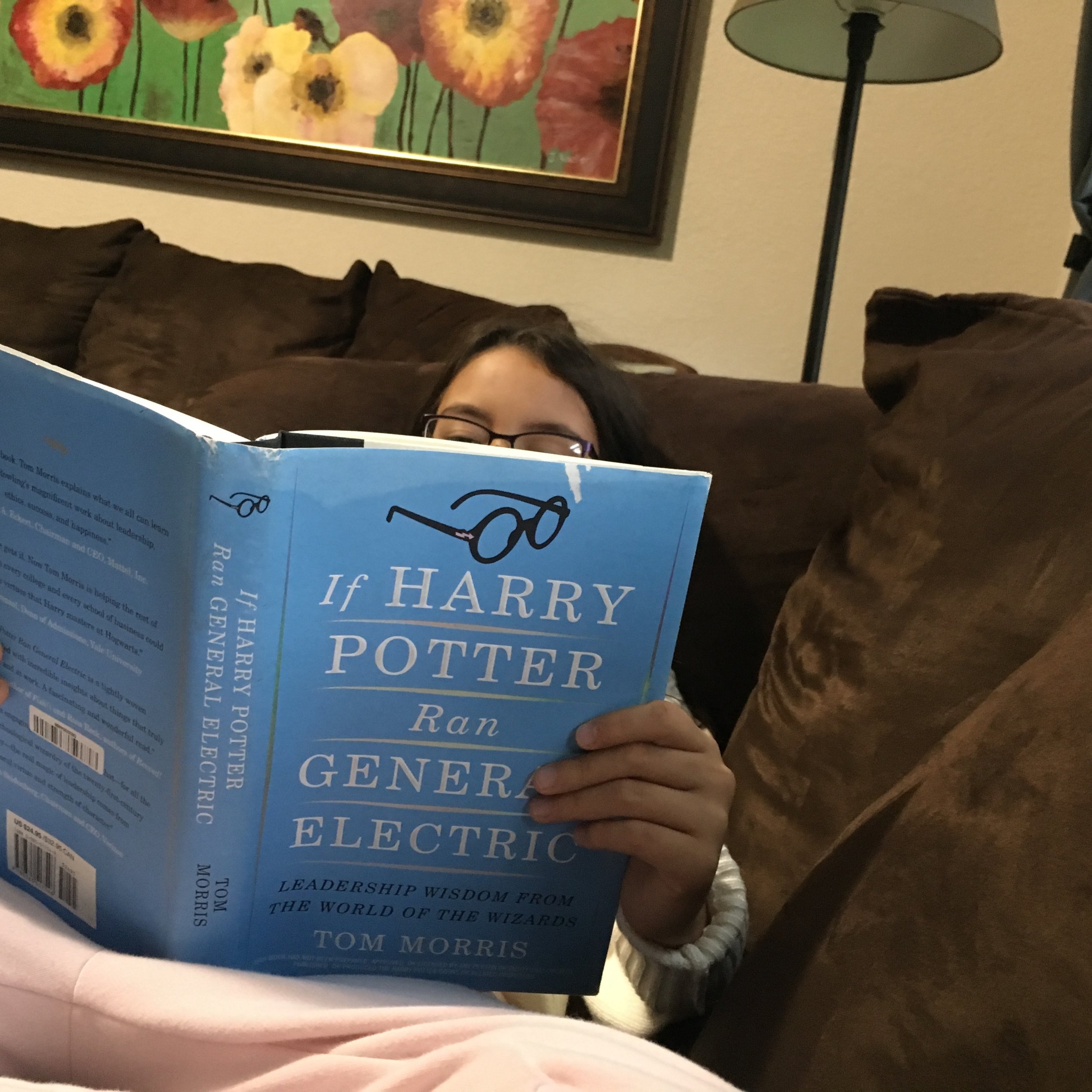
My Favorite Recent Photo: A young lady named Jubilee gets off to a head start in life by diving into some philosophy!

My Favorite Recent Photo: A young lady named Jubilee gets off to a head start in life by diving into some philosophy!

Great new Elizabeth Gilbert book on creative living and the creative experience.

Great new Elizabeth Gilbert book on creative living and the creative experience.

Two minutes on a perspective that can change a business or a life.

So many people have asked to see one of my old Winnie the Pooh TV commercials and I just found one! Here it is:

Long ago and far away, on a Hollywood sound stage, I appeared in two network ads for the wise Pooh, to promote his adventures on Disney Home Videos. For two years, I was The National Spokesman for that most philosophical bear. This is one of the ads. I had a bad case of the flu but I hope you can't tell. A-Choo!

One of my newest talk topics is "Plato's Lemonade Stand: Stirring Change into Something Great." Based on the old adage, "When life hands you lemons, make lemonade," this talk is about how to do exactly that. Inquire for my availability through the c…

One of my newest talk topics is "Plato's Lemonade Stand: Stirring Change into Something Great." Based on the old adage, "When life hands you lemons, make lemonade," this talk is about how to do exactly that. Inquire for my availability through the contact page above! Let's stir something up!

Above is a short video on finding fulfillment in anything you do, that was taped a few years ago. I hope you enjoy it!