Follow @TomVMorris
Retreats
Keynote Talks and Advising
About Tom
Popular Talk Topics
Client Testimonials
Books
Novels
Blog
Contact
ScrapBook
Short Videos
The 7 Cs of Success
The Four Foundations
Plato's Lemonade Stand
The Gift of Uncertainty
The Power of Partnership

Tom Morris

Great Ideas. With Power. And Fun.
Retreats
Keynote Talks and Advising
About Tom
Popular Talk Topics
Client Testimonials
Books
Novels
Blog
Contact
ScrapBook
Short Videos
The 7 Cs of Success
The Four Foundations
Plato's Lemonade Stand
The Gift of Uncertainty
The Power of Partnership
CowChicken.jpg

Cows, Chickens, and Taters

Did your parents, or any other significant adult during your growing-up years, have any favorite sayings that have stayed with you over time? Adam Grant recently interviewed CEO Susan Salka, of AMN Healthcare and asked a question like this. Let me share the brief exchange.

Any favorite expressions that your parents would repeat often around the dinner table?

My dad has 10,000 expressions. When he would say these things as I was growing up, I would roll my eyes every time, but I find myself using many of those same expressions today. One of them has to do with keeping things simple and making people feel comfortable around you. If somebody was talking over his head, using big words, being too complex, or trying to act too sophisticated, he would say, “Would you break that down to cows, chickens and taters?”

I used to think it was silly — what do cows, chickens and taters have to do with each other? But years later, I realized that the message is, keep it simple. Don’t overcomplicate things. As a leader, that’s something that I’ve really learned over time. The strategy and the business can be complex, but you have to explain them in a way that’s really easy to understand.

Cows, chickens, and taters. I like that. Even though I've never lived on a farm, that resonates with me. As a philosopher, I often know way too much about a subject, and I have to remind myself in many contexts to boil it down to its essence.

Simple focuses. Simple invites. Simple motivates. Complicated gets in the way. It's never necessary, until it is. But not until then.

So, whenever you're called on to describe what you do, or what your strategy might be, remember: Cows, chickens, and taters.

PostedMarch 4, 2015
AuthorTom Morris
CategoriesAdvice, Business, Life, Wisdom
TagsSimplicity, Complexity, Leadership, Business, Tom Morris, TomVMorris, Adam Grant, Susan Salka, AMN Healthcare, Wisdom, Philosophy
Post a comment
Confidence.jpg

Confidence and Courage

Confidence and courage are closely related. We often need them both in challenging circumstances. But how exactly do they relate to each other? It occurred to me today that I should reflect for a moment on what's similar and what's different between these two important qualities. 

I've claimed for years that confidence is one of the seven most universal conditions for success in any difficult undertaking. But why not courage? Don't we need it as well? Why would one of these qualities, and not the other, be universally applicable to success in challenging endeavors?

First, some careful clarification. 

Both confidence and courage are dispositions to think and act in certain ways rather than others. Neither of these qualities in you will let your circumstances dictate what you think or what you do. Courage and confidence both seek to rise above circumstances and shape reality, not just reflect it.

Confidence isn't mainly about believing that certain things will certainly or likely happen. It doesn't require making precise predictions concerning the future and feeling sure of them. It's more about believing in yourself, or your team, than it is about believing that one or another thing is sure to happen.

Courage is more about valuing and treasuring, than it is about predicting or believing, although it can involve all these things.

Confidence is a positive orientation toward doing what you judge to be right that's undeterred by obstacles. It carries a personal expectation that your action will lead you in some way closer to your goals.

Courage is a positive orientation toward doing what you judge to be right that's undeterred by danger. It carries with it a positive commitment that your action is right, regardless of its ultimate results.

Ignorance isn't confidence. Ignorance isn't courage. Neither positive quality can be produced by brainwashing indoctrinations, or supported by mind altering drugs. Each of these qualities is best nurtured in a soil of knowledge and wisdom.

Confidence helps you do what you feel you want to do. It's about marshaling your resources.

Courage helps you do what you feel you ought to do. It's about defeating your fears.

A person acting courageously doesn't necessarily expect success in securing a desired outcome. A person acting confidently does to some extent expect success in securing a desired outcome.

Confidence is a universal condition for success in any challenging endeavor, because challenges always involve obstacles and difficulties. Courage is always helpful, but not always literally necessary, since many challenging situations don't literally involve dangers of harm. But a generally courageous person ordinarily has an easier time of being confident in the face of difficulty.

The deeper of the two qualities may be courage. But the most pervasively useful is probably confidence. When you think about them enough, you come to realize that, different as they are, these two qualities very often go together and be mutually supporting.


PostedMarch 1, 2015
AuthorTom Morris
CategoriesAdvice, Life, Business, Wisdom
TagsConfidence, Courage, Bravery, Fortitude, Danger, Obstacles, Success, Tom Morris, TomVMorris, Philosophy, Wisdom
Post a comment
Worry.jpg

Worry

It makes no sense to worry about what we can't control. But then it also makes no sense to worry about what we can control. So, therefore, as a philosopher would say, worry makes no sense.

I've never seen worry improve a situation. I've just seen it stress people out and drag them down.

You may think that it's your job to worry. I respectfully suggest you're wrong. Your job, whatever it is, certainly requires attention, awareness, and care, and perhaps even meticulous concern. It no doubt calls for diligence and foresight, checking, and double checking. It certainly benefits from backup plans and thoroughgoing prudence.

But worry, however natural, is never required. Never. At best, it's a redundant use of energy that would be better put to work in positive ways. More typically, it's a negative void that sucks energy away - energy that you could indeed put to a much more creative use.

So, if you worry, don't worry. Just don't worry.


PostedFebruary 27, 2015
AuthorTom Morris
CategoriesAdvice, Attitude, Business, Life
TagsWorry, Anxiety, Care, Work, Wisdom, Tom Morris, TomVMorris
Post a comment
Cheerleaders.jpg

Encouragement

We need to encourage each other more. Life is often hard. Our work can sometime seems like a long march up hill. We need support. We need a little cheerleading. A kind word. A moment of praise. A big smile. We need the spiritual fuel of encouragement. We all need to feel like people around us believe in us and are cheering us on. But most of all, we need to do that for others.

Are you an encourager? That's one of the noblest roles in life. By encouraging others along their proper paths, we contribute to the best in the world. In modern life, we easily become so fixated on our own challenges, opportunities, and successes. But a great part of my success in life can be my aid to others in helping them along to success. And the same is true for you.

Let's all work on the habit of encouragement. No doubt, the world needs critics. But it needs encouragers even more.

And if you've read all the way to this point, I'm encouraged.

PostedFebruary 19, 2015
AuthorTom Morris
CategoriesAdvice, Attitude, Business, Leadership, Life
TagsEncouragement, cheerleading, support, helping others, philosophy, Tom Morris, TomVMorris
Post a comment
american-sniper_612x380_1.jpg

The American Sniper and You

A few days ago, I was flying to California for a talk in Napa Valley. I had a philosophy book with me to read along the way, but I wasn't really in the mood for analyzing and critiquing a complex argument. So I went into an airport bookstore in Charlotte, where I was changing planes. I had about 4 minutes to spare, so quickly scanned the nearest book table and saw American Sniper, the book on which the new movie is based.

I'm sure you know the story. Texas boy Chris Kyle worked hard and became a Navy SEAL, and ultimately the most prolific sniper in history. He was a legend. The book is his autobiography, with an emphasis on SEAL training, and his deployments into hot spots in the Middle East. It's a well written book, an absorbing tale, and a quick read, despite its nearly 500 pages.

The most surprising thing about the book is how much Kyle seemed to love his job, and, more generally, war. A sniper? Loving his job? But his job was killing people, right? Well, in his mind, his job was protecting his friends, and keeping the bad guys from killing the good guys. He came to see his adversaries as, for the most part, brutal, drugged up "savages" who seemed to have no shred of morality, civilization, or love for their fellow man. Their hearts had been so darkened by ignorance, ideology and violence that they could be stopped from their lust for killing in only one way. It was his job to see that this way was pursued vigorously and effectively.

I've written here before on what I've discovered about success in the works of the great practical philosophers throughout history and the fact that I've distilled their advice down to seven universal conditions. You may remember them. For true success in any challenging endeavor, we need (1) a clear CONCEPTION of what we want, (2) a strong CONFIDENCE that we can attain the goal we've set, (3) a focused CONCENTRATION on what it will take to get there, (4) a stubborn CONSISTENCY in pursuing our vision, (5) an emotional COMMITMENT to the importance of what we're doing, (6) a good CHARACTER to guide us and keep us on a proper course, and (7) a CAPACITY TO ENJOY the process along the way.

As you read American Sniper, it becomes clear that Chris Kyle lived each of these seven universal conditions, or what I call The 7 Cs of Success. The surprise to me was his wholehearted embrace of number seven, a CAPACITY TO ENJOY THE PROCESS. Initially, you say to yourself, "Who in the world could ever enjoy being a sniper? Aren't there just some jobs that can't possibly be enjoyed?" But then you read and ponder what Kyle says about his love for action, and battle, and doing his job well, and you begin to understand more deeply why he was the best at it who ever lived.

Now, if you're a pacifist, you may be insisting right now that no sniper could possibly satisfy the CHARACTER condition of The 7 Cs. But I'd take you back to Aristotle, who held that character involves such things as honesty and courage and a sense of humor amid difficulty. Chris displayed all such things. And you could continue through Aristotle's classic list of virtues and you'd still be able to tick off the boxes in this guy's life.

So if you are trying to live wisely and be successful and think that your job is so hard, or unpleasant, on some days, that you can't possibly satisfy the seventh condition of success, read this book and rethink it all. Like Marcus Aurelius once said, "Your life is what your thoughts make it." 

Excellence is hard. And it's tough to make it happen without commitment, character, and a capacity to enjoy the process, along with all the other conditions.

PostedFebruary 17, 2015
AuthorTom Morris
CategoriesAdvice, Life, Business, Wisdom
TagsAmerican Sniper, Chris Kyle, War, Success, Difficulty, Enjoyment, Love, Philosophy, Wisdom, Tom Morris, TomVMorris
Post a comment
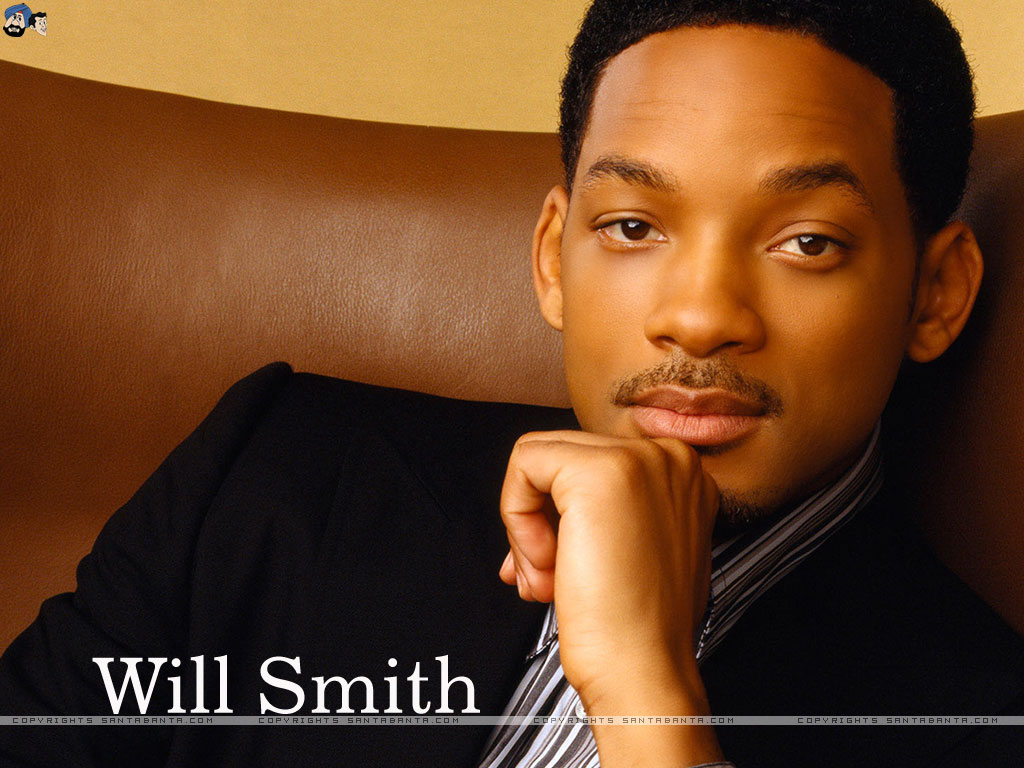
WillSmithB.jpg

The Man in Black on Joy

I want to add something to what I wrote earlier this morning. First, again, one more quote from actor Will Smith:

The maximum joy that I have is when I can create something that makes someone else's life lighter, or brighter, or better.

To that, I can only say a loud, hearty, AMEN. 

I posted this earlier today, ending with the amen. I think I want to add a bit more. What Will Smith is talking about is creative love, or loving creativity, which I presented as the meaning of life in a chapter on Business and Meaning in the book If Aristotle Ran General Motors, back in 1997. You would not believe how many people have written me over the years about that chapter, saying that it's the most important chapter in any book on business they've ever read. Some say it's the most important chapter, period. And that knocks me out, and gives me a sense of great satisfaction. Because in that chapter, I was seeking to gather together what I considered all the world's best wisdom on meaning and dig deep to the root and then distill it all down to something that would be both simple and powerful. And that became:

Creative love. Loving Creativity.

That's why we're here. That's what everything we do should embody. And that's where joy comes from. It's all connected. If you want to ruminate on this more, If Aristotle is widely available in paperback, and the first edition hardcover is still floating around used, and there's an ebook available at Zolabooks.com.


PostedFebruary 16, 2015
AuthorTom Morris
CategoriesAdvice, Business, Life, Wisdom
TagsWill Smith, Joy, Service, Helping Others, Tom Morris, TomVMorris, Wisdom, Philosophy, Life
Post a comment
WillSmith.jpg

Will Smith, on Success and Love.

We've all seen him in the movies. We've heard his music. Some of us first discovered him on television. But now, as the new interview with Scott Raab in the current issue of Esquire makes clear, Will Smith has become a philosopher.

Reflecting on his career, he describes something that many of us have felt.

I always thought there was some place I was going, that there was some success or some achievement or some box-office number that was going to fill the hole. And what I realize is that life is a hole. It's a process of continually trying to find and reinvent myself. I'm the type of person who is always going to be somewhat dissatisfied with myself. I'm never going to be smart enough. I'm never going to be a good enough father. I'm never going to be a good enough husband. I'm never going to be a good enough actor for myself. I just never will be, and I have to get comfortable with waking up every day and trying to move some little increment closer to the person I have always dreamed of being.

Lesson Number One: Even being a huge star and celebrity, with great wealth and social power won't complete us. Yeah, we knew that. But we have to be reminded, now and then, to keep us from fruitlessly chasing our own versions of this, in our own efforts to "fill the hole."

Later on, he talks about a movie that failed at the box office and what he felt when he got the very bad numbers. 

And that Monday started the new phase of my life, a new concept: Only love is going to fill that hole. You can't win enough, you can't have enough money, you can't succeed enough. There is not enough. The only thing that will ever satiate that existential thirst is love. And I just remember that day I made the shift from wanting to be a winner to wanting to have the most powerful, deep, and beautiful relationships I could possibly have.

Lesson Number Two: If we define success in isolation from love and relationships, we'll never be satisfied or happy. We need to start at the core of who we are as human beings. And that core is supposed to be all about love. When we use that as our foundation, we can build a life that matters and a success that's not only real, but that feels deep and true and fulfilling.

A friend of mine named Matt Ham has just written a book all about that. It's called Redefine Rich, and is well worth a read. It offers a diagnosis and a reminder that we all need.

Love first. All else, second.


PostedFebruary 14, 2015
AuthorTom Morris
CategoriesAdvice, Life, Business, Wisdom
TagsWill Smith, Esquire, Scott Raab, Success, Love, Fulfillment, Satisfaction, Money, Power, Fame, Celebrity, Tom Morris, TomVMorris, Matt Ham, Redefine Rich
Post a comment
CoffeeIdeas.jpg

Philosophical Tools

What is a tool? At the simplest level, it's some sort of object or item that helps us to extend our natural powers and accomplish something that we otherwise could not do, or at least could not achieve with the same ease, or speed, or safety that the tool, well used, can provide. A hammer. A screwdriver. A saw. A knife. A wrench. These are, of course, obvious examples. Other suggestions could be: A laptop. A smart phone. A bicycle. A car. A business. An organization of any sort. But there are other tools that are, perhaps, the most important of all for getting things done.

I'm apparently a rare type of philosopher, at least, these days. My job is to discover and create intellectual tools that people can use to improve their businesses and their lives. My specialty is that I'm a provider of philosophical tools for excellence. When you're working on a project around the house, you need the right tools to get the job done well. The same is true more generally of work and your personal life. You need the right tools for whatever job you face. A philosophical tool is just an idea or set of ideas that will help you to think, feel, and act in more productive and healthy ways, in whatever you're doing. 

When I speak on success, I provide a toolkit drawn from the great practical philosophers of the past, a framework of ideas that I call "The 7 Cs of Success." When I talk about great teamwork, strong organizations, and customer loyalty, I bring people an additional toolkit that I call "The Four Foundations of Excellence." If I'm asked to help a company, or the members of an industry association, deal with difficult change, I bring them another toolkit - "The 3 Arts of Change." In every case, I'm putting into people's hands, or minds, tools that they can use to extend their natural powers and accomplish something they might not otherwise be able to do, or at least could not achieve with the same ease, or speed, or safety. And that's what makes my work so satisfying. I'm in the business of helping people to obtain and use the tools of excellence.

What philosophical tools do you use at work and in life? They should be well designed, finely calibrated, and durable. I hope you have some good ones that you use on a regular basis. If not, keep reading these blogs. I'll be describing great new tools, and some useful ancient ones, now and then.

If you're in a leadership position, consider this: What tools are your team members, or the people in your company, overall, using? Are they of high quality? Does everyone have the same access to the toolbox? Those factors are vital for maximal results.

For more on the tools I have mentioned, consult the Talks page on www.TomVMorris.com, or the Books page, where you can click to gain access to any of these ideas you haven't already come across. And check back. I'm always on the hunt for a new tool that will work for me, and for you!

PostedFebruary 12, 2015
AuthorTom Morris
CategoriesBusiness, Life, Philosophy, Performance
TagsIdeas, Tools, Philosophy, Wisdom, Insight, Tom Morris, TomVMorris
Post a comment
Kindness.jpg

The Power of Kindness

In a world of bristling egos, kindness can sometimes seem as quaint as it is rare. We're in a hurry, and have to get things done. We confront obstacles, irritants, and demands. There's little time to pause and recognize a need and then go to the trouble of treating someone else kindly. As I've heard it asked, recently: "Who's got the bandwidth for that?"

We all do. And we ignore kindness to our own detriment. Whether you believe it's a quality that reflects our Creator, or you think it's a strange and wonderful anomaly in a universe of particles and energies, if you look deeply enough, you can see that it's a nearly magical elixir for great relationships and inner peace.

Do you want to get a lot done? Do you even aspire to the excellent, the exceptional, the extraordinary? Surround yourself with great people. And treat them with justice, fairness, and kindness. Truly great people will do the same thing, themselves. And your work together will flourish.

Kindness is the extra, supererogatory "beyond" - an overflow of goodness that takes place beyond the demands of duty, and occurs only as a manifestation of love. It plants the seeds of great relationships and then nurtures them into a full flowering. It resonates in the heart.

When you contrast the soul of an irate or callous individual with that of a person filled with kindness, you find a clash and disparity no greater than which can be conceived.

And here's a secret. Kindness toward others is, perhaps, the greatest form of kindness toward yourself. When peace is given, it grows within. When love is given, it grows within. The small kindnesses of life obey a mathematics not imagined by the unjust and surly among us. Their consequences multiply beyond any reasonable expectation. Those often quiet actions make for great business teams, sports organizations, schools, neighborhoods, and families. They are a hidden source of excellence in all our endeavors.

Kindness has power. And as one of Shakespeare's characters says about mercy, it's always twice blessed - it blesses him that gives and him that takes. And the great surprise is this. The more you give, the more then is given for you to take. That's the power of kindness.

KindnessNinja.jpg


PostedFebruary 9, 2015
AuthorTom Morris
CategoriesAdvice, Business, Life, Wisdom
TagsKindness, Mercy, Justice, Goodness, Greatness, Tom Morris, TomVMorris, Philosophy, Wisdom
Post a comment
Crash.jpg

Worst Case Scenario Thinking

Worst case scenario thinking is healthy, worst case scenario believing is not. And there's an important difference. Prudence in life requires that we understand the ways in which things could go wrong, and have some idea as to what we would do if they did. That's worst case scenario thinking. We imagine various negative scenarios enough to prepare for them, but no more than that. Too much imagination can actually become anticipation, and that easily can turn into belief.

When I was a teenager, my father used to tell me stories about effective worst case scenario thinking. A dump truck driver had imagined what would happen if the bed of the truck was in the up position and there was a catastrophic failure causing it to fall onto the cab. He had visualized jumping into the floorboard to keep from being crushed. And then one day it happened. And he was unhurt, because he instantly had done exactly what he had imagined.

At its best, worst case scenario thinking is a form of "what if" planning. It prepares us for remote possibilities, and thereby helps us to avoid the most damaging consequences that could otherwise ensue. As such, it's actually a way of building confidence and assurance, rather than anxiety. But at its worst, the same sort of thinking can become both believing and fearing. Out of control, it unhinges us and impedes our performance. It's up to use to use it in the best way, and avoid the worst case scenario with it.

PostedFebruary 5, 2015
AuthorTom Morris
CategoriesAdvice, Business, Life, Wisdom
TagsNegatives, Danger, Damage, Possibility, Worst case scenario thinking, anticipation, Prudence, Rational planning, Tom Morris, TomVMorris, Philosophy, Wisdom, Anticipation, Anxiety
Post a comment
Spices.jpg

Adversity. The Spice of Life.

Adversity. It's the spice of life.

That's a quote from the amazing film Haute Cuisine, as spoken by an elderly president of France, to his cook, at least as I remember it. If you haven't seen this little cinematic masterpiece of excellence, it's on Netflix streaming. It's a inspiring portrait of someone who really cares about what she's doing, and works as an artist. The observation about life from which we begin today was spoken to her as comforting advice when she confessed to having big troubles with government officials who suddenly stepped in, interfered with her work and insisted on cost savings, low calories, and no rich sauces for her boss.

Adversity. The Spice of Life. What does spice do? Well, it imparts flavor, interest, and sometimes even a gustatory version of drama. How gripping would life be without trouble, difficulty, and seemingly impossible obstacles? How many great tales could have the form "I tried a new path, and everything went just fine"? What would film, literature, or life be without conflict and challenge?

A life without adversity. It might be nice, for even a very long time, but it couldn't be heroic or adventurous or exciting. It would end up as a big yawn. Trouble challenges us. It forces us to be creative, persistent, and brave. It strengthens us. The worst pain I've ever experienced was at the same time an existential jolt of enlightenment that built my overall life confidence like nothing else ever had.

You win when you can smile at adversity, and even on occasion laugh in its face. You prevail when you can use it for your own growth, wisdom, and accomplishments. It's all about the right attitude and the right action. That's the standard philosophical formula. 

Take on the right attitude. Take the right action. The spice makes all the difference.

In proper measure, a dash of adversity may indeed be the energizing spice that enhances all the flavors of life. Bon Appetite!

PostedFebruary 2, 2015
AuthorTom Morris
CategoriesLife, Advice, Attitude, Business
TagsAdversity, Trouble, Difficulty, Growth, Accomplishment, Attitude
Post a comment
Transformation.jpg

Transformation

One of the most enduring themes in world literature is transformation. The great commonality among the otherwise very different religions across the globe is the possibility of transformation. And in business, there's nothing more important than the promise of this very thing.

Transformation is all about where we are now, where we ideally need to be, and how best to get from this present to that future.

In the world of work, transformation is about turning potentiality into actuality, a need into a business, raw materials into products, people into performers, potential customers into loyal fans and investments into profits.

In life, our weaknesses can be transformed into strengths, our limitations can be morphed into the outlines of our distinctive excellence, and our mistakes can be redeemed into new wisdom.

The nearly magical spark of all positive transformations is a vision that can turn regular men and women into heroes, despite all the challenges and setbacks they might face. The right vision creates the right energy in the right people to produce the right results.

The greatest wonder in our world is the ongoing possibility for transformation that it allows.

When we understand deeply where we are, envision clearly where we could be, and create boldly a path forward that will spark the best in those around us, as well as in our own hearts, we provide the leadership necessary for great transformations.

PostedJanuary 28, 2015
AuthorTom Morris
CategoriesLeadership, Advice, Business, Philosophy, Performance
TagsTransformation, Turnarounds, Business, Success, Work, Leadership, Tom Morris, TomVMorris, Philosophy
Post a comment

Running the Race Well

I just came across an old image. Life is like a relay race. So is your work. Someone has passed a baton to you. And you're now running with it. At some point, you'll pass it on to someone else. As you run, you should reflect on at least these considerations:

1. The person who gave you the baton - Who was it? What do you owe him or her, as a result of the gift of that baton? What responsibility has been passed on to you with it?

2. The person you'll eventually give the baton - Who will it be? Do you know? Do you care? Are you selecting a proper recipient, even now? What do you owe that person? What responsibility do you have to him or her? What duty, or possibility, or momentum, will you pass on?

3. On a deeper level, is this the right race for you? When you pass off the baton, should you then find a different race, or a different track?

To run the race of your life or work well is to take care of these things. And, while you hold the baton, you move forward as well as you can, and you uphold the process at its best.

That's running the race well.

PostedJanuary 27, 2015
AuthorTom Morris
CategoriesLife, Business, Wisdom, Performance
TagsLife, Work, Race, Obligation, Duty, Responsibility
Post a comment
fremont-street.jpg

The Wow Factor, Vegas-Style

Las Vegas is the World Capital of Attention Grabbing Overstimulation. In such a ramped up mega cacophony of sights and sounds, it's hard for anything or anyone to stand out for more than twenty seconds. That's why I was so surprised, on Fremont Street, in downtown Vegas the other night, to see an outdoor bartender quietly but flamboyantly wowing thirsty partiers who had been wandering up and down the avenue. He was an individual who truly stood out. And that's not easy, in his context. Every ten feet, there's a superhero, a breakdancer, a contortionist, a magician, musician, or a barely garbed man or woman, sometimes in a minimalistic historical costume, soliciting your attention and financial compliments. Have your picture taken with a Chippendales Dancer. Eat a Chili Dog with Darth Vader or Mr. T. How can anyone compete?

The treat of the evening was watching this one silent bar man skillfully juggling bottles and putting on a real show with each drink order, whether he got the applause and thanks he deserved or not. His skill, focus, and untiring commitment to make each customer feel special formed together a cluster of qualities that were a rare delight to see.

The noise level on Fremont can be mind-numbing. The light show projected onto the high canopy ninety feet above the street, playing off the apparently millions of neon signs also blinking from all sides, can be the ultimate distraction from any human performer. But this one guy just continued to do his thing, undaunted by the massive competition for attention that swirled all around him. Most mere mortals serving the whole range of humanity under the endless sonic assault of high decibel chaos from all directions would just hunker down, do the job, and try to get through the shift. Not this guy. You almost forgot the noise and the wild freak show flowing all around you, as he plied his craft and smoothly performed for each customer. Watching him reminded me of something important.

It's not our circumstances or our competition that determines our level of excellence or success; it's our inner commitment to what we do, and to the people we serve. 

We should never let challenges shut us down, but raise us up to peak performance. In the end, it's up to us. For a look at our man in Vegas, play the few seconds below.


PostedJanuary 24, 2015
AuthorTom Morris
CategoriesAdvice, Attitude, Business, Life
TagsCustomer service, customer love, customer delight, service, business, chaos, competition, Las Vegas, Vegas, Fremont Street, Tom Morris, TomVMorris, Philosophy, Wisdom, Challenges
Post a comment

Crazy Big Goals

This week, the world watched Tommy Caldwell and Kevin Jorgeson climb the Dawn Wall of El Capitain, in Yosemite National Park, over a stretch of 19 days. We all applauded in amazement as they struggled and succeeded at what's often described as the most challenging rock climb in the world. It was the first time the 3,000 foot sheer rock face had ever been taken on in a single expedition while using just hands and feet, rather than with the artificial means climbers have employed before. And there were many little failures that came before the crazy big outrageous success. I heard a television commentator put it well when he said about one of the guys: "He fell and fell and fell, until he didn't."

And that, in itself, is a great lesson.

Afterwards, Jorgeson said, "I hope it inspires people to find their own Dawn Wall, if you will. We've been working on this thing a long time, slowly and surely. I think everyone has their own secret Dawn Wall to complete one day, and maybe they can put this project in their own context."

As I read the details of their longtime dream, preparation, and execution of the climb, I saw the philosophers' 7 Cs of Success all through the story. Tommy and Kevin had:

C1 - A clear CONCEPTION of what they wanted, a vivid vision, a goal clearly imagined

C2 - A strong CONFIDENCE they could reach that goal

C3 - A focused CONCENTRATION on what it would take

C4 - A stubborn CONSISTENCY in pursuing their vision

C5 - An emotional COMMITMENT to what they were doing

C6 - A good CHARACTER to guide and keep them on course

C7 - A CAPACITY TO ENJOY the process along the way.

Whenever we see exceptional achievement in the world, we'll see the implementation and operation of these seven simple conditions that I've been speaking on for over 25 years. During that quarter of a century, I've seen many people get excited about The 7 Cs of Success but never apply them systematically in their lives, and others whose excitement translated into a relentless application of the conditions and a level of success that astonished everyone around them.

The philosophers can preach to us all day long, but it's what we learn by seeing people like Tommy and Kevin live their dream that really brings home to us how the right approach to anything can turn Crazy Big Goals into Crazy Big Success Stories.

Now. Go create your own.

Oh. And if you want to read more, go see the books True Success, or The Art of Achievement, or the big, comprehensive study of how the great thinkers have brought us these ideas and suggested that we use them, the new ebook, The 7 Cs of Success.

PostedJanuary 16, 2015
AuthorTom Morris
CategoriesAdvice, Business, Leadership, Life
TagsGoals, Big Goals, Accomplishment, Achievement, Success, Failure, Tommy Caldwell, Kevin Jorgeson, El Capitain, The Dawn Wall, Tom Morris, TomVMorris, Philosophy, The 7 Cs of Success
Post a comment
CharlieRally.jpg

Insult, Offense, and Rage

Contrary to apparently widespread opinion, it’s not possible to insult, offend, demean, or disparage a great leader, prophet, religion, nation, or individual. It’s easy, of course, to insult and enrage lesser people. Many seem prepared to take umbrage at nearly anything. But true greatness is in this distinct way completely untouchable. The target is too far from its detractors. Any arrow of invective or caricature will fall short.
 
Public events of recent days and decades can seem to indicate the opposite. A movie is announced to be an offense and an insult to a revered leader, or to an entire swath of the human population. A cartoon, a video, or a passage in a book can be said to have committed a grievous injury that must be avenged “by all means necessary.”
 
The problem is that all this rage and reaction is based on a faulty understanding of the very notions of insult and offense that are being used to explain and justify the responses of anger, threat, and violence that seem so enormously out of proportion to whatever incited the response.
 
You just can’t claim with logical consistency both that your leader, or nation, or cause is great, and that he, she, or it has been insulted, offended, or demeaned by any words or works of art. It’s literally impossible to successfully insult, offend, demean, or disparage real greatness.
 
There’s an old proverb: The lordly lion ignores the yapping of small dogs. This is an image of a philosophical insight. Greatness has, within itself, its own intrinsic honor and worthiness of respect. When it’s not shown that respect, a wrong is done, not to the great person, nation, movement or religion being attacked, but both by and to and in the one communicating the disrespect. With anything other than greatness, however, things are quite different. But true greatness has an essential immunity to such diminishment.
 
Socrates believed that others could harm us only physically. We alone are capable of hurting and demeaning ourselves spiritually. He was also convinced that the worst efforts of lesser men could never do genuine harm to the souls of greater men, however they might contrive to inflict that damage.
 
Of course, there’s often a dynamic of insult, offense, and rage within businesses and industries, as well as within cultures. And far too much energy is wasted on these things. Any who react with anger and even rage to such perceived wounds need to engage in the age-old enterprise of self-examination. Are they defending their honor, or their great mentor’s honor? True honor needs no such defense. It’s fine, as it is. Once they understand this, then, perhaps, they'll be able to discover what's really going on in their own hearts and minds, and make some changes that can result in something philosophically and emotionally healthier.


PostedJanuary 15, 2015
AuthorTom Morris
CategoriesAdvice, Life, Business, Wisdom
TagsInsult, Offense, Rage, Anger, Violence, Honor, Character, Greatness, Charlie, Tom Morris, TomVMorris, Wisdom
Post a comment
Disengaged.jpg

Half-Hearted Half-Lives

How intensely do you live? How fully embodied are you, throughout your day? Are you doing your thing All-In, or just semi-engaged?

Here's a challenging claim from Walter Kerr, in his book, The Decline of Pleasure:

"We are vaguely wretched because we are leading half-lives, half-heartedly, and with only one-half of our minds actively engaged in making contact with the universe about us."

Is that true of most people? Is it ever true of you, even half the time?

Just reading Kerr, I'm already vowing to make sure that, throughout this day, I'm playing life as a full contact sport, totally immersed, and committed to the full, with all my heart and mind.

How about you?

PostedJanuary 14, 2015
AuthorTom Morris
CategoriesAdvice, Business, Life, Wisdom, Performance
TagsEngagement, Commitment, life, work, enthusiasm, Tom Morris, TomVMorris, Philosophy, Wisdom, Walter Kerr, The Decline of Pleasure
Post a comment
GoldenTriad.jpg

The Golden Triad for Intellectual Contribution

Three things are needed, if you want to make an intellectual contribution in any field. That may sound daunting, and like an aspiration for the few, but it's really not.

In anything we do, new ideas can be useful. In fact, the right new idea can create a breakthrough. If your job involves working with your mind as well as with your feet or hands, or any other body part, making a real intellectual contribution to the enterprise you're engaged in will help any others who work with you, and, as a side effect, will help you to shine. 

In my first life as a philosopher, in a university setting, my areas of expertise were the philosophy of religion and philosophical theology. In all my work, three things mattered greatly to me. I like to think of them together as The Golden Triad for Intellectual Contribution in any field. They are:

Precision

Innovation

Simplicity

It's hard to make a real contribution in any domain of life or work unless you understand well what's already going on. You've got to know your stuff, and not just vaguely, or generally, but with precision. Sloppy thinking abounds, and it's up to you and me to do something about it. Precision is every bit as important as it is rare, and there's no better place to start in solving any problem, or assessing any opportunity, than grasping it precisely.

The Crowd tends to learn what's done, so they can go and do likewise. The Few master what's done so they can go and do better. But that means innovation.

I think that creativity is tied up at the core of the meaning of life. I have a whole chapter on that idea ("Business and the Meaning of Life") in my 1997 book, If Aristotle Ran General Motors: The New Soul of Business. We're not here to be just replicators and copyists in every way. We exist to be creators. When you understand your field, or a problem you face, with precision, that positions you to be innovative as well. And you should never settle for anything less. Innovation is what sets people and businesses apart.

But a lot of people who understand the need for precision and innovation go on to complicate things needlessly. That's a common problem for, especially, anyone who is new to a field. It's even found among old hands who have never risen to the level of top mastery in what they do. They think that to be precise, they have to be complicated. And when they're innovative, their creative solutions can sometimes be convoluted and complex beyond belief.

Simplicity is not only a sign of mastery, it's a powerful tool, and, as science has come to understand, a mark of deep truth.

Some people purchase simplicity at the sacrifice of precision, or innovation. That's extremely common in the area of practical philosophy I work in now, seeking for new insight on life and work, and on such issues as success. There are a lot of writers and speakers completely sacrificing any real precision of thought in order to be catchy, clever and memorable. Other people pursue innovation or precision at the cost of simplicity. Even in my most complex contributions to academic philosophy, I always sought for a beauty of simplicity in the ideas and their expression.

With these three qualities, or ideals, you can make an intellectual contribution to anything you're doing that will be helpful and memorable. Indeed, why settle for less?

PostedJanuary 11, 2015
AuthorTom Morris
CategoriesAdvice, Business, Leadership, Life
TagsPrecision, Innovation, Simplicity, The Mind, Creativity, Tom Morris, TomVMorris, Philosophy
Post a comment
ArcherTarget.jpg

Self Knowledge and Goal Setting

I was giving a presentation recently on success, and we were talking about the importance of basing our goal setting in self knowledge. I explained that one philosopher had parsed self knowledge in an interesting way. He said, "Know your strengths. Know your weaknesses. Know your opportunities." And that's interesting, isn't it? Strengths and weaknesses are inner things. Opportunities are outer things. So how can knowing them, as external circumstances, be a part of self knowledge?

A situation that creates a great opportunity for one person will not provide the exact same thing for a different individual. Knowing what external situations are opportunities for you is a matter of self knowledge. But, how so?

Maybe we need to dig a little deeper. Maybe the imperative "Know Yourself" has a few more elements:

Know your strengths. Know your weaknesses. Know your limits.

Know your passions. Know your ideals.

Weaknesses are certainly limits, at least for now. But not all limits are weaknesses. Some limits are a result of our prior choices and commitments, and some are actually among our strengths. A robust and proper structure of commitments is a great thing to have. It empowers and it limits. And such limits will be very relevant to the goals we decide to set or adopt.

Knowing your passions is equally important. Some are strengths. Others are weaknesses. Some may be neither, in themselves, but developed can go either way. Passion is a source of drive and motivation. Setting goals outside of any concern for our passions is never a recipe for greatness.

And perhaps most important of all is knowing our ideals. We all have fantasies, desires, or passions that would not be right to pursue in a certain way or at a certain time. Our ideals are those values that should guide us in choosing. And they will help to determine what external situations do indeed provide opportunities for new goals and new successes.

All goal setting should be an ongoing exercise in self knowledge. And all these factors matter.

PostedJanuary 8, 2015
AuthorTom Morris
CategoriesAdvice, Business, Life, Wisdom, Philosophy
TagsSelf Knowledge, Know Thyself, Know Yourself, Strengths, Weaknesses, Limits, Opportunities, Passions, Ideals, Tom Morris, TomVMorris, Philosophy
Post a comment
Values.jpg

Values and Goals

This week, I'm reflecting a bit on goals, and I'll try to say some new things. Typically, we select new goals as a result of our desires and our values. Most of us have more desires than we ought to pursue. Our values help select which should be transformed into goals.

A goal is a guide to action. A value is a guide to action. So, then, what's the difference?

I've written that a goal is a commitment of the will. But then so is a value. A value is a commitment of the will. So, then, what's the difference?

On the simplest level, a goal is a specific commitment and a value is a general one.

But we can say more. A goal is a specific commitment to bring something about - to create or contribute to a certain result in the realm of fact. A value is a general commitment to honor, respect, protect, embody, or enact a quality or concern.

Some people confuse goals and values. They say, "Our goal this year is outstanding customer service." But that's too vague to be a goal. It isn't specific enough as to what fact will be created and how it will be measured or recognized. Outstanding Customer Service isn't a good or proper goal. But it's a great value. It's a fantastic general commitment that can suggest specific goals that are easily measurable and recognizable.

Values generate goals. But here's the equally important news. Values generate other values. For any value that suggests a new goal, there are often other values that lie behind it. And it's just as important to have the right values behind your choices and actions as it is to have the right goals.

Let me explain. If your commitment in the new year is outstanding customer service, if that's a driving value for you, then you should ask yourself why. Why do I value outstanding customer service?

Maybe, on reflection, you will come to realize that you want to be well known, or even famous for pleasing your customers. You want the praise and the reputation that will result. You also may value the financial benefits that often accrue to people who deliver great customer service. These are all common answers. And there's nothing wrong with wanting these things. People can properly value praise, reputation, and wealth. But they aren't the best ultimate values to drive the more immediate value of outstanding customer service.

Here's the contrast. There are other individuals who ask "Why?" about the value of outstanding customer service, and end up with the answer, "Because I really care about other people, and they always deserve the best I can give." That answer expresses the values of altruism and personal excellence. Those are the greatest drivers of more immediate values. Those are the answers that will help you to set, pursue, and stay consistent with the best and most worthy goals. Ironically, they'll also give you a better reputation, and often more wealth, than the guy just chasing reputation and wealth.

The commitments behind our commitments matter. They are where we get our ultimate strength. If you can get your inner house in order, at the deepest levels, you can fly the highest and do the best over the longest time frame. And that's the power of values.

PostedJanuary 7, 2015
AuthorTom Morris
CategoriesAdvice, Business, Attitude, Life, Wisdom
TagsGoals, Choices, Values, Good Values, Tom Morris, TomVMorris
Post a comment
Newer / Older

Some things that may be of interest. Click the images below for more!

First up: Tom’s new Silver Anniversary Edition of his hugely popular book on The 7 Cs of Success!

The New Breakthrough Guide to Stoicism for our time.

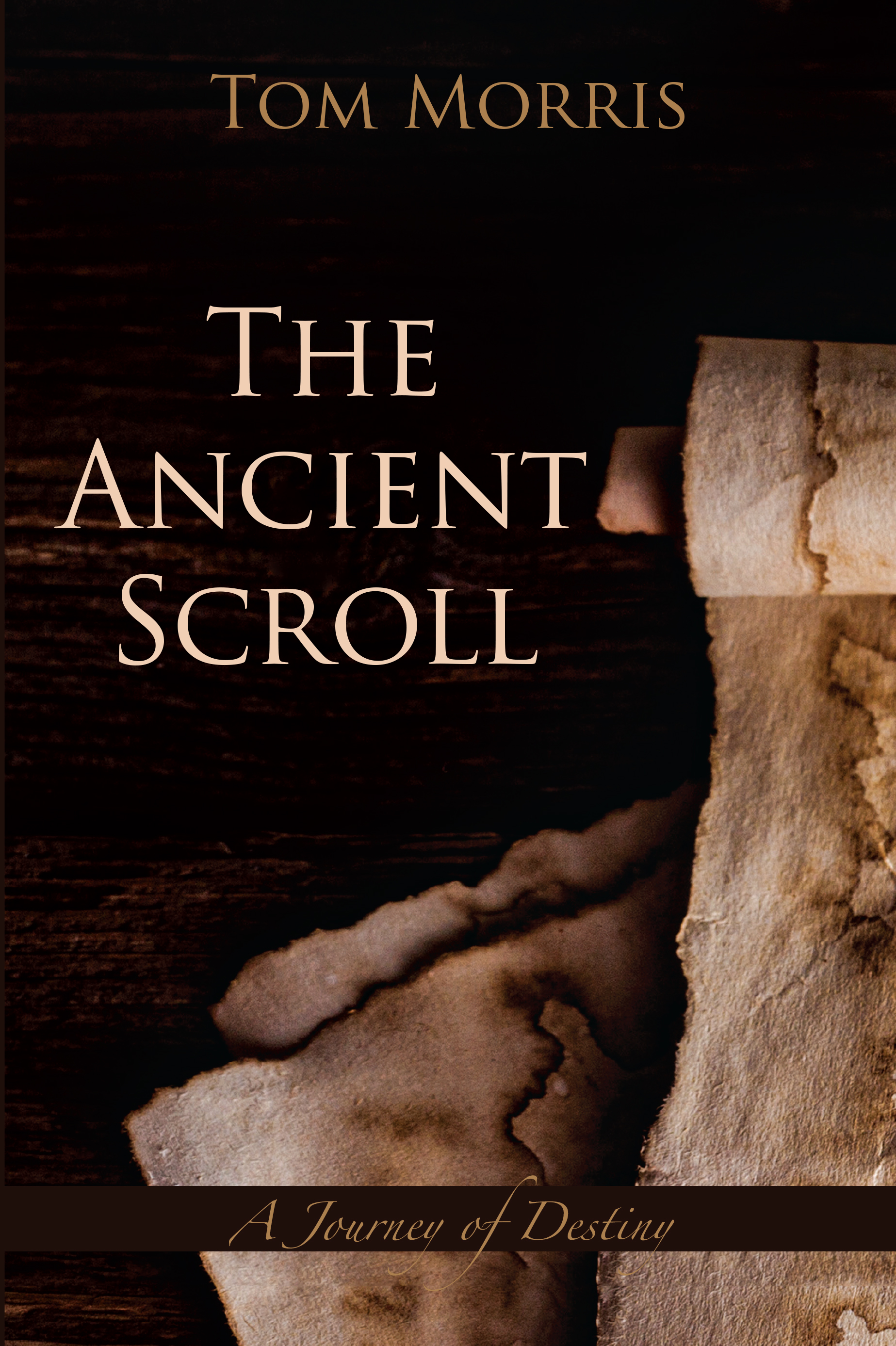
Tom's new book, out now!
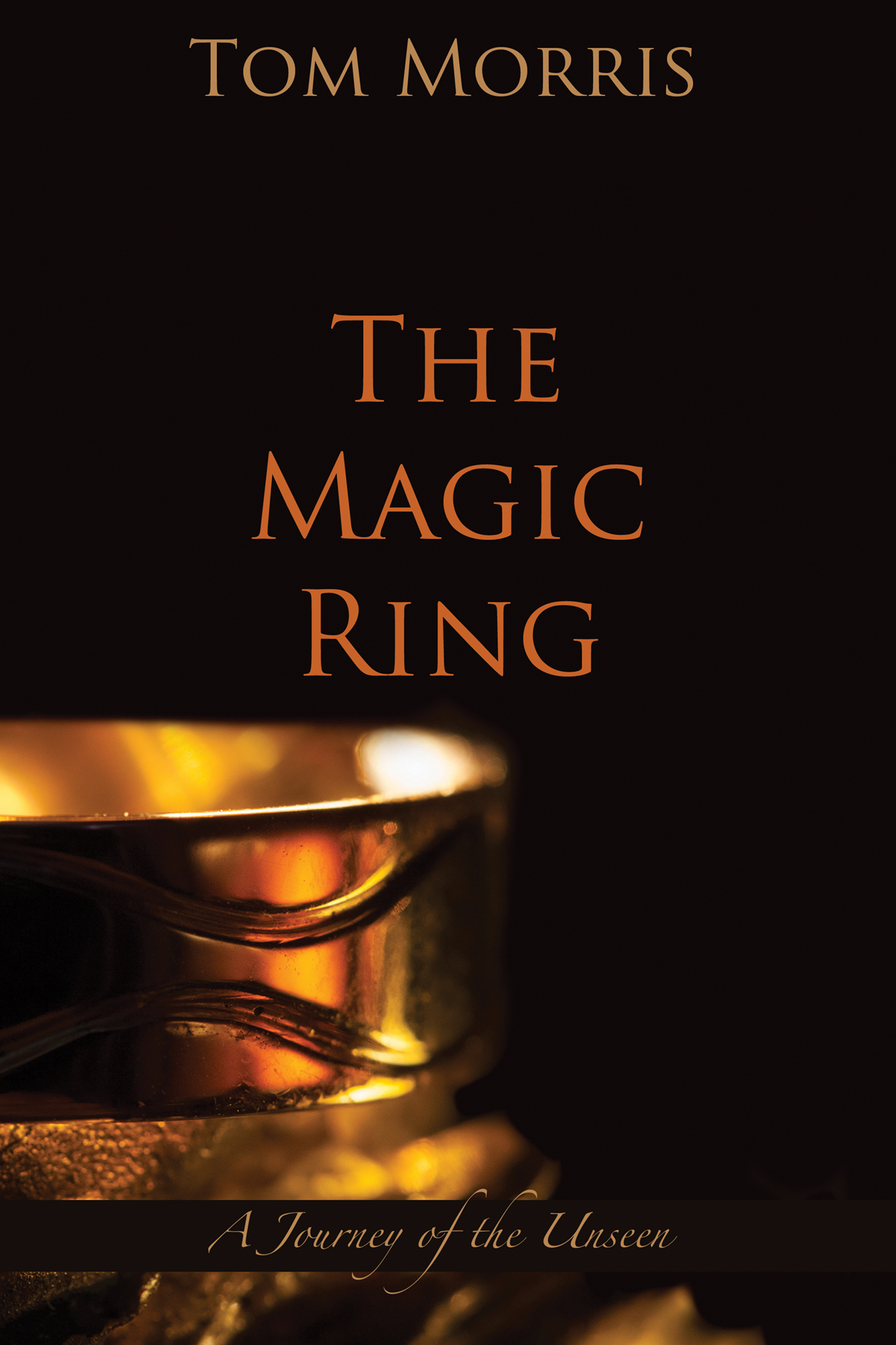
Finally! Volume 7 of the new series of philosophical fiction!

Finally! Volume 7 of the new series of philosophical fiction!

Plato comes alive in a new way!

Plato comes alive in a new way!

On stage in front of a room full of leaders and high achievers from across the globe.

On stage in front of a room full of leaders and high achievers from across the globe.

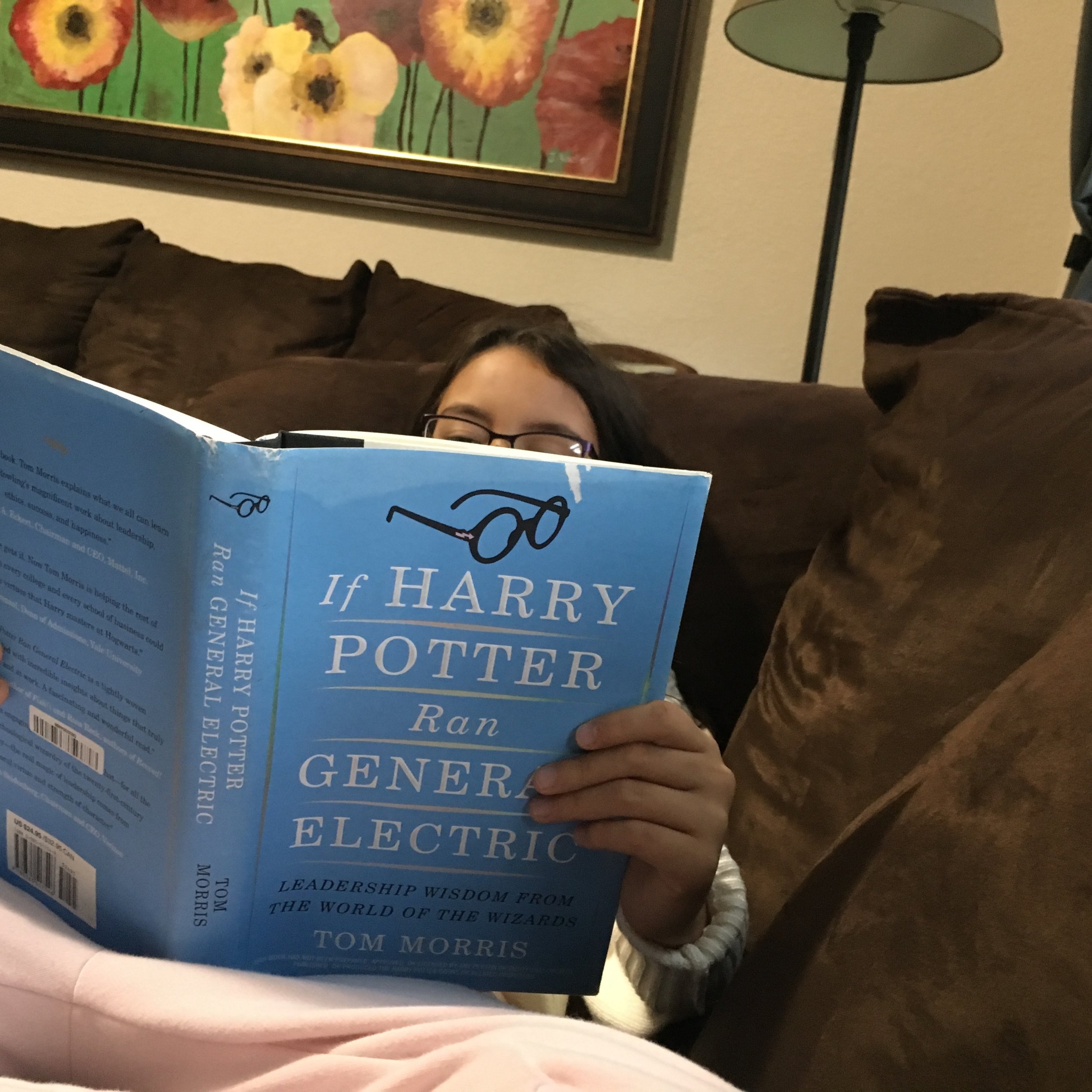
My Favorite Recent Photo: A young lady named Jubilee gets off to a head start in life by diving into some philosophy!

My Favorite Recent Photo: A young lady named Jubilee gets off to a head start in life by diving into some philosophy!

Great new Elizabeth Gilbert book on creative living and the creative experience.

Great new Elizabeth Gilbert book on creative living and the creative experience.

Two minutes on a perspective that can change a business or a life.

So many people have asked to see one of my old Winnie the Pooh TV commercials and I just found one! Here it is:

Long ago and far away, on a Hollywood sound stage, I appeared in two network ads for the wise Pooh, to promote his adventures on Disney Home Videos. For two years, I was The National Spokesman for that most philosophical bear. This is one of the ads. I had a bad case of the flu but I hope you can't tell. A-Choo!

One of my newest talk topics is "Plato's Lemonade Stand: Stirring Change into Something Great." Based on the old adage, "When life hands you lemons, make lemonade," this talk is about how to do exactly that. Inquire for my availability through the c…

One of my newest talk topics is "Plato's Lemonade Stand: Stirring Change into Something Great." Based on the old adage, "When life hands you lemons, make lemonade," this talk is about how to do exactly that. Inquire for my availability through the contact page above! Let's stir something up!

Above is a short video on finding fulfillment in anything you do, that was taped a few years ago. I hope you enjoy it!