Follow @TomVMorris
Retreats
Keynote Talks and Advising
About Tom
Popular Talk Topics
Client Testimonials
Books
Novels
Blog
Contact
ScrapBook
Short Videos
The 7 Cs of Success
The Four Foundations
Plato's Lemonade Stand
The Gift of Uncertainty
The Power of Partnership

Tom Morris

Great Ideas. With Power. And Fun.
Retreats
Keynote Talks and Advising
About Tom
Popular Talk Topics
Client Testimonials
Books
Novels
Blog
Contact
ScrapBook
Short Videos
The 7 Cs of Success
The Four Foundations
Plato's Lemonade Stand
The Gift of Uncertainty
The Power of Partnership
seawolf2.jpg

Goodness Wins in the End

The Sea-Wolf, written by Jack London, has become one of my favorite novels of all time. It’s about the power of goodness when held onto and lived despite terrible obstacles, and also it's ultimately about the power of moral partnership to prevail over what seems to be invincible evil. It’s a message perfect for our time. I first read this in 2014 but too quickly. On my second read, just finished, I came to appreciate its depth as well as its compelling narrative.

Wolf Larsen is a thoroughly amoral leader, the captain of a seal hunting ship, whose only personal value is power and its exercise. He’ll kill a man just to feel that power. In our own time with too many amoral people in leadership positions, Wolf stands apart. He has the body and physical strength of an Achilles and a brilliant mind, though rough and unfinished through being entirely self-educated, even at the earliest stages of reading and writing. He was born of a poor family in a remote region of Norway and lived a rough adventure that led him to the leadership role in a seagoing ship. He has attracted a crew who are mostly as hardened and casually evil as he can seem to be. We learn of him through a highly educated literary man who survives the capsizing of another boat near San Francisco and is “rescued” by the Ghost, Larsen’s ship. The Lord of the Flies has nothing on what subsequently transpires, with our narrator, Humphrey Van Weyden, forced into service on the ship and treated with abominable cruelty.

This castaway is puzzled by the seasoned crew members on board, who seem able to endure agonizing physical injuries without complaint, but will “fly into the most outrageous passion over a trifle” (40, Book of the Month Club Edition). Van Weyden says of a particular seal hunter aboard:

<<He was doing it now, vociferating, bellowing, waving his arms, and cursing like a fiend, and all because of a disagreement with another hunter as to whether a seal pup knew instinctively to swim. (41)>>

He goes on to comment about the rest of the men:

<<Childish and immaterial as the topic was, the quality of their reasoning was still more childish and immaterial. In truth, there was very little reasoning or none at all. Their method was one of assertion, assumption, and denunciation. They proved that a seal pup could swim or not swim at birth by stating the proposition very bellicosely and then following it up with an attack on the opposing man’s judgment, common sense, nationality, or past history. Rebuttal was precisely similar. I have related this to show the mental caliber of the men with whom I was thrown in contact. (41)>>

And the moral caliber of most of them was much, much worse, with a few exceptions, soon to be roughed up and killed. Later, our narrator says of the ongoing discussion, modeling the political discourse of our own day:

<<The hunters were still arguing and roaring like some semi-human amphibious breed. The air was filled with oaths and indecent expressions. I could see their faces, flushed and angry, the brutality distorted and emphasized by the sickly yellow of the sea-lamps which rocked back and forth with the ship. (43)>>

One of the mates tells the new arrival about the captain, making what he takes to be a useful distinction: “He’s not black-hearted like some men. Tis no heart he has at all.”

Of the amoral and power-hungry skipper and his top henchmen, reflecting again too much that's wrong about our own world now, our narrator says:

<<The callousness of these men, to whom industrial organization gave control of the lives of other men, was appalling. I, who had lived out of the whirl of the world, had never dreamed that its work was carried on in such a fashion. Life had always seemed a peculiarly sacred thing, but here it counted for nothing, was a cipher in the arithmetic of commerce. (64)>>

Later in the story, after Humphrey witnesses the may terrible and unpredictably evil actions of the captain, who keeps our narrator alive only because his education amuses the brute, and this autodidact skipper among fools finally enjoys having someone to talk to about literature and philosophy, an event of great significance happens. The ship spots and picks up some other marooned sailors and a passenger from another ocean going vessel who are bobbing about in the vast pacific clinging to a small boat and hoping for rescue. An elegant and exquisitely educated young woman, Maud Brewster, a famous poet who is by wild coincidence known to our narrator—a literary critic who loves her work—is among them. Humphrey desperately tries to tell her about the captain:

“You must understand, Miss Brewster, and understand clearly, that this man is a monster. He is without conscience. Nothing is sacred to him. Nothing is too terrible for him to do. It was due to him that I was detained aboard in the first place. It is due to his whim that I am still alive. I can do nothing, can do nothing, because I am a slave to this monster, as you are now a slave to him; because I desire to live, as you will desire to live; because I cannot fight and overcome him, just as you will not be able to fight and overcome him.” (208)

The ship was a sort of hell presided over by Wolf Larsen. Maud eventually calls him Lucifer. Humphrey comments on the man and his henchmen:

<<Wolf Larsen it was, always Wolf Larsen, enslaver and tormentor of men, a male Circe and these his swine, suffering brutes that groveled before him and revolted only in drunkenness and secrecy. (243)>>

But the tale is not told with too much gruesome detail. It’s not like what I would imagine one experiences reading a horror novel. There’s psychological complexity and a wonderful narrative flow. Wolf and Humphrey even debate their opposing worldviews marvelously, when alone, the crass materialist and the spiritually sensitive man of morals debating life and death and value. The conversations are fascinating. Larsen enjoys the rare intellectual challenges, but on a whim might thrown his interlocutor across the room or choke him nearly to death, just to display his power.

Humphrey and Maud know they have to escape the ship where their deaths are eventually inevitable. And there the story takes off and becomes one of the most amazing tales of all time. The two of them face the greatest odds imaginable and adversities that would be impossible to imagine in advance, much like Odysseus in The Odyssey, but brought into a more modern and less mythological day.

There are lessons about persistence and resilience and courage and confidence and success again the odds all through the book, but especially in its final third. I wish I could take the time here to share more of the lessons on goodness and partnership in the face of evil and overwhelming adversity, because they’re reassurances we all need right now. But instead of going on and on, I’ll simply commend the book to you in the strongest possible terms. If you buy it on amazon, take care the publisher. There are independent publishers now who mangle the text and make it microscopic, and Amazon has unhelpfully put the same comments on each edition, though the complaints clearly apply only to one or two. I’ll paste here a reliable publisher, and you can just click the pic. At some point, please read this book! And yeah, in advance, you’re welcome!

For the book, click HERE.

PostedJune 6, 2020
AuthorTom Morris
CategoriesBusiness, Leadership, Life
TagsLeadership, Power, Morals, Ethics, Worldview, Philosophy, Jack London, The Sea-Wolf, Tom Morris
Post a comment
BooksNovels.jpg

Summer Reading

Finally! Summer Reading! What if you could read something this summer that would transport you far far away from the problems of our day and into a world rich with action, adventure, romance, comedy, and real wisdom coming at you from all sides? What if a super fun read could deepen your worldview, help you with your thoughts and emotions, and prepare you better for everything life brings your way? Not many books will do all that, but one fictional series will: Walid and the Mysteries of Phi.

The books came to me like a movie in my mental theater, surround sound and all. Now, they're my favorite thing I've ever done as a philosopher. Set in Egypt in 1934and 1935, they're a magic carpet ride to a new source of optimism and hope, which is actually the oldest source of all.

One of my favorite contemporary philosophers, who works in the areas of physics and cosmology, has said that reading these books gave him a “palpable sense of goodness” and restored to his life some of the magic that had long been missing. Other readers have compared the novels to Indiana Jones and Harry Potter and Lawrence of Arabia meeting Plato and Aristotle. A few have invoked The Alchemist and The Little Prince. I always smile with gratitude. But they’re really different, a one of a kind ride, and will give you a story that may last in your heart and mind for the rest of your life.

Please try some of these books and let me know what you think. To look at them and snag some easily, go to www.TomVMorris.com/novels/ or visit TheOasisWithin.com. The book The Oasis Within is a short prologue or prelude to the series. And then, the door gets blown open for the swirl of story and adventure. I hope you can have the experience and then tell me about it.

PostedMay 31, 2020
AuthorTom Morris
CategoriesAdvice, Wisdom, Life
TagsSummer Reading, Books, Novels, Philosophy, Wisdom
Post a comment
rich2.png

"Why Do the Wicked Prosper?"

"Oh, God, why do the wicked prosper?" This was the repeated worry and lament of the psalmist, who can sometimes come across as a real complainer, falling into a common form of philosophical confusion.

We all know, or know about, people of whom it's said that "He gets away with everything!" At least until he doesn't, like Bernie Madoff. We can even be tempted to say of such a person that he's crazy lucky or strangely blessed to get away with everything he does. Plato and Epictetus, by contrast, say that he's cursed, because "getting away with stuff" makes him a worse and worse individual, corrupting his soul even more with every "success."

The classic philosophers would often say: Bad is the man who wants to do evil, worse is he who gets it done. In what can appear to be a run of unethical achievement, there is no true success but only corruption, the degradation within that Socrates warned us about.

As the poet Terence once said, "Wealth is a blessing to those who know how to use it, a curse to those who don't." The same is true of any worldly accomplishment. Those who seem to get away with wrong, if we look closely, also seem to grow more and more desperate as time passes. They don't feel inner contentment, or fulfillment, or genuine happiness, in even a small measure. I've seen this up close. They can't maintain true friendships, or deep relationships of any kind. They aren't free at all but are rather enslaved to false, blighted, and immensely unhealthy motives. Their very progress down the road of their urges takes them farther and farther from their true good. They are to be pitied and not resented or, last of all, grudgingly admired. They become shells of who they could have been, and almost ugly, contrastive caricatures of human excellence. They are never flourishing, but at best can only maintain the outward counterfeit of that. So, God let the psalmist complain, and then calmed him down and turned him around with a little more of the wisdom he needed and that we all could benefit from, as well.

For more on what’s wise and otherwise, visit me any time at www.TomVMorris.com!

PostedMay 28, 2020
AuthorTom Morris
CategoriesBusiness, Life, Wisdom
TagsEthics, Morals, Success, Prosperity, Wealth, Fairness
Post a comment
catbutterfly.jpg

What Gets Your Attention?

What gets your attention? Even more importantly, what holds your attention? For many of us now, it's the shocking, the sad, the abhorrent. But a constant attention diet of bad almost by definition isn't good for us. We need to remind ourselves to notice the good, the delightful, the lovely, the ennobling, and when we see it, take it in. Allow it to hover and stay with you a bit. We become like the people we're around. We've long known that. But we're also formed deeply by what habitually gains and holds our attention.

What happens to us can carve, paint, and compose us, as we react and respond. Our thoughts matter, as well as our emotions, and the attitudes that we develop over time. And as the wise Dumbledore tells Harry Potter, it’s our choices that most make us into who we become, far more than our inborn talents. And that’s something over which we can have control, as we grow our powers of control, from whatever tiny modicum a situation might allow us, under howling, pressing emotion, to the full sway of what we’re eventually capable. And attention is vital to that development. That’s why it’s been stressed by every major spiritual tradition. Take care how you choose to pay attention, because that can affect deeply the full measure of choice you gain for yourself. And it will color who you are.

PostedMay 19, 2020
AuthorTom Morris
CategoriesAdvice, Life, Wisdom
TagsAttention, Focus, Choice, Becoming, Depth, Spirituality, Goodness, Tom Morris
Post a comment
BreakfastTiffany.jpg

Two Paths in Life

I've been reading Truman Capote this weekend, Breakfast at Tiffany's and three of his better known short stories—A Christmas Memory, The Diamond Guitar, and House of Flowers. In the widely acclaimed Breakfast, Capote brings to life a character very much like Thackeray's famous Becky Sharp, a poor girl born with beauty and a hedonistic lust for adventure among the culture's markers of money, status, and power, an ingenue perfect for the 1940's but seen at every time, a creature who learns to augment her physical attributes with a shrewd and manipulative charm that men can't seem to resist. Holly Golightly, of course, is the belle of Truman's ball.

At one point, explaining some of her tendencies to our narrator, who lives in the same apartment building as the enigmatic young woman, Holly recounts her many ways of turning herself around when she's feeling bad. She admits she's spent too much money buying and consulting astrological charts to read her future and says:

"It's a bore. But the answer is good things only happen to you if you're good. Good? Honest is more what I mean. Not law-type honest—I'd rob a grave, I'd steal two bits off a dead man's eyes if I thought it would contribute to the day's enjoyment—but unto-thyself-type honest. Be anything but a coward, a pretender, an emotional crook, a whore: I'd rather have cancer than a dishonest heart. Which isn't being pious. Just practical." (Modern Library, p. 79)

Holly's authenticity, her "honesty" is wholly in service to her own perceived self interest, and seems to magnify her unfortunate personality tendencies and character weaknesses to the extent that she's never actually happy, or long in the possession of good things, but always chasing happiness in deluded ways.

By contrast, a character in the immensely wonderful story A Christmas Memory seems to embody goodness and simplicity. The narrator here is a young boy growing up in the country in a house of adults, one of whom, an outsider to the others, becomes his best friend. He says:

<<Other people inhabit the house, relatives; and though they have power over us, and frequently make us cry, we are not, on the whole, too much aware of them. We are each other's best friend. She calls me Buddy, in memory of a boy who was formerly her best friend. The other Buddy died in the 1880s, when she was still a child. She is still a child.>> (ML 144)

They bake fruitcakes to give away for the holidays, and go hunt down a tree to decorate together. They make kites for each other as Christmas presents. They collect pennies and the occasional dime for treats. She gives Buddy a dime each week so he can go to a picture show in town. He says about her, in a wonderful passage:

<<My friend has never been to a picture show, nor does she intend to: "I'd rather hear you tell the story, Buddy. That way I can imagine it more. Besides, a person my age shouldn't squander their eyes. When the Lord comes, let me see him clear." In addition to never having seen a movie, she has never: eaten in a restaurant, traveled more than five miles from home, received or sent a telegram, read anything except funny papers and the Bible, worn cosmetics, cursed, wished someone harm, told a lie on purpose, let a hungry dog go hungry. Here are a few things she has done, does do: killed with a hoe the biggest rattlesnake ever seen in this county (sixteen rattles), dip snuff (secretly), tame hummingbirds (just try it) till they balance on her finger, tell ghost stories (we both believe in ghosts) so tingling they chill you in July, talk to herself, take walks in the rain, grow the prettiest japonicas in town, know the recipe for every sort of old-time Indian cure, including a magical wart remover.>>

This is one of the most wonderful stories ever written about the simple life and the real and deepest honesty that's not merely a second order true-to-yourself-whoever-you-are thing, but a matter of fidelity to the highest and best that life, in true authenticity, offers. Truman had a talent. But his early sufferings ended up pushing him along the path of Holly Golightly, rather than Buddy's childhood and properly childlike friend. And that was a tragedy that need not have been. And yet, having experienced both sides of life, he can describe them powerfully well.

For the book, click HERE.

PostedMay 17, 2020
AuthorTom Morris
CategoriesLife, Wisdom, Philosophy
TagsLife, Authenticity, Honesty, Truman Capote, Tom Morris, Wisdom, Breakfast at Tiffany's
Post a comment
SEALS.jpg

Wisdom for Big Challenges

Last night, I was in another great Morehead-Cain Zoom session with one of my MC cousins, this time George Hodgin, UNC Class of 09, who began his short chat by describing an experience he once had at 2 AM, 60 miles from the Pakistan border, hearing the crunch of gravel under his boots as he led a group through the dark for his first time as team leader. He was in his twenty-fifth year, a quarter of a century young, and for most of us what happened in the next seconds would have aged us through the rest of that century. His night vision goggles picked up a shape ahead, what turned out quickly to be a human shape that instantly turned and started spraying George and his men with automatic weapon fire. That was the challenging start of a mission of overwhelming success that ended with George getting his entire SEAL team back to base completely uninjured and ready for the next adventure.

After seven years as a SEAL, George decided to go to Stanford Business School. But the change at first was tough. As a SEAL he had experienced a daily sense of fulfillment from a clear purpose and with great camaraderie. That wasn’t all reproduced automatically in a business school setting. At first, he didn’t have a compelling, clear sense of purpose, or great partners in the challenge like the guys who had been on his team. He learned some important advice for anything we do. Last night he put it like this: “Find a partner to pick you up when you fall.” It’s Biblical, and it’s the principle used by Batman when he sheds the loner MO to take on a sidekick known to us as Robin.

"Two are better than one; because they have a good reward for their labor. For if they fall, one will lift up his fellow: but woe to him who is alone when he falls; for he does not have another to help him." (Ecclesiastes 4:9-12)

Speaking of the Dark Knight, in a masterful series on Batman entitled “Hush”, superstar writer Jeph Loeb quotes Aristotle: “Without friends, no one would choose to live, though he had all other goods.” Friends, colleagues, comrades, good partners: This may be the most commonly overlooked secret to success in anything we do. It’s no surprise to me that the oldest western war epic, The Iliad, is really about the power of partnership and what happens when it isn’t properly maintained. The Odyssey is then about the power of purpose and its importance to help us get through the greatest difficulties we face.

George’s favorite professor at Stanford one day wrote this on the board:

"Regret for what you have done can be tempered by time. Regret for what you haven't done is inconsolable."

It lit a fire. George needed a new sense of purpose and new partners, or at least a challenge from a friend. One of his SEAL pals was struggling with injuries and the opioids used to treat his pain. The man wanted to use the known properties of marijuana as a safer alternative, but there wasn’t any medically available. And doctors couldn't even do legal research on what might work. So my MC cousin quickly went on to succeed at Stanford Biz, a daunting task in itself, did a tremendous amount of research on the health relevant properties of marijuana, and has now taken on a new major challenge: to become the first federally approved legal provider of medical marijuana, nationwide. But federal agencies can be tougher than the Taliban. They’re uninterested. They drag their feet. They produce obstacles instead of solutions. But George says, “I have to be an optimist.” It turns out that SEALS don’t quit. No surprise there. And they’re opportunistic, always looking for the hidden doorway, or the covered path forward that others might not see. And I learned a few other things in our session.

There’s a common misconception that Navy SEALS are successful because they’re very good at doing enormously complex things. But George says the truth is rather that they do the basics best. I like the old football analogy. It’s not trick plays. It’s being the best at blocking, tackling, catching, and running. Be better than anyone else at the basics. That's the secret.

And you don’t have to go out on night patrol in Afghanistan to experience fear. There’s plenty of it readily available in our business lives, and in our personal affairs. George says the key is to manage it and your other emotions well. “You are not your emotions.” You are the person who can manage and control your emotions. But fear can be instructive. When you feel it, ask what’s causing it, exactly. It may be able to speak to you on a deep level about something you need to notice or address. Then act on it or move beyond it.

George points out that having pre-established procedures, like a checklist, is immensely helpful. When you’re doing combat scuba and you suddenly hear a boat above you that’s not supposed to be there and there's an instant visceral reaction that could get in your way, you need to fall back on procedures and checklists. Yeah, thanks George, I’ve had exactly the same experience. Just kidding. But we all have our own shocks and reactions of fear from things we didn’t expect. It always goes better if you have something to fall back on, some rehearsed way of responding, at least inwardly.

And even in a business meeting, the 4x4x4 rule can help with anxiety or stress. Breathe in for four seconds. Hold it for four. Breathe out for four. Use your breath to calm your heart and head and center yourself for the challenge.

I love this. George gave us one of his favorite analogies. We’re almost always juggling too many balls in the air. Just don’t drop the glass one.

Don’t drop what’s actually most important, dearest, and perhaps preciously fragile, in your pursuit of any success. Know which balls can be dropped, which will bounce and be fine, and which must be protected most of all. In a great zoom session today with bankers, I mentioned this advice and mused that for most of us, those glass balls may be faith, family, or friends, perhaps proper self care, and likely our basic integrity.

George Hodgin is like Steve Jobs in taking on big challenges, problems that are as big as his heart and head, his spirit, and his talents. And he’s learned the joy of the journey. It’s not the mission accomplished that brings the delight, but the deed well done in the doing.

And I could go on. Lots. But it’s fifteen hundred hours and by the ROE, I’ve got to pull chocks right now and get outa here. The only easy day was yesterday. Hooyah.

PostedMay 14, 2020
AuthorTom Morris
CategoriesLife, Wisdom, Philosophy
TagsDifficulties, Challenges, Wisdom, Philosophy, Navy SEALS, TomVMorris, Tom Morris, George Hodgin, UNC, Morehead-Cain
Post a comment
stoneaudience.jpg

One Hard Audience

So. Yeah. I couldn't just walk by these guys. I had to give a short philosophy talk. And of course I started with a funny story. That one guy just could not stop laughing. I love that guy. And, you know, I threw in some extra humor along the way just for him. He cracked me up. I hope I didn't do the same to him. Before I began, they had no expressions on their faces at all. But, believe it or not, I'd actually had tougher crowds. And the solution is always the same. You just pour out the love. You bring real wisdom. You have fun. Show the adventure. Be the joy. And even the old guys covered with moss eventually break out of their shells. Then, by the end, everybody's thinking, "Philosophy ROCKS!" And that's the stone cold truth.

PostedMay 14, 2020
AuthorTom Morris
Post a comment
deepervasterbeautiful.jpg

Wonders and Mysteries

The Extended Reflection: We are wonders amid mysteries, real enigmas ourselves. We ought to carry a modicum of astonishment with us all throughout our day, adorned with compassion and even a spirit of celebration. Imagine what we could do if we came to realize who we most deeply are. It's a journey well worth taking. In fact, to miss it would be almost as much a puzzle as a tragedy. You are here, now. Dig deep into what that may mean. Aristotle told us that philosophy begins in wonder. Philosophy: The love of wisdom. A fascinating object of love, but like others. When you lack it, you pursue it. When you have it, you embrace it. Always in wonder.

This is a theme in the short novel The Oasis Within. It’s a book about attaining the inner peace and power that are actually ours by birthright, and give us the recipe for making our proper difference in the world. I hope you get to see it soon and then join what the character Ali calls “the fellowship of the mind” across space and time.

PostedMay 11, 2020
AuthorTom Morris
CategoriesLife, Philosophy, Wisdom
TagsWorldview, Wisdom, Philosophy, wonder
Post a comment
latelateshow.png

Self Trust and Joy

A Vital Lesson Well Learned. I experienced the most amazing Zoom session Wednesday night as a viewer. The people who made college possible for me, the prestigious Morehead-Cain Foundation, has a network of former and present scholars around the world in every sort of profession and job (Frank Bruni of the New York Times, Alan Murray who runs Fortune and Time, Inc, our current and great North Carolina governor, the best selling novelist Shilpi Somaya, British television producer James Dean, and on and on). All are graduates of UNC Chapel Hill and keep in touch across space and time in various ways.

This week’s evening event was the second in a series of group Zoom sessions (I sadly had to miss the first) where our Morehead-Cain “cousins” - as we call each other - will variously speak on topics from our own lives. Last night, our speaker was Tom Thriveni, the accomplished Writer for The Late Late Show with James Corden (that super talented dude who also rides around and does Carpool Karaoke with top vocalists like Adele). Tom spent the hour talking about his life journey and how he learned self-trust, which is a big challenge for a lot of us, regardless of where we are in life. It was one of my favorite chats ever.

Tom’s parents came to America from India and worked hard to create a good life for their children, whom they hoped would get great educations and go into solid professions where their futures would be assured and they wouldn’t have to take the sorts of risks their parents had embraced in order to begin a new life here. Tom was on track. Great university. Econ major. But then a wild summer internship with Jon Stewart on The Daily Show sparked a flame. And he knew what he wanted to do. But it was too risky. So he became an investment banker instead and then went into private equity as impressive stepping stones to eventually attending Harvard Business School and then of course ruling the world from a corner office high up in a tall building somewhere in the world, and thereby making his parents both proud and unworried for his future. But investment banking and private equity weren’t for him. The pressure, the long hours, and the not at all loving the work put him in the hospital for brain surgery. Yeah. More than the normal work headache. Brain surgery. Maybe two of the scariest words in English. It went well. So he became a comedy writer. Obviously. The surgeons removed all the grey cell investment banker-equity neurons and his remaining synapses naturally reverted to jokes.

“Mom. Dad. I have news.” Oh, no. The conversation. The previous such chat, involving cranial cutting as it did, wasn’t a great precedent. How not to end up back in the hospital? How could he face this? But back up. How could he face the world of comedy, which of course is not known for any guarantees concerning corner offices in tall buildings, world power, and impressive wealth. But Tom had developed a trick. Whenever he confronts a daunting new possibility, something he really wants to do but that has a failure rate percentage with numbers that better reflect normal body temperature, nowadays around 98.3% or something, he uses his imagination. He’ll ask himself “What’s the worst that can happen?” And in pretty much every case where he has ever employed the question (apart, of course, from the brain surgery), the answer has been a version of: “I’ll do something very interesting and fail and come away with some great stories to tell.”

And he has learned something else along the way. Great people make what they do look easy and natural. But whenever we tackle something big and new to us, it doesn’t typically feel easy or particularly natural in the early stages. And so people give up. Tom figured out that something’s being really hard at first doesn’t mean that you’re not supposed to do it, or that you’re not meant to do it, or that it’s not for you. This is exactly what anything challenging and interesting is supposed to feel like at first. That “natural” free throw shooter? Yeah, he makes it look easy after those three million practice shots we never saw.

Tom also learned a third thing. As if these two aren’t enough for that corner office, at least metaphorically speaking. Because, yeah, in comedy you learn to work with metaphor. It beats brain surgery. At least on one end of the surgical scenario. He learned that success isn’t about big titles, major status, and great sounding attainments. He said something profound: “The process is the joy.” And that’s a powerful secret.

The joy isn’t in being named “Writer” for a major television show and being known for the signature monologues that make America, and often the world, laugh. It’s about the process. But then when he described his normal day and what the process is like, I could see that, first, it’s a good thing he’s a lot younger than me to work the hours he does, and second that to enjoy a process that hard is living proof he’s found his thing. Nothing makes it easy. But the fit with his passion makes it great.

Thanks, Tom Thriveni, Writer, Great Zoomer, and Philosopher of Life!

PostedMay 8, 2020
AuthorTom Morris
CategoriesLife, Wisdom, Performance
TagsSelf Trust, Boldness, Courage, Adventure, Jobs, Life, risk, Passion, Wisdom, Philosophy, The Late Late Show, James Corden, Tom Thriveni, Tom Morris
Post a comment
Mansion.jpg

Your Worldview

Your worldview is the structure of ideas, values, assumptions, beliefs, hopes, dreams, aspirations, desires, emotions, attitudes, and ideals within which you live. It's the home of your wisdom and virtue. Some such homes of the soul are bigger than others. Some are better built and sturdier than others. Far too many are tiny cold bare and uncomfortable shacks, when they need not be. We use the materials around us to do our building. Some people just move into the lodgings of others. But we all have choices.

Your worldview is how you interface with the broader world. Will it be a place of preparation and restoration, a base camp for all your highest ascents and adventures, or a mere fortress against what you don't like or trust? We build our own worldviews, stone by stone. Take care what you construct and the shape in which you keep it.

PostedMay 7, 2020
AuthorTom Morris
CategoriesAdvice, Life, Wisdom
TagsWorldview, Wisdom, Philosophy, Guidance
Post a comment
watching.jpg

Three Kinds of People

There's an old philosophy joke, more illuminating than actually funny, unsurprisingly like almost every philosophy joke. It specifies that there are three kinds of people in the world: (1) Those that watch things happen, (2) Those that make things happen, and (3) Those who wander around saying "What happened?" The astute advice we’re then given is to be firmly and reliably in the second category. Make things happen. It’s cool bumper sticker level wisdom. But the problem is that it's not exactly right, is it?

We should be at various times in each of these categories: observing, creating, and seeking. Anything else is a one dimensional life, and will be full of problems. Take it all in. Use what you see. Inquire further. Observe, make, seek. Today's wisdom nugget.

Now I've got some watching, making, and some very serious asking to do. I bet you do, too.

PostedMay 5, 2020
AuthorTom Morris
CategoriesAdvice, Life, Wisdom
TagsWisdom, Philosophy, Advice, Life, Observing, Doing, Seeking
Post a comment
SowerSeed.jpg

The Seeds of Wisdom

Each day, our personal experience sows what can be seeds of wisdom in our lives. And then when we listen, the words of others, past or present, based on their own journeys ,can serve in this same way. But what will result? That's all in the soil. Are you good soil? Am I?

Good soil is full of life, it's dynamic, a partner to the seed, working together with it for the increase intended. Let's commit to seeking always to be good soil, so that what our experience sows may grow real wisdom to be reaped in the challenges and opportunities to come.

I reflect on this metaphor throughout an entire chapter in the new book, Plato’s Lemonade Stand. If you get a chance to see it soon, please let me know what you think. I’d love to hear your insights, which can serve as even more seeds for wisdom to grow in my own life.

The book is HERE.

PostedApril 13, 2020
AuthorTom Morris
CategoriesLife, Philosophy, Wisdom
TagsExperience, Wisdom
Post a comment
business2.jpg

How Business Can Save the World.

Actually, let’s think about how we can change the world. This unpredicted and unprecedented time we're all in right now gives us the possibility of a big restart, a massive reset in our attitudes and outcomes around business.


Years ago, I often lamented that sport had become a business, that even law had turned into the same, that healthcare of all things had transformed itself in too many ways as well from profession to profit machine. And actually, that's the precise problem. It isn't that everything has become about business, but that we misunderstand what business is supposed to be.


Business is supposed to be about human flourishing, building a better world for us all. It's meant to be about collaboration and partnership, about giving people structures and processes for discovering their talents, developing those talents, and deploying them into the world for the good of others as well as themselves. It's not about money or power or status at all. We've turned it into that. None of those side effects of work done well are to be the essence of enterprise. It should be seen as our greatest creative engine for attaining and encouraging human well being across all groups, and healing our divides rather than increasing them. Understood properly, business can save the world, not destroy it. But it's up to us to use this disruptive moment to re-engineer our worldviews to make business what it should and can be, and to save it from what it's devolved into, so that it can then return the favor.


As we're all seeing by absence as well as occasional presence, even the best business community can't replace the legitimate roles of good government, done well. And bad governance can make good business practically impossible. There are some things that can be done only by all of us acting in concert through our freely chosen representatives, and the specialists and experts they can marshal through broad reaching distinctive structures and processes. There are things so big and comprehensive that only government at each of its ascending levels can get the job done right, when it's been itself made right. But that's a part of our challenge now. If we don't understand business properly, we won't understand government properly either. The same lens of human flourishing should be used to view and assess them both.

We're all in a position to approach our work more wisely, and vote with our energies and dollars to encourage those running businesses who do so, as well. In that way, we can help business to change the world, and governance to facilitate the process in the best ways, rather than serving as an obstruction or a warped booster of all that's wrong, which comes to the same thing.

PostedApril 10, 2020
AuthorTom Morris
CategoriesBusiness, Philosophy, Wisdom
Tagsbusiness, philosophy, wisdom, human flourishing, Aristotle, Pandemic
Post a comment
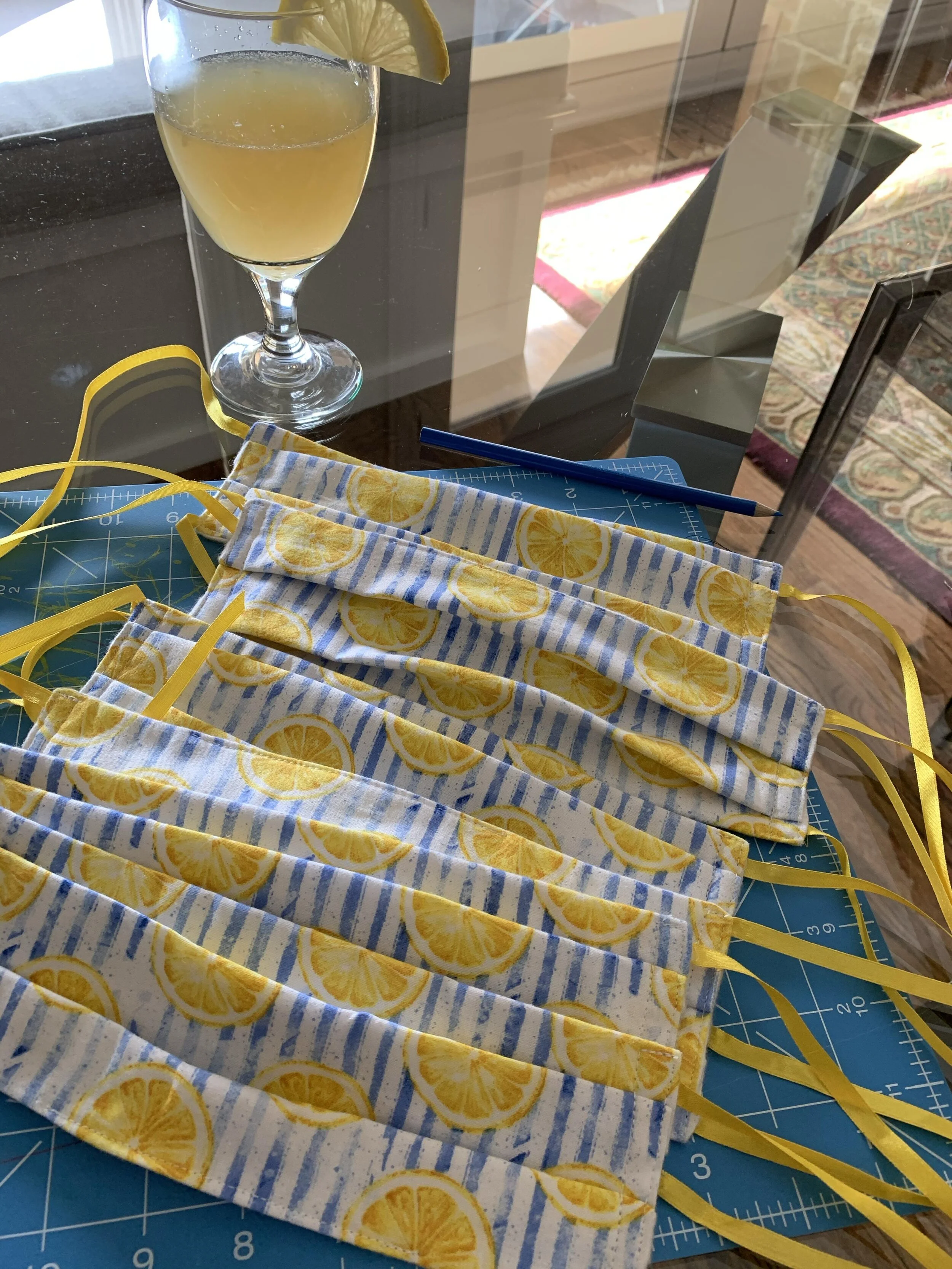
The Covid masks inspired by my new book! I hope you get to see it soon! Let me know!

The Covid masks inspired by my new book! I hope you get to see it soon! Let me know!

Lemons, Lemonade, and The Imagination

Be still my heart! (Well, not too still.) A current reader of Plato's Lemonade Stand just posted this statement and this photo of her new beverage and masks, based on my new book, which has made my day!

<<Plato’s Lemonade Stand is the most perfect book for these trying times. Your whole family can benefit as part of an integrity-filled curriculum.

Excerpt from Chapter 2, Handling The Lemons: “In the face of life’s lemons, it’s vital to remember we have the power that can help us deal creatively with any challenge, the power of the imagination. And this resource is immense. A piece of advice follows from this fact: Use your imagination well. This is the third rule in the art of self-control: Don’t rush to judgement; value the right things; and use your imagination well. When we put our imaginations to work in service of our ideals, we position ourselves for the best response to change” (Page 51).

My “When Life Gives You Lemons” Covid-masks and delicious lemonade recipe (included on last page of book) are in homage to Tom Morris for allowing me to creatively use my talents and imagination.>>

Thanks, Leigh!!! I’ve gotten Amazon to drop the price of the Kindle ebook from $9.99 to just $2.99 (the lowest they’d let me go) in order to get it into people’s lives when it’s really needed, NOW!

I’d love to hear from any other readers who find the new book inspiring! To see it, click HERE.

PostedApril 8, 2020
AuthorTom Morris
CategoriesLife, philosophy, Wisdom
TagsAdversity Challenge Change Disruption
Post a comment
dogonporch.jpg

Dog Wisdom, Cat Insight, Pet Profundity.

Here's a lesson for the moment from most of our pets these days. They're not worried about tomorrow, or next week, or next month. They're just fine sheltering in place. Social isolation isn't a big deal. They know how to get their rest right now for any excitement or challenge to come. They respond well to kindness and give us human beings all of it that they can, and more than we likely deserve. When they're happy, or content, they wag it clearly. And: They know how just to be.

Now, don't worry, I'm a philosopher and I already know all the rejoinders in the minds of some readers that will begin with the ever useful word "But," and then detail all the many differences and disanalogies and responsibility asymmetries and obvious dependence relations between diverse domestic species and us that make them, as readers, resistant to a little whimsical reminder or two from the world of the pet. But ... to anyone who thinks that way, I'd recommend you just go out onto the porch and lie down a bit and take a nap, Ok? Good boy. Good girl.

PostedMarch 25, 2020
AuthorTom Morris
CategoriesLife, Wisdom, Philosophy
Tagsmindfulness, patience, being, pets, shelter in place
Post a comment
boat.jpg

A Brief Thought for Our Fraught Moment, or Any Challenging Time

Remember: Don't mistake a frame in the film for the film itself, a chapter of the story for the whole tale, or a moment in your life for more than it is. We're all in some way the co-creators of what comes next and can make a positive difference to the outcome in the overall flow of things.

In many great stories, the hardest things happen before the most wonderful things come to be. And we tell such stories and love to hear them because they reflect the strange movements of our world in a way that we need to be reminded of, time and again. It’s always darkest at some point before the dawn. Things look hopeless for the hero when he’s down, and then there’s a great turnaround.

Courage. Faith. Hope. Love. Creativity. Openness. Peace. Positive Action. Many things can float our boat well.

PostedMarch 22, 2020
AuthorTom Morris
CategoriesBusiness, Wisdom, Life
TagsDifficulty, Hardship, Adversity, Uncertainty, Faith, Hope, Love, Creativity, covid-19, Pandemic
Post a comment
Wisdom, compassion.jpg

A Young California Philosopher Speaks of Wisdom in Trying Times

The very insightful practical philosopher Kayla Trautwein just shared with her followers on Facebook a short post I did there this morning in my own stream, a few words on courage and wisdom, that I also posted here a bit later. I wanted to relay her wise words, rooted in an amazing life adventure. Kayla writes:

<<If you're looking for some courage in these trying times, please read these important insights from one of my favorite authors, Tom Morris. Tom wrote a fantastic book called The Stoic Art of Living which was the first practical philosophy book I read many years ago. It kick started my 6-year saga of overcoming my anxiety, anger, pessimism, constant negative thoughts, and more. I'm currently reading his book, Plato's Lemonade Stand, which is all about transforming change and adversity into something positive. The timing couldn't be more perfect.

Times like these are why we can't live life on auto-pilot or in a reactive mode anymore. We must adopt a set of wisdom we can turn to in order to maintain our courage and peace of mind even in the most challenging of circumstances. Otherwise, we'll just feel tossed around on the ocean of uncertainty with our emotions controlled by what's happening outside of us.

Life felt like pure chaos until I had fundamental wisdom I could cling to in order to make sense of the world and my experience. Not random tactics, tricks, or techniques that the self-help world is based upon. Real wisdom. Things like learning to stop worrying about things outside of my control, suspending negative judgments about my circumstances, transforming adversity into opportunity, developing positive character qualities, and more.

Thank you, Tom!>>

And I thank Kayla for sharing her hard-earned wisdom!

PostedMarch 19, 2020
AuthorTom Morris
Post a comment
courage.jpg

Courage and Your Philosophy

Courage has nothing to do with a lack of fear. It's all about how we react to the fear, worry, or anxiety that we naturally feel in the face of any danger, including the unknowns of radical uncertainty. Do we feed the fires of fear, do we allow anxiety to grow insidiously and uninhibitedly, or do we act inwardly to redirect our emotions, attitudes, and actions in more positive directions? Courage means first and foremost doing what's morally right for both you and others around you. It means prioritizing our values properly, giving up what's not necessary, and protecting what's most valuable.

Every one of us capable of extended thought is by nature a philosopher, whether we realize that or not. Every one of us has a basic worldview, however well or badly developed. The only question that remains is whether we'll be good philosophers or bad ones, which is to say, whether we'll live from the resources of a powerful and productive worldview, or a poor one. We all need a good philosophy of life, or a basic worldview that will allow us to respond wisely to the ups and downs of life with a measure of inner peace and calm. Anything positive that you think anxiety may help you to achieve can be had without its intervention, as a gift from wisdom alone, without the worry.

In our unusual time, we have the need and so the opportunity to examine our personal philosophies of life and ask whether they're up to the challenge we clearly face now, and that we could well encounter in different forms in future years. The courage to engage in self examination, to seek new self knowledge, and to work toward developing a robust philosophy of life that can give good guidance and inner peace will repay us in benefits for as long as we live, and perhaps even beyond those bounds.


Note: These issues are addressed more deeply and I hope helpfully in my Egyptian novels and in the new book Plato's Lemonade Stand, in case you want to explore them more fully. Just visit TomVMorris.com and click around.

PostedMarch 19, 2020
AuthorTom Morris
CategoriesLife, Philosophy, Wisdom
TagsCourage, worry, anxiety, fear, cornavirus, covid-19, philosophy, wisdom, TomVMorris
Post a comment
messageInBottle.jpg

Message in a Bottle

Imagine. What if you were out for a beach walk alone and came across a message in a bottle that spoke directly to your situation and told you exactly what you needed to hear? I've come to think of many old books as serving precisely that function in my own life. They contain messages that have crossed the ocean of space and time from someone I didn't know, and have washed up right next to me. And they're often a great blessing, very needed, and useful right away. Those who do not read are like the beachcomber who sees the bottle and walks on by it. Let's make the most of every one we come across. The insight we most need might be very close.

PostedMarch 11, 2020
AuthorTom Morris
Post a comment
stoic-art-photo.jpg

Philosophy Can Change a Life

I'm so thrilled at every email from a reader, even those who are determined to convince me I'm wrong about something. But every now and then I get one that says, "You changed my life." With the permission of the writer, I want to share one of those that came to me this week, with exactly that title. I hope this powerful message will nudge you to read some in the Stoic philosophers, whether through my book or someone else’s. The book referred to by my correspondent here, by the way, could be my least known general audience book, and yet I was gratified just today to see a philosopher I greatly respect and admire say that it should have been a top bestseller when it appeared. And there’s an interesting story about that. I always do my best to write books worth reading. I do hope I succeed! Now the email:

Dear Tom,

I read your book, The Stoic Art of Living, back in 2016. My life until that point had been pretty miserable. I suffered from terrible anxiety, depression, 24/7, obtrusive negative thoughts, anger, uncontrollable emotions, and a belief that I was destined to be unhappy.

I was introduced to Stoicism in a philosophy class a few years earlier, but I struggled to sift through the dense philosophical texts. Your book helped me take Stoic wisdom and actually apply it to my life. I remember reading it over and over, finding it so fascinating how each time I read it, a new gem of your wisdom popped out of me which was completely applicable to my current situation.

Over the years, I continued practicing Stoicism and finally overcame each of my struggles. Today, I experience a near-constant sense of happiness and freedom from negative thoughts (really, I have a clear mind free from such thoughts for ~95% of the day). I transformed from a complete pessimist to an eternal optimist. I know how to immediately practice neutrality toward adversity or turn challenges into something to be grateful for. I truly feel like a Stoic.

And now I help other people do the same. I developed an 8-week program where I teach people logic and principles from Stoicism that help them create happiness and change the way they respond to challenges. The methods that I use and have developed make the wisdom stick so it becomes second-nature. The results have been fantastic so far.

I just wanted to reach out and say thank you for changing my life and for the work you do to keep philosophy alive in the modern-day. I think with all of our technological progress, we’ve forgotten some of these basic laws of nature that allow us to create happiness regardless of our genetics, what we learned from the people who raised us, and the difficult experiences we’ve had.Your book had quite the ripple effect, not just on me, but everyone I've worked with who has benefited from the treasures of this ancient philosophy.I would love to hear what you’re up to. Thank you again!

Best Regards,

Kayla Trautwein

www.kaylatrautwein.com

For the book, click HERE.

PostedFebruary 21, 2020
AuthorTom Morris
CategoriesAttitude, Advice, Wisdom
TagsStoics, Stoic Philosophy, Life, Philosophy, Meaning, Resilience, Tom Morris
Post a comment
Newer / Older

Some things that may be of interest. Click the images below for more!

First up: Tom’s new Silver Anniversary Edition of his hugely popular book on The 7 Cs of Success!

The New Breakthrough Guide to Stoicism for our time.

Tom's new book, out now!
Finally! Volume 7 of the new series of philosophical fiction!

Finally! Volume 7 of the new series of philosophical fiction!

Plato comes alive in a new way!

Plato comes alive in a new way!

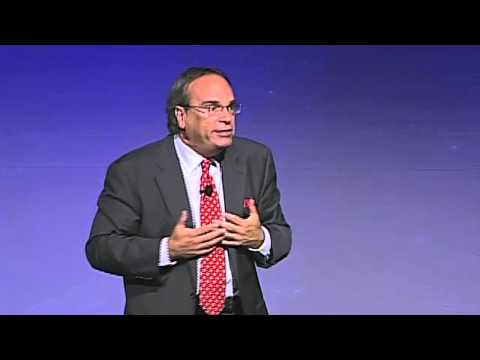
On stage in front of a room full of leaders and high achievers from across the globe.

On stage in front of a room full of leaders and high achievers from across the globe.

My Favorite Recent Photo: A young lady named Jubilee gets off to a head start in life by diving into some philosophy!

My Favorite Recent Photo: A young lady named Jubilee gets off to a head start in life by diving into some philosophy!

Great new Elizabeth Gilbert book on creative living and the creative experience.

Great new Elizabeth Gilbert book on creative living and the creative experience.

Two minutes on a perspective that can change a business or a life.

So many people have asked to see one of my old Winnie the Pooh TV commercials and I just found one! Here it is:

Long ago and far away, on a Hollywood sound stage, I appeared in two network ads for the wise Pooh, to promote his adventures on Disney Home Videos. For two years, I was The National Spokesman for that most philosophical bear. This is one of the ads. I had a bad case of the flu but I hope you can't tell. A-Choo!

One of my newest talk topics is "Plato's Lemonade Stand: Stirring Change into Something Great." Based on the old adage, "When life hands you lemons, make lemonade," this talk is about how to do exactly that. Inquire for my availability through the c…

One of my newest talk topics is "Plato's Lemonade Stand: Stirring Change into Something Great." Based on the old adage, "When life hands you lemons, make lemonade," this talk is about how to do exactly that. Inquire for my availability through the contact page above! Let's stir something up!

Above is a short video on finding fulfillment in anything you do, that was taped a few years ago. I hope you enjoy it!