When you’re out in nature and in a philosophical mood, it’s amazing how many moral and spiritual lessons you can get if you pay attention. I like to go out in the morning now and then and drop down on my hands and knees in the backyard to weed. It strikes me that the stuff we don’t want in our yards and gardens grows quickly and profusely on its own, and with no help or encouragement from us. That’s a lot like our personal vices: irritation, irascibility, lust, greed, pride, envy, laziness, and any form of harmfully addictive tendencies, to name just a few. We don’t decide to cultivate them, plant them in our souls and work intentionally to nurture them. They’re the weeds of the soul.
So, if we want a nice landscape, we weed. It used to be that when I noticed a stray weed in a place I’d worked hard to clear earlier in the day, I got mildly frustrated. Now I just get busy. Weeds grow. The ones we don’t uproot today, we’ll pull tomorrow. You rarely get it all done at once. And I used to be overwhelmed seeing how many needed my attention in certain stretches of the back. Now I simply know my coming days will allow me to get out into nature again and do something needed, something that’s good. Plus, the exercise itself is its own thing, and beneficial.
It’s important for us to realize that the garden of our hearts, the landscape of our souls, needs similar attention and work. Every day, try to weed a little. And while you’re paying attention, also check on the good stuff. A little water here, some organic fertilizer there, and it’s heartening what a bit of care can accomplish. But there’s always work to do, which is not something to be regretted, or to sprout new weeds in your spirit, but to be embraced as a reality of why we’re here in the first place. The inner exercise itself keeps you sharp.
The Garden is vitally important in the Biblical narrative, and it’s an equally crucial metaphor in our own stories.

One of the hardest lessons for us to learn is that our most important task and number one priority should be our own spiritual growth, improvement, and maturity. And if that sounds selfish, it’s because we haven’t yet made enough progress ourselves to see how it’s the one path to growing more self-less. Only when we are becoming inwardly whole and good can we do our proper good for others. But we are by nature outwardly oriented. And that's an evolutionary survival trait. Improvement is important to us, but we'd rather improve our circumstances, or our friends and family members, or the entire rest of the world than ourselves. We're fine, we easily assume. They've got the problem.
One of my guilty pleasures used to be watching the various incarnations of "The Real Housewives" mock reality shows on Bravo TV, until I just couldn't take it anymore. The dominant theme and attitude on the part of any cast member in any challenging situation seemed to be "I deserve better than this!" It was a show about aggrieved egos on parade, or in other words, about more of us than we'd like to admit. Jesus had a funny way of talking about how much time we spend spotting the speck in the eye of another when we have a log in our own. That was his little nudge toward a refocus and concern for improving ourselves before we tackle all the inner problems of others.
When we're not experiencing Nirvana day to day, we easily blame others, or anything else in our circumstances, rather than considering the part that we ourselves might be playing in our own discontent. But if that rare realization dawns on us decisively and we actually act on it, we quickly feel astonished at how long it took us to see what then becomes the most obvious truth, that it's how we react to the world, more than the world itself, which determines the way we feel, day-to-day. If we can learn to manage our expectations better, or at some level release them altogether, shift our center of attention from how we ourselves are doing to how we can help others around us, just inwardly smile with God, and adopt a different framing attitude for all that's around us, we can attain an inner peace and even stretches of joy never seen on Bravo.

Thornton Wilder's short play, The Angel that Troubled the Waters" is based on a Biblical story (John Chapter 5). The blind and lame and otherwise damaged would gather at a famous pool to await an angel who might come to stir the waters, and it was said that the first to get in would be healed. In Wilder's play, a newcomer arrives among those who regularly wait and hope, a medical doctor himself, looking whole and healthy. The legendary angel suddenly arrives and challenges this man as to why he's there. He answers to point to a deep inner wound:
"Surely, surely, the angels are wise. Surely, O, Prince, you are not deceived by my apparent wholeness. Your eyes can see the nets in which my wings are caught; the sin into which all my endeavors sink half-performed cannot be concealed from you."
The angel says simply, "I know."
The doctor then renews his plea, and the angel explains:
"Without your wound where would your power be? It is your very remorse that makes your low voice tremble into the hearts of men. The very angels themselves cannot persuade the wretched and blundering children on earth as can one human being broken on the wheels of living. In Love's service, only the wounded soldiers can serve. Draw back."
The water is stirred and many leap or tumble into the pool and are healed, jumping for joy and showing their former deformities that are now made whole. One of the healed, the first who threw himself into the water, now turns to the silent doctor and says:
"May you be next, my brother. But come with me first, an hour only, to my home. My son is lost in dark thoughts. I—I do not understand him and only you have ever lifted his mood. Only an hour ... my daughter since her child has died, sits in the shadow. She will not listen to us ..."
And the play ends. Pictured, a rare 1928 copy that I found online, cheaper than a used paperback, and on the front page, it was inscribed by Wilder. Meant for me. And you. Wounded healers.

Clarity often emerges on the far side of confusion. We have to go through the tangle to find the thread.
The ancient philosophers had a fascinating idea that few things in the world are intrinsically good or bad, but rather have their value residing in how we use them. How do they function in our lives? This can be true of confusion. Since the time of Socrates, people have wondered why Plato’s Dialogues portray him as questioning people about important concepts they thought they understood—like courage, or piety, or justice—and shaking them up, demolishing their felt certainties, and leaving them in confusion without a positive resolution or a “right answer” at the end of the conversation. It may be because Socrates thought of the confusion he left them in as having a power that a simple certainty could never possess. It might goad them into wrestling with ideas they’d taken for granted, and in the process they might not only find the truth themselves but be transformed by the search, something an easy answer could never provide.
In the opening of the Odyssey, Telemachus wants to know whether his father Odysseus is still alive, years after the Trojan War. The man has not yet returned home. The young man asks the goddess Athena, who knows the answer. But rather than just telling him and giving us a much shorter book, she suggests that he travel to a distant land to seek the answer, knowing that what he really needs more than information is the transformation that only such a risky journey can provide, if he is one day to be the properly strong partner for his father to help save their land from arrogant and rapacious enemies.
We like to think of questions as simple transactions. I give you a question, you give me an answer. Loop closed. Transaction complete. But the best questions aren’t like that at all. They take us on an adventure of search and understanding that’s much deeper than simply finding a true sentence at the end of the road. We become seasoned travelers in pursuing our concern. Like Telemachus, we get stronger. And we may be led through various stages of bewilderment and confusion along the way that cause us to rethink, reimagine, and discover what we might otherwise never have been able to think. It may all cause us to become what we otherwise might not have been able to be.
There are obviously some bad forms of confusion, for example, a drug or dementia induced mental fog, a terribly troubled state of mind that can produce a fight or flight panic, or a fervent wish to just shut down thought altogether. But there may be many good kinds of confusion as well and we need to appreciate them for what they’re worth.
Jean Paul Sartre once said of boredom that it’s a state of simultaneously too much and too little. We might say the same about many forms of confusion. It’s perhaps a state of mind that involves both too much and too little. Too much information, not enough knowledge; too much knowledge; not enough understanding; too much understanding but not enough wisdom; too much peripheral complexity, but not enough grasp of the essentially simple core.
Don’t fear the confusion that comes from real adventure, from grappling with new things. Don’t let it tie you in a knot. Take a breath, center yourself, and live into the adventure. Great clarity may eventually result.

I woke up early this morning with these thoughts rolling through my head and had to write them down.
A Good Life. We all want to live a good life. But what does that mean? I suspect that at the core it’s fairly simple.
We all want a life in which we make our proper difference in the world and it makes its proper difference in us.
We seek the journey and result that our being here makes a positive impact for good, however small it may seem, since there is no such thing as small in the realm of the spirit.
We want to be and become with appropriate action, wonder, and most of all, love.
We hope to serve as a blessing to others wherever we are, and to the broader natural world.
And we want to grow into some version of our better or higher or even best self, in the circumstances given us and that we form throughout this adventure.
We may not have all the words for these things explicitly in our minds along the way, and we may not keep consistently on track, but this is what we are born to aspire to, and what's always hidden away in the bottom of our hearts. And all of this, seasoned with gratitude, hope, and compassion along the way, is, I think, a good life.

The other day I posted a challenge to the commonly heard advice that to deal with change and attain excellence, we all need to get out of our comfort zones, and keep doing that. The classic motivational advice makes a comfort zone sound like quicksand, or a dead end street. I suggested instead that the very best people in every field learn to expand their comfort zone and take it with them wherever they go. They don't leave it, they stretch it and carry it with them on any new adventure. I wanted to share an interesting conversation about this that just took place on LinkedIn.
Candice Frost, Director with the Army G2 Intelligence, reposted my thoughts and wrote: <<Insightful points made here and have me rethinking my advice on being comfortable with being uncomfortable. Tom Morris reframes how we look at this advice and instead states that experts, “created a superior and special zone of comfort in being and doing the very best in their various fields of endeavor.” He also focuses on expanding your zone of comfort. How have you grown/expanded your #comfortzone?>>
I replied: <<Hi Candice! Thanks for the kind words. Maybe the way this works is that when we're new to mastering the inner game of life, or even midway in our work on that skill set, we do have to experience discomfort now and then, and get comfortable doing that, but when we're farther down the path of our development, we bring our comfort with us wherever we go. Or to put it another way, getting comfortable with discomfort is likely a necessary stage along the way to where you ultimately want to be, always carrying your comfort zone with you as one of your more important inner possessions. So you are naturally comfortable at what makes others uncomfortable. I'm sure your advice has been great for where most people are, to get them to the next step, and that's so needed. I just like to identify what our ultimate aims are or should be for the true inner and outer excellence to which we aspire ! Let's keep philosophizing. Some of the most crucial passages in my latest book, Plato's Lemonade Stand resonate deeply with these new ideas about comfort zones. I hope you can see it!>>
Then, Sara Helfer, a Strategic Analyst at the Office of the Chairman of the Joint Chiefs of Staff weighed in, as a reply to Candice: <<Insightful and something I've been grappling with lately. What is our comfort zone versus an area of strong expertise? What is the point of diminishing returns in discomfort? That is, when is something just a bad fit? How long do you wait for something to "break in" and get comfortable? These are rhetorical - I presume everyone will have different answers to these.>>
Candice responded: <<Sara, well stated. I'm advising new intelligence professionals to understand they'll have to focus on areas where they're often ill equipped to advise/understand as a SME. That's why collaboration is so critical. Of course, when this issue arises often, you've got to get on board quick and rapidly learn.>>
I weighed in: <<Hi Sara. Great questions. To me, an “area of strong expertise” is an "outer" range of structures and processes, facts and systems, reflected in us by the relevant inner skills, knowledge, and even wisdom. Let's call that peak expertise. The comfort zone is the emotional and attitudinal proper reflection of all that. The importance of the comfort is that a peak performer isn’t nagged by discomfort, uncertainty, unease, or an obstructive self consciousness in performing his or her duties. A bad fit in a job or with a task happens when peak expertise never develops and doesn't look like it's going to, and those inner emotions and attitudes never properly grow to what they should be for the flow of top excellence. A really unfortunate situation is where there is a bad fit between person and task, but his or her emotions and attitudes of comfort, assurance, and confidence grow IMPROPERLY, and without the relevant developing expertise. As to how long it takes to develop peak expertise, or even a modicum of it, and the naturally attached emotions and attitudes, that can vary a lot with person and task.>>
I then responded to the reply Candice made to Sara: << Candice, I like what you say here. I've come to think that collaboration and partnership is crucial in mastery or any form of challenging success. I see Homer's Iliad as all about the power of partnership, when it's working and when it's not. The partnership between Agamemnon and Achilles breaking down is crucial for the story. So are all the small partnerships formed throughout the tale (Ajax, despite his immense individual strength, calls friends over in fierce fights and together they prevail). Beowulf is about what happens when you never learn to partner with others collaboratively. Aristotle actually saw the peak of human power and good (in the Politics) as - in my words summing his thoughts - "People in Parnership for a shared Purpose." And the Odyssey is all about the power of purpose! Great stuff to ponder!>>
Eric Potvin, a former CIA Special Agent, replies to the original reposting by Candice: <<Ma'am, Thanks for sharing this thought-provoking and insightful article. Tom Morris uses logic and reasoning to create a perfect argument for comfort zone expansion. There is no doubt in my mind that most people suffer from some level of "Imposter Syndrome" and the advice provided in this article will help others find comfort in their new environments. Ultimately, the application of what you know now in an environment of unfamiliarity can help overcome uncomfortable situations. When I deployed to Afghanistan for the first time, I recalled my successes in Iraq and applied the same team leadership skills and report production techniques to accomplish the mission in a completely new geographical, cultural, and altogether different environment. Until I read this article, I had not reflected upon the "how" I did that. Not to say I did it perfectly, but it was a helpful way to take what I know now and apply it to what I wanted to accomplish. Thanks again for posting!>>
Then, me to Eric: <<Eric! Very well and wisely said. Thanks for your kind words. As a philosopher, I admire a lot that goes on in the world of self-help and motivation, but often find the thinking to be imprecise and limited, as good and useful as it might be to many people. As a philosopher who loves the practical side of wisdom, I like to weigh in and try to tighten things up, perhaps provide a broader perspective, and look at some of the ultimate issues that lead to excellence. Thanks for your own reflections that resonate so well with what I've been thinking.>>
And the band plays on. To me, this epitomizes social media at its best. People from different backgrounds thinking hard together about things that matter, living Aristotle's vision of excellence. Don't you wish it were all that way?

“You need to get out of your comfort zone!” “It’s important to get as far out of your comfort zone as you can!” “You gotta escape your comfort zone!” “You’ll never experience real success or happiness or fulfillment until you get far out of your current comfort zone!” “Everything great happens outside your comfort zone!”
Approximately 12,347 public speakers, business gurus, and motivational mavens have thundered this advice from more than 1,928,342 stages, podiums, and small carpeted areas at the front ends of hotel meeting rooms for the past 20 years. Books are written around this injunction. Podcasts reinforce it. Blogs repeat it. And they all make it sound like the most important and universal advice you can ever hear coming from the mind, or mouth, or preferred media of another human being, while somehow also implying that it’s something revolutionary and great that, after millennia of human history, they’ve finally managed to discover and are willing and eager to tell you at last, now that you’ve heard all the other “secrets” to success so often spoken and written about everywhere else, and yet have strangely found them not quite to work as advertised.
The idea is simple enough. We all have habits, routines, patterns, and surroundings that give us a sense of normalcy, or comfort in knowing what we’re doing, what’s likely to come, and how to function without too much worry or deliberation. We get in a groove. There’s a small circle of light in which we all enjoy a sense of assurance and the warm glow of the ordinary. And as we often likewise feel under toasty bedcovers on a cold morning, we want to stay where we are. The last thing we want to go is get out of that snuggly place of pleasantness. But of course, we have to in order to accomplish anything of importance, or greater value in the world. Yes, and that’s a metaphor for life. We have to get out of our ruts, our actually dangerous comfort zones, in order to live the adventure we’re here to experience and in which alone true value and delight are to be found. That’s the message we’re sold over and over.
But there’s a major flaw in this ubiquitous advice and in how it’s given. Maybe it’s even a fatal flaw. How are we supposed to escape these insidious comfort zones? Well, you know that too. How many times have you been told to “Face your fears!” “Confront your demons!” “Do the thing that worries you most!”
And yet. The greatest exhibitions of excellence and joy I’ve ever seen on basketball courts or football fields, in concert halls and artists’ studios, in college seminars, business meetings, and on any of those stages in all those convention centers and hotel ballrooms where we’ve all been roused to new levels of inspiration, it was always an individual or team operating in the magic of “flow” in which they weren’t anywhere outside their comfort zones at all, but had created a superior and special zone of comfort in being and doing the very best in their various fields of endeavor. Their performances happened precisely in the middle of the sweet spot of a well cultivated and exalted comfort zone. The best TV newscasters, sportscasters, and talk show hosts aren’t nervously “facing their fears” and going “way beyond their comfort zones” in doing their jobs with ease and peak excellence each day. When they’re in front of the cameras, they’re in the very middle of their comfort zones, and that’s why they make it look so easy, with their natural and casual seeming performances.
But, wait, you may think to yourself: Didn’t all these great people now operating at the peak of excellence, didn’t they have to leave previous comfort zones in order to get to the ones they now occupy, and maybe many times, and isn’t that why the motivational speakers are always accosting us with their endless advice to get up off our butts and go and do the same, now and forever?
Well. The advice can seem good, and perhaps important, but even when it seems needed and appears to work, I would like to suggest that the focus of it isn’t quite right. The most successful people in the world don’t get to their peak performance level by simply leaving comfort zones, but rather by learning to take their comfort zones with them wherever they go. The standard motivational speakers and business gurus seem to think of comfort zones as mostly an outer thing, as really all about our normal circumstances or situations where we feel at ease. But what if a comfort zone is really supposed to be an inner thing, an existential state or inward attitude arising from our souls or spirits, and so is something we can bring with us into new circumstances?
Many years ago, when I was trying to go to sleep in my hotel room in New York City without much success the night before I was to undergo my first interview live on national television, an idea suddenly occurred to me that changed everything, settled my unraveling nerves, and allowed me to drift into the needed slumber that alone would prepare me for the high anxiety situation that awaited me only hours to come.
I was to appear on “Live! With Regis and Kathy Lee” at the peak of the morning television show’s popularity, in August of 1994. I had met Regis a year and a half earlier, and was thrilled to be invited to his show to help launch my new book “True Success,” my first nonacademic foray into publishing a book of helpful public philosophy. It was going to be great. The publisher was thrilled and sent their top publicist to be with me backstage, a bright young woman whose husband had written a movie I had just seen and found to be a real delight, the Stanley Tucci film about a restaurant called “Big Night.” But I’m getting ahead of myself. The night before my guest slot, as those in the biz would call it, as I was worried and nervous and scared half to death about making a fool of myself in front of many millions of people, I suddenly said to myself, “Wait a minute. Regis is as comfortable every day there on his set at the ABC Studios as I am in my classroom at Notre Dame (where I was a professor at the time). Our session is just going to be part of a normal day for him. He’s not out of his mind nervous, worried, and scared about it. It’s his comfort zone. That’s why he’s so good at it. So, Ok, I’m going to borrow some of his comfort tomorrow. I’m going to pretend like it’s a normal day for me, too, just like a day in classes at Notre Dame. Regis is going to lend me some of that television comfort and I’m going to use it and feel it and enjoy it and just go and have fun like he does every single day on the show.” And that was miraculous, and worked beautifully. My emotions and attitudes were calmed like a Biblical storm, and I was at peace and even eager, not anxious or scared half out of my mind. And the show went great. And ever since, I’ve managed to carry my comfort zone with me wherever I’ve gone, even if I had to borrow part of it from someone else to make it my own.
Ultimately, it’s an inner thing. It’s an inner game. And just remember that those motivational speakers who are urging you so convincingly to leave your comfort zone are bellowing out their advice from right smack in the middle of their own comfort zone if they’re any good at all. They brought it with them to the speech. So do as they do, not as they say. Take your comfort zone with you wherever you do.
Or here's another metaphor: Expand your comfort zone. Stretch it. Make it bigger. Don't ever abandon it. Either metaphor works, but I like to carry stuff around, and I make sure my zone surrounds me at all times.
But, sure, early in the process of learning how to take it with you, you’ll slip up now and then and find you’ve left your comfort zone behind. And outside it, you may make some progress working through anxiety or facing fear. Good for you. But when you realize that your comfort zone can and should go with you inwardly wherever you go, it will be revolutionary, and freeing, and truly inspiring after all. And then you can be truly great.
Oh, and you know that comfort I borrowed from my friend Regis? I forgot to give it back. Yeah. I still take it with me wherever I go. In fact, I have more than I need, in case you'd like to borrow some. Help yourself.

The solitude required of mastery can be profound. Even for essentially social skills, a cultivation within is necessary, and time alone in analysis, imagination, and development equally crucial. When properly done, the isolated immersion is so complete, though, that time and space conspire in shrinking tight around you to form a total cocoon so that you seem to miss nothing in the broader world while that one thing is itself everything.

For the past twenty five years, I've been on a slow drive with the classics in philosophy and literature. And I've discovered that when something is long considered a classic, there's a good reason. One prominent novelist told me many years ago that a novel rarely ascends to that status through a beauty of language alone, or because of experimental techniques, but in most cases has attained that high mark because of its ideas, conveyed powerfully and embodied well. The classic gives a form to profound thought that touches on our concerns for truth, beauty, goodness, and unity. Our work should do that as well every day.

There's cognitive memory and muscle memory. That's well known. I suspect there's also moral memory.
Sometimes, cognitive memory is easy. You have an experience and you later remember it. Sometimes it's hard. I had to work for days to memorize the famous "To be or not to be" passage in Hamlet, and even longer to get the Saint Crispin's Day Speech down perfectly. You should have heard me motivating the troops as I drove to the grocery store, my "band of brothers" ready for anything. I did it over and over and over. And that's the recipe for muscle memory as well. There is a cumulative readiness in the nerves and musculature cultivated by repetition and awaiting the next spark for a nearly automatic flow of your tennis serve or golf swing or guitar chord progression. Moral memory I take to be similar.
It's all about wisdom and that part of wisdom known as virtue, though we can equally well and more traditionally think of wisdom as one of the virtues, even if perhaps wildly the most important one, since it may encompass all the rest, both generally and situationally. Yeah, I know. That won't fit on a bumper sticker or LinkedIn poster or get 2,000 "likes." But it's true. And the implication for us today is that your moral choices, to attend, to focus, to feel or to act, are cumulative as well. The sheer repetition sets up a memory in your soul making you more likely the next time to focus or feel in that way. Because of this, moral goodness gets easier with practice. But so does moral degradation and corruption, as we can see in the news daily. Every choice adds up. There are no exceptions. We’re never just doing, we’re always becoming. Small actions create small habits and they become big and deep traits of character.
With this in mind, take care to build your wisdom in little things, then you'll have it readily and almost automatically available in big things. It's something important to know and to remember.

We see ourselves in small boxes. We define ourselves and give our spirits restrictively false limits, within which we then live. That very habit can blind us to our true limits, which we then blithely ignore to our great and lasting harm. We need to turn it all around, avoid the artificial and respect the real, working with the amazing nature we actually have. Stop drawing yourself into a corner. Get out your eraser and toss away that chalk.

Two totally different subjects have been on my mind lately, and they just came together this week. Since publishing the book Plato's Lemonade Stand I've continued to think about our many problems, our difficulties and struggles and how they often affect us. Independently, I've been thinking a lot about partnership, as seen in fiction like The Iliad, The Three Musketeers, and Dracula, to mention a few places in literature where a big problem requires the partnership of several to deal with it well. And so, here's the idea.
When a problem comes into our lives, we often react with the fight or flight response - we flee and seek to avoid it, or we do battle with it. And this is the new twist: Perhaps in some cases, we need to partner up not just with others to confront a problem but with the problem itself. Now, let's consider that metaphor.
In life there is a spectrum of relationships people stand in. On far negative side, there's Combat where we battle. One step away from that is some forms of Competition where we strive. In the neutral zone there is Co-existence where we leave each other alone. More positive is Cooperation, where we go along, not resisting but allowing and maybe at least minimally contributing. Most positive of all is Collaboration where we bring the best of who we are, what we know and what we can do into a dynamic synergistic relationship of maximal partnership with others, to give and do our best together, building jointly and mutually accomplishing what none of us could have done alone.
Think then about what it would mean to take this most positive relationship to a problem that comes your way and partner up with the problem itself. What would that mean? Well, how do we relate to true partners? We listen, learn, contribute, and humbly adjust our contributions as we get feedback, and we look to build on what our partner brings as we grow and are transformed by the collaboration.
Perhaps if we carried as much of that mindset as possible into problem situations, we'd deal with them better. A problem can teach us, if we're open and humble, and willing to learn. It can also transform us, if we bring to it those same qualities. Marcus Aurelius had the insight that sometimes in life, "the obstacle is the way." A hindrance can sometimes become a help if we approach it properly, and let it lead us to see what is really needed that we might not have anticipated without its disruption. Difficulties can bring us detours that show us what we would not have seen without them. Struggles can strengthen us. So, maybe in the end, there are three possible approaches to problems: fight, flight, and then, perhaps even a metaphorical version of friendship.
There are always doors around. Most may be closed. Some are locked. A few will attract your attention. And there will be an occasional one with a distinctive color or scintillating feature, perhaps the nob, that practically asks you to reach out and take and turn it to see what's beyond. Sometimes curiosity will do the job. At other moments, a measure of courage is required. The doors in life are every bit as important as the rooms, structures, and spaces they guard. Often, it's good to knock first. But follow your best intuition at all times. This may be the door you've hoped and waited for, as it has been awaiting you.
Just remember: Opportunity won't always knock. It's often up to you, and me.


Sometimes, there's a breech in the stone, an unexpected crack in the wall of the cave, and a whole universe opens up. It could be a book or a heard sentence, or a film, or a song, a poem, or even some fleeting aspect of a day in nature. It could be almost anything that for a moment opens up a new and spectacular view of what's out there, or in here, or around and beyond. Find a way to capture and save that amazing glimpse.
A character in my novels talks about taking a wisdom bucket wherever we go, for precisely this reason. He says that waters of insight can fall from the heavens like rain suddenly at any time and we need a way to capture those moments to use later and share. So keep a snapshot in your head or a small bucket in your heart and you won't forget, but can pass on to others what you've so wonderfully seen.

Kindness and Wonder: Why Mr Rogers Matters Now More than Ever. The great book and film reviewer Ben Steelman passed this wonderful book on to me, and he was right that I would enjoy it. I didn't grow up watching Mr. Roger's Neighborhood. He was after my time. I caught as much Captain Kangaroo as I could before leaving for grade school each morning. But those two shared a sensibility of love for children, and a gentle kindness, an overall orientation to which we desperately need to return.
When Mr. Rogers was dying of cancer, he asked his wife, "Am I a sheep?" He was alluding to the Biblical parable of the sheep and the goats, which, with nothing against goats, Jesus had used to illustrate the fact that in the end, there would be two different types of people. According to Jesus in this use of the metaphor, his sheep are those who help others in need, outsiders, the poor, and the downtrodden. The goat may think he's the Greatest Of All Time, but he's all ego and no love. The author of this book quotes Jesus saying that what we do to the least of our brothers and sisters, we do to him. Addressing the true sheep in his flock, he said: "I was hungry and you gave me food. I was thirsty and you gave me something to drink. I was a stranger and you welcomed me. I was naked and you gave me clothing. I was in prison and you visited me." Those are the most salient identifying features of any among us who truly belong to God the Father recognized by Jesus and Mr. Rogers. Others who may proclaim his name and their great faith and allegiance are just bleating goats.
But once you read this book through, you realize that the greatest thing anyone can do for a goat is to love him or her. That doesn't have to mean liking them (which the near saintly Fred Rogers seemed to manage somehow, liking all of us just the way we are, while hoping better for many of us) and it doesn't mean endorsing goat conduct. It means remembering that each person is a child of God, no matter how far they may have fallen. It might require imagining them as little children, or as the babies they once were, new to the world, and seeking to connect with that core of their soul or self that existed before all the false beliefs and bad attitudes and awful behavior on Face Book and Twitter and In Real Life. It means feeling compassion, and wishing for true good for everyone, while rejecting the false and wrong they may bring into the world. It means seeking to approach everything and everyone with love and kindness and real compassion before all else. We tend to get that backwards too much of the time.
That's the message and legacy of Fred Rogers. For a book with several very funny stories (I laughed out loud three times), many deeply insightful incidents, and some important ideas we all need right now, check this one out.. For the book, click HERE.

From the time of Plato and Aristotle, astute philosophers have sought the wisdom to understand what makes people feel their best, do their best, and become their best. In our time of massive uncertainties and daunting challenges, every organization of people working together needs to put the most effective tools of such wisdom into everybody's hands and minds. That way, people become much more hopeful, more engaged, more committed, more creative, and more productive because they're truly more empowered.
Wisdom is a force multiplier. Unwise choices never lead anywhere good. Ordinary mindsets aren't optimal for extraordinary times. Only the best of wisdom can bring us the resources for transformative innovation and genuinely excellent work in all its dimensions. The best leaders understand this and do everything they can to introduce the most practical philosophy to all their associates. And I'm grateful for that understanding, because it's allowed me to have a wonderful career for decades as an independent philosopher, bringing people exactly that. The right sort of philosophy isn't after all an elective luxury, but a required necessity for that excellence consisting in and produced only by the inner happiness wisdom alone brings.

Regis Francis Xavier Philbin was a really good guy. I was at a Notre Dame football scrimmage, the springtime Blue and Gold Game, when an older coach came up to my row in the stands and yelled out, "Professor! I want you to come and meet one of my good friends! Can you come down for a minute?" "Sure, Coach." I made my way across the seats to Coach George Kelly and down the aisle as he tugged on my sleeve and said, "I've been wanting you to meet an old friend of mine. We go way back."
We got down closer to the field, only a few rows up, and the coach led me across a row of seats. "Regis, Regis, I want you to meet my favorite professor, Tom Morris." George Kelly patted me on the back. "Tom, this is my old friend Regis Philbin." I got a big smile from the television icon. His show, Live with Regis and Kathie Lee was at the peak of its popularity on ABC. "Professor, come sit down and visit!" I did, and he said, "What do you teach?" I said, "Philosophy." He said, "Wait a minute. You're my daughter's favorite professor." What? "She's in your big freshman class." "Really?" And we talked on and on for a long time. Regis had no sense of self importance or celebrity. He was just a nice funny guy. The man wanted to know all about me and what I did and at some point asked me if I was thinking about writing a book for general audience. I said, "I just did and it's out next year." "What's it about?" "True Success for everybody. The wisdom of the great thinkers." He lit up even more. "Let me know when it's published and we'll have you on the show to talk about it!" Wow. Ok. "I'll do it!"
Regis was the ideal conversationalist. Nothing was about him. Everything was about me and whomever was around. He was engaging, and really funny. In fact, I was so taken up in the moment I forgot to tell him that a few years before, when Notre Dame had won the National Championship, I had written, recorded, and released a rock and roll fight song called "The Fightin' Irish Are Back!" And Champion T Shirts made up a special shirt for it featuring the Irish Leprechaun playing my Fender Stratocaster electric guitar, with my initials added to the headstock: TVM. Regis had played the song on his national show and danced to it. And it didn't even occur to me to mention that to him.
A little more than a year later, I was on the famous sofa with him and Kathie Lee, in front of the live audience in late August of 1994, if I recall, talking about kids having success going back to school, and listening to him pitch my book to his national viewers. He'd come backstage to the Green Room to talk to me and make sure I felt his personal welcome and enthusiasm for the book True Success before the show. But of course I was in the Men's Room. But he met me in the hall and we had the best chat. He was a real motivator. After that little hallway talk, I could have suited up and played with the team. Even at my age. After the broadcast, he grabbed me and pulled me around all the cameras to the audience and held up my book and said, "Everybody go get this book right away! You'll love it!" And they did. And then I saw him at a few parties in South Bend on game weekends, and he was always kind, generous, happy, funny, and just a joy to be around.
His daughter and my philosophy student JJ has created her own show Single Parent, and her husband is the creator of The Good Place. Good people. Good work. Regis will be missed by all. Gone too soon. A good, good man who did great things for other people, like me. And that's true success.

I like to read old books. I just read Pater Ackroyd’s masterful prose retelling of The Canterbury Tales, first penned by Geoffrey Chaucer in the late fourteenth century. With all the wild naughty stories of mistaken identity, folly, fornication, and flatulence, you have to remind yourself that you’re reading stuff written two hundred years before Shakespeare and six centuries before such storytellers as Neil Simon and John Updike. It’s a “retelling” published by Viking not long ago, which is a touch beyond a loose translation or tight paraphrase, simply because not everyone wants to wade through:
Whan that Aprille with his shoures soote,
The droghte of March hath perced to the roote,
And bathed every veyne in swich licóur
Of which vertú engendred is the flour;
But my favorite lines in the original prologue, sampled here, are:
And smale foweles maken melodye,
That slepen al the nyght with open ye,
So priketh hem Natúre in hir corages,
Thanne longen folk to goon on pilgrimages …
The 436 pages of tales are full of wisdom about our earthly plight, as well as its entertainments and wonders. A group of random pilgrims is traveling through England on their way to a holy site, when one of the group suggests they all tell engaging stories to help pass the time. And they’re off to the racy races. Who knew? But under all the off-color marvel and merriment, there is indeed a lot of insight. In The Knight’s Tale, you come across this rumination on how little we know, and the wisdom of not rushing to judgment. He says:
<<Why do so many people complain of the actions of providence, or the decisions of God Himself, when their eventual fate is better than they could have imagined? Some men long for riches, but at the expense of their health and even of their lives. Some men desire to escape from prison, as I once did, only to be murdered in the households of their kin. We do not know the answers to our prayers. We fare as one who wanders drunk through the streets; he knows that he has a house, somewhere, but he cannot remember the name of the street. His is a long and wayward journey. So do we fare in this fallen world. We search for felicity down every lane and alley, but often enough we take the wrong path.>> (38)
And consider these cautionary words on the wheel of fortune, the ups and downs of life, spoken by “The Man of Law” among them who tends to emphasize the lows:
<<Woe is always the consequence of bliss. Sorrow follows prosperity, and suffering succeeds joy. That is the way of the world. Follow this advice for the sake of your well-being. If you ever experience happiness, keep in mind the day when it will end. Nothing abides.>> (127)
Debbie Downer has an ancestor. Later he says again:
<<The joys of this world do not endure. Life changes, like the tide. After the brightness of the day, comes the darkness of the night.>> (143)
And later, the Squire, in his own tale, remarks:
<<But nothing lasts forever. Fortune turns the wheel.>> (273)
And later, the Monk says:
<<Who can trust the dice that Fortune throws? Anyone who makes his way in the difficult world must know that misfortune and disaster are always at hand. The only remedy is self-knowledge. Beware of Dame Fortune. When she wants to mislead, or to deceive, she chooses the least predictable path.>> (357)
And later, the Nun’s Priest, in his tale says:
<<The end of joy is always woe. God knows that happiness in this world is fleeting.>> (382)
You want to say, "Cheer up! It goes the other way, too!"
On the topic of wealth and poverty, the Wife of Bath speaks about rags and riches in a way that could get us talking for an hour. She says:
<<Seneca and other philosophers tell us that cheerful and willing poverty is a great blessing. Whoever is satisfied with a slender purse, even though he does not have a shirt on his back, I hold rich indeed. He who is greedy is wretched; he longs for that which he cannot have. He that has nothing, and wants nothing, is a man of wealth; you may call him a knave, but I call him a spiritual knight. Poverty sings. You may know that quotation from Juvenal, to the effect that a poor man whistles and dances before thieves. Poverty may seem hateful but it is in truth a blessing. It encourages hard work. It teaches the wise man patience. It teaches the patient man wisdom. It may seem miserable. It may be a state no one wishes. But it brings us closer to God. It brings us self-knowledge. >> (174)
The Clerk speaks about the masses of people in his time, and in a way that may resonate a bit too much in our own day:
<<Oh, fickle people, people of the wind, unsteady and unfaithful! You are as ever changing as a weathervane. You delight only in novelty. You wax and wane as does the moon. You gape and chatter, much to your own cost. Your opinions are worthless, and your behavior proves that you are never to be trusted. Only a fool would believe anything you say.>> (228)
And the Pardoner could be speaking for certain self proclaimed religious figures in our time, if they would ever confess to their own methods, when he says:
<<That is how I retaliate against those who defame me. I spit out my venom under the cover of holiness. I seem virtuous, but seeming is not being. I will tell you the truth in one sentence. I preach only for money. I want their silver pence. That is why my theme has always been, and always will be, the same. “Greed is the root of all evil.” It is suitable, don’t you think. I preach against the very vices I practice! It saves time. And even though I may be guilty of that sin, I persuade other folk to repent with much wailing and lamenting. But that is really not my intention. I will say it one more time. I preach only for the cash.>> (309)
And in the Canon’s Yeoman’s Tale, a fake expert is unmasked, a sharp conman who seems to be able to fool an inordinate number of otherwise normal people. The teller of this tale tells us of the man, a real life individual, and thereby anticipates several bestselling authors and gurus of our time:
<<No one would be able to describe his infinite tricks and subtleties. You could live a thousand years and not be able to fathom all of his craft. No one is his equal in falsehood. He is so sly in his use of words, so slippery in his language, that he can make a fool of anyone he talks to. He could beguile the devil, even though he is one himself. He has duped many people, and will carry on deceiving them as long as he lives. Yet this is the curious thing. Men travel for miles to consult and converse with him; little do they realize he is a swindler in disguise.>> (412)
But perhaps that’s enough. I’ll save all the bawdy salacious bits and pieces of narrative for your own deep dive into this breezy and often insightful text. But don't say I didn't warn you!
For the book, click HERE.
There's so much great literature about the power of partnership precisely because it's so important in life. In fact, Aristotle's implicit formula in his book "Politics" for the peak of human good is "People in partnership for a shared purpose" (my words but his ideas). So The Iliad is all about partnership. So is The Three Musketeers and Dracula, surprising as that might be. My new novels are the same. People together can solve problems that were impossible to solve alone.
Yesterday, while doing a LinkedIn Live interview on video with the great Jan Rutherford, I had an epiphany. Jan asked whether struggles and difficulties and sufferings can strengthen and improve us. I said yes but added that it's in large part up to us how we use them. My insight, an idea I'd never had before, is that to benefit from a difficulty, we have to partner up with it.
That's quite a different sort of idea. How do most of us deal with difficulties or struggles? We seek to avoid them and when we can't, we seek mostly to endure them, often with lots of inner negativity. But what if we leaned in to our difficulties, our challenges, and even our struggles? What if we partnered up with them in a positive way?
Partnership is all about something beyond cooperation. It's about creative collaboration. All members to a partnership have to bring the best of their minds and hearts, their thoughts, emotions, attitudes, and energies into service to some purpose. Many ancient philosophers clued us in that difficulties can be opportunities well disguised. They come to us, often unexpected. We need to meet them creatively, embrace them, and not just run and hide and hope for the best. What does that mean? In a struggle or challenge, get creative. Open yourself to what the difficulty is bringing you and showing you and perhaps hinting about new possibilities. You'll have to be very active in meeting the problem to ferret out such stuff. Often it will take a further form of partnership with another person, or with a group of people. But it can be done.
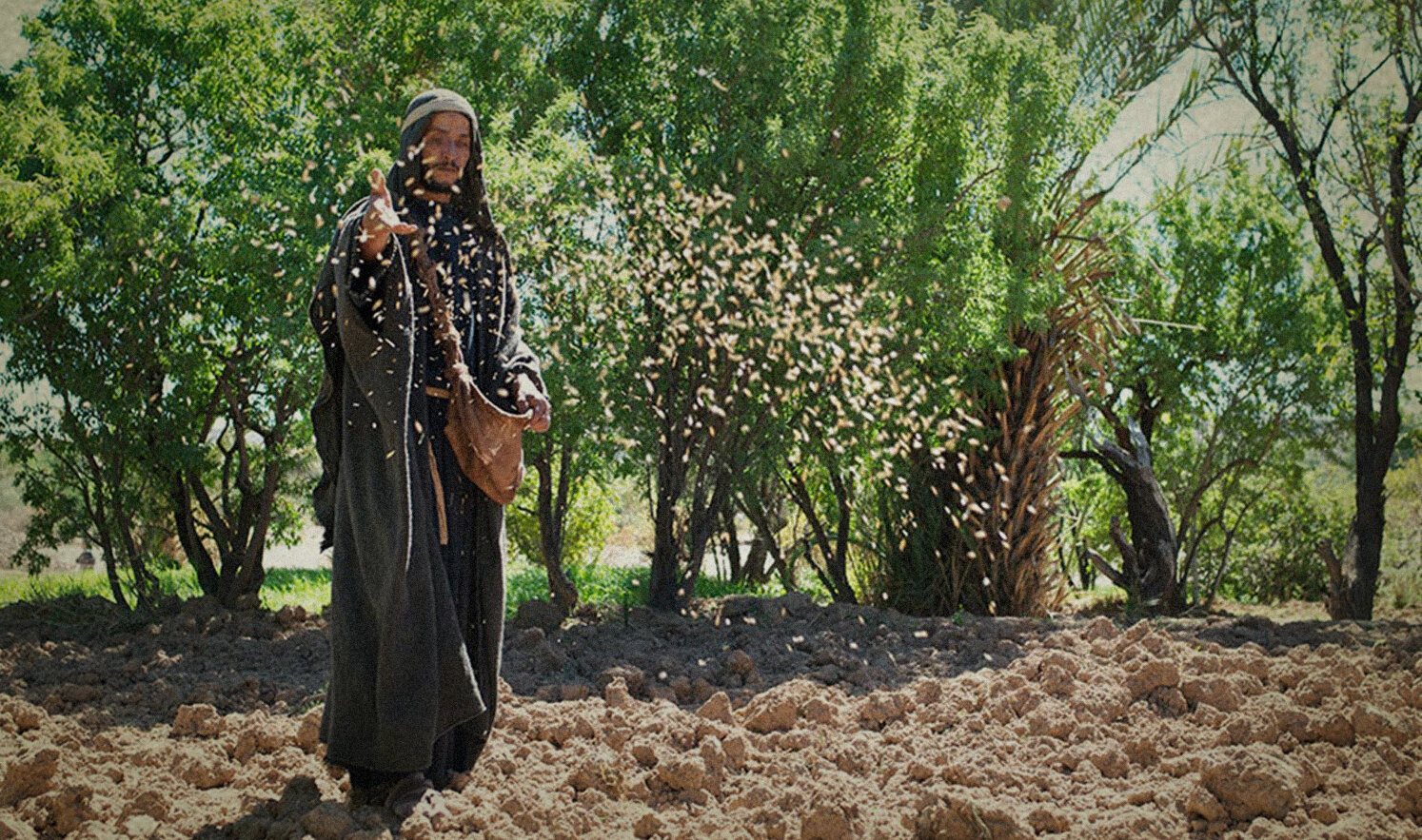
A famous parable in the New Testament is about a sower and seed. A farmer throws seed out onto the ground. Much falls on shallow dirt that won't support it, or into weeds, or gets eaten by birds. But some falls on fertile soil. I once asked a biologist what fertile soil is. He said, well, by contrast, sterile soil has no microbes, no bacteria, no worms, no life of any kind. Fertile soil is full of activity and life. When seed hits fertile soil, the soil partners with the seed for a great result, actively contributing to new growth. Consider that you are soil.
One of our most common tendencies when a big new problem arises is to try to evade it or squash it and get back to the way things were before it arrived. But that can be a big mistake. The new difficulty may be hiding a new path forward that won’t take us back to where we were but to where we need to be instead. Partner up with the problem to see how.
Are you in a time of challenge or difficulty? Lean in. Partner up with it. It's bringing you lots of clear negatives, so bring it some positives to balance the energy and break open new possibilities. New growth can result.

An old college friend and I were discussing this morning the all too common tendency to overreact to things on social media, which is of course just a part of our general tendency to overreact to things in real life. I said:
Not overreacting in life is a huge and often difficult learned behavior, when it's learned at all. Consider for example the Apostle Peter when in anger he cut off a Roman soldier's ear. Jesus rebuked him. And then something like the following transpired, if I recall the Gospels correctly here.
Peter looked puzzled. "But Lord, you got pretty into it chasing those money changers out of the temple with that big whip."
Jesus smiled. "Yeah, drastic situations can call for drastic actions, but you will remember that everyone got out with body parts intact."
"True. I see what you're saying."
"Don't overreact, or at least, not that far over. Everyone makes mistakes. We do well to mitigate the consequences when we can, not make them much worse."
*Sigh* "Ok, Lord, I understand. I've got ears to hear, as you like to say."
"Good, and now, thanks to my corrective action, that soldier does again too."
"Ha! Good one, Lord. You're pretty quick."
Again, Jesus smiled.