Follow @TomVMorris
Retreats
Keynote Talks and Advising
About Tom
Popular Talk Topics
Client Testimonials
Books
Novels
Blog
Contact
ScrapBook
Short Videos
The 7 Cs of Success
The Four Foundations
Plato's Lemonade Stand
The Gift of Uncertainty
The Power of Partnership

Tom Morris

Great Ideas. With Power. And Fun.
Retreats
Keynote Talks and Advising
About Tom
Popular Talk Topics
Client Testimonials
Books
Novels
Blog
Contact
ScrapBook
Short Videos
The 7 Cs of Success
The Four Foundations
Plato's Lemonade Stand
The Gift of Uncertainty
The Power of Partnership
Jenner.jpg

Bruce Jenner and Gender

Anyone who did not see Diane Sawyer's masterful two hour interview with Bruce Jenner on ABC television recently missed a Master Class on philosophical anthropology, psychology, and ethics. Jenner's evident intelligence, sincerity, and sensitivity to the big issues surrounding his lifelong struggle with gender issues helped to make the show instructive in ways I had not anticipated.

For anyone who missed the show, and who has not had the chance to glance at the cover of almost any magazine recently, the former Olympic great and Decathalon gold medalist, once declared "the greatest athlete alive," has revealed that he's had a lifetime struggle with gender identification. Born, of course, with the body of a man, he says that he has since childhood felt like a girl, and then a woman, in perspectives, thoughts, and interests. He sought to make clear that he is not homosexual, or gay. What he's experienced is different from that. He has been married three times and has fathered several children. He has loved his wives. 

One thing the interview made clear was that gender is a more complex issue than most people assume. Anatomy doesn't necessarily confer it. As in most things, the world is a more rich and complicated place than we often give it credit for being. I initially watched the interview out of curiosity, and came away with a deep sense of compassion, not just for what this one individual has been through, and is likely to go through, still, but for all of our brothers and sisters who are misunderstood in any way, and feel forced by social pressure to pretend to be something they're not, something that's not authentic, along any deep dimension in their lives. It brought home to me in a new way the power of the emphasis in eastern philosophies on compassion for all creatures, and wonder in the presence of the real.

When we understand the New Testament emphasis that "God is love," and grasp the profound empathy that real love embodies, we can approach issues like this with a new heart and a new wisdom. Despite the fact that these revelations have come out amidst the flamboyant media circus that is everything Kardashian, we, in a sense, have that whole spectacle to thank for providing such a public stage and forum for this issue to be raised - not only of gender identification, but of the need for compassion in all things.

In our complex world, a few things are simple. One of them is compassion.

 

PostedMay 1, 2015
AuthorTom Morris
CategoriesAdvice, Life, Wisdom
TagsBruce Jenner, Gender, Trans Community, Kardashians, Philosophical Anthropology, Psychology, Compassion, Understanding, Love, Tabloids, Tom Morris, TomVMorris
Post a comment
selfie.jpg

Your Photos

The world is always moving and changing in a constant flood of events, as if there is a vast movie spooling forward from some cosmic film reel and being projected onto a limitless metaphysical screen. Because of the dynamism of everything, you might think, at first consideration, that actual movies of our lives, or our work, if we could have them made, might give us just the insight we need in order to be able to understand more deeply, and perform more excellently in whatever we do. Like sports teams studying game film, if we could just have something like a film of our work and life to review, we could perhaps gain tremendous insight that we otherwise lack.

But my movie would just show me for most of any given day at my desk, thinking. You might as well just take a photo. And this, I suspect, is at least one of the reasons why Ryan Seacrest has never pitched to me a reality show about my life. Who would watch an hour of me sitting still? But then again, compared to some of the shows currently running, it might not be the worst.

Would you like to be the star of your own movie, or TV show? Would watching yourself help you to understand your life better? I've learned something interesting. Photographs can be just as illuminating as film. And sometimes, even more so. My daughter, in her work, often makes slide shows from great photographs she's taken and then set to music, displaying the visuals over an appropriate soundtrack. When I watch such a show on my computer, each shot, each individual photograph, stays on the screen for three or four seconds, it seems, before another appears and lingers, and then moves on.

Each photograph captures a moment in time in a way that was impossible before this distinctive art developed. We live a fluid flow of moments eliding into each other in such a manner that we can't directly experience the freezing of any one moment for examination and reflection. We can't stop the ever flowing stream of life, except in photographs. And then, when we do, we can contemplate, for a time, what took place at a time. In other words, we can think through, over a period of time, a snapshot of one moment in time. We can notice things that might have passed unnoticed in the real spooling forth of the filmic procession that is our lives. We can ponder that moment and what it shows. We can take the time needed to reflect more deeply on a fleeting second that may have been lived through initially devoid of reflection.

A photograph can be misleading in many ways. But it can be revelatory in others. It can be an aperture into a new vision for ourselves and our lives. We have more pictures available to us now than ever before in modern times. But do we use them well? Do we squeeze out the insight or wisdom from them that may be there to be gained?

I suspect, for the most part, not. And maybe this is something we need to think about more. How could you really benefit from those selfies on your phone? Contemplate it. Consider them. Linger in reflection. Illumination may occur.

PostedApril 29, 2015
AuthorTom Morris
CategoriesAdvice, Art, Life
TagsPhotography, Film, Life, Contemplation, Reflection, Wisdom, Tom Morris, TomVMorris
Post a comment
Moods.jpg

Moods or Goals?

I think I remember an episode of Seinfeld where Jerry says about something, "I'm not in the mood," and George replies, "Well, you better GET in the mood."

What is a mood? It's something like an emotional inclination, a sensed attraction or repulsion to some activity or thing. Moods come, and they go. And we normally don't think of them as something within our control. You're in a bad mood, or a good mood. It's almost like the weather, we think. It is what it is. And it will pass.

How often do moods determine what you do, or don't do? I suspect that mood plays more of a role in most of our lives than we acknowledge, on first consideration. And it's usually quite subtle. You don't feel like making the call, or writing up the report yet, so you don't. You feel like taking a break, or a walk, and so you do. "I'm not in the mood for any more of this right now" can indicate a lapse of patience, or perseverance, or tolerance, or even a loss of focus that could result from not enough sleep, or not enough breakfast, or too much of something else the night before.

"You're in a real mood today."

"I think I'm in the mood for pizza tonight," or "Mexican" or "Italian." And, here's something interesting: We hardly ever think or say, "I'm in the mood for working really hard today" even though we might be. And we never say, "I'm in the mood for striving consistently toward my goals for the next five months." Why not?

We normally think of moods as temporary, passing, or fickle, and goal oriented behavior as, by definition, rational, continuous, or, ideally, consistent. Moods are about what you feel like, now. Goals are about what you're committed to bring about, eventually.

I've come to think that it's fine to respond to many of our moods, in moderation. It can even be good, if the mood itself is. But life is all about the balance, the dance, the weave and integration of rational and non rational elements - what the Greeks called the Apollonian and the Dionysian (for Apollo, god of rationality and Dionysius, god of the emotional and sensual aspects of life). If we're, overall, goal oriented and have as goals valuable aims that we really believe in, then that will in itself be something of a mood governor.

The wise man or woman's moods can most often be indulged, because they're the result of a life well lived. But the long path to wisdom requires monitoring, and often overruling, the fleeting and often blind demands of mood. On that path, we train our emotions, and our moods, to work in concert with our rational purposes and goals, giving us both boosts and breaks when we need them, and moments of restoration when that's required. We're not to be machines in work or life. And our moods can express our humanity.

What are you in the mood for, today?

PostedApril 28, 2015
AuthorTom Morris
CategoriesAdvice, Life, Wisdom
TagsMoods, Goals, Plans, Rational Planning, Irrational Emotions, Feelings, Tom Morris, TomVMorris
Post a comment
GlassHalfFull.jpg

Half Glass Living

One night at dinnertime, years ago, when my son Matt was at the ripe old age of thirteen, he walked into the kitchen, put a plate on the table, and said, out of the blue, “Dad, I've figured out that glass question.” I drew a total blank.

“What glass question, Matt?” I asked as I quickly searched my memory for anything we might have been talking about in the preceding hours.

He said, “You know, the one about the glass being half empty or half full.” Oh, that glass question. You know the famous scenario: A water glass contains liquid up to its midpoint. The question is then asked whether the glass is half empty or half full. Everyone then tells us that a pessimist will say it’s half empty, while an optimist will say it’s half full. The situation is supposed to be a test for inner attitude. It’s assumed that there's no objectively better answer. Either can be right, and yet neither is objectively preferable. What you say will be determined by what you are as an observer, not just by what the glass is as an item apart from you in the world.   

Well, my son wasn’t about to buy that. He had heard the question somewhere, and apparently it had been bothering him. He now had his own take on it. “So, what's the answer?” I asked with real curiosity, wondering how someone his age would approach this old classic. And, in reply, he said something that proved to me again the simple truth that you can be a philosopher at almost any age.  

He thought for a second and said, “It all depends.” Well, of course, when I heard these opening words, I thought that we’d be quickly going straight into the familiar and well trod territory of attitude relativism. But his next words surprised me and took us into a totally different direction. He said, “If you were filling the glass up just before you got to that point, it’s half full. If you were drinking from it or pouring it out just before that, then it’s half empty.”    

Aha! “It all depends,” people have always said, but they’ve thought the answer depends on the attitude of the person looking at the glass. Matt couldn’t accept that as the final word. It does all depend, he was saying, but it depends on what real process had been going on previously, in order to bring the glass to its present state. What something is sometimes depends on where it came from, on how it got to be as it is, and maybe even on where it’s in the process of going. That’s a pretty profound insight.  

There’s a lesson here for us all. How’s your glass these days? How’s your life? Is it pretty good, or pretty bad? If you’re like most people, you may think of yourself as somehow representative of roughly half-glass living. There are some good things in your life. And there’s a lack, or an empty space, as well. Well, then, if this is even remotely an accurate representation, the question arises: Is your life generally half full, or basically half empty? According to young Matt, it all depends. Have you been emptying it out, dissipating your energies, squandering your deepest self, alienating those who are closest to you, and as a result losing things of real value – or have you been filling up your life in the best possible way, adding elements of true value and deep worth to your daily experience? Have you been depleting or enriching yourself? What real process has been going on up until now, and is perhaps still presently occurring in your life, right now, or in your business? Where have you been, in this regard, and where are you now going?


PostedApril 27, 2015
AuthorTom Morris
CategoriesAdvice, Life, Business, Wisdom
TagsLife, Fulfillment, Happiness, Psychology, Philosophy, Half Full Glass, Half Empty Glass, Tom Morris, TomVMorris, Creativity
Post a comment
Error.jpg

Mistakes

We all make mistakes. Even with the most information we can gather, the greatest care in planning, and the best of intentions, we make mistakes. That's simply a part of what it is to be human.

But this is just as important. The world can forgive most mistakes. Most reasonable mistakes aren't completely self destructive. They're part of the process. And the world is typically even more than forgiving. It actually often rewards our mistakes in an interesting way. I talked with a man the other day who admitted making a great many mistakes in his career, and his account of them was both very funny and telling. What didn't work, or even went terribly wrong, often set him up for what did work, and worked magnificently.

We're here to try things. As Emerson said, "Life is an experiment." Make as many good experiments as you can. Sure, many will be mistakes. But from them we can learn. And they can often have oddly good consequences we never could have anticipated.

This adventure we're on can never be completely planned. It just has to be lived.

PostedApril 23, 2015
AuthorTom Morris
CategoriesAdvice, Life, Business
TagsPlans, Efforts, Mistakes, Experiments, Emerson, Tom Morris, TomVMorris
Post a comment
People.jpg

Relationships Rule The World

There are two fundamentally different approaches to work and life - a transaction mentality, and a relationship focus. I've written about this before, but a review might be helpful. 

The transaction approach to work and life concentrates just on the sale, the deal, the event, the accomplishment. A relationship orientation focuses on people and getting to know them, helping them, and encouraging them. The great philosopher Martin Buber spoke of the "I-Thou" relationship, and the "I-It" alternative. What do we primarily relate to, people or things? Do we treat people like the amazing and valuable souls they are, or as if they were mere things to be move and manipulated?

The irony is that with a relationship mentality, you end up with far more satisfying transactions than you get with a transaction approach to life. The transaction guy loses relationships, and many valuable transactions, as a sad consequence of his focus. Transactions are immensely important. That just show how valuable the vastly more important relationships in the world are.

Be a relationship person. Then, enjoy the great transactions that result. Priorities matter. So does focus.

PostedApril 22, 2015
AuthorTom Morris
CategoriesAdvice, Business, Life, Wisdom
TagsRelationships, Transactions, People, Things, Our Orientation, Work, Life, Philosophy, Tom Morris, TomVMorris, Martin Buber
Post a comment
Limits.jpg

Good Limits

We all live with limits. And yet, we love words and phrases like 'Limitless' and 'No Limits!' and 'Without Limits!' There are movies, T shirts and businesses that choose such phrases as names. It can seem like a great ideal, and a liberating thought. But let's think a little more deeply.

We need to make a distinction between artificial limits, or false limits, and real ones. We wrongly think we have many limits that we don't have at all. And we impose on ourselves artificial limits all the time that hinder and hold back what could be our genuine excellence, and a more expansive experience of life.

I've been having some related thoughts come to me this week. Let me lay out a few here, together, aphoristically, for your consideration.

Artificial limits are weaknesses. Natural limits are strengths. They give us structures to build on, and a form to build within. Some can be extended, and expand the borders of our strength. Some can't, but form the often hidden foundations for who we are and can be.

All limits give form and structure. To live without them would be impossible - it would be to live without any form or structure. But to live with too many limits, or the wrong ones, restricts you, constrains you, and holds you back needlessly. It shrinks your life.

You have to free yourself from artificial limits to find your natural and empowering structures.

The right limits liberate and give you a place to stand.

The limits that are freeing and empowering are those that arise from the shape of your distinctive talents, your best choices, and your highest commitments.

My dogs have a big fenced in backyard. They often go to the fence and poke their noses through the uprights to bark at another dog, or a jogger, or almost anything. The fence limits them. But it protects them as well. And it gives them the power to move and play vigorously without fear. It provides them an expansive area in where they can't be harmed by cars, or other dangers.

That's almost a trivial example. But it shows in one small way that not all limits are bad.

The best limits come from your wisest decisions, the ones that chart your proper path forward in life. You can't do everything. You shouldn't even want to. Some things are just not right. Others aren't right for you, at least, not now.

When we shed the wrong limits and embrace the right ones, we flourish. If that's a new thought, I hope you can use it well.

PostedApril 19, 2015
AuthorTom Morris
CategoriesAdvice, Life, Wisdom, Performance
TagsLimits, Structure, Form, Life, Choice, Commitment, Work, Play, Tom Morris, TomVMorris, Philosophy, Wisdom
Post a comment
TooMuch.jpg

Too Much

When was the last time you ate too much, drank too much, exercised too much, watched too much bad tv, or worked too much on something that ended going nowhere?

We have all these clever aphorisms like:

Too much is never enough!

Too much is impossible!

Too much is wonderful!

Too much is just right! 

And these little sayings are admittedly all clever, and all sound good in the right context, but are also mutually inconsistent, which is, of course, warning signal. Clever isn't always a sign of true, although it's often mistaken as such in our world. 

How about too much paperwork? Too much information? Too much food in your mouth, or way too much stuff for your carryon to hold?

I just had an epiphany in the bathroom of the Airbus A319 I was flying on Wednesday morning from Jacksonville, Florida to Charlotte, North Carolina. The seatbelt sign was illuminated, and I’m not usually an in-air rule breaker, but too much white and red wine, capped with too much Jack Daniels the night before at a party had led to too much black coffee that morning, which resulted in too much of a need for the Airbus facilities, mid-flight, and all of that resulted in my standing up for too much time in violation of the captain’s sign. But as soon as I had slipped out of my comfortable window seat 2A and ducked into the little lav, then, zap, I had my morning revelation.

Here’s the insight. Too much leads to too much.

Too much libation and getting up much too early requires too much java which leads to too much time in the restroom during a bumpy flight. Too much weight in the gym leads to too much back pain, which leads to too much Advil, and too much recovery time in the bed. Too much is trouble.

And maybe that’s why the ancients said “Nothing in excess.” In fact, the famous Oracle at Delphi had two things carved in marble. "Know yourself" and "Nothing in excess." I've reflected before in a blog on the relationship between these two pieces of advice. Each one helps you with the other.

Of course, you can't have too much self knowledge. Whatever you can get will be useful, and it helps you know what counts as too much, in anything else.

Spot in advance what's too much for you, and then find a way to stop before you cross the line. That's the path of virtue which, in Greek and Latin, meant strength. It should today as well.

And there's no such thing as too much strength. So, therefore:

Know yourself. Do at least almost nothing in excess. Be strong.

PostedApril 17, 2015
AuthorTom Morris
CategoriesAdvice, Life, Wisdom, Philosophy
Post a comment
Rut.jpg

The Rut

You're in a rut. I almost know you are. At least a little. Because most of us are like that. You have lots of habits, ways you do things, and things you do, daily, or weekly. Most of our habits benefit us in some way or we wouldn't have them. But they can also tie us up and hold us down. And so I have some advice.

Get out of your rut. For just a little bit, in a small way, stick your head above the habits that define your normal stuff and catch a glimpse of what's out there. I often do this by reading a different kind of book, something I wouldn't ordinarily try. In the past week, I've read one by a famous movie producer, The Curious Mind, and a fascinating young adult novel that was surprisingly full of philosophy, The Fault Is In Our Stars. They get me out of my rut and spark all sorts of new ideas. 

A few days ago I helped instal a fence. Now that's way outside my rut. And I really enjoyed it. I haven't otherwise done any fencing since 1982, which is a long time ago. I got outside my rut, and I had a new experience that was deeply satisfying.

Watch a TV show you wouldn't normally view, or go see a film that's outside your normal parameters of moviegoing. It's still good to avoid junk. But try something new. Talk to someone you've never talked to, or about something different. I meet people on airplanes all the time, and have conversations that I sometimes remember years later. It's all about the little act of stretching beyond what you normally do. You never know how a little rut-desertion, if even just for a few minutes, might spice up your day, and give you just that nudge of energy or creativity you need.

PostedApril 16, 2015
AuthorTom Morris
CategoriesAdvice, Life, Business
TagsHabit, Novelty, New, Experience, Creativity, Tom Morris, TomVMorris
Post a comment
Integrity.jpg

Integrity

Integrity. It's one of those words we all think we understand, and yet, when asked what it means, we might find ourselves stumbling out partial answers. It's about character and being ethical. It's about doing the right thing, or aligning yourself with the side of good. It involves telling the truth, and keeping promises, and being dependable. Right? 

Well. These are all implications of integrity. But what, actually, is it?

The word comes from the same etymological root as integer, meaning a whole number. And there's a big clue. Integrity is somehow about wholeness. It's about not compartmentalizing your decisions and actions, walling off some from the rest of who you are. It's about acting with the wholeness or entirety of your beliefs and values, in every choice. 

But wait. A thoroughly bad guy, an immensely corrupt character, a murderous terrorist could act in every choice with and from the wholeness or entirety of his insane beliefs and perverse values, but we wouldn't call him an individual with integrity, would we? No. Of course not. Because integrity isn't just about consistency. It's a moral concept. And there's our second clue.

A rascal, criminal, or deranged psycho can be consistent in his actions, throughout the range of his conduct. That is to say, his actions can be consistent with each other, and with the false beliefs and skewed values he holds. But to have integrity, you have to display wholeness in another sense. You need the wholeness of health. Integrity is about moral health. And that's about more than just mere consistency among your actions. Your choices and action have to also be consistent with objective standards of health that are independent of your own thoughts and feelings - that are, in a metaphysical sense "out there" in the world.

What are those standards? I suggested years ago in the book If Aristotle Ran General Motors that they're Truth, Beauty, Goodness, and Unity, understood properly. If your life, thought, and actions are all consistent, or at one, with Truth, Beauty, Goodness, and Unity, then you are a person of integrity. You have integrity. Or better, it has you. Because there's an important sense in which you don't really possess it until it owns you. You can be good in fits and starts - a mostly good character, a decent soul, overall, even a kind person most of the time, but if there is not a higher calling that you've said yes to, in a deep and abiding way, perhaps because you really don't see any reasonable alternative, then you aren't yet a person of integrity.

That's a high standard. But that's because it's what integrity is all about. Most people admire it from afar. Some actually live with it. Many are apparently blind to it, and just don't get what the big deal is about it. But I'm convinced that it's tied in deeply with not only what I call "true success," but also true happiness, contentment and fulfillment. It's also a part of what it takes to make your best possible mark on the world.

Are you living with it? many of us try to embody it in at least most aspects of our lives, at least most of the time. But it calls us to live it wholeheartedly, fully, and consistently across everything we do. It's a high calling, and a hard calling, but it's the one true path to the best life we can live. As such, it's well worth working hard to attain.

PostedApril 15, 2015
AuthorTom Morris
CategoriesAdvice, Life, Business
TagsIntegrity, Ethics, Morals, Character, Truth, Beauty, Goodness, Unity, Choice, Decisions, Actions, Business, Life, Wisdom, Tom Morris, TomVMorris
Post a comment
Patience.jpg

Patience

For most of my life, patience has been a monumentally aggravating virtue. I like to make things happen. I like to dream it, do it, and then move on to the next thing. I work hard at projects, and pursue them with determination, persistence, and as much creativity as I can muster. And then I like to see my efforts come together and work, producing the fruit of achievement. I bask in the warm glow of a job well done and go looking for the next one.

When I get excited about an idea or a project, I become a curator of great energy. It seems to come to me from all directions, get inside me, and demand to be used. I surf on it, run with it, and even fly because of it. Then, occasionally, things don't go as expected. Not right away, at least. And sometimes, not even considerably after the "right away" phase has long gone. What's this? The world is not responding to my bright idea and hard work? I'm being made to WAIT?

Patience has a very different energy signature from striving and working hard. For most of my life, I had no real conception of how to make them go together. I was always pushing, running down hallways, making call after call, with almost a frantic pace that finds youth to be such fertile soil. But as I've gotten older, I've come to a bit more of an understanding of patience.

The world is an infinitely complex buzzing web of intersecting interests, energies, and events. It's hard to fit a new idea, or invention, or discovery, into the speeding traffic of what's already on the highway. You sometimes have to sit on the on ramp and patiently wait until the time is right. Then you can safely merge into the stream of ongoing things that are whizzing by.

Impatience doesn't want to wait - ever. But waiting can be just as important an activity as doing. A great baseball player doesn't step up to the plate and let impatience goad him into swinging hard before the pitcher even throws the ball. That would be crazy. And if he even swings a moment too soon, he can miss the opportunity and the ball. Patience is all about acting when the time is right. It's about waiting until the proper moment arrives. It involves the ability to be at peace and give the world time to get ready for your great new idea or project. It's most of all an attitude. And it's powerful.

Impatience is all about ego and that spoiled child inside that wants its way now. Its companions are frustration, irritation, and anger. Patience is a form of inner peace. It's about wisdom. Its companions are serenity and assurance, a confidence that doesn't require immediacy. It isn't in a hurry. It understands that great things take time.

I always wanted to have a better understanding of patience. But I had to wait a long time to get it. It was worth the wait. And most things of value are.

PostedApril 14, 2015
AuthorTom Morris
CategoriesAdvice, Life, Business, Wisdom
TagsPatience, Virtue, Impatience, Hurry, Running, Racing, Expectation, Success, Achievement, Energy, Tom Morris
Post a comment
AgesofMan.jpg

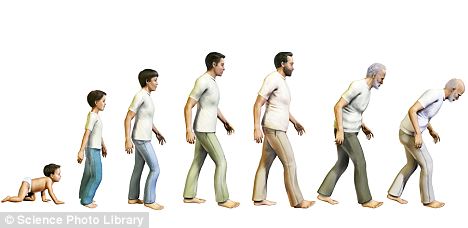
The Benefits of Age

I'm really glad I'm not twenty years younger. I bet you are, too. Unless maybe you're 100 and wish you could have a do-over for everything since your eightieth birthday. 

There are advantages to age if you live with your eyes wide open. Experience can be a great teacher if we let it work for us this way. Of course, I'm sure there are some people who are just as foolish at forty as they were at twenty. I feel really sorry for them. I was in many ways an idiot in my twenties. I was a high functioning, intellectual idiot, but an idiot all the same. I had to grow into a measure of wisdom. And I learned it in my head long before it fully made the difference it should have made in my heart. Making enough mistakes helps. It can humble you, and open you to new avenues of growth and inner transformation. Learning what doesn't work can be great preparation for an eagerness to know what does.

Today, April 13th, is my birthday. I was born on Easter Sunday, 1952. That makes me 63 years old, or young, as my friends like to console me by saying. And I'm fine with it. I think I'm finally starting to really understand some things, some important things. I have an expansive awareness about life and the world that I lacked even a few years ago. So if you feel like you're mystified most of the time, and are making mistakes left and right, hang in there. The wisdom you need may be just around the next corner. If you let experience be your teacher, and allow other wise people to give you guidance, you can age into new vistas of understanding and delight that you could not even have imagined twenty years ago.

So stay open, stay eager to learn, stay tuned in to what life has to teach you. Let today and tomorrow provide you with some of those genuine benefits of age. And, Happy WiseDay to you.

PostedApril 13, 2015
AuthorTom Morris
CategoriesAdvice, Life, Wisdom
TagsAge, Wisdom, Life, Tom Morris, TomVMorris
Post a comment
Philosopherplate.jpg

Emergency Wisdom

A car in front of me on a major street today caught my attention. It was a white Ford Explorer tricked out with orange stripes like an emergency vehicle. And it also had round reflectors built into the tail gate. Or were they flashing lights? Above the license plate, there was a very official looking sign, where EMT or POLICE might otherwise be. It said CHAPLAIN.

I couldn't help but be jealous. If I could just have one like that but with the sign instead saying PHILOSOPHER. Can you imagine? I sure could. I'd be driving down the road and the radio would squawk. "Logic Emergency on Front Street. All Philosophers Respond." I'd hit the lights, and of course the siren, and the gas. Out of the way, everybody. Sage coming through. I'd screech up to the address and dash out of the car. City police would be holding the door open for me. I'd run up the stairs two at a time, and there it would be: a guy splayed out across his desk, with his computer flashing some sort of error message. A detective would be standing there, and he'd look up at me and say, "It's a conceptual catastrophe."

I'd say, "What have we got?"

The gumshoe would reply. "I think we need some Aristotle."

I'd look more closely and say, "No! It's too late for that! Only Kierkegaard will do!" And, with a Leap of Faith, I'd use just the right aphorism and summon the guy back to life, and conceptual clarity. A gasp would go through the room, and I'd suddenly notice all the other people huddled over at the side. They'd start cheering and clapping. Someone would run up to me and gush appreciation and words of praise for what I had just accomplished.

"No Ma'am. No need to thank me. Just another day for a hard working philosopher."

As I came out of my stoplight reverie, I realized why things don't work like this. Oddly, most people go in search of wisdom only when they confront a catastrophe, or disaster that has arisen from unwise decisions. Wanting to avoid the flames of irrational self immolation, they desperately look for insight. And they might find a piece of wisdom here or there that can save them. But philosophy is much better as a powerful preventative medicine than as last minute emergency treatment. It's better applied in small doses throughout our days and decisions. Then, we can most likely avoid cataclysmic personal disasters, at least of the existential sort.

So: Don't wait for trouble. Seek wisdom now. Remember, I don't really have the flashing lights and siren. It was just in my imagination. Then again, the chaplain in town apparently does.

PostedApril 12, 2015
AuthorTom Morris
CategoriesAdvice, Life, Philosophy
TagsWisdom, Philosophy, Problems, Disasters, Insight, Health, Logic, Kierkegaard, Aristotle
Post a comment
Watch.jpg

A Plan With Urgency.

Leonard Bernstein once said:

To achieve great things, two things are needed; a plan, and not quite enough time.

That's really good. I like it. What you need is not (1) a plan, and (2) all the time in the world. What you need is a plan and not quite enough time. Why?

You need a sense of urgency about your plan and your ability to execute it. Plenty of time makes a sense of urgency hard to create. Not quite enough time gets you going and keeps you at it, while you glance at the calendar and check your watch.

That's the secret insight of procrastinators. They put things off until they have the magic of not quite enough time. Then they bear down with focus and intensity. Some wait until actual desperation sets is. They do whatever it takes to get the fire blazing high.

I'm not recommending procrastination - not yet, at least.

I'm agreeing with the famous director that a great plan and a time squeeze can be a magical combination. I sometimes give myself an artificial deadline for a project, and get all worked up about how in the world I'll get it done in that amount of time. I don't let myself think of the fact that I've just made up the deadline. I convince myself it's real and important. And it is important if it gets me going full force. And because I'm pretty good at convincing myself of things, I hit the accelerator and take off! I get stuff done.

And I'd love to say more, but: There's not quite enough time.

Tempus fugit!

PostedApril 11, 2015
AuthorTom Morris
CategoriesAdvice, Business, Life
TagsGoals, Urgency, Procrastination, Magic, Leonard Bernstein, Tom Morris, TomVMorris
Post a comment
Ferrari.jpg

Harmony: Part Two

Go buy all the individual parts of a Ferrari, thousands of them, down to the nuts and bolts, and the cans of paint needed for that glossy finish (which are you, red, black, or yellow - or maybe dark blue?), and then pile all those parts in your driveway. You won't as a result have a great car that you can take for a spin around the block. You'll just have a big pile of stuff. The parts have to be connected and then have to work together well for you to have a functioning classic high end sports car. They have to perform in harmony.

I wrote about harmony already this week, but felt that another post could be beneficial. Two Part Harmony seems apt, after all. In the previous post, I pointed out that a whole of any kind (a face, team, or as here, a car) can be greater or lesser than the sum of its parts, and that the secret sauce determining whether the parts are augmented or diminished in their assemblage is harmony.

Harmony is something we hope for, in our lives, our businesses, and our families. At work, we try to gather the best people we can, and then hope that they'll act harmoniously toward shared goals. But of course harmony should be sought from the start, and not just desired in the end.

Don't just hire for individual talent, or even greatness. Hire for diverse, dynamic fit. Hire for harmony. Some companies do it already. They have job candidates interviewed by the people they'd be working with. Everyone has an eye on the issue of harmony. How will we work together? Will we mesh?

Harmony is often used as a synonym for consistency. But it may go even deeper. Imagine two guitarists playing all the same notes in perfect rhythm. They're consistently matching each other, note-for-note. Now imagine them playing in harmony. When I was in grad school at Yale, I used to go down the road to a great guitar store every afternoon for an hour or two and play with an outstanding studio guitarist named Tommy. He had taught me Chet Atkins style finger picking. I'd play a song, bass and melody, and he'd play in harmony with what I was doing. The sound that resulted was amazing. What he was doing was far more than merely playing in a way that was consistent with what I was doing. It was enhancing the sounds immensely.

Think of the spices in a great dish. You want more than consistency. You want them to work together and mutually enhance each other harmoniously. That's what we want in life and in our work. Think about what that means right now in what you're doing. How can you introduce more real harmony into it? How can you play it to make it sing?

PostedApril 10, 2015
AuthorTom Morris
CategoriesAdvice, Life, Business
TagsHarmony, Consistency, Work, People, Chet Atkins, Les Paul, Guitar, Ferrari, Philosophy, Tom Morris, TomVMorris
Post a comment

The Size of Your Life

I live in many ways a small, snug life. And I'm happy in it. But one of the hardest things in the modern world is to be content with the size of your life.

People contact me all the time to tell me about their grand plans, their world-historical ambitions and dreams that will likely play out on a stage so big that the earth itself will seem too small to support it all. And even our own galaxy, in contrast, may appear to be a bit modest and out of the way for the immense grandeur that is to transpire, if their goals are realized. 

This has been going on for decades. Really. My wife says I'm some sort of a magnet for grandiose dreamers. I don't know why. I do enjoy hearing of their ambitions. I deeply appreciate unfettered enthusiasm. I love thinking big. But as I listen to the various magnificent plans, I always wonder: "How?" And sometimes: "Why?"

Most days, I work at home. And most of my day involves working on very little things. I realized long ago that if I was going to personally change the world for the better, it would have to be very slowly. And so now, on the brink of my 63rd birthday, you've got to give me credit for sticking to my own plan and sense of timing. I've been slow, indeed. The world is not yet, it seems, quite changed in the way I've intended. Maybe I've planted a few seeds over the years that will germinate. And it could be that the results of those seeds will go far beyond anything I can currently imagine. But then again, if not, that's fine, too.

I've come to suspect that there is a way in which the smallest lives can be among the biggest, and what play out as the biggest may often be missing out on the real adventure. You see, surface appearances don't tend to be reliable guides to deeper realities. There may be a spiritual transvaluation of values that's always going on. Focus on the right things, and your life, however humble it seems, is in reality infinitely expansive. Chase the wrong things, however grand, and you've shrunk it down to a pinpoint of value. And then, in the realm of the right things, any little action can have ripples that don't stop. My hyperbolic dreamers, by contrast, often aspire to the role of demi-gods, and want to make huge waves that could end up with the effect of a tsunami.

So, my thought for the day, if I actually have one here, is to enjoy, relish, and value the small things in your life. Maybe you are changing the world, whether you're advertising it in huge letters of skywriting for us all to read or not. Maybe your small is really big.

Small is good.


PostedApril 9, 2015
AuthorTom Morris
CategoriesAdvice, Life, Wisdom
TagsValue, Grandiosity, Ambition, Goals, life, impact, influence, Dreamers, Smallness, spirituality, Tom Morris, TomVMorris
Post a comment
BoDerek.jpg

Harmony

Many years ago, when the movie "10" starring Bo Derek aimed to portray a woman who was so beautiful she was a "perfect 10" in all ways, a national news team decided to try an experiment. They searched fashion photos, movie star pictures, and many other sources to find "the perfect lips" and "the perfect nose" and "the perfect eyebrows," and so on, for chin, hair, ears, and cheeks. They said they would photo shop them together and present the truly perfect woman. The result was not at all what they had intended.

In sports you can do the same thing. Bring together the best basketball center, the best guards, the best forwards, and you won't necessarily have the best team. Thinking otherwise commits a classic philosophical error called "The Fallacy of Composition." Or in another phrase, the whole can be greater than the sum of its parts. Or lesser. 

Why? Harmony.

Harmony is an important ingredient in greatness of all kinds. Do you have it in your life? In your work? Among your actions? In your family? On your team? It's a key to beauty and excellence.


PostedApril 8, 2015
AuthorTom Morris
CategoriesAdvice, Business, Life
TagsHarmony
Post a comment
BigWave.jpg

Passionate Pursuit

As I look back over the trajectory of my life, from the high perch of being on the verge of 63, I see that the times when I've had the most fun and gotten the most done were the times when I was the most passionate in pursuit of an idea, or project. My enthusiasm propelled me forward. It woke me up in the morning, and got me going. It gave me energy. It sustained me through the day. It opened the doors of possibility all around me that would otherwise have remained closed, and sometimes locked.

When I was a professor, and writing articles and books like a maniac who required no sleep, people would often ask me "Do you just work all the time?" My reply would most often be: "No, no. Not at all. My life is long periods of indolence punctuated by intense bursts of activity. I get so excited about what I'm working on that I can't help but get things done. Then I go take a nap."

But passion waxes and wanes through a life. You're not always surfing a high wave of energy. If you find yourself right now astride your board in calm water, just waiting for the next wave, and nothing's on the horizon, you can do something about it. You can yourself stir up the waters. It all starts within. Make your own waves. In life, unlike in the ocean, it's possible. It works. It's always better to feel the breeze in your face as you ride a big wave, as you go new places and do new things. It will kill the lull if you can feel the love. You can renew your inner passion.

We're here to make things happen. Pursue passionately what's right for you!

Today.

PostedApril 7, 2015
AuthorTom Morris
CategoriesAdvice, Business, Life, Performance
TagsPassion, Enthusiasm, Work, Energy, Love, Wisdom, Tom Morris, TomVMorris
Post a comment
Grapes.jpg

Intense Living

How intensely do you live? It's well known, and often experienced, that we can eat without attending to the taste and feel of what we're consuming. We're watching TV or talking or reading and just mindlessly chewing our food with no conscious awareness of it whatsoever. We can even drive on automatic pilot, realizing now and then that we haven't payed any conscious attention to what's gone on, along the way. It's amazing the road isn't littered with the wreckage of mindlessness.

But when we stop and attend, our experience changes radically. How much do you do that? How present are you? Where is your focused attention throughout the day? Most of us live without intensely attending, which means we take up time and space without the effects we're here to have, for most of our moments. We're missing The Big Show that's here for us all. 

And when we don't fully notice, we can't fully act in the best and highest ways. In the end, we're here to enjoy the show, but also to perform in it our own best roles.

Don't miss the moment. You have an all access ticket. Don't sleep through The Big Show. Pay attention. Relish it. Feel it. Absorb it. Throw yourself into it. Luxuriate in it. That's what it's for.

Today.

PostedApril 3, 2015
AuthorTom Morris
CategoriesAdvice, Life, Philosophy
TagsAttention, Experience, The Present, the moment, Tom Morris, TomVMorris
Post a comment
Spyder.jpg

Find What Matters

Have you noticed that advertisements are becoming more philosophical? I've blogged the noble sentiments of a recent Cadillac ad. Now let me post the content of an ad for Spyder.com:

Find what matters and free yourself from the rest. That's invincibility.

Why invincibility? Because when you focus on what matters, you really can't be defeated. All failures either feed you or take you out of the game. You won't stay in it to lose. What matters most, of course, are the matters of creative love, or loving creativity, as I explored in the book If Aristotle Ran General Motors: The New Soul of Business, a book that was published in 1997, but that reflects what only now many leaders in the corporate world are beginning to realize. 

Focus matters. A focus on the right things matters more. Freeing yourself from the rest is the most liberating act, and ongoing habit, that you can develop. And it's a key to your highest potential - the only route to the only invincibility there is.

PostedApril 2, 2015
AuthorTom Morris
CategoriesAdvice, Business, Leadership, Life
TagsFocus, Distraction, time management, Energy Management, Work, Business, Career, Creativity, Love, Meaning, Life, Advice, Tom Morris, TomVMorris
Post a comment
Newer / Older

Some things that may be of interest. Click the images below for more!

First up: Tom’s new Silver Anniversary Edition of his hugely popular book on The 7 Cs of Success!

The New Breakthrough Guide to Stoicism for our time.

Tom's new book, out now!
Finally! Volume 7 of the new series of philosophical fiction!

Finally! Volume 7 of the new series of philosophical fiction!

Plato comes alive in a new way!

Plato comes alive in a new way!

On stage in front of a room full of leaders and high achievers from across the globe.

On stage in front of a room full of leaders and high achievers from across the globe.

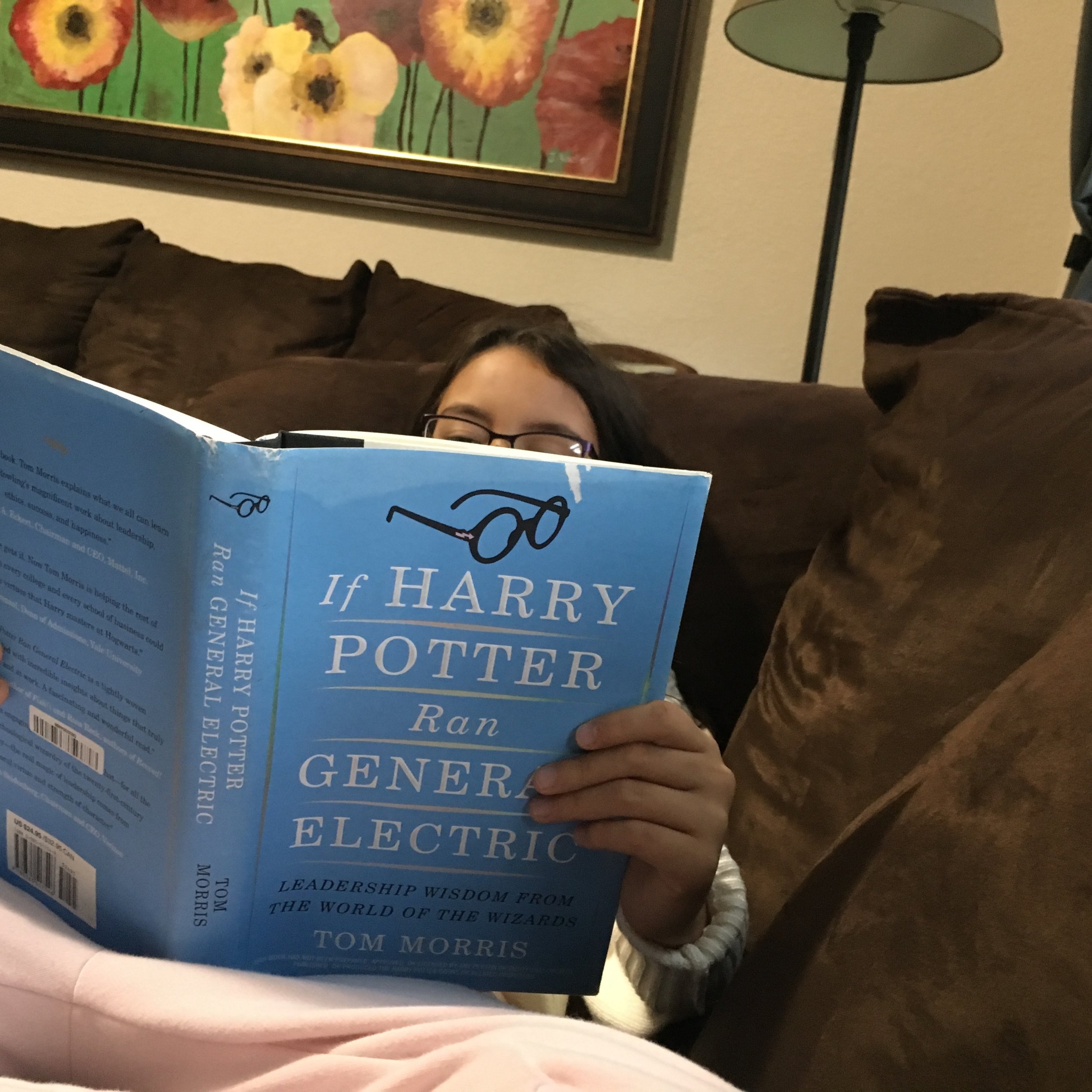
My Favorite Recent Photo: A young lady named Jubilee gets off to a head start in life by diving into some philosophy!

My Favorite Recent Photo: A young lady named Jubilee gets off to a head start in life by diving into some philosophy!

Great new Elizabeth Gilbert book on creative living and the creative experience.

Great new Elizabeth Gilbert book on creative living and the creative experience.

Two minutes on a perspective that can change a business or a life.

So many people have asked to see one of my old Winnie the Pooh TV commercials and I just found one! Here it is:

Long ago and far away, on a Hollywood sound stage, I appeared in two network ads for the wise Pooh, to promote his adventures on Disney Home Videos. For two years, I was The National Spokesman for that most philosophical bear. This is one of the ads. I had a bad case of the flu but I hope you can't tell. A-Choo!

One of my newest talk topics is "Plato's Lemonade Stand: Stirring Change into Something Great." Based on the old adage, "When life hands you lemons, make lemonade," this talk is about how to do exactly that. Inquire for my availability through the c…

One of my newest talk topics is "Plato's Lemonade Stand: Stirring Change into Something Great." Based on the old adage, "When life hands you lemons, make lemonade," this talk is about how to do exactly that. Inquire for my availability through the contact page above! Let's stir something up!

Above is a short video on finding fulfillment in anything you do, that was taped a few years ago. I hope you enjoy it!